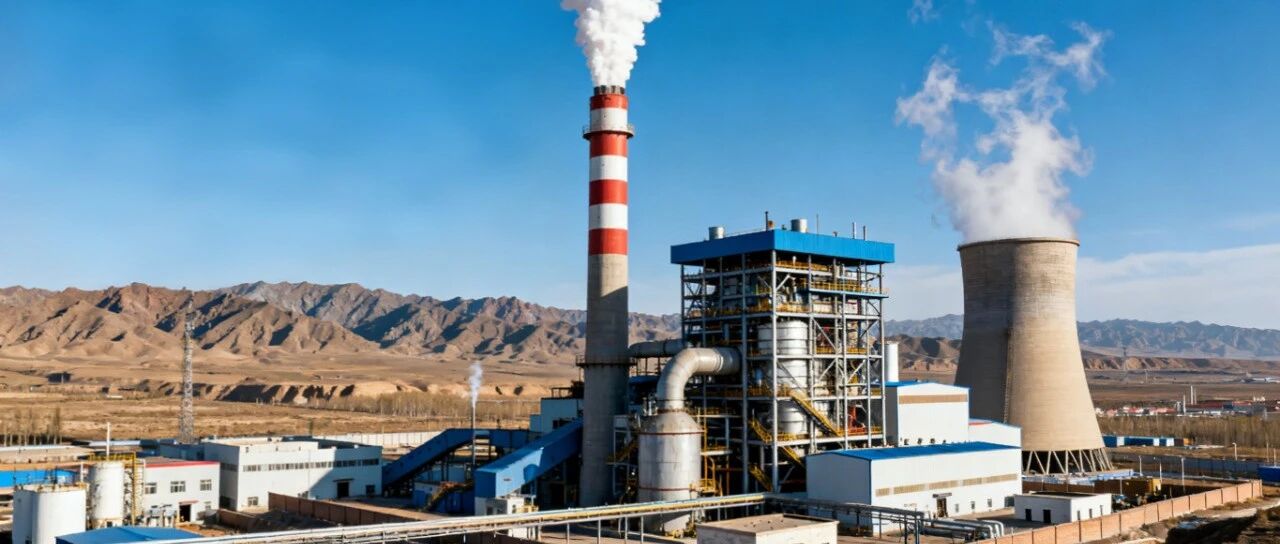
减污降碳协同

Search documents
生态环境部等联合印发《生态文明建设示范区(生态工业园区)管理办法》
Xin Lang Cai Jing· 2026-02-13 04:13
Core Viewpoint - The newly revised "Management Measures for Ecological Civilization Construction Demonstration Zones (Ecological Industrial Parks)" aims to enhance the ecological development of industrial parks, promoting green production and low-carbon, circular development in the industrial sector [3][4]. Group 1: Overview of Ecological Industrial Parks - Since 2001, 73 industrial parks across 19 provinces have been designated as ecological industrial parks, contributing 8.5% of the national industrial added value while maintaining 84% lower pollutant emission intensity compared to the national average and achieving over 89% in solid waste comprehensive utilization [3][8]. - The existing management system for ecological industrial parks is based on "one method and two standards," which includes the "National Ecological Industrial Demonstration Park Management Measures," "National Ecological Industrial Demonstration Park Standards," and "Guidelines for the Preparation of Ecological Industrial Park Construction Plans" [4][8]. Group 2: Key Changes in the Revised Management Measures - The revised management measures emphasize the coordination of pollution reduction and carbon reduction, optimizing management processes, and establishing a framework where provincial authorities organize the creation and national authorities handle acceptance and naming [4][9]. - The new measures enhance supervision during and after the process, detailing performance evaluation and exit mechanisms to ensure the quality of park creation. For instance, the previous three-year review after naming has been changed to a performance evaluation, with warnings for parks that do not meet standards [4][9]. - Specific conditions for revoking naming have been clarified, including severe environmental pollution incidents and data falsification, with a prohibition on reapplying for a period after revocation [4][9]. - An "incentive measures" chapter has been added, focusing on financial support, technological innovation assistance, and funding for ecological industrial parks to promote high-quality development [4][9].

三部门联合发文促工业园区绿色发展
Ke Ji Ri Bao· 2026-02-02 00:54
Core Viewpoint - The Ministry of Ecology and Environment, along with the Ministry of Commerce and the Ministry of Industry and Information Technology, has issued the "Management Measures for Ecological Civilization Construction Demonstration Zones (Ecological Industrial Parks)" to promote green, low-carbon, and high-quality development in industrial parks across the country [1][2]. Group 1: Overview of the Management Measures - The revised management measures aim to create demonstration activities for ecological industrial parks, serving as a model for green development in industrial zones nationwide [1]. - Since 2001, 73 industrial parks across 19 provinces have been designated as ecological industrial parks, contributing 8.5% of the national industrial added value while maintaining significantly lower pollution emission intensity, 84% below the national average [1]. - The solid waste comprehensive utilization rate in these parks exceeds 89%, demonstrating a balance between rapid development and low pollution [1]. Group 2: Key Changes in the Management Measures - The new management measures emphasize a clear directive for coordinated pollution reduction and carbon reduction, optimizing management processes and enhancing supervision [2]. - Performance evaluations will replace the previous three-year review process, with parks failing to meet standards receiving warnings and a one-year deadline for rectification [2]. - Specific conditions for revoking park designations have been established, including severe environmental pollution incidents and data falsification, with a prohibition on reapplying for a period [2]. Group 3: Support and Future Plans - A new chapter on "incentive measures" has been added, focusing on increased financial support, technological innovation, and funding for ecological industrial parks to promote high-quality development [2]. - The Ministry of Ecology and Environment plans to advance the management of ecological industrial parks with high standards and will initiate the creation of a new batch of ecological industrial parks this year [2].
生态环境部:生态工业园区管理办法修订,今年将启动新一批创建
2 1 Shi Ji Jing Ji Bao Dao· 2026-01-28 11:01
Core Viewpoint - The newly revised "Management Measures for Ecological Civilization Construction Demonstration Zones (Ecological Industrial Parks)" aims to enhance the ecological development of industrial parks, promoting green production and low-carbon, circular development in the industrial sector [4]. Group 1: Overview of Ecological Industrial Parks - Ecological industrial parks serve as crucial engines for industrial upgrading, technological innovation, and regional collaborative development [1]. - Since 2001, 73 industrial parks across 19 provinces have been designated as ecological industrial parks, contributing 8.5% of the national industrial added value while maintaining significantly lower pollution emission intensity, 84% below the national average, and achieving a solid waste comprehensive utilization rate exceeding 89% [4]. Group 2: Management Measures and Revisions - The existing management system for ecological industrial parks is based on "one method and two standards," which includes the "National Ecological Industrial Demonstration Park Management Measures," the "National Ecological Industrial Demonstration Park Standards," and the "Ecological Industrial Park Construction Planning Guidelines" [4]. - The original management measures, established in 2015, have been revised to adapt to new ecological civilization requirements, resulting in a new framework consisting of 7 chapters and 35 articles covering application, creation, acceptance, naming, performance evaluation, and supervision [4]. Group 3: Key Features of the Revised Management Measures - The revised measures emphasize the synergy of pollution reduction and carbon reduction, optimizing management processes and establishing a framework where provincial authorities organize creation and national authorities handle acceptance and naming [5]. - Enhanced supervision and detailed performance evaluation mechanisms have been introduced, including a warning system for parks failing to meet standards and a one-year deadline for rectification [5]. - The new measures specify conditions for revoking naming, such as severe environmental pollution incidents or data falsification, and introduce a chapter on incentive measures to support high-quality development through financial and technological assistance [5].
《生态文明建设示范区管理办法》印发
Jin Rong Jie· 2026-01-28 04:18
Core Viewpoint - The Ministry of Ecology and Environment, in collaboration with the Ministry of Commerce and the Ministry of Industry and Information Technology, has issued the "Management Measures for Ecological Civilization Construction Demonstration Zones," emphasizing pollution reduction and carbon reduction synergy [1] Group 1: Policy and Management - The newly revised management measures highlight a clear direction for synergizing pollution reduction and carbon reduction [1] - The management process has been further optimized and standardized, with enhanced supervision during and after the process [1] - The performance evaluation and exit mechanisms have been refined and improved in the new measures [1] Group 2: Industrial Impact - Since 2001, 73 industrial parks across 19 provinces have been designated as ecological industrial parks, contributing 8.5% of the national industrial added value [1] - The intensity of major pollutant emissions in these parks is 84% lower than the national average, and the comprehensive utilization rate of solid waste exceeds 89% [1] - The new measures include a dedicated chapter on "incentive measures" to support the high-quality development of these parks [1]
内蒙古蓝天保卫战交出“硬核”成绩单
Xin Lang Cai Jing· 2026-01-23 19:56
Group 1 - In 2020, only 9 cities in Inner Mongolia achieved air quality standards, but by last year, all 12 leagues and cities met the standards, marking a historic breakthrough in air quality improvement [1] - By 2025, the average PM2.5 concentration in Inner Mongolia is projected to be 22 micrograms per cubic meter, a 21.4% decrease from 2020, with a good air quality rate of 92.1%, up 1.4 percentage points from 2020 [1] - The Inner Mongolia government has implemented a series of plans since 2021 to enhance air quality, including the "Implementation Plan for Pollution Prevention and Control" and the "Action Plan for Continuous Improvement of Air Quality" [1] Group 2 - The region is focusing on industrial pollution prevention and promoting green transformation in traditional industries, with significant investments in pollution control for key sectors [2] - A total of 28 coking enterprises and 17 cement enterprises have undergone ultra-low emission transformations, and 281.2 million tons of steel production capacity has been upgraded to ultra-low emissions [2] - Comprehensive coal pollution control measures have been implemented, including the elimination of smaller coal-fired boilers and the promotion of clean heating in several cities [2] Group 3 - The transportation sector is being targeted for pollution control, with the establishment of an integrated vehicle emission monitoring system and the inspection of over 63,457 diesel trucks [3] - By 2025, the promotion of 227,400 new energy vehicles is expected, representing a year-on-year increase of 100.52% [3] - A collaborative pollution prevention mechanism has been established in key areas, with significant improvements in air quality expected in regions like Hohhot, Baotou, and Ordos [3] Group 4 - The Inner Mongolia Ecological Environment Department emphasizes source control and collaborative pollution reduction strategies to support high-quality development and enhance ecological security in northern China [4]
迈向“十五五” 报告勾勒减污降碳协同战略新蓝图
Zhong Guo Jing Ji Wang· 2025-12-17 07:07
Core Viewpoint - The report emphasizes the importance of assessing the progress and challenges of carbon neutrality and clean air in China, which is essential for fulfilling international commitments and promoting high-quality domestic development [1] Air Pollution and Climate Change - Ozone (O3) concentration is showing a fluctuating upward trend, with VOCs reduction efforts being insufficient and global warming contributing to increased heatwave days, which are potential reasons for inadequate ozone pollution control [2] - The PM2.5 pollution in 2020 was most severe in cities concentrated in the Beijing-Tianjin-Hebei region and surrounding areas, with a projected overall concentration decrease to 50μg/m³ by 2024 [2] - The distribution of O3 pollution has changed, with new pollution centers emerging in eastern Hubei province, and the overall situation worsening in 2024, particularly in the Beijing-Tianjin-Hebei region and Fenwei Plain [2] Governance System and Practices - China is gradually establishing a multi-departmental collaborative governance system that includes administrative, economic, and social governance methods, although challenges remain, particularly in high carbon emission cities where PM2.5 pollution is more severe [3] Structural Transformation and Governance Technology - The trend in fossil energy consumption is diverging, with a slowdown in coal consumption growth and a decrease in coal power approvals since the 14th Five-Year Plan began, although chemical industry output growth remains a major factor for industrial coal consumption [4] - Advanced manufacturing and digital industries are driving rapid growth in electricity demand, while carbon capture, utilization, and storage (CCUS) technologies are developing quickly, with significant milestones achieved in various aspects [4] Atmospheric Composition Sources and Reduction Pathways - From 2020 to 2024, human-induced carbon dioxide emissions increased by 15.4%, posing significant pressure on achieving the carbon reduction targets of the 14th Five-Year Plan, with a cumulative carbon intensity reduction of approximately 7.8% by 2024 compared to 2020 [5] - The stability of terrestrial carbon sinks has been maintained during the 14th Five-Year Plan, but the annual growth rate has slowed, necessitating scientific forest management to sustain carbon sink growth [5] Health Impacts and Synergistic Benefits - The number of deaths attributed to PM2.5 exposure is decreasing, but there has been no significant improvement in deaths related to ozone pollution, with extreme weather events from climate change severely impacting public health [6] - Collaborative governance is expected to yield significant health benefits, requiring further efforts in areas such as integrating clean energy use, building energy efficiency, and improving indoor air quality into pollution reduction policies [6]
生物质供热潜力加速释放
中国能源报· 2025-12-15 06:06
Core Viewpoint - The article emphasizes the increasing economic viability of biomass resource utilization in China, driven by supportive policies, which enhances the potential for clean heating in rural areas and promotes a diversified clean energy supply system alongside wind and solar energy [1][3]. Group 1: Biomass Resource Utilization - China produces over 800 million tons of straw annually, and improper disposal leads to air quality issues and waste of green resources [5]. - The cost of biomass heating is becoming more competitive, with an average fuel cost of approximately 144 RMB per ton of steam, compared to 333 RMB for gas and coal boilers, especially during times of tight natural gas supply and rising coal prices [5]. - The utilization of biomass energy, particularly in rural areas, is crucial for achieving environmental goals and supporting rural clean heating initiatives [5][6]. Group 2: Policy Support and Strategic Importance - Recent top-level designs and the "14th Five-Year Plan" highlight the strategic importance of rural energy, positioning it as a key pillar for energy security, carbon reduction goals, and rural revitalization [6]. - The integration of various technologies and policies, such as zero-carbon parks and advancements in heat pump technology, creates favorable conditions for low-carbon heating in rural areas [6]. Group 3: Progress in Rural Biomass Heating - Rural biomass heating is transitioning from pilot projects to large-scale promotion, particularly in resource-rich areas like Heilongjiang Province, which produces about 90 million tons of straw annually [8][9]. - Heilongjiang has achieved a comprehensive utilization rate of 95.07% for straw, with over 660,000 households using biomass heating, representing over 60% of rural households [9]. - Innovative models in Heilongjiang include various combinations of biomass and electric heating systems, enhancing cost efficiency and promoting low-carbon living [9]. Group 4: Coupling Biomass with Solar Energy - The coupling of biomass energy with solar heating has received clear policy support, with the aim of integrating multiple energy sources for efficient utilization [11]. - This approach not only promotes the use of biomass resources but also supports the development of rural photovoltaic projects, addressing challenges related to limited distribution capacity in rural areas [11]. - Establishing distributed biomass fuel processing plants in rural areas can facilitate the integration of solar energy and biomass, potentially resolving issues related to photovoltaic access [11].

西北散煤治理路径全面升级
中国能源报· 2025-10-19 00:40
Core Viewpoint - The report highlights significant progress in the management of industrial small coal-fired boilers and building material kilns in the Northwest region, while also identifying ongoing challenges such as insufficient industrial structure optimization and uneven clean energy substitution [5][7]. Industrial Small Boilers - The total capacity of coal-fired small boilers in the Northwest region is approximately 0.8 million steam tons, with coal consumption around 3.53 million tons as of 2024 [5]. - The capacity and coal consumption of coal-fired industrial small boilers nationwide have decreased by 87% and 82% respectively from 2017 to 2024, but the Northwest still accounts for 12.6% of the national coal consumption from small boilers [7]. - Experts suggest a dual approach of "regional differentiated elimination + end-of-pipe deep governance" to address the challenges, emphasizing tailored strategies for different regions [8]. Building Material Kilns - The brick and tile industry has seen a significant reduction in coal consumption, dropping from 236 million tons to 37 million tons, with the proportion of tunnel kilns increasing from 10% to 90% [10]. - The number of brick enterprises in Gansu has decreased from 973 to 218, and in Xinjiang from over 1,000 to around 300, but remaining capacities still face environmental pressures [10]. - A comprehensive governance plan is proposed, focusing on eliminating outdated production capacity, enhancing environmental performance, and utilizing solid waste [11]. Emission Standards and Regulations - The current boiler emission standards are outdated and do not meet the needs of modern pollution reduction and carbon neutrality goals, particularly in the Northwest region [15]. - There is a need to revise local boiler emission standards to include carbon emission intensity, which would provide clearer guidelines for pollution reduction and carbon neutrality efforts [15].