创新策源地

Search documents
绽放东方之珠时代光彩
Jing Ji Ri Bao· 2026-02-07 22:09
Core Insights - Hong Kong is set to play a significant role in the "14th Five-Year Plan," leveraging its unique advantages to attract global capital, enterprises, and talent, while enhancing governance and legal frameworks to ensure national security and residents' rights [1][2][3] Governance and Policy Initiatives - Over 3,300 national security mentors have been trained to promote knowledge of national security among Hong Kong residents, with plans for at least 750 promotional activities in 2026, targeting over 950,000 participants [2] - The Hong Kong government is transitioning to a results-oriented governance style, with a focus on enhancing efficiency, as evidenced by its second-place ranking in government efficiency globally [3] - New planning documents, including the "Chinese Medicine Development Blueprint" and "Transport Strategy Blueprint," are set to be released in 2026, contributing to a comprehensive policy framework [3][4] Economic Development and Financial Markets - The Hong Kong IPO market is expected to see continued growth in 2026, with predictions of 150 new listings raising over HKD 320 billion [6] - The government is implementing measures to enhance its status as an international financial center, including optimizing listing regulations and establishing new arrangements for RMB business [6] - Hong Kong is also expanding its gold market by facilitating the establishment of gold refining facilities, aiming to store over 2,000 tons of gold within three years [6] Trade and International Relations - Hong Kong has signed free trade agreements with 21 economies and investment agreements with 33 economies, with ongoing negotiations with several others [7] - The launch of the "Port Community System" aims to enhance trade efficiency through real-time tracking of goods, attracting 2,300 companies to register [7] - The government is actively promoting cross-border trade and logistics, with plans to attract 1,200 companies to establish or expand operations in Hong Kong by 2027 [15] Innovation and Technology - The establishment of the "AI Efficiency Enhancement Group" aims to integrate AI technology into government operations, with plans to implement AI tools across 100 administrative processes in 2026 [4] - The development of the Northern Metropolis area is a key focus, with plans for a new tech park expected to contribute HKD 250 billion to GDP and create over 300,000 jobs [10][11] Integration with the Greater Bay Area - Hong Kong is deepening its integration with the Greater Bay Area, enhancing cooperation in trade, technology, and cultural exchanges, with a focus on reducing cross-border dispute resolution costs [13] - The government is also facilitating the movement of goods from inland provinces to international markets through improved logistics and transportation networks [15]
长三角议事厅|G60科创走廊新政激活长三角“策源”引擎
Xin Lang Cai Jing· 2026-01-08 07:39
Core Viewpoint - The Shanghai Municipal Science and Technology Commission and Songjiang District have released measures to support the construction of the G60 Science and Technology Innovation Corridor, transitioning its focus from connectivity to becoming an innovation source, thereby enhancing Shanghai's role in the Yangtze River Delta as a national technology innovation hub [1][2]. Group 1: Policy Framework - The measures consist of four main areas and 23 supporting policies, with a total investment of 2.5 billion yuan over five years from both municipal and district levels [3]. - The internal logic of the policies can be summarized as "source leading - cluster upgrading - ecological empowerment," emphasizing the importance of source capabilities, industrial clusters, and resource sharing [3]. Group 2: Innovation Source Development - The measures aim to enhance innovation source capabilities, including a multi-source funding mechanism for applied basic research and a project demand list to attract global institutions for collaborative innovation [4]. - The establishment of national key laboratories and innovation centers is intended to improve the corridor's capacity to undertake major national strategic technology tasks [4]. Group 3: Industrial Cluster Focus - The G60 corridor will focus on two main industrial directions: "next-generation electronic information (smart terminals)" and "aerospace (satellite internet)," both of which are technology-intensive and align with Shanghai's industrial foundation [5][6]. - A comprehensive support system for the entire lifecycle of industry development is being established, from small enterprises to potential global leaders [6]. Group 4: Ecological Empowerment - Financial support will shift towards market-oriented tools, including venture capital and mergers, to empower technological innovation [7]. - Talent management will be enhanced by allowing key employers to recommend talent autonomously, facilitating the attraction of practical and innovative talent [7]. - Policies will provide flexible space management for technology companies, addressing their initial development challenges [7]. Group 5: Addressing Structural Bottlenecks - The measures aim to overcome administrative barriers that hinder innovation by establishing cross-regional collaboration mechanisms and funding [8]. - They also address the disconnect between technological and industrial innovation by integrating policies that promote a seamless transition from research to market [8]. - The measures seek to balance the "siphoning" effect of Shanghai by transforming gathered resources into public products and innovation networks that benefit the broader region [9].
中国从世界工厂迈向创新策源地
news flash· 2025-07-17 10:36
Core Insights - In the first half of 2025, China's GDP reached 66,053.6 billion yuan, reflecting a year-on-year growth of 5.3% [1] - The total import and export volume was 21,787.6 billion yuan, with a year-on-year increase of 2.9% [1] - The third China International Supply Chain Promotion Expo showcased the resilience of the Chinese economy and attracted participation from 75 countries and regions, along with over 650 enterprises and organizations [1] Economic Performance - China's GDP growth of 5.3% indicates a stable economic recovery and resilience amidst global challenges [1] - The increase in import and export volume by 2.9% suggests a gradual recovery in trade activities [1] Supply Chain Dynamics - The expo highlighted China's role as a "stabilizer" in the global supply chain, with a 15% increase in European and American exhibitors compared to the previous year [1] - The introduction of an innovation chain section at the expo, featuring a system that covers 680,000 existing patents, signifies a shift from traditional trade to technological collaboration [1] Innovation and Technology - Over 100 globally launched products were showcased, including advancements in brain-computer interfaces and embodied intelligence from Zhejiang and Hubei, respectively [1] - This shift indicates China's transition from being the "world's factory" to becoming an "innovation source" [1]
又一跨国巨头在穗设全球研发中心,广东前4月外资增8.9%
Nan Fang Du Shi Bao· 2025-07-04 11:31
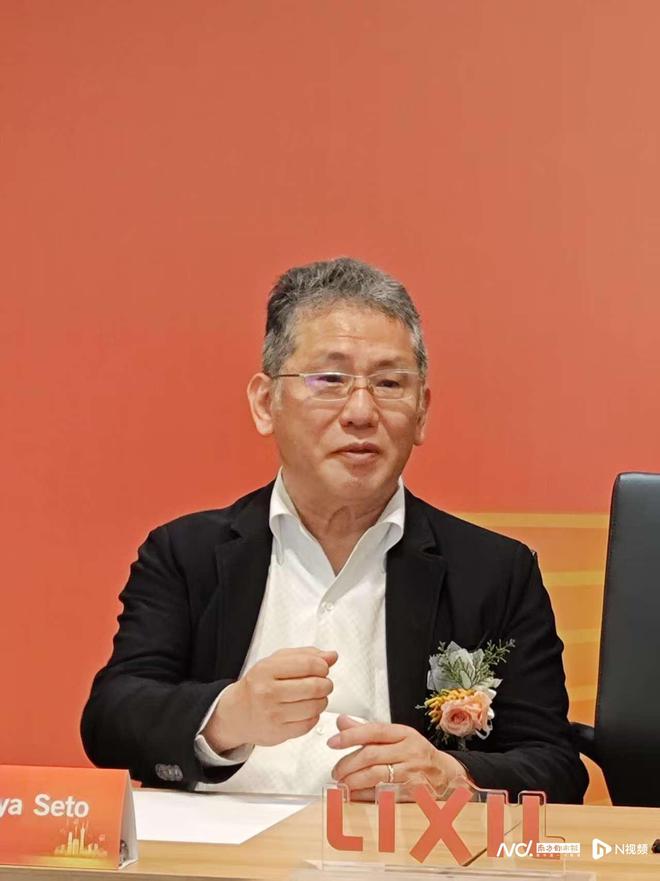
Core Insights - Lixil Group has established an international R&D center in Guangzhou, marking a significant step in enhancing its global R&D system and international collaboration capabilities [1][4][5] - The center spans 1,600 square meters and integrates functions from design and R&D to supply chain management, directly serving global brand technology development [4][5] - The investment reflects a broader trend of foreign companies shifting towards high-value chain R&D in Guangdong, with actual foreign investment in the province increasing by 8.9% year-on-year in the first four months of the year [4][6] Company Strategy - Lixil Group's CEO, Setsu Shinaya, emphasized the importance of Guangzhou's complete industry ecosystem and the availability of electronic components and rapid market validation for smart product development [5][7] - The Guangzhou center will focus on global markets and non-ceramic products, differentiating itself from the Shanghai center, which targets the Asian market and ceramic technology [8] - The center aims to leverage consumer insights and product innovation to meet the rapidly changing demands of Chinese consumers, who are increasingly willing to try new products [9][14] Market Dynamics - The Chinese smart toilet market has seen a twelvefold growth over the past decade, with expectations to reach 12 million units by 2025, indicating a significant opportunity for innovation [9] - Despite challenges such as tariff friction, Lixil Group maintains confidence in the Chinese market, viewing it as the largest consumer market globally [11] - The company plans to enhance its competitive edge in the high-end segment through differentiated value propositions and a multi-brand strategy [13]