技术协同

Search documents
通威“抄底”青海丽豪 光伏行业并购潮来了
Guo Ji Jin Rong Bao· 2026-02-25 13:58
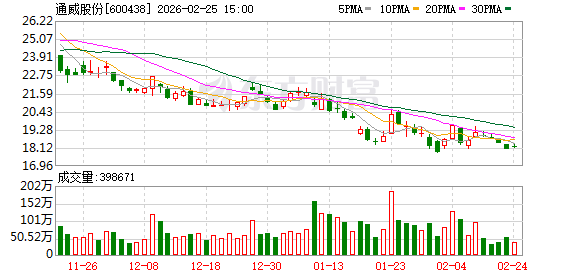
Core Viewpoint - Despite an expected net loss of approximately 9 to 10 billion yuan in 2025, Tongwei Co., Ltd. is planning a significant acquisition in 2026, aiming to enhance its competitive position in the photovoltaic industry through the purchase of Qinghai Lihua Qingneng Co., Ltd. [2] Group 1: Acquisition Details - Tongwei announced plans to acquire 100% of Qinghai Lihua's shares through a combination of issuing shares and cash payments, with the stock and convertible bonds suspended from trading starting February 25, 2026 [2][4] - If successful, this acquisition would mark the first large-scale merger in the photovoltaic sector for 2026, following TCL Zhonghuan's acquisition in January [4] - The acquisition is viewed as a strategic move to consolidate resources and enhance efficiency within the industry, moving away from mere scale expansion [4] Group 2: Market Position and Capacity - Qinghai Lihua, established in 2021, specializes in the research, production, and sales of high-purity crystalline silicon and electronic-grade polysilicon, with a production capacity of over 200,000 tons by the end of 2025 [5] - Tongwei currently holds a high-purity crystalline silicon production capacity of over 900,000 tons, with a global market share of approximately 30%. The acquisition would increase its total capacity to 1,110,000 tons and market share to around 34% [5][6] - This move is expected to solidify Tongwei's position as the industry leader and enhance its market influence in pricing and technology collaboration [5] Group 3: Strategic Rationale - The acquisition aims to achieve coordinated development across multiple bases, reducing logistics and operational costs by optimizing the production network in western and southwestern China [6] - Qinghai Lihua's use of "green electricity" in production and its high-purity electronic-grade polysilicon could provide Tongwei with a competitive edge in the high-end semiconductor materials market [6] Group 4: Financial Considerations and Risks - Tongwei is projected to incur a loss of 9 to 10 billion yuan in 2025, raising questions about its financial capacity to complete the acquisition, especially given its high debt ratio of 71.95% and total liabilities of approximately 144.86 billion yuan [7] - The specific transaction amount for the acquisition has not been disclosed, but historical estimates suggest Qinghai Lihua was valued at around 13.85 billion yuan in 2022 [7][8] - Previous acquisition attempts by Tongwei have faced challenges, indicating potential hurdles in this transaction as well [8]


佛山网站建设如何选择合适的技术栈
Sou Hu Cai Jing· 2026-02-15 01:14
Group 1 - The core idea emphasizes the importance of carefully selecting a technology stack for website development in the Foshan region, as it directly impacts performance, cost, maintenance, and scalability [1] Group 2 - Understanding the collaborative structure of the technology stack involves recognizing the interplay between front-end and back-end components, which affects data flow and functionality [2] - The front-end is responsible for user interaction, while the back-end handles business logic and data storage, with databases playing a crucial role in structured data management [2] Group 3 - Evaluating project requirements is essential for mapping these needs to the collaborative demands of the technology stack components, particularly for manufacturing websites that require clear information presentation and fast loading speeds [3] - For B2B e-commerce platforms, the focus shifts to data consistency and high concurrency capabilities, necessitating careful consideration of back-end frameworks and database performance [3] Group 4 - Front-end technology selection must consider device diversity, interaction complexity, and development efficiency, with frameworks like React and Vue offering different collaborative advantages [4] - The choice of front-end tools should align with the main framework to optimize development processes and product performance [4] Group 5 - Back-end technology is central to business logic, and its collaboration with databases is critical, with different programming languages and frameworks offering various performance characteristics [7] - The selection of databases should align with data models and access patterns, ensuring efficient and secure operations [7] Group 6 - Long-term collaboration in deployment, operations, and scalability is vital, involving server configuration, continuous integration, and monitoring systems [9] - Containerization can enhance deployment consistency, while microservices architecture offers flexibility for independent module expansion [9] Group 7 - Local ecosystem considerations are crucial for technology stack selection, focusing on available development resources and community support to mitigate technical risks [10] - Choosing widely supported technologies can facilitate quicker responses to market changes and ongoing project adjustments [10] Group 8 - The conclusion highlights that selecting a technology stack for Foshan website projects should create a cohesive system that aligns with unique project needs, team capabilities, and long-term goals [10] - Decisions should be based on a systematic analysis of how components work together rather than isolated technical comparisons [10]
新时达:海尔拥有全球供应链、数字化营销、精益管理、品牌资源等各项能力
Zheng Quan Ri Bao· 2026-02-13 12:44
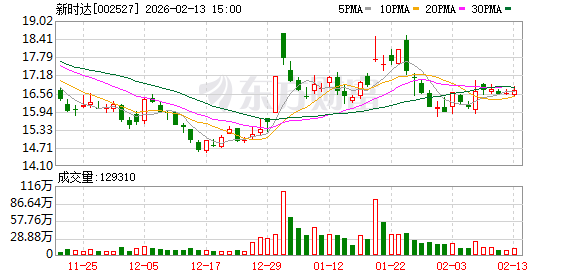
Core Viewpoint - New Times is leveraging its partnership with Haier to enhance asset management efficiency and strengthen core technological barriers while seizing opportunities in emerging markets [2] Group 1: Collaboration and Synergy - New Times is focusing on supply chain management, technological collaboration, market and channel expansion, and operational management to accelerate synergy effects [2] - Haier's capabilities in global supply chain, digital marketing, lean management, and brand resources are being utilized to support New Times [2]


大禹节水:公司将持续与慧图科技在技术、项目、市场领域深度协同
Zheng Quan Ri Bao Wang· 2026-02-11 11:13
Core Viewpoint - Dayu Water-saving (300021) aims to enhance collaboration with Huitu Technology in technology, projects, and market areas, focusing on technological innovation and resource optimization to build a high-growth, high-barrier business system [1] Group 1 - The company will continue to deepen collaboration with Huitu Technology [1] - The focus will be on technological innovation and resource optimization [1] - The goal is to create a business system characterized by high growth and high barriers [1]

赛伍技术:公司与今蓝纳米均在高分子材料技术、精密涂布、光学设计等领域有技术布局
Zheng Quan Ri Bao Wang· 2026-02-10 13:11
Core Viewpoint - The acquisition by Saiwu Technology (603212) aims to enhance its capabilities in the automotive materials sector and consumer business, leveraging the Jinlan Nano technology platform and product matrix [1] Group 1: Acquisition Benefits - The acquisition will allow the company to enter high-barrier automotive pre-installation and post-installation sales channels, addressing gaps in its consumer business [1] - Both companies have technological synergies in polymer materials, precision coating, and optical design, which can be fully utilized [1] - The lithium battery and new energy materials sectors of the company overlap with Jinlan Nano's downstream customer channels, enabling cross-marketing and category expansion [1] Group 2: Strategic Implications - This acquisition will support the company's business development and market expansion in automotive materials and consumer materials [1] - It is expected to positively impact the company's technological research and development, as well as customer acquisition efforts [1] - The move is aimed at transforming the company into a platform-based enterprise across multiple application fields, enhancing its risk resistance and growth potential [1]

半导体材料龙头打响锂电并购第一枪
高工锂电· 2026-02-02 12:21
Core Viewpoint - The acquisition of 70% stake in Shenzhen Haofei New Materials Co., Ltd. by Dinglong Co., Ltd. for 630 million yuan marks a significant event as it is the first acquisition of a lithium battery auxiliary material company by a semiconductor materials listed company, highlighting the integration of semiconductor and lithium battery industries as key growth drivers in the national economy [2][8]. Group 1: Acquisition Details - Dinglong Co., Ltd. announced the acquisition of Haofei New Materials, valuing the company at 900 million yuan, which signifies the recognition of the value in the lithium battery auxiliary materials sector [2][8]. - The acquisition is aimed at entering the high-growth new energy materials sector, leveraging platform advantages for resource integration, and optimizing financial structure to enhance profitability [4][6]. Group 2: Company Profiles - Dinglong Co., Ltd. is a leading domestic semiconductor materials company, primarily focusing on CMP polishing pads, and has established a strong influence in CMP polishing liquids and advanced packaging materials [2][3]. - Haofei New Materials is a top domestic player in lithium battery dispersants, with a client base that includes major domestic and international new energy manufacturers [4]. Group 3: Market Potential - The market for lithium battery binders and dispersants in China is projected to exceed 10 billion yuan in 2025, with expectations to surpass 20 billion yuan by 2030, indicating a compound annual growth rate of over 15% [8]. - The acquisition is seen as a crucial attempt for cross-industry integration in high-end materials, with the potential for synergistic effects that could lead to greater combined value [8]. Group 4: Technical Synergies - There are complementary technologies between Dinglong and Haofei, such as Dinglong's polymer synthesis and interface modification techniques, which can enhance Haofei's product offerings in the semiconductor field [5]. - High-purity alumina, a core abrasive in Dinglong's CMP polishing liquids, is also a key raw material for lithium battery auxiliary materials, suggesting potential for resource integration post-acquisition [5].

观想科技借重组打响保壳战?收购标的业绩波动营收不足2亿赛道竞争激烈
Xin Lang Cai Jing· 2026-01-09 09:43
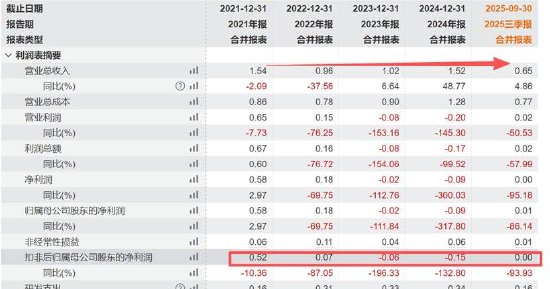
Core Viewpoint - Guanshang Technology has not seen significant revenue growth since its listing, with Q3 revenue falling short of 100 million yuan. The company's ongoing weak performance raises questions about its ability to restructure and avoid delisting under new regulations, especially given the modest revenue scale and volatility of the acquisition target [1][3][12]. Group 1: Company Performance - Since its listing in December 2021, Guanshang Technology's revenue has consistently remained below 300 million yuan, with a significant drop in profitability reported in Q3. The company's revenue for the first three quarters was 65.36 million yuan, a year-on-year increase of 4.86%, while the net profit attributable to shareholders was 763,000 yuan, down 86.14% year-on-year [3][14]. - The company's financial performance indicates a lack of strong revenue generation capability, as evidenced by its fluctuating net profit, which has hovered around the breakeven point [3][14]. Group 2: Acquisition Details - Guanshang Technology plans to acquire 100% of Liao Jing Electronics through a combination of issuing shares and cash payments, while also raising supporting funds from no more than 35 specific investors. This transaction constitutes a major asset restructuring [1][12][19]. - The acquisition target, Liao Jing Electronics, has reported revenues of 147 million yuan, 114 million yuan, and 132 million yuan for the years 2023 to 2025 Q3, with net profits of 54.90 million yuan, 25.51 million yuan, and 40.57 million yuan respectively. Although the revenue scale is relatively small, it exceeds 100 million yuan, which may help mitigate delisting risks for Guanshang Technology [5][16]. Group 3: Industry Context - The military semiconductor industry in China is experiencing significant growth, supported by national strategies for domestic substitution and improvements in industry certification systems. However, the sector is also facing increasing competition from new entrants, intensifying market dynamics, and a trend towards homogenization in the mid-to-low end market [7][18]. - If the acquisition target fails to keep pace with market trends and maintain a competitive edge in core supporting areas, it may face challenges in an increasingly competitive environment [7][18]. Group 4: Strategic Intent - The acquisition aims to create a synergy between software and hardware technologies, enhancing the overall quality of Guanshang Technology. The company has established a strong technical foundation in areas such as AI-enabled systems and digital twin technology, which will complement the hardware advantages of the acquisition target [10][20]. - The integration of Liao Jing Electronics' semiconductor expertise with Guanshang Technology's existing capabilities is expected to improve product reliability and operational stability, thereby enhancing the company's competitive position in the defense information sector [21].

威高血净拟85.11亿元“内购”威高普瑞 拓展布局医药包材赛道
Zheng Quan Ri Bao Wang· 2026-01-06 11:28
Core Viewpoint - The major asset restructuring plan by Shandong Weigao Blood Purification Products Co., Ltd. aims to acquire 100% equity of Weigao Puri Pharmaceutical Packaging Co., Ltd. for 8.511 billion yuan, expanding into the pharmaceutical packaging sector while remaining under the same control of Chen Xueli [1][2]. Group 1: Acquisition Details - The assessed value of Weigao Puri's 100% equity is 8.511 billion yuan, representing an increase of approximately 192.90% over its book net assets [2]. - The transaction will be fully paid through the issuance of shares at a price of 31.29 yuan per share, making Weigao Puri a wholly-owned subsidiary post-acquisition [2]. - The transaction involves entities controlled by Chen Xueli, ensuring the integration of resources within the Weigao system [2]. Group 2: Performance Commitments - The sellers have made clear performance commitments, with Weigao Puri's net profits for 2026 to 2028 set to be no less than approximately 640 million yuan, 720 million yuan, and 784 million yuan respectively [2]. - These profit commitments exceed Weigao Blood Purification's projected net profit of 449 million yuan for the entire year of 2024, indicating a potential significant enhancement to the company's performance [2]. Group 3: Strategic Intent - The acquisition is driven by Weigao Puri's strong market position in the pre-filled drug delivery system and the potential for synergy in biopharmaceutical filter business [3]. - The company aims to "integrate quality assets, strengthen the listed company," and seize opportunities in the biopharmaceutical industry [3]. Group 4: Technological and Market Synergy - Weigao Blood Purification's core advantage lies in its hollow fiber membrane technology, which has been developed for biopharmaceutical filters [4]. - Weigao Puri holds a leading position in the domestic pre-filled syringe market, with over 50% market share from 2022 to 2024, and has established long-term partnerships with numerous well-known biopharmaceutical companies [4]. - The acquisition is expected to facilitate a transition from a blood purification product supplier to a comprehensive blood treatment solution provider, enhancing sales channel development and customer resource acquisition [4]. Group 5: Industry Implications - The integration of pharmaceutical packaging is crucial for controlling product quality and supply chain stability, creating a more complete industrial ecosystem [5]. - The internal integration is anticipated to lower procurement costs, improve production and logistics efficiency, and foster technological exchange and innovation [5]. - The restructuring will establish a dual-driven business model of "blood purification + pharmaceutical packaging," aiming to tap into the biopharmaceutical filter market, which is currently dominated by foreign firms [6].
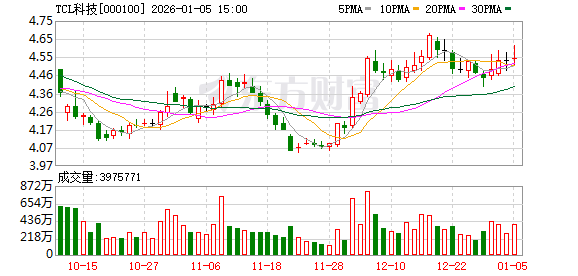
李东生谈TCL进韩国:既是挑战也是“反向促进”
2 1 Shi Ji Jing Ji Bao Dao· 2026-01-05 13:40
Group 1 - The core viewpoint emphasizes the need for Chinese and Korean companies to seek mutually beneficial cooperation in the industrial chain and technology sectors to enhance global competitiveness [1] - TCL's founder and chairman, Li Dongsheng, highlighted the long-standing and significant cooperation between TCL and Korean enterprises, despite competition in the consumer electronics market [1] - Li stressed the importance of moving beyond simple product competition to explore potential in industrial chain collaboration and technological synergy, especially in the face of global economic challenges [1] Group 2 - Li acknowledged the high market entry barriers in South Korea, a stronghold for global consumer electronics with leading companies like Samsung and LG, making TCL's entry significant [1] - He described the competition in the Korean market as healthy, suggesting that it would drive TCL to pursue excellence and ultimately benefit both parties [1] - Looking ahead, Li believes that the China-Korea Free Trade Agreement provides a solid foundation for cooperation, with geographical proximity offering efficiency and cost advantages [1][2]

21现场|李东生谈TCL进韩国:既是挑战也是“反向促进”
2 1 Shi Ji Jing Ji Bao Dao· 2026-01-05 13:33
Core Viewpoint - The founder and chairman of TCL, Li Dongsheng, emphasized the need for Chinese and Korean companies to seek mutually beneficial cooperation in the industrial chain and technology sectors to enhance global competitiveness [2]. Group 1: Cooperation and Competition - TCL has a long-standing and substantial cooperation history with Korean companies, despite competition in the consumer electronics market [2]. - Li Dongsheng highlighted the importance of moving beyond simple product competition to explore potential in industrial chain collaboration and technological synergy [2]. - The entry of TCL into the Korean market is seen as a significant development, given the high market entry barriers and the dominance of local brands like Samsung and LG [2]. Group 2: Future of China-Korea Economic Relations - The China-Korea Free Trade Agreement provides a solid foundation for cooperation between the two countries' enterprises [2]. - Geographical proximity offers efficiency and cost advantages for collaboration [2]. - Li Dongsheng expressed the expectation for broader cooperation with Korean partners to create shared value and achieve mutual development [3]. Group 3: Forum Insights - The China-Korea Business Forum, co-hosted by the China Council for the Promotion of International Trade and the Korea Chamber of Commerce and Industry, attracted over 400 participants from both countries [3]. - Key discussion topics included manufacturing innovation, supply chain cooperation, new consumer markets, and service industry collaboration [3].