智能终端

Search documents
比亚迪电子再跌超6% 去年下半年业绩逊预期 多家机构下调目标价
Zhi Tong Cai Jing· 2026-03-31 15:44
Group 1 - The core viewpoint of the news is that BYD Electronics reported a revenue of RMB 179.48 billion for the fiscal year 2025, reflecting a year-on-year increase of 1.22%, while the profit attributable to the parent company decreased by 17.61% to RMB 3.515 billion [1] - Huatai Securities attributes the company's underperformance to changes in demand for certain models from major clients, leading to a 17.7% decline in revenue from the more profitable components business [1] - Looking ahead to 2026, Huatai Securities believes that the growth in server systems and liquid cooling, along with the expansion of overseas automotive sales, may offset the temporary pressure on smart terminal sales, with expectations for a return to rapid growth by 2027 [1] Group 2 - Bank of America noted that BYD Electronics' performance in the second half of last year was below expectations, with net profit dropping 35% to RMB 1.8 billion, which was 34% and 37% lower than their and market forecasts, respectively [1] - The bank has revised its earnings forecasts for BYD Electronics for 2026 and 2027 down by 20% to 21%, reflecting pressure on the gross margin of the consumer electronics business, and has lowered the target price from HKD 38 to HKD 31.5 [1] - Credit Lyonnais has also reduced its earnings forecasts for 2026 and 2027 by 34% and 39%, respectively, and has adjusted the target price from HKD 48 to HKD 33.3 [1]

比亚迪电子:AI 服务器及汽车驱动 2026 增长-20260331
HTSC· 2026-03-31 10:40
Investment Rating - The report maintains a "Buy" rating for the company with a target price of HKD 38.00 [6][5]. Core Insights - The company reported FY25 revenue of RMB 179.5 billion, a year-on-year increase of 1.2%, which was below Bloomberg consensus expectations of 3.0%. The net profit attributable to shareholders was approximately RMB 3.515 billion, down 17.6% year-on-year, also below market expectations [1][5]. - The company has adjusted its disclosure to separately report its AI computing infrastructure business, which generated revenue of RMB 943 million in FY25, a year-on-year increase of 31.7%. The company aims for this segment to reach several billion RMB in revenue by 2026 [1][3]. - The electric vehicle segment saw revenue growth of 27.7% year-on-year, driven by increased sales of the parent company's new energy vehicles and higher penetration of intelligent features [1][4]. Summary by Relevant Sections Financial Performance - FY25 revenue was RMB 179.5 billion, with a net profit of RMB 3.515 billion. The revenue growth was primarily impacted by changes in demand from major clients, leading to a 17.7% decline in the revenue of the more profitable components business [1][5]. - The company forecasts revenue for FY26 to be RMB 178.5 billion, with a slight decline expected in the smart terminal business due to storage chip price increases [2][9]. AI Computing Infrastructure - The AI computing infrastructure segment is expected to be a major growth driver, with a revenue target of several billion RMB for 2026. The company has begun small-scale production of several liquid cooling products that have passed certification [3][4]. New Energy Vehicles - The new energy vehicle segment's revenue reached approximately RMB 27 billion in FY25, with significant growth in intelligent driving systems and thermal management products. The company plans to expand its overseas client base and participate in fast-charging projects [4][5]. Profit Forecast and Valuation - The company is projected to achieve net profits of RMB 3.544 billion, RMB 4.133 billion, and RMB 4.783 billion for the years 2026, 2027, and 2028, respectively. The target price of HKD 38.00 reflects a premium based on the company's advantages across the AI cloud and smart terminal value chain [5][6].
比亚迪电子(00285):AI服务器及汽车驱动2026增长
HTSC· 2026-03-31 07:41
Investment Rating - The report maintains a "Buy" rating for the company with a target price of HKD 38.00 [6][5]. Core Insights - The company reported FY25 revenue of RMB 179.5 billion, a year-on-year increase of 1.2%, which was below Bloomberg consensus expectations of 3.0%. The net profit attributable to shareholders was approximately RMB 3.515 billion, down 17.6% year-on-year, also below market expectations [1][5]. - The company has adjusted its disclosure to separately report its AI computing infrastructure business, which generated revenue of RMB 943 million in FY25, a year-on-year increase of 31.7%. The company aims for this segment to reach several billion RMB in revenue by 2026 [1][3]. - The electric vehicle segment saw revenue growth of 27.7% year-on-year, driven by increased sales of the parent company's new energy vehicles and higher penetration of intelligent features [1][4]. Summary by Relevant Sections Financial Performance - FY25 revenue was RMB 179.5 billion, with a net profit of RMB 3.515 billion. The revenue growth was primarily impacted by changes in demand from major clients, leading to a 17.7% decline in the revenue of the more profitable components business [1][5]. - The company forecasts revenue for FY26 to be RMB 178.5 billion, with a slight decline of 0.5% year-on-year, followed by a projected recovery in FY27 and FY28 [9][18]. AI Computing Infrastructure - The AI computing infrastructure segment is expected to be a significant growth driver, with a target revenue of several billion RMB by 2026. The company has begun small-scale production of several liquid cooling products that have passed certification [3][4]. - The company anticipates that the AI server segment will receive authorization for product manufacturing from major clients in China, contributing to revenue growth [3][4]. New Energy Vehicles - The new energy vehicle segment generated approximately RMB 27 billion in FY25, with a year-on-year growth of 27.7%. The company aims to expand its overseas client base and participate in fast-charging projects [4][5]. - The intelligent driving assistance system has seen significant sales, with over one million units shipped, and the company plans to continue this growth trajectory [4][5]. Valuation and Profit Forecast - The report projects net profits for FY26, FY27, and FY28 to be RMB 3.544 billion, RMB 4.133 billion, and RMB 4.783 billion, respectively, reflecting a recovery in profitability [5][9]. - The target price of HKD 38.00 is based on a 21.5x PE ratio for FY26, which is a premium compared to the industry average of 20.4x, reflecting the company's advantages in the AI and smart terminal sectors [5][13].
中国银行董事长葛海蛟与TCL董事长李东生举行工作会谈
Xin Lang Cai Jing· 2026-03-13 12:50
Group 1 - The meeting between the chairman of Bank of China and the chairman of TCL focused on deepening comprehensive cooperation, highlighting TCL's role as a representative of advanced manufacturing in China [1][3] - The "14th Five-Year Plan" outlines 16 goals for national strength, with manufacturing being the top priority, indicating the strategic importance of the manufacturing sector [1][3] - Bank of China aims to leverage its strengths in key areas such as new displays, semiconductor materials, and the photovoltaic industry chain to support TCL's technological breakthroughs and global expansion [1][3] Group 2 - TCL's chairman expressed gratitude for Bank of China's long-term support and discussed TCL's operational status, industry conditions, and future strategic planning [2][4] - TCL is committed to core industries including smart terminals, semiconductor displays, new energy photovoltaics, and semiconductor materials, focusing on enhancing core capabilities and key technologies [2][4] - The collaboration aims to achieve resource sharing and mutual benefits, enhancing core competitiveness to better serve national strategic needs [2][4]


“十五五”开局年的政策脉络与投资主线
Huafu Securities· 2026-03-06 08:29
Group 1: Macroeconomic Goals - The 2026 GDP growth target is set at "4.5%-5%", marking the lowest range in recent years, reflecting a pragmatic approach amidst complex external and domestic challenges [6] - This shift from a fixed target to a range indicates a focus on high-quality development rather than merely speed, allowing for structural reforms and risk prevention [6] - The CPI target remains around "2%", emphasizing the importance of reasonable price recovery and combating deflationary pressures [6] Group 2: Macroeconomic Policies - The report outlines a "more proactive fiscal policy" with a deficit rate planned at around 4%, and total public budget expenditure reaching 30 trillion yuan for the first time [7][8] - The introduction of long-term special bonds and local government special bonds indicates a clear intention from the central government to increase leverage [7] - Fiscal spending will focus on "investing in people," prioritizing support for consumption, education, healthcare, and elderly care, contrasting with previous infrastructure-focused investments [9] Group 3: Industry Investment Themes - The report emphasizes the "intelligent economy" and the deepening of "Artificial Intelligence+" initiatives, indicating a shift towards comprehensive commercialization of AI applications [11] - Emerging industries such as integrated circuits, aerospace, and biomedicine are highlighted, alongside future industries like nuclear energy and hydrogen energy, which are expected to become new growth drivers [11] - Traditional industries will undergo upgrades and restructuring to alleviate "involution" competition, particularly benefiting sectors like photovoltaics and steel [11] Group 4: New Demand Expansion Strategies - The focus on expanding domestic demand has shifted towards stimulating residents' consumption, with significant policies aimed at housing support for young families [12] - The report proposes a plan to increase residents' income, particularly through enhancing property income, which aligns with broader capital market reforms [12] Group 5: Investment Strategies - The macro environment of range control and target management is expected to reduce market uncertainty, maintaining a medium to high risk appetite [15] - Three main investment themes are suggested: 1. Intelligent economy focusing on AI and related infrastructure [16] 2. Future energy and materials, particularly in nuclear and hydrogen sectors [16] 3. Consumption and livelihood sectors benefiting from policies supporting family and elderly care [16]
\十五五\开局年的政策脉络与投资主线:策略点评报告:2026年政府工作报告学习体会
Huafu Securities· 2026-03-06 06:28
Group 1: Macroeconomic Goals - The 2026 GDP growth target is set at "4.5%-5%", marking the lowest range in recent years, reflecting a pragmatic approach amidst complex external and domestic challenges [7] - This shift from a fixed target to a range indicates a focus on high-quality development rather than merely speed, allowing for structural reforms and risk prevention [7] - The CPI target remains around "2%", emphasizing the importance of reasonable price recovery and combating deflationary pressures [7] Group 2: Macroeconomic Policies - The report emphasizes a "more proactive fiscal policy" with a deficit rate planned at around 4%, and total public budget expenditure reaching 30 trillion yuan for the first time [8][9] - The introduction of long-term special bonds and local government special bonds indicates a clear intention from the central government to increase leverage [8] - Fiscal spending will focus on "investing in people," prioritizing support for consumption, education, healthcare, and elderly care, contrasting with previous infrastructure-focused investments [11] Group 3: Industry Investment Themes - The report highlights the deepening of "Artificial Intelligence+" and the push for smart economy development, indicating a shift towards commercializing AI applications [13] - Emerging industries such as integrated circuits, aerospace, and biomedicine are identified as key sectors, alongside future industries like nuclear energy and hydrogen energy, which are expected to drive growth [13] - Traditional industries will undergo upgrades and restructuring to mitigate "involution" competition, which is crucial for improving supply-demand dynamics in sectors like photovoltaics and steel [13] Group 4: Expanding Domestic Demand - The strategy for expanding domestic demand has shifted towards stimulating residents' consumption, with a focus on housing support for newly married and multi-child families [14] - The report proposes a plan to increase residents' income, particularly through property income, which aligns with broader capital market reforms [14] Group 5: Investment Strategy - The macro environment of range control and target management is expected to reduce market uncertainty, maintaining a medium to high risk appetite [19] - Three main investment themes are suggested: 1. Smart economy focusing on AI and related infrastructure [20] 2. Future energy and materials, particularly nuclear and hydrogen energy [20] 3. Consumption and livelihood sectors benefiting from policies supporting family and elderly care [20]
两会调查!数万投资者参与,最看好的投资赛道揭晓,第一名是它!
券商中国· 2026-03-06 04:04
Core Viewpoint - The article highlights the results of a survey conducted during the 2026 National People's Congress, indicating that the AI computing power industry chain is the most favored investment direction among investors, receiving 10,627 votes and a 40.61% approval rate, reflecting a strong consensus in the capital market regarding this sector [3][4]. Group 1: Survey Results - The survey attracted over 26,000 participants, including individual investors, institutional representatives, and professional analysts, showcasing a broad sample structure that reflects current market expectations [3]. - The first tier of industries includes AI computing power (40.61%), robotics and high-end manufacturing (33.73%), and low-altitude economy and commercial aerospace (32.40%), indicating strong confidence in high-end manufacturing and new productive forces [3][4]. - The second tier features semiconductors and storage (27.78%) and AI applications (26.60%), both recognized as core pillars of information technology [4]. - The third tier includes the power export industry chain (15.65%), next-generation energy technologies (15.42%), consumption recovery (13.63%), strategic resources (13.56%), and AI hardware (13.10%), reflecting diverse market expectations and structural layout strategies [4]. Group 2: Policy and Economic Context - The year 2026 marks a critical point for advancing the construction of a technology-driven nation, with a clear path for technological development [6]. - The government work report emphasizes the creation of a new intelligent economy and the expansion of the "Artificial Intelligence +" initiative, promoting the commercialization of AI across key industries [7]. - The report indicates that the AI computing power industry and semiconductor sectors are expected to undergo significant restructuring and growth, becoming core beneficiaries under the technology-driven national strategy [7]. Group 3: Investment Themes - Three main investment themes are highlighted: 1. Technological innovation, driven by the acceleration of economic transformation and the penetration of innovation into industrial sectors [8]. 2. Resource factors, with significant investments in major projects and the impact of geopolitical conflicts on resource prices, alongside the demand for resources driven by AI infrastructure [8]. 3. New consumption supply, focusing on expanding consumption in areas such as smart, digital, green, and emotional sectors, which will create numerous investment opportunities [8]. Group 4: Market Sentiment - Investors express strong confidence in the industrial opportunities presented in the opening year of the 14th Five-Year Plan, with new productive forces being a core consensus [9]. - The survey results provide valuable decision-making references for investors participating in the 2026 National People's Congress market trends [9].


联合解读-政府工作报告
2026-03-06 02:02
Summary of Key Points from the Conference Call Industry or Company Involved - The conference call discusses the 2026 Government Work Report, focusing on macroeconomic policies, fiscal and monetary strategies, and their implications for various industries, including technology, real estate, and energy. Core Points and Arguments Economic Growth and Policy Direction - The GDP growth target for 2026 is set at 4.5% to 5.0%, reflecting a shift towards high-quality development and sustainable growth rather than short-term acceleration [2][3] - The emphasis is on maintaining flexibility in achieving better results while avoiding strong cyclical policies to meet growth targets [2][3] Fiscal and Monetary Policy - The scale of policy financial tools is increased from 500 billion to 800 billion, expected to leverage 10-11 trillion in investments [1][3] - The overall fiscal deficit target is approximately 4%, with a slight increase in government debt by 200-300 billion [3][7] - Structural policies are prioritized to support sustainable growth, focusing on efficiency and targeted investments [3][4] Consumer and Investment Policies - Policies aim to enhance residents' income and improve public services to boost domestic demand sustainably [4][5] - The report emphasizes the importance of new technologies, particularly AI and digital economy sectors, in driving future growth [4][5] Capital Market Implications - The report highlights the need for reforms in the capital market, including enhancing direct financing and investor protection mechanisms [5][6] - A shift in A-share market strategy is noted, moving from a single focus on growth to a dual focus on growth and resource stocks, particularly in light of AI and cyclical recovery [6][7] Real Estate Sector Focus - The real estate policy emphasizes controlling new supply and reducing inventory, with a focus on second-hand housing [15][16] - Long-term strategies include reforming housing provident fund systems and optimizing affordable housing supply [15][16] Energy and Environmental Policies - The report outlines a commitment to carbon neutrality, with a target to reduce carbon emissions per unit of GDP by 17% during the "15th Five-Year Plan" [10][35] - New energy storage technologies and green energy initiatives are highlighted as critical areas for development [9][10] Technology and Innovation - The report emphasizes the importance of AI and digital infrastructure, with a focus on promoting AI applications across various sectors [17][30] - There is a strong push for domestic innovation in semiconductor and AI technology, with significant investment expected in these areas [31][32] Other Important but Possibly Overlooked Content - The report indicates a potential increase in the role of monetary policy in supporting macroeconomic stability, especially as fiscal policy becomes less expansive [8][9] - The focus on green energy and sustainable practices is expected to drive investment in related sectors, including renewable energy and energy efficiency technologies [10][35] - The report suggests that the integration of AI and energy systems could lead to significant changes in energy consumption patterns, with AI data centers projected to account for 5% of total electricity demand [9][10] This summary encapsulates the key points from the conference call, highlighting the strategic directions and implications for various sectors as outlined in the 2026 Government Work Report.
威胜信息2025年营收净利双增 分红回购持续加码
Zheng Quan Ri Bao Wang· 2026-02-28 03:47
Core Insights - The company reported a revenue of 2.978 billion yuan for 2025, representing a year-on-year growth of 8.48%, and a net profit of 666 million yuan, up 5.64% year-on-year [1] - The company aims to focus on internationalization and innovation as core growth engines for 2026, with significant investments in AI data centers [1] Financial Performance - The operating cash flow for 2025 was 516 million yuan, improving by 8.91% year-on-year, indicating a synchronized growth in revenue, profit, and cash flow [2] - The company announced a total cash dividend of 268 million yuan for 2025, with a dividend payout ratio of 40.24% [2] - The company has a contract amount of 4.059 billion yuan at the end of 2025, providing a solid foundation for future performance [2] Shareholder Returns - Since its IPO, the company has returned a total of 1.529 billion yuan to shareholders through cash dividends and share buybacks, which is 250% of the net funds raised during the IPO [3] - The total shareholder return rate has reached 203.27% since the company went public [3] Market Positioning - The company ranked first in the bidding amounts for smart terminals and communication modules in major state grid projects in 2025 [4] - The company is expanding its business in the digital energy sector, focusing on core needs such as power distribution investment and renewable energy integration [4] International Expansion - The company achieved overseas revenue of 564 million yuan in 2025, a year-on-year increase of 33.98%, accounting for 19.06% of its main business revenue [4] - The company has established a presence in regions including Egypt, South Africa, the Middle East, North Africa, and Southeast Asia, with a factory in Indonesia and a technical service center in Saudi Arabia [4] AI Strategy - The company invested 232 million yuan in R&D in 2025, with an average R&D expenditure of over 9% of revenue over the past five years [5] - AI-related product revenue reached 737 million yuan, making up 24% of the main business revenue [5] - The company plans to focus on AI data centers as a core strategic area for growth in 2026 [5][6]

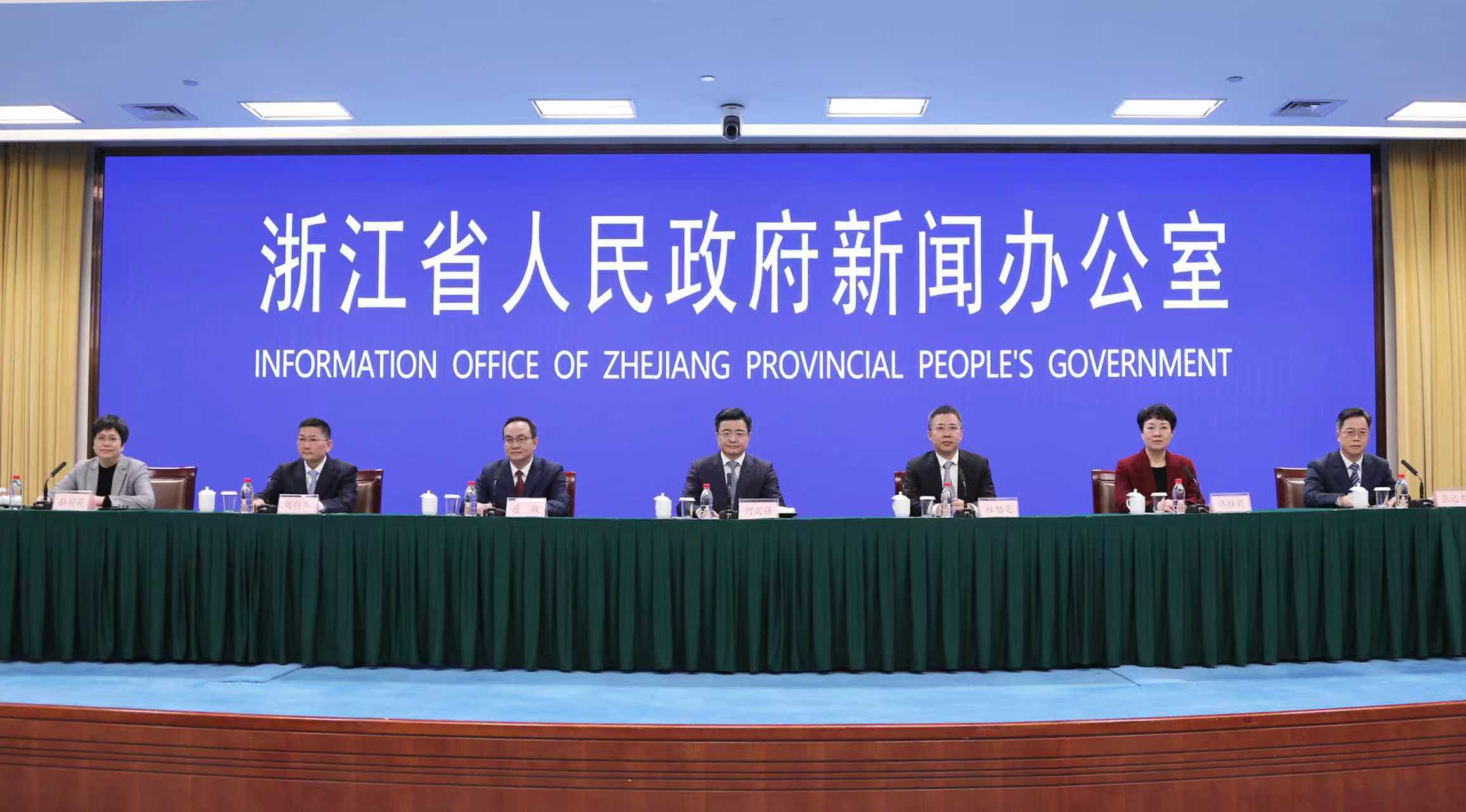
再甩千亿“政策包”,浙江all in科技
2 1 Shi Ji Jing Ji Bao Dao· 2026-02-26 12:32
Core Viewpoint - Zhejiang Province emphasizes enterprise-led innovation as a key strategy for technological advancement, distinguishing itself from other regions that focus on different aspects of innovation [12][8]. Economic Policy Framework - The 2026 "8+4" economic policy system includes eight key policy packages and four factor guarantee lists, marking the fifth year of this initiative [2]. - The total provincial funding for 2026 is set at 105.38 billion yuan, an increase of 1.1 billion yuan from the previous year, with all policy packages receiving increased funding [3]. Support for Technological Innovation - Over 20 billion yuan is allocated for supporting technological innovation, focusing on high-level scientific and technological platforms, core technology breakthroughs, and high-level talent cultivation [3][4]. - The policy package for advanced manufacturing includes 16.362 billion yuan aimed at promoting new industrialization and enhancing enterprise innovation capabilities [5]. Integration of Innovation and Industry - The policies stress the deep integration of technological and industrial innovation, with a focus on nurturing new productive forces and supporting enterprises in digital and green transformations [5][4]. - The emphasis on enterprise innovation is rooted in the characteristics of Zhejiang's robust private economy, which plays a crucial role in driving innovation [6][8]. Investment in Human Capital - The province aims to cultivate over 500 outstanding engineers, 100 legal talents, and 2,000 digital technology engineers, highlighting the importance of investing in human resources alongside physical capital [11]. Encouragement of Private Investment - Policies are designed to stimulate private investment in major projects, with a target for private capital to account for at least 80% of certain projects [10]. - The government aims to reduce the financial burden on businesses by over 250 billion yuan and facilitate new loans for small and micro enterprises [11]. Collaborative Innovation Mechanisms - The "315" technology innovation system and "double first-class" talent development initiatives are part of the strategy to enhance collaborative innovation [13]. - The government plans to implement a collaborative problem-solving mechanism involving enterprises, government, and market evaluations to drive innovation [13]. Financial Support for Innovation - The province aims to increase the total R&D investment to 780 billion yuan, with a target R&D intensity of 3.35% [13]. - Financial support mechanisms will be expanded, including a target for technology loans to exceed 4.2 trillion yuan [14]. Regional Collaboration - Zhejiang seeks to leverage its strengths to enhance collaboration within the Yangtze River Delta region, promoting a coordinated innovation ecosystem [15]. - The province aims to establish data platforms for key industrial chains and enhance communication with neighboring regions to facilitate technological advancements [14].