创新药跨境合作

Search documents
中国创新药“出海”势头强劲 年内海外授权总金额突破530亿美元
Zheng Quan Ri Bao· 2026-02-25 15:45
Core Insights - In 2026, China's innovative drug licensing-out transactions are experiencing strong momentum, with 44 licensing events reported by February 25, totaling approximately $31.23 billion in upfront payments and $53.28 billion in total deal value [1] - The trend indicates a shift in China's innovative drug industry from "catching up" to "keeping pace" and even "leading," marking a structural transition from "importing imitation" to "exporting innovation" [1] - The total value of China's innovative drug licensing-out transactions reached a record high of $135.66 billion in 2025, with 157 transactions and $7 billion in upfront payments [1] Group 1 - On January 16, 2026, Xibiman Biotech announced a deal with AstraZeneca for a 50% stake in the development and commercialization rights of C-CAR031 in China [2] - On January 30, 2026, CSPC Pharmaceutical Group signed a strategic R&D cooperation and licensing agreement with AstraZeneca to develop innovative long-acting peptide drugs [2] - On February 8, 2026, Innovent Biologics announced a strategic collaboration with Eli Lilly to advance global R&D of innovative drugs in oncology and immunology, with an upfront payment of $350 million and potential milestone payments of up to $8.5 billion [2] Group 2 - On February 24, 2026, Frontier Biotech announced an exclusive licensing agreement with GlaxoSmithKline (GSK) for two early-stage siRNA products, with an upfront payment of $40 million and potential milestone payments totaling up to $950 million [3] - On February 25, 2026, Dasheng Pharmaceutical announced an exclusive licensing agreement with Slate Medicines for a monoclonal antibody targeting PACAP, excluding Greater China [3] - The overall trend in cross-border cooperation is characterized by faster technological iterations, increased transaction scales, and deeper collaboration models [4] Group 3 - The new collaboration models are evolving from sporadic large projects to a more normalized and platform-based approach, indicating strong industry representation and long-term resilience [4] - Heptares Therapeutics announced a collaboration with Solstice Oncology, including an exclusive licensing and equity cooperation agreement, with an upfront payment exceeding $105 million [5] - The transaction models are shifting from early-stage "selling seedlings" to joint development and regional licensing, reflecting a transition towards quality and value competition in the industry [5]
创新药行业,再迎百亿美元重磅交易
2 1 Shi Ji Jing Ji Bao Dao· 2025-10-22 05:37
Core Insights - The article discusses a significant global strategic collaboration between Innovent Biologics and Takeda Pharmaceutical, focusing on the development of innovative cancer therapies, particularly in the fields of tumor immunology (IO) and antibody-drug conjugates (ADC) [3][4]. Group 1: Collaboration Details - Innovent Biologics will receive an upfront payment of $1.2 billion, including a $100 million premium for strategic equity investment, with potential milestone payments bringing the total deal value to $11.4 billion [4]. - The collaboration involves the joint development of IBI363, a novel PD-1/IL-2α-bias bispecific antibody, with Takeda leading the commercialization efforts in the U.S. and holding rights outside Greater China [3][9]. - Innovent will grant Takeda exclusive rights for IBI343 (CLDN18.2 ADC) outside Greater China and an option for IBI3001 (EGFR/B7H3 ADC) in the same regions [3][11]. Group 2: Market Context - The global oncology drug market is projected to exceed $200 billion, driven by unmet clinical needs and technological advancements, with a compound annual growth rate (CAGR) expected to surpass 20% over the next five years [6][12]. - The shift from the "PD-1 dividend period" to the "next-generation technology-driven period" is highlighted, emphasizing the importance of bispecific antibodies and ADCs in this transition [6][12]. Group 3: Product Insights - IBI363 has shown promising results in early clinical trials for various cancers, including immune-resistant lung cancer and melanoma, and is set to enter pivotal Phase III trials soon [8][10]. - IBI343 is currently undergoing Phase III trials for gastric cancer and has received breakthrough therapy designation from both the NMPA and FDA [10][11]. - IBI3001 is in Phase I trials and targets B7-H3 and EGFR, showcasing multiple anti-tumor mechanisms [11]. Group 4: Industry Trends - The article notes that multinational pharmaceutical companies are under pressure due to patent cliffs, with some facing risk exposures exceeding 20% of their revenues [14][16]. - The collaboration between Innovent and Takeda exemplifies a trend where global pharmaceutical firms seek to partner with innovative Chinese biotech companies to enhance their portfolios and maintain market share [16][17]. - The increasing number of collaborations between Chinese companies and global firms indicates a growing recognition of the value of Chinese innovation in the biopharmaceutical sector [17][18].


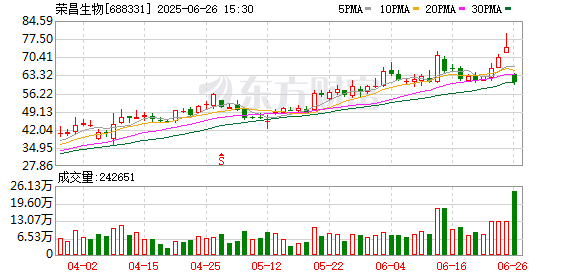
融资1.75亿美元与裁员95%:荣昌生物这次押对了吗?
2 1 Shi Ji Jing Ji Bao Dao· 2025-06-26 08:36
Core Viewpoint - Rongchang Biopharma has entered a significant partnership with Vor Bio, involving a $4.2 billion risk-sharing agreement and a $175 million private investment in public equity (PIPE) deal, aimed at advancing clinical product lines and addressing liquidity issues [2][3][5]. Group 1: Financial Transactions - Rongchang Biopharma will receive $1.25 billion in cash and warrants from Vor Bio, including a $45 million upfront payment and $800 million in warrants, along with potential milestone payments totaling up to $4.1 billion [5][6]. - Vor Bio plans to issue 700 million warrants at a price of $0.25 per share as part of the PIPE, with expected net proceeds to be used for clinical development and operational expenses [2][8]. Group 2: Company Strategies and Challenges - Vor Bio is shifting its focus to autoimmune disease treatments, particularly the drug Tai Itasip, which has received various regulatory recognitions in China and the U.S. [8][9]. - Despite the immediate financial relief from the PIPE, Vor Bio's long-term prospects remain uncertain due to previous operational challenges, including a significant workforce reduction and halted clinical trials [6][10]. Group 3: Market Reactions and Future Outlook - Analysts express caution regarding Vor Bio's ability to execute its clinical and commercialization strategies effectively, given its reduced team size and the need for potential partnerships to enhance market reach [10][11]. - Rongchang Biopharma's financial health is under scrutiny, with a reported net loss of 1.468 billion yuan and a rising debt-to-asset ratio of 63.88%, indicating significant financial pressure [6][7].