
创新资本化

Search documents
研究领军人物告别一线!广发证券全球首席沈明高到龄卸任
券商中国· 2026-02-04 10:30
Core Viewpoint - The retirement of Shen Minggao, a prominent figure in the securities industry, marks a significant transition in the sector, highlighting a trend of influential economists leaving their positions [2][3][4]. Group 1: Retirement Announcement - Shen Minggao's departure from his role as Global Chief Economist at GF Securities was confirmed, effective February 2026, coinciding with his reaching the legal retirement age [2][3]. - Shen has a robust academic and professional background, holding degrees from Nanjing Agricultural University, the Chinese Academy of Social Sciences, and Stanford University, and has held significant positions in both academia and major financial institutions before joining GF Securities in 2017 [3]. Group 2: Industry Trends - The retirement of Shen adds to a wave of departures among influential chief economists in the securities industry, including notable figures from Guotai Junan and Xiangcai Securities [4]. - Shen's retirement reflects broader changes in the industry, as several key personnel have recently stepped down, indicating a potential shift in the landscape of economic research within the sector [4]. Group 3: Contributions and Insights - Before his retirement, Shen actively participated in industry discussions, emphasizing the need for technology finance innovation to transition from pilot projects to scalable models, particularly during the 14th Five-Year Plan period [5]. - He proposed that technology finance should support both "technology industrialization" and "industrial technology" goals, advocating for the concept of "technology capital" that combines funding with industry insight [5]. - In his outlook on industries, Shen identified the "smart manufacturing industry chain" as a potential new pillar of the economy, suggesting it could rival real estate in significance over the next 5-10 years [6].



“智能制造产业链”有望成为新支柱!广发证券沈明高最新发声
券商中国· 2025-11-25 01:48
Core Viewpoint - The core challenge of technological financial innovation is transitioning from singular breakthroughs to scalable development, necessitating a financial ecosystem that can support a modern industrial system and foster globally competitive tech companies [2][4]. Group 1: Challenges and Solutions - The key challenge for technological financial innovation is achieving scalable support for new productive forces, which is critical for the next five years [4]. - Five major challenges include the non-standardization of technology, unprofitability of tech companies, light asset models, high uncertainty, and long cycles, which traditional financial services struggle to address [4][5]. - The concept of "technology capital" is proposed, which should provide additional value such as technological and market understanding alongside financial support [5]. Group 2: Industry Insights - The "smart manufacturing industry chain" is identified as a potential new pillar to replace real estate, with significant spillover effects expected in the next 5-10 years [2][9]. - The need to enhance pricing capabilities for unprofitable companies is emphasized, with a stark contrast noted between the U.S. and China regarding the percentage of unprofitable companies at the time of IPO [9]. Group 3: Future Pathways - Artificial intelligence is defined as a "general technology" leading the fourth industrial revolution, with a critical window for adoption in the next 5-10 years [6][7]. - A "risk-sharing mechanism" is proposed to address unmet investment needs for early-stage tech companies, suggesting that local governments could establish subordinate funds to absorb initial losses [10].
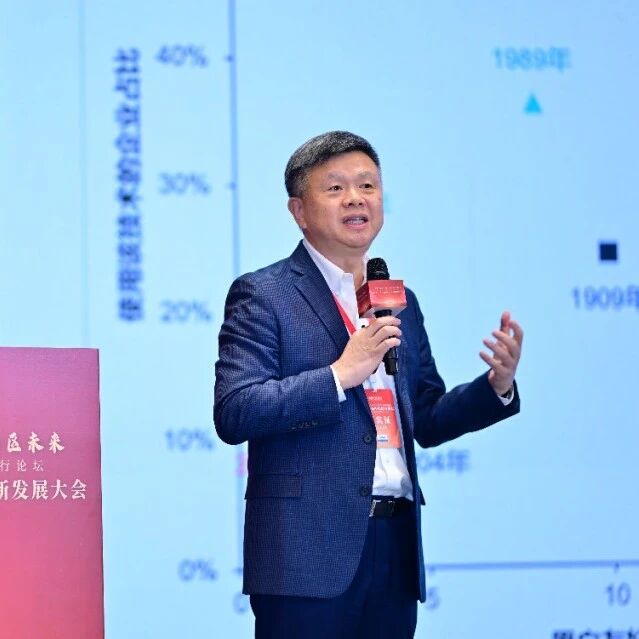
广发证券沈明高:以“科技资本”赋能新质生产力 破解科技金融规模化难题
证券时报· 2025-11-24 00:48
Core Viewpoint - The core challenge of technological financial innovation is transitioning from single-point breakthroughs to scalable development, necessitating the construction of a financial ecosystem that can serve a modern industrial system at scale, thereby nurturing globally competitive tech companies and injecting strong momentum into new productive forces [2]. Summary by Sections Technological Financial Innovation - Emphasis on the need for scaling from "1 to N" in technological financial innovation, with the "14th Five-Year Plan" highlighting many innovative points but lacking replicable models [2]. - The "15th Five-Year Plan" suggests a framework for a modern industrial system, balancing the service of "technological industrialization" and "industrial technologicalization" [2]. Innovation Capitalization - The essence of technological finance is "innovation capitalization," which requires transforming technological innovation into capital returns to support sustainable innovation and iteration [2]. - Five major challenges to achieving innovation capitalization include non-standardization, unprofitability, light asset models, high uncertainty, and long cycles, which traditional financial services struggle to meet [3]. Concept of "Tech Capital" - The concept of "tech capital" is introduced, which should provide additional value such as technological and market understanding alongside financial investment [3]. - "Tech capital" must possess five capabilities: understanding technology, industry, pricing, risk management, and resource allocation [3]. Future Outlook - Artificial intelligence is defined as a "general technology" leading the fourth industrial revolution, with potential for exponential growth in adoption over the next 5-10 years [3]. - The "smart manufacturing industry chain" is expected to become a new pillar of the economy, comparable to real estate, with significant spillover effects [3]. Risk Sharing Mechanism - A focus on establishing a "risk-sharing mechanism" is highlighted as a critical measure to address unmet investment needs in early-stage tech companies [4]. - Recommendations include local governments or private enterprises acting as "subordinate" entities to absorb initial losses, thereby encouraging social capital investment in early-stage and hard technology [5].

广发证券全球首席经济学家沈明高: 以“科技资本”赋能新质生产力破解科技金融规模化难题
Zheng Quan Shi Bao· 2025-11-23 20:48
Core Insights - The core challenge of technological financial innovation is transitioning from singular breakthroughs to scalable development, necessitating a financial ecosystem that can support a modern industrial system and foster globally competitive tech enterprises [1] Group 1: Technological Financial Innovation - Emphasis on the need for scaling from "1 to N" in technological financial innovation, with the "14th Five-Year Plan" highlighting numerous innovative points that have yet to form replicable models [1] - The "15th Five-Year Plan" suggests a framework for a modern industrial system, balancing the service of "technological industrialization" and "industrial technologicalization" [1] Group 2: Innovation Capitalization - The essence of technological finance is "innovation capitalization," which involves converting technological innovation into capital returns to support sustainable innovation and iteration [1] - Five major challenges to achieving innovation capitalization include non-standardization, unprofitability, light asset models, high uncertainty, and long cycles, which traditional financial services struggle to address [2] Group 3: Concept of "Tech Capital" - The concept of "tech capital" is introduced, requiring additional value such as technological and industrial understanding, market comprehension, and risk management alongside financial investment [2] - "Tech capital" must possess five capabilities: understanding technology, industry, pricing, risk management, and resource allocation [2] Group 4: Future Outlook - Artificial intelligence is identified as a "general technology" leading the fourth industrial revolution, with a potential for exponential growth in adoption over the next 5-10 years [3] - The "smart manufacturing industry chain" is projected to become a new pillar of the economy, comparable to real estate, with significant spillover effects [3] Group 5: Risk Sharing Mechanism - The absence of a risk-sharing mechanism is identified as a root cause for unmet investment needs in early-stage tech enterprises, with suggestions for government or private entities to assume a "subordinated" role [3] - Establishing a subordinated fund by local governments could incentivize social capital to invest in early-stage hard technology [4]
广发证券沈明高:科技金融的实质是“创新资本化”
Zheng Quan Shi Bao Wang· 2025-11-18 10:01
Core Viewpoint - The key challenge for technology finance in the next phase is transitioning from point innovations (0 to 1) to scalable and replicable innovations (1 to N), which will create systematic advantages and support the construction of a modern industrial system [1] Group 1: Challenges in Technology Finance - Current technology finance services face five major challenges: non-standardization, unprofitability, light assets, high uncertainty, and long cycles [1] - There is a call for the financial system to implement precise policies that provide "technology capital" which understands technology, knows the industry, is good at pricing, can manage risks, and can allocate resources effectively [1] Group 2: Innovation and Capitalization Cycle - The essence of technology finance is to transform technological innovations into sustainable capital returns, which in turn drives the next round of innovation, forming a virtuous cycle of "innovation-capitalization-reinnovation" [1]