
科技资本

Search documents
研究领军人物告别一线!广发证券全球首席沈明高到龄卸任
券商中国· 2026-02-04 10:30
Core Viewpoint - The retirement of Shen Minggao, a prominent figure in the securities industry, marks a significant transition in the sector, highlighting a trend of influential economists leaving their positions [2][3][4]. Group 1: Retirement Announcement - Shen Minggao's departure from his role as Global Chief Economist at GF Securities was confirmed, effective February 2026, coinciding with his reaching the legal retirement age [2][3]. - Shen has a robust academic and professional background, holding degrees from Nanjing Agricultural University, the Chinese Academy of Social Sciences, and Stanford University, and has held significant positions in both academia and major financial institutions before joining GF Securities in 2017 [3]. Group 2: Industry Trends - The retirement of Shen adds to a wave of departures among influential chief economists in the securities industry, including notable figures from Guotai Junan and Xiangcai Securities [4]. - Shen's retirement reflects broader changes in the industry, as several key personnel have recently stepped down, indicating a potential shift in the landscape of economic research within the sector [4]. Group 3: Contributions and Insights - Before his retirement, Shen actively participated in industry discussions, emphasizing the need for technology finance innovation to transition from pilot projects to scalable models, particularly during the 14th Five-Year Plan period [5]. - He proposed that technology finance should support both "technology industrialization" and "industrial technology" goals, advocating for the concept of "technology capital" that combines funding with industry insight [5]. - In his outlook on industries, Shen identified the "smart manufacturing industry chain" as a potential new pillar of the economy, suggesting it could rival real estate in significance over the next 5-10 years [6].



上海交大上海高级金融学院创院理事长屠光绍:发挥长三角区域优势 打造科技金融协同发展高地
Sou Hu Cai Jing· 2025-12-09 00:08
Core Viewpoint - The transformation from industrial capital to financial capital and now to technological capital is reshaping economic development, with technological capital becoming a significant driving force for both technological and economic advancement [1][3]. Group 1: Capital Accumulation in Technology - Capital is increasingly concentrating in the technology sector, significantly promoting technological development and the emergence of new productive forces [4]. - Investment in technology is becoming a key driver in financial markets, with venture capital flowing into the technology sector. In China, the proportion of venture capital in the technology sector is rising, while in the U.S., it remains high [5]. - By the end of 2024, the market capitalization of the technology sector in A-shares is expected to reach 42.7%, while in U.S. markets, it is projected to be 46.5% [5]. Group 2: Investment Institutions and Financial Tools - The focus of technology financing is shifting from Wall Street to industrial capital, with corporate venture capital and strategic investments from technology leaders reshaping the venture capital landscape [6]. - By 2025, funds led by technology core enterprises are expected to account for 51% of total venture capital, surpassing traditional venture capital for the first time [6]. - The global allocation of insurance funds to technology equity is projected to reach 1.32 trillion yuan, representing 35% of total technology equity financing by 2025 [6]. Group 3: Mergers and Acquisitions - The proportion of mergers and acquisitions in China's technology sector is showing a fluctuating upward trend, reaching 30.4% of total industry mergers by the end of 2024 [6]. - The U.S. continues to dominate the global technology M&A landscape, leading market trends [6]. Group 4: Regional Dynamics - Global technology investment is forming a "three-pole pattern," with capital rapidly concentrating in technology-financially developed regions such as North America, Asia-Pacific, and Europe [7]. - Different economies are developing differentiated technology financing models, with the U.S. excelling in venture capital and the EU focusing on policy-driven financing [7]. Group 5: Empowering Financial Systems - The financial system is undergoing profound changes driven by technology, transitioning from mere technical applications to fundamentally reshaping financial services [8]. - The proportion of technology talent in major financial centers is increasing, reflecting the deepening digital transformation in the financial sector [8]. Group 6: Collaborative Development in the Yangtze River Delta - Anhui, as a key region in the Yangtze River Delta, is encouraged to leverage its regional advantages to foster collaborative development in technology and finance [9]. - Specific recommendations include deepening market reforms to empower technology financial product innovation and enhancing knowledge property financing practices [9][10].
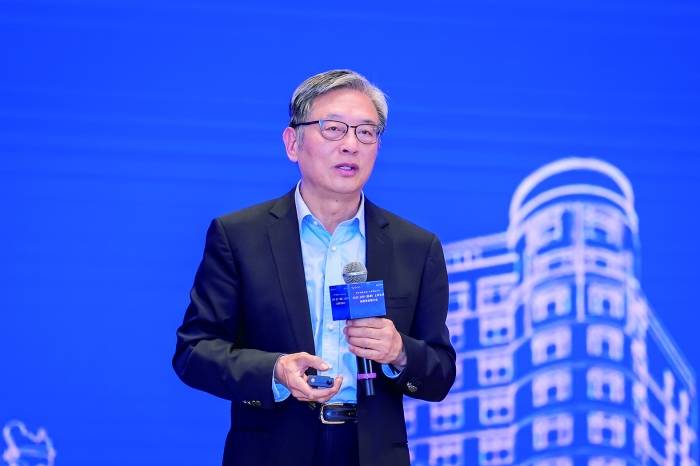
“智能制造产业链”有望成为新支柱!广发证券沈明高最新发声
券商中国· 2025-11-25 01:48
Core Viewpoint - The core challenge of technological financial innovation is transitioning from singular breakthroughs to scalable development, necessitating a financial ecosystem that can support a modern industrial system and foster globally competitive tech companies [2][4]. Group 1: Challenges and Solutions - The key challenge for technological financial innovation is achieving scalable support for new productive forces, which is critical for the next five years [4]. - Five major challenges include the non-standardization of technology, unprofitability of tech companies, light asset models, high uncertainty, and long cycles, which traditional financial services struggle to address [4][5]. - The concept of "technology capital" is proposed, which should provide additional value such as technological and market understanding alongside financial support [5]. Group 2: Industry Insights - The "smart manufacturing industry chain" is identified as a potential new pillar to replace real estate, with significant spillover effects expected in the next 5-10 years [2][9]. - The need to enhance pricing capabilities for unprofitable companies is emphasized, with a stark contrast noted between the U.S. and China regarding the percentage of unprofitable companies at the time of IPO [9]. Group 3: Future Pathways - Artificial intelligence is defined as a "general technology" leading the fourth industrial revolution, with a critical window for adoption in the next 5-10 years [6][7]. - A "risk-sharing mechanism" is proposed to address unmet investment needs for early-stage tech companies, suggesting that local governments could establish subordinate funds to absorb initial losses [10].
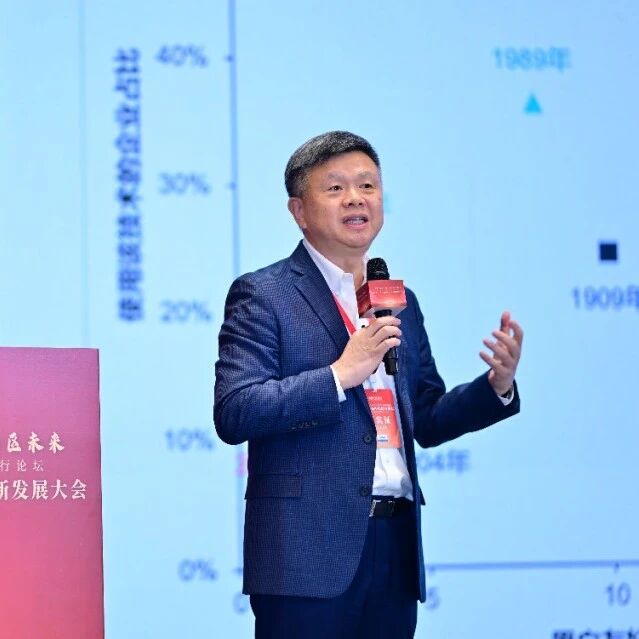
广发证券沈明高:以“科技资本”赋能新质生产力 破解科技金融规模化难题
证券时报· 2025-11-24 00:48
Core Viewpoint - The core challenge of technological financial innovation is transitioning from single-point breakthroughs to scalable development, necessitating the construction of a financial ecosystem that can serve a modern industrial system at scale, thereby nurturing globally competitive tech companies and injecting strong momentum into new productive forces [2]. Summary by Sections Technological Financial Innovation - Emphasis on the need for scaling from "1 to N" in technological financial innovation, with the "14th Five-Year Plan" highlighting many innovative points but lacking replicable models [2]. - The "15th Five-Year Plan" suggests a framework for a modern industrial system, balancing the service of "technological industrialization" and "industrial technologicalization" [2]. Innovation Capitalization - The essence of technological finance is "innovation capitalization," which requires transforming technological innovation into capital returns to support sustainable innovation and iteration [2]. - Five major challenges to achieving innovation capitalization include non-standardization, unprofitability, light asset models, high uncertainty, and long cycles, which traditional financial services struggle to meet [3]. Concept of "Tech Capital" - The concept of "tech capital" is introduced, which should provide additional value such as technological and market understanding alongside financial investment [3]. - "Tech capital" must possess five capabilities: understanding technology, industry, pricing, risk management, and resource allocation [3]. Future Outlook - Artificial intelligence is defined as a "general technology" leading the fourth industrial revolution, with potential for exponential growth in adoption over the next 5-10 years [3]. - The "smart manufacturing industry chain" is expected to become a new pillar of the economy, comparable to real estate, with significant spillover effects [3]. Risk Sharing Mechanism - A focus on establishing a "risk-sharing mechanism" is highlighted as a critical measure to address unmet investment needs in early-stage tech companies [4]. - Recommendations include local governments or private enterprises acting as "subordinate" entities to absorb initial losses, thereby encouraging social capital investment in early-stage and hard technology [5].

广发证券全球首席经济学家沈明高: 以“科技资本”赋能新质生产力 破解科技金融规模化难题
Zheng Quan Shi Bao Wang· 2025-11-23 23:42
Core Insights - The core challenge of technological financial innovation is transitioning from singular breakthroughs to scalable development, necessitating a financial ecosystem that can support a modern industrial system and foster globally competitive tech enterprises [1][2] Group 1: Technological Financial Innovation - Emphasis on the need for scaling from "1 to N" in technological financial innovation, with the "14th Five-Year Plan" highlighting the absence of replicable models for supporting new productive forces [1] - The "15th Five-Year Plan" suggests a framework for a modern industrial system, balancing the service of "technological industrialization" and "industrial technology" [1][2] - The essence of technological finance is "innovation capitalization," which requires converting technological innovation into capital returns to sustain future innovation cycles [1][2] Group 2: Challenges in Innovation Capitalization - Five major challenges to achieving innovation capitalization include non-standardization, unprofitability, light asset models, high uncertainty, and long cycles, which traditional financial services struggle to address [2] - The concept of "technology capital" is introduced, which should provide additional value alongside financial investment, encompassing understanding of technology, industry, pricing, risk management, and resource allocation [2] Group 3: Future Outlook and Recommendations - Artificial intelligence is identified as a "general technology" leading the fourth industrial revolution, with a critical window for adoption in the next 5-10 years [3] - The "smart manufacturing industry chain" is projected to become a new pillar of the economy, potentially rivaling real estate, with significant spillover effects [3] - A recommendation for the Greater Bay Area to establish a "1+N" industrial system centered around the smart manufacturing industry chain [3] Group 4: Risk Sharing Mechanism - The absence of a risk-sharing mechanism is identified as a barrier to meeting the investment needs of early-stage tech enterprises [3][4] - Suggestions include local governments establishing subordinate funds to absorb initial losses, thereby encouraging social capital to invest in early-stage and hard technology ventures [4]
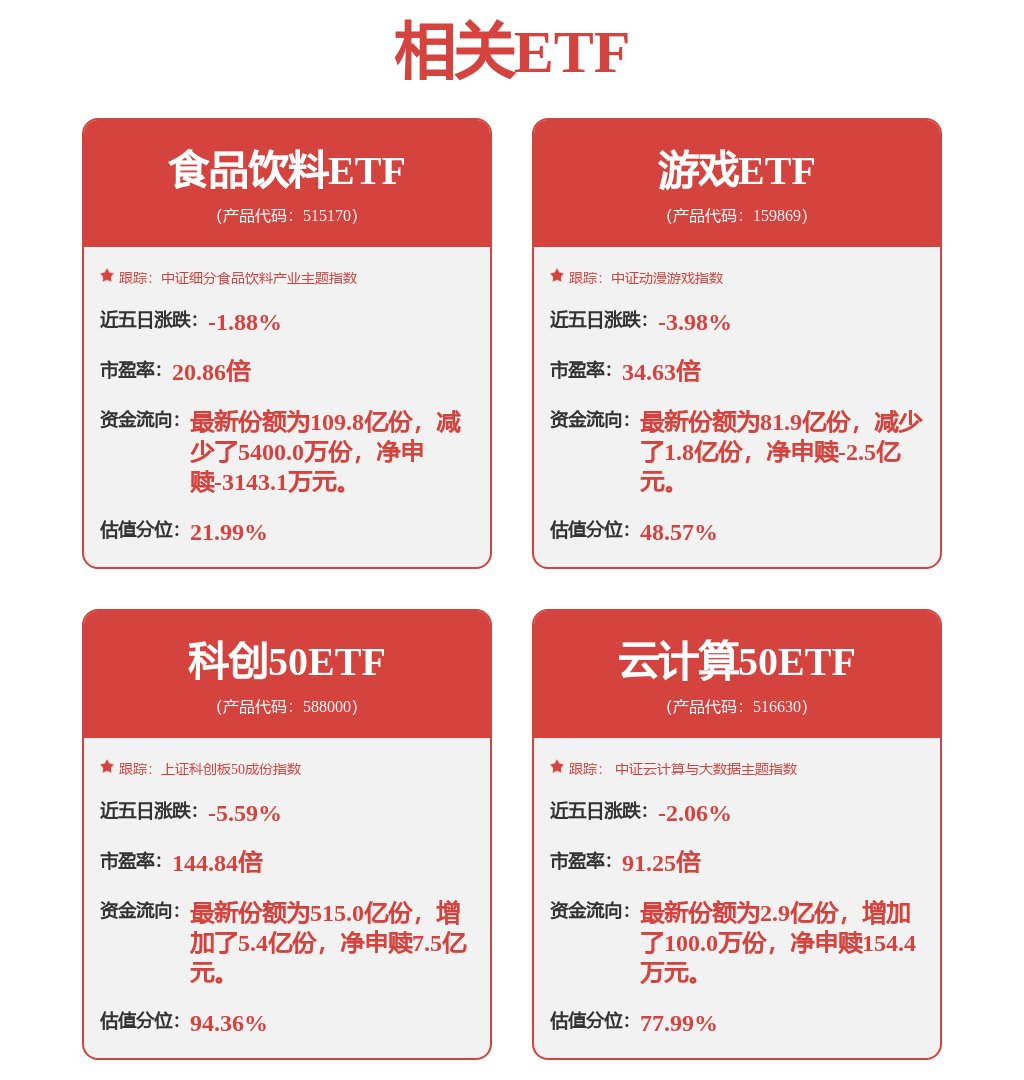
广发证券全球首席经济学家沈明高: 以“科技资本”赋能新质生产力破解科技金融规模化难题
Zheng Quan Shi Bao· 2025-11-23 20:48
Core Insights - The core challenge of technological financial innovation is transitioning from singular breakthroughs to scalable development, necessitating a financial ecosystem that can support a modern industrial system and foster globally competitive tech enterprises [1] Group 1: Technological Financial Innovation - Emphasis on the need for scaling from "1 to N" in technological financial innovation, with the "14th Five-Year Plan" highlighting numerous innovative points that have yet to form replicable models [1] - The "15th Five-Year Plan" suggests a framework for a modern industrial system, balancing the service of "technological industrialization" and "industrial technologicalization" [1] Group 2: Innovation Capitalization - The essence of technological finance is "innovation capitalization," which involves converting technological innovation into capital returns to support sustainable innovation and iteration [1] - Five major challenges to achieving innovation capitalization include non-standardization, unprofitability, light asset models, high uncertainty, and long cycles, which traditional financial services struggle to address [2] Group 3: Concept of "Tech Capital" - The concept of "tech capital" is introduced, requiring additional value such as technological and industrial understanding, market comprehension, and risk management alongside financial investment [2] - "Tech capital" must possess five capabilities: understanding technology, industry, pricing, risk management, and resource allocation [2] Group 4: Future Outlook - Artificial intelligence is identified as a "general technology" leading the fourth industrial revolution, with a potential for exponential growth in adoption over the next 5-10 years [3] - The "smart manufacturing industry chain" is projected to become a new pillar of the economy, comparable to real estate, with significant spillover effects [3] Group 5: Risk Sharing Mechanism - The absence of a risk-sharing mechanism is identified as a root cause for unmet investment needs in early-stage tech enterprises, with suggestions for government or private entities to assume a "subordinated" role [3] - Establishing a subordinated fund by local governments could incentivize social capital to invest in early-stage hard technology [4]
马斯克“疯狂出招”:萝莉岛风云背后的美政坛“神仙打架”
Sou Hu Cai Jing· 2025-07-13 23:44
Group 1 - The public conflict between Musk and Trump has attracted global attention, revealing deeper political tensions and power struggles [1] - Musk has threatened to expose a scandal involving Trump, particularly related to the Epstein case, which has intensified political discourse [1][3] - Musk's newly founded political party, the "American Party," aims to prioritize the public release of documents related to the Epstein case, causing significant political upheaval [1][3] Group 2 - Epstein's connections to high-profile individuals in American politics and business have raised concerns about corruption and power dynamics [3] - The relationship between Trump and Epstein dates back to the 1990s, with both having participated in social events together, indicating a close association [7] - The ongoing feud between Musk and Trump is seen as a clash between traditional political forces and emerging tech capital interests, with Musk representing a new political voice [9]

深度解读|马斯克建“美国党”背后三大推手
Xin Hua She· 2025-07-11 13:36
Core Viewpoint - Elon Musk's proposal to establish a new political party, the "American Party," reflects deep-seated contradictions within American society and politics, driven by his desire to protect his technological empire and respond to the evolving political landscape [2][8]. Group 1: Conflict of Interests - The immediate catalyst for Musk's initiative is the "Big and Beautiful" bill promoted by Trump, which eliminates tax incentives for electric vehicle purchases, adversely affecting Tesla [3]. - This conflict represents a broader struggle between traditional industries and emerging tech capital, highlighting the tension between MAGA supporters and tech elites [3]. - Musk's establishment of the "American Party" signals the emergence of a new interest group in American political dynamics, representing the tech-industrial complex [3]. Group 2: Conflict of Systems - Musk's involvement stems from his understanding of the complexities of the American electoral system, which he believes he can navigate to become a disruptive force [5]. - The electoral system's fragmentation and gerrymandering have led to increased political polarization, making it difficult for third-party candidates to gain traction [5]. - Musk envisions that the "American Party" could gradually secure seats in the House of Representatives, thereby influencing government decisions to protect his interests [5]. Group 3: Conflict over National Debt - The "Big and Beautiful" bill also raises concerns about the escalating U.S. national debt, which Musk views as a significant threat to economic stability and innovation [6][7]. - Musk argues that unchecked debt expansion undermines U.S. competitiveness and jeopardizes funding for critical sectors like aerospace and renewable energy, which are vital to his business interests [7]. - The national debt has become a central issue in American political discourse, with differing views on fiscal responsibility between Democrats and Republicans [7][8].
