
智能制造产业链

Search documents
研究领军人物告别一线!广发证券全球首席沈明高到龄卸任
券商中国· 2026-02-04 10:30
Core Viewpoint - The retirement of Shen Minggao, a prominent figure in the securities industry, marks a significant transition in the sector, highlighting a trend of influential economists leaving their positions [2][3][4]. Group 1: Retirement Announcement - Shen Minggao's departure from his role as Global Chief Economist at GF Securities was confirmed, effective February 2026, coinciding with his reaching the legal retirement age [2][3]. - Shen has a robust academic and professional background, holding degrees from Nanjing Agricultural University, the Chinese Academy of Social Sciences, and Stanford University, and has held significant positions in both academia and major financial institutions before joining GF Securities in 2017 [3]. Group 2: Industry Trends - The retirement of Shen adds to a wave of departures among influential chief economists in the securities industry, including notable figures from Guotai Junan and Xiangcai Securities [4]. - Shen's retirement reflects broader changes in the industry, as several key personnel have recently stepped down, indicating a potential shift in the landscape of economic research within the sector [4]. Group 3: Contributions and Insights - Before his retirement, Shen actively participated in industry discussions, emphasizing the need for technology finance innovation to transition from pilot projects to scalable models, particularly during the 14th Five-Year Plan period [5]. - He proposed that technology finance should support both "technology industrialization" and "industrial technology" goals, advocating for the concept of "technology capital" that combines funding with industry insight [5]. - In his outlook on industries, Shen identified the "smart manufacturing industry chain" as a potential new pillar of the economy, suggesting it could rival real estate in significance over the next 5-10 years [6].



“智能制造产业链”有望成为新支柱!广发证券沈明高最新发声
券商中国· 2025-11-25 01:48
Core Viewpoint - The core challenge of technological financial innovation is transitioning from singular breakthroughs to scalable development, necessitating a financial ecosystem that can support a modern industrial system and foster globally competitive tech companies [2][4]. Group 1: Challenges and Solutions - The key challenge for technological financial innovation is achieving scalable support for new productive forces, which is critical for the next five years [4]. - Five major challenges include the non-standardization of technology, unprofitability of tech companies, light asset models, high uncertainty, and long cycles, which traditional financial services struggle to address [4][5]. - The concept of "technology capital" is proposed, which should provide additional value such as technological and market understanding alongside financial support [5]. Group 2: Industry Insights - The "smart manufacturing industry chain" is identified as a potential new pillar to replace real estate, with significant spillover effects expected in the next 5-10 years [2][9]. - The need to enhance pricing capabilities for unprofitable companies is emphasized, with a stark contrast noted between the U.S. and China regarding the percentage of unprofitable companies at the time of IPO [9]. Group 3: Future Pathways - Artificial intelligence is defined as a "general technology" leading the fourth industrial revolution, with a critical window for adoption in the next 5-10 years [6][7]. - A "risk-sharing mechanism" is proposed to address unmet investment needs for early-stage tech companies, suggesting that local governments could establish subordinate funds to absorb initial losses [10].
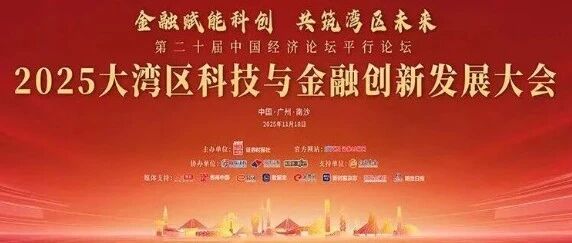
营造“雨林”生态 共筑大湾区科创高地丨2025大湾区科技与金融创新发展大会
证券时报· 2025-11-24 00:48
Core Viewpoint - The development of technology finance is crucial for building a modern industrial system in China and injecting key momentum into the cultivation of new productive forces [1][5]. Group 1: Event Overview - The 2025 Greater Bay Area Technology and Financial Innovation Development Conference was successfully held in Nansha, Guangzhou, gathering nearly 300 professionals from various sectors including securities, funds, banks, futures, listed companies, and technology enterprises [1][2]. - The conference featured keynote speeches and brainstorming sessions that showcased frontline innovations in the integration of technology and finance [1][5]. Group 2: Opportunities and Challenges - During the 14th Five-Year Plan period, technology finance faces both opportunities and challenges, with a focus on creating a virtuous cycle between technology industries and finance [2][3]. - Six major opportunities include the continuous improvement of frameworks and tools, strong financial institution capabilities, and increasing market demand for financing in future industries and core technologies [3][4]. - Three main challenges involve insufficient evaluation and identification capabilities for early-stage technology projects, a lack of professional talent, and the need for improved cooperation mechanisms in investment and lending [4]. Group 3: Key Directions for Future Development - Eight key directions for future development were proposed, including enhancing the role of national commercial banks, promoting differentiated allocation of technology finance resources, and improving the technology finance service ecosystem [4]. - The focus is on fostering patience capital, optimizing the risk-sharing and benefit-sharing mechanisms between state-owned and private capital, and enhancing the digital and intelligent capabilities of financial institutions [4]. Group 4: Financial Market Innovations - The establishment of the Science and Technology Innovation Board and the deepening of the registration system have led to over 500 innovative enterprises listed, with 70% being technology companies [3][4]. - New financial products such as science and technology bonds have been launched, and cross-border financial facilitation policies continue to improve, enhancing the environment for technology finance development [3][4]. Group 5: Regional Development and Policy Support - Nansha is positioned as a key player in the Greater Bay Area's technology finance innovation, with significant policy support and strategic advantages [21][22]. - The region has seen rapid growth in high-tech enterprises and financial innovation, with a focus on fostering a supportive ecosystem for technology companies [22][23]. Group 6: Capital Market Support for Innovation - The capital market is enhancing support for technology innovation through reforms in the Science and Technology Innovation Board and the establishment of a multi-dimensional financing service ecosystem [13][14]. - The focus is on providing tailored services for technology enterprises at various stages of development, ensuring a robust support system for innovation [13][14].
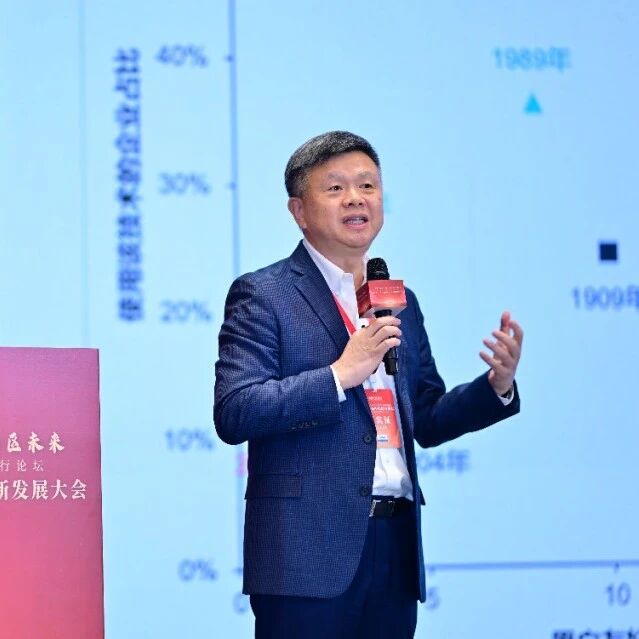
广发证券全球首席经济学家沈明高: 以“科技资本”赋能新质生产力 破解科技金融规模化难题
Zheng Quan Shi Bao Wang· 2025-11-23 23:42
Core Insights - The core challenge of technological financial innovation is transitioning from singular breakthroughs to scalable development, necessitating a financial ecosystem that can support a modern industrial system and foster globally competitive tech enterprises [1][2] Group 1: Technological Financial Innovation - Emphasis on the need for scaling from "1 to N" in technological financial innovation, with the "14th Five-Year Plan" highlighting the absence of replicable models for supporting new productive forces [1] - The "15th Five-Year Plan" suggests a framework for a modern industrial system, balancing the service of "technological industrialization" and "industrial technology" [1][2] - The essence of technological finance is "innovation capitalization," which requires converting technological innovation into capital returns to sustain future innovation cycles [1][2] Group 2: Challenges in Innovation Capitalization - Five major challenges to achieving innovation capitalization include non-standardization, unprofitability, light asset models, high uncertainty, and long cycles, which traditional financial services struggle to address [2] - The concept of "technology capital" is introduced, which should provide additional value alongside financial investment, encompassing understanding of technology, industry, pricing, risk management, and resource allocation [2] Group 3: Future Outlook and Recommendations - Artificial intelligence is identified as a "general technology" leading the fourth industrial revolution, with a critical window for adoption in the next 5-10 years [3] - The "smart manufacturing industry chain" is projected to become a new pillar of the economy, potentially rivaling real estate, with significant spillover effects [3] - A recommendation for the Greater Bay Area to establish a "1+N" industrial system centered around the smart manufacturing industry chain [3] Group 4: Risk Sharing Mechanism - The absence of a risk-sharing mechanism is identified as a barrier to meeting the investment needs of early-stage tech enterprises [3][4] - Suggestions include local governments establishing subordinate funds to absorb initial losses, thereby encouraging social capital to invest in early-stage and hard technology ventures [4]
广发证券全球首席经济学家沈明高: 以“科技资本”赋能新质生产力破解科技金融规模化难题
Zheng Quan Shi Bao· 2025-11-23 20:48
Core Insights - The core challenge of technological financial innovation is transitioning from singular breakthroughs to scalable development, necessitating a financial ecosystem that can support a modern industrial system and foster globally competitive tech enterprises [1] Group 1: Technological Financial Innovation - Emphasis on the need for scaling from "1 to N" in technological financial innovation, with the "14th Five-Year Plan" highlighting numerous innovative points that have yet to form replicable models [1] - The "15th Five-Year Plan" suggests a framework for a modern industrial system, balancing the service of "technological industrialization" and "industrial technologicalization" [1] Group 2: Innovation Capitalization - The essence of technological finance is "innovation capitalization," which involves converting technological innovation into capital returns to support sustainable innovation and iteration [1] - Five major challenges to achieving innovation capitalization include non-standardization, unprofitability, light asset models, high uncertainty, and long cycles, which traditional financial services struggle to address [2] Group 3: Concept of "Tech Capital" - The concept of "tech capital" is introduced, requiring additional value such as technological and industrial understanding, market comprehension, and risk management alongside financial investment [2] - "Tech capital" must possess five capabilities: understanding technology, industry, pricing, risk management, and resource allocation [2] Group 4: Future Outlook - Artificial intelligence is identified as a "general technology" leading the fourth industrial revolution, with a potential for exponential growth in adoption over the next 5-10 years [3] - The "smart manufacturing industry chain" is projected to become a new pillar of the economy, comparable to real estate, with significant spillover effects [3] Group 5: Risk Sharing Mechanism - The absence of a risk-sharing mechanism is identified as a root cause for unmet investment needs in early-stage tech enterprises, with suggestions for government or private entities to assume a "subordinated" role [3] - Establishing a subordinated fund by local governments could incentivize social capital to invest in early-stage hard technology [4]
广发证券沈明高:智能制造产业链是构建"1+N"产业体系的核心
Zheng Quan Shi Bao· 2025-11-18 11:03
Core Viewpoint - The 20th China Economic Forum highlighted the rapid advancement of artificial intelligence as a universal technology, suggesting its adoption may outpace previous technological cycles [1] Industry Insights - The intelligent manufacturing industry chain, centered around humanoid robots, smart vehicles, and embodied intelligence, is expected to grow significantly over the next 5-10 years [1] - This industry chain is characterized by its long supply chain, common technologies, and strong industrial spillover effects, positioning it as a potential pillar industry comparable to real estate in the past [1] - The development of this sector is seen as a core component in building a "1+N" industrial system [1]
广发证券沈明高:智能制造产业链是构建“1+N”产业体系的核心
Zheng Quan Shi Bao Wang· 2025-11-18 09:56
Core Viewpoint - The 20th China Economic Forum highlighted the rapid advancement of artificial intelligence as a universal technology, suggesting its adoption may outpace previous technological cycles [1] Industry Insights - The intelligent manufacturing industry chain, centered around humanoid robots, smart vehicles, and embodied intelligence, is expected to grow significantly over the next 5-10 years [1] - This industry chain is characterized by its long supply chain, common technologies, and strong industrial spillover effects, positioning it as a potential pillar industry comparable to real estate [1] - The development of this sector is crucial for constructing a "1+N" industrial system, indicating its importance in the broader economic landscape [1]
财信证券晨会纪要-20250923
Caixin Securities· 2025-09-22 23:31
Group 1: Market Overview - The overall market showed a mixed performance with the Wind All A Index rising by 0.52% to 6241.68 points, while the Shanghai Composite Index increased by 0.22% to 3828.58 points. The STAR 50 Index led the gains with a rise of 3.38% to 1408.64 points [7][10] - In terms of market segments, the electronic, computer, and non-ferrous metals sectors performed well, while retail, beauty care, and social services lagged behind [8][10] - The trading volume decreased by approximately 2069.5 billion yuan compared to the previous trading day, indicating a cautious market sentiment [7][10] Group 2: Economic Insights - The People's Bank of China maintained the Loan Prime Rate (LPR) at 3.0% for the one-year term and 3.5% for the five-year term as of September 22, 2025 [16] - The central bank restarted the 14-day reverse repurchase operations, injecting 3000 billion yuan into the market, marking the first such operation in nearly eight months [18][17] Group 3: Industry Dynamics - The Guangdong "136 Document" was released, setting the electricity price for existing projects at 0.453 yuan per kilowatt-hour [27][29] - The steel industry is projected to achieve an average annual growth target of around 4% over the next two years, focusing on stabilizing growth and preventing internal competition [26] Group 4: Company Updates - Baoli Food (603170.SH) is actively expanding new channels and has launched innovative products such as instant pasta and frozen sausages to diversify its offerings [30] - Tianjin Pharmaceutical (600535.SH) received approval for a new indication for its recombinant human urokinase injection, which is now approved for use in acute ischemic stroke treatment [33] - Zhongju High-tech (600872.SH) is enhancing its market penetration and has signed a celebrity endorsement deal to attract younger consumers [34]
维宏股份(300508.SZ):拟参设嘉兴宏溥智造并购私募基金
Ge Long Hui A P P· 2025-08-27 10:40
Group 1 - The core point of the article is that Weihong Co., Ltd. plans to invest up to 100 million RMB to establish a private equity fund focused on the intelligent manufacturing industry [1] - The fund, named Jiaxing Hongpu, will be set up in partnership with Shanghai Hongpu Private Fund Management Co., Ltd. [1] - The investment aims to leverage professional institutions' expertise and resources to enhance the company's overall competitiveness [1] Group 2 - The fund will focus on investment and acquisition opportunities in technology-driven enterprises within the intelligent manufacturing supply chain, including industrial software, high-precision core components, intelligent equipment, and intelligent sensing technology [1]
