科技金融创新

Search documents
236万元"科技研发贷"落地经开区,北京农商银行创新金融模式助力生物医药企业突破融资瓶颈
Jin Rong Jie Zi Xun· 2026-02-25 07:57
Group 1 - Beijing Rural Commercial Bank's Economic and Technological Development Zone Branch issued its first "Technology R&D Loan" of over 2.36 million yuan to Beijing Huanuo Tai Biopharmaceutical Technology Co., Ltd., providing crucial funding for vaccine innovation and R&D [1] - The loan will specifically support key aspects of vaccine R&D, including raw material procurement, laboratory equipment upgrades, and team support, addressing the financing challenges faced by biopharmaceutical companies due to a lack of collateral [1][2] - The innovative financing model transforms the company's R&D investment, core patents, and team qualifications into credit assessment criteria, allowing for more flexible financing solutions for technology-driven enterprises lacking tangible assets [2] Group 2 - The "Technology R&D Loan" is part of a broader financial service system aimed at supporting technology innovation, with Beijing Rural Commercial Bank offering a product matrix of 75 financial products covering the entire lifecycle of enterprises [3] - This initiative reflects the bank's commitment to addressing the financing difficulties of biopharmaceutical companies and supporting the real economy and technological innovation [3] - The bank plans to deepen its technological financial innovation practices and enhance its credit product offerings, contributing to the construction of an international technology innovation center in Beijing and the high-quality development of the real economy [3]
全省高质量发展大会围绕五大主题举行分会场会议为广东推进制造业与服务业协同发展凝聚强大合力
Nan Fang Ri Bao Wang Luo Ban· 2026-02-25 02:13
Group 1: Core Themes of the Conference - The conference focused on high-quality development through industrial integration, policy innovation, and the role of technology and finance in empowering industries [1][2][3][4][5][6][7] - Emphasis was placed on deepening the integration of advanced manufacturing and modern services, as well as the digital economy with traditional industries [2][3][5] Group 2: Key Discussions and Initiatives - The "Industry Integration and Policy Innovation" session highlighted the need for practical measures to enhance policy innovation and create a modern industrial system [2] - The "Technology and Financial Innovation Empowering Industry Integration" session stressed the importance of financial support for technological innovation and the establishment of a high-level cycle ecosystem between technology, industry, and finance [3] - The "Smart Manufacturing and Industrial Internet" session called for leveraging AI and industrial internet to strengthen manufacturing capabilities and enhance competitiveness [4] - The "Digital Economy and New Trade Formats" session discussed the advantages of Guangdong in digital trade and the need for further integration of digital and physical economies [5] - The "Hundred-Thousand Project" session emphasized the importance of county-level industrial integration and the need for coordinated regional development [6][7]
广东2025年全省科技保险为逾1200万家次企业提供风险保障
Zhong Guo Xin Wen Wang· 2026-02-24 12:55
Group 1 - The conference highlighted the rapid development of technology finance in Guangdong, with projections for 2025 indicating that over 12 million enterprises will receive risk coverage of 14.38 trillion yuan and premium income of 9.785 billion yuan, making it the largest scale in the country [1][2] - Guangdong's modern industrial system has achieved significant development, with a notable increase in autonomous technological capabilities supporting ten strategic industrial clusters, each exceeding one trillion yuan in scale [2] - The "Shenzhen-Hong Kong-Guangzhou" technology cluster is expected to rank first in the global innovation index by 2025, with Guangdong's regional innovation capability ranking first nationally for nine consecutive years [2] Group 2 - The conference emphasized the need for financial support to drive innovation and industry upgrades, advocating for a robust technology finance system that aligns with technological innovation [3] - The province aims to strengthen the role of enterprises in technological innovation and ensure that financial services cater to the real economy as a fundamental principle [3] - Guangdong has seen a significant increase in technology loans, with a balance exceeding 6 trillion yuan and a year-on-year growth of 13.84%, alongside the establishment of various investment funds to support strategic emerging industries [2]
中国太保未来关注点:可转债到期、行业政策利好与盈利预测
Jing Ji Guan Cha Wang· 2026-02-20 10:58
Recent Events - The company has a zero-coupon convertible bond of HKD 15.556 billion maturing in 2030, with a conversion price of HKD 39.04 per share, potentially leading to the issuance of approximately 398 million H-shares, which may impact the future capital structure and shareholder equity [1] Industry Policy and Environment - The National Financial Regulatory Administration plans to lower the risk factors for insurance companies investing in stocks by December 2025, which may release incremental capital and support the valuation of the insurance sector in 2026; additionally, the accelerated premium growth during the "New Year" period in early 2026 may boost the company's short-term business performance [2] Institutional Perspectives - According to research reports, the new business value (NBV) of the company is expected to grow at year-on-year rates of 30.0%, 10.5%, and 13.2% for 2025-2027, while the net profit attributable to shareholders is projected to increase by 15.7%, 19.5%, and 15.1% respectively; the proportion of new single premiums from the bancassurance channel has rapidly increased, reaching 46.1% in the first half of 2025, which may become a core driver of future growth [3] Company Status - Recent developments such as the implementation of financial technology innovation projects (e.g., "Qin Scientific Research Insurance"), reforms in the compensation system for professional managers, and regulatory compliance matters should also be monitored, although these are primarily recent events that have already been announced [4]

未来产业2026年或迎“破茧”时刻
Xin Lang Cai Jing· 2026-02-12 20:33
Core Viewpoint - The integration of technological and industrial innovation is expected to lead to significant advancements in China's future industries by 2026, with key breakthroughs in various sectors such as quantum technology, biomanufacturing, and controllable nuclear fusion [1][2] Group 1: Future Industry Development - The report from the China Center for Information Industry Development indicates that by 2026, multiple tracks in future industries are likely to achieve critical transitions from technological breakthroughs to industrial applications [1] - Quantum technology is moving from laboratory settings to specific applications in fields like financial risk control and drug development [1] - Biomanufacturing technologies are maturing, with deepening applications in pharmaceutical research and agricultural breeding [1] - Controllable nuclear fusion is entering a critical phase of engineering feasibility verification, accelerating its commercialization [1] Group 2: Investment and Policy Initiatives - Beijing plans to invest 100 million yuan annually to discover and cultivate over 100 "future-winning" enterprises [1] - Guangdong Province has released policy guidelines to establish a strategic emerging industry investment guidance fund with a total scale of 100 billion yuan, with an initial phase of 50 billion yuan [1] - The fund will implement mechanisms for error tolerance and long-term performance assessment [1] Group 3: Challenges in Future Industry Investment - The future industries face challenges such as high capital intensity, long investment cycles, and significant risks, necessitating tailored strategies to address the question of "who will invest" [2] - Government funding should focus on "patient investment" to leverage fiscal resources for early, small, long-term, and hard technology investments [2] - Social capital needs to address the "reassuring investment" issue by activating venture capital and private capital [2] - Financial institutions should facilitate "coordinated investment" by utilizing various channels such as bank credit, capital markets, technology insurance, and bond issuance [2]
上海国际金融中心升级瞄准三大方向
Sou Hu Cai Jing· 2026-02-05 08:48
Core Viewpoint - The construction of an international financial center in Shanghai is a key topic during the 2026 Shanghai Two Sessions, with a shift from scale expansion to functional upgrading [1] Group 1: Strategic Focus Areas - The focus will be on building an offshore financial system, global allocation of RMB assets, and innovation in financial technology [1] - Specific pathways include exploring pilot zones for offshore financial functions and promoting innovation in offshore business [1] - There will be an emphasis on deepening connectivity between domestic and foreign markets to facilitate cross-border investment and financing [1] Group 2: Goals and Objectives - The initiatives aim to enhance Shanghai's global competitiveness and influence as a hub for RMB asset allocation [1] - These measures are intended to provide a "Shanghai plan" for the construction of a financial powerhouse during the 14th Five-Year Plan period [1]
广发证券全球首席经济学家沈明高退休
Xin Lang Cai Jing· 2026-02-04 06:53
Core Viewpoint - Shen Minggao, the global chief economist of GF Securities, is retiring due to reaching the legal retirement age, not due to rumors of resignation [1][5]. Group 1: Retirement Announcement - Shen Minggao will no longer serve as the global chief economist and head of the industry research institute at GF Securities as of February 2026 [1][5]. - There were rumors about his departure due to the inability to find his information in the securities industry system, which led to speculation about personnel changes at GF Securities [1][5]. Group 2: Professional Background - Shen Minggao was born in 1965 and has an extensive academic background, including a bachelor's degree in agricultural economics from Nanjing Agricultural University, a master's degree from the Chinese Academy of Social Sciences, and a Ph.D. in economics from Stanford University [1][5]. - His career includes roles in policy research at the State Council's Rural Development Research Center and the Development Research Center from 1988 to 1994, followed by academic positions at Peking University [3][7]. - He entered the financial industry in 2005, serving as chief economist at Citibank (China) and later at various prestigious financial institutions, including a return to Citigroup as managing director and chief economist for Greater China [3][7]. Group 3: Recent Contributions - Shen Minggao's last public appearance was at the 2025 Greater Bay Area Technology and Financial Innovation Development Conference, where he delivered a speech on the theme of "Technological Financial Innovation: From 1 to N" [3][7]. - He emphasized the need for a financial ecosystem that can scale to support modern industrial systems, which is crucial for nurturing globally competitive technology enterprises [4][8]. - He noted that the "14th Five-Year Plan" has explicitly outlined a framework for building a modern industrial system, highlighting the balance between "technological industrialization" and "industrial technologicalization" [4][8].


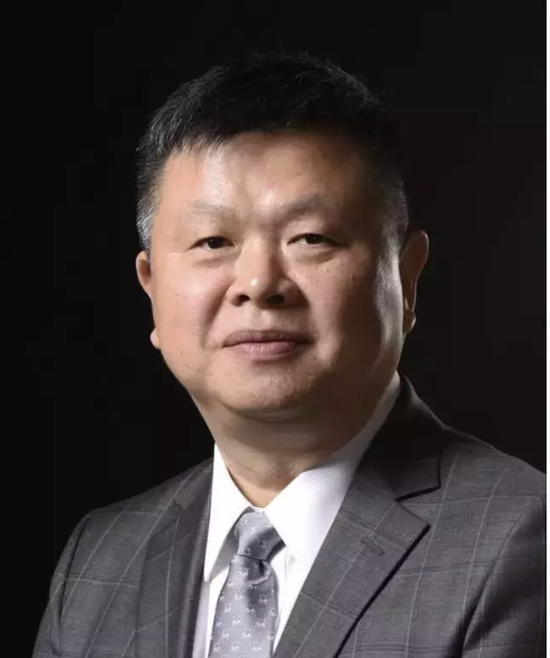
独家!沈明高,到龄退休!
Zhong Guo Ji Jin Bao· 2026-02-04 06:53
Group 1 - Shen Minggao, the global chief economist of GF Securities, is retiring due to reaching the legal retirement age in February 2026, not due to rumors of leaving the company [1] - Shen Minggao has extensive experience in economic research, having worked in various prestigious institutions and financial organizations since 1988, including the State Council and Citibank [2] - His recent public appearance was at the 2025 Greater Bay Area Technology and Financial Innovation Development Conference, where he discussed the challenges of scaling technological financial innovation [2] Group 2 - Shen emphasized the need for a financial ecosystem that can scale to support modern industrial systems, which is crucial for nurturing globally competitive technology enterprises [2] - He noted that the 14th Five-Year Plan explicitly outlines a framework for a modern industrial system, indicating a shift from merely emphasizing technological innovation to integrating technology with industry [3] - This integration requires balancing the service of "industrialization of technology" and "technologization of industry" [3]
每日债市速递 | 银行间市场资金面有所改善
Sou Hu Cai Jing· 2026-01-27 23:37
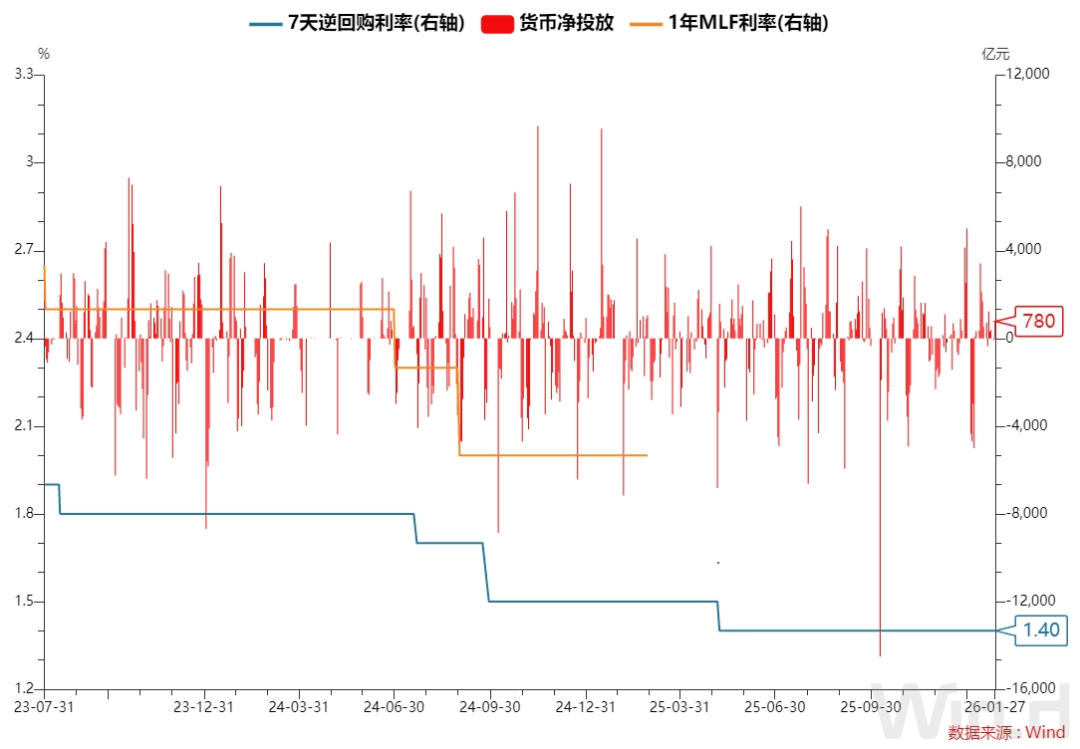
Market Overview - The central bank conducted a reverse repurchase operation of 402 billion yuan for 7-day terms at a fixed rate of 1.40%, resulting in a net injection of 78 billion yuan after accounting for 324 billion yuan maturing that day [1][3] - The interbank market saw an improvement in liquidity, with the weighted average rate of DR001 declining by approximately 5 basis points to around 1.36% [3] - The latest overnight financing rate in the U.S. stands at 3.65% [3] Financial Indicators - The one-year interbank certificates of deposit (CD) for major banks are trading at around 1.60%, unchanged from the previous day [5] - The yields on major interbank bonds showed stability, with the 30-year futures contract down by 0.33% while the 10-year, 5-year, and 2-year contracts remained flat [9] Economic Data - The National Bureau of Statistics reported that profits of industrial enterprises above designated size reached 73,982 billion yuan in 2025, a year-on-year increase of 0.6%, with manufacturing profits growing by 5% [10] - The real estate loan balance in RMB was 51.95 trillion yuan at the end of Q4 2025, a year-on-year decrease of 1.6% [11] Policy Developments - The Ministry of Finance plans to issue 45 billion yuan of 182-day discount treasury bonds through competitive bidding [11] - The Hubei Provincial Government is focusing on integrating financial resources to support innovation and technology enterprises in accessing capital markets [10] Global Economic Context - The Federal Reserve is expected to maintain the current benchmark interest rate, with no new economic or policy forecasts anticipated during the upcoming meeting [12] - South Korea is closely monitoring the U.S. decision to potentially raise tariffs on Korean products, which could impact trade relations [12] Bond Market Events - The city of Foshan is supporting qualified enterprises in issuing technology innovation bonds to enhance industry chain integration [13] - Six domestic debt restructuring plans for Baolong Real Estate have been approved, with a hearing for overseas debt restructuring scheduled for March [14]
每日债市速递 | 银行间市场资金面有所改善
Wind万得· 2026-01-27 23:00
Group 1: Monetary Policy and Market Operations - The central bank conducted a 7-day reverse repurchase operation of 402 billion yuan at a fixed rate of 1.40%, with a net injection of 78 billion yuan after 324 billion yuan of reverse repos matured on the same day [1] - The interbank market saw an improvement in liquidity, with the weighted average rate of D R001 declining by approximately 5 basis points to around 1.36% [3] - The latest overnight financing rate in the U.S. stands at 3.65% [3] Group 2: Interbank Certificates of Deposit and Bond Yields - The latest transaction rate for one-year interbank certificates of deposit is around 1.60%, unchanged from the previous day [7] - The yields on major interbank bonds show varied rates, with 1-year government bonds at 1.2925%, 3-year at 1.4200%, and 10-year at 1.6990% [9] - The 30-year government bond futures contract fell by 0.33%, while the 10-year, 5-year, and 2-year contracts remained stable [12] Group 3: Industrial Profit and Local Government Debt - In 2025, profits of large-scale industrial enterprises reached 73,982 billion yuan, a 0.6% increase from the previous year, with manufacturing profits growing by 5% [13] - The Ministry of Finance plans to issue 45 billion yuan of 182-day discount treasury bonds, using a modified multi-price bidding method [13] - By the end of Q4 2025, the balance of real estate loans in RMB decreased by 1.6% year-on-year, totaling 51.95 trillion yuan [14]