
创新驱动型经济

Search documents
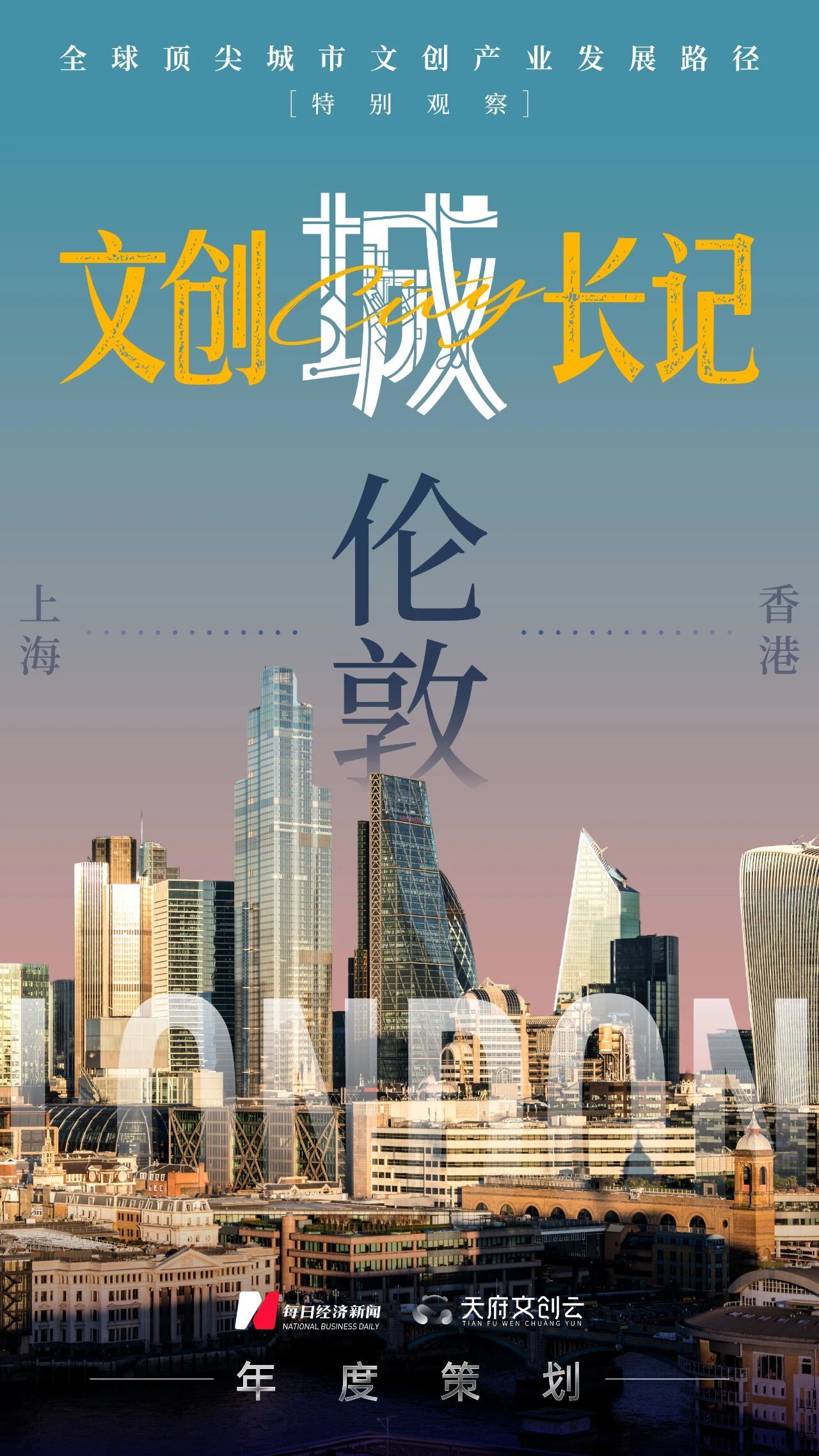
三十年变奏:流水的“007”,铁打的伦敦文创
Mei Ri Jing Ji Xin Wen· 2025-12-26 15:11
Core Insights - London's creative industry has become the third largest sector, generating over £50 billion in economic benefits, following finance and real estate [2][17] - The creative sector contributes 12.6% to London's total economic output, with a 46.1% increase in gross value added (GVA) from 2010 to 2019, the highest growth among all UK regions [17][18] - The sector's success is attributed to strategic top-level design, high aggregation of creative industries, and a favorable capital environment [10][11][18] Industry Development - The creative industry in London began to take shape as a global leader in the late 1990s, with the establishment of a special task force by then-Prime Minister Tony Blair to elevate creative economy development to a national strategy [6][9] - The introduction of the term "creative industries" in 1998 marked a significant shift towards an innovation-driven economy, attracting over one-third of the UK's creative talent [6][8] Economic Impact - The creative industry has consistently generated over £50 billion in economic output, making it a vital pillar for sustainable urban development [2][17] - In the 2019-2020 fiscal year, the creative sector contributed £13 billion in taxes, accounting for 8% of all tax revenues in London [17] Capital Environment - London's position as an international financial center provides a robust capital market that supports the creative industry, particularly in sectors like film, gaming, and esports [18][20] - The city hosts over 1,600 fintech companies, ranking first globally, and is a hub for fintech unicorns, fostering a unique environment for innovation [20] Policy Support - The London Economic Council's report emphasizes the importance of supporting grassroots cultural organizations, ensuring their representation in cultural policy-making [16] - Various targeted support plans have been implemented to promote the integration of creative individuals and industries, reflecting a pragmatic approach to urban development [15][16]

非洲媒体:中国为非洲发展提供重要机遇
人民网-国际频道 原创稿· 2025-12-25 01:20
Group 1 - The core viewpoint of the articles highlights China's significant achievements during the "14th Five-Year Plan" and the strategic blueprint provided by the "15th Five-Year Plan" for future development, which offers valuable opportunities and experiences for Africa [1][2][3] Group 2 - During the first four years of the "14th Five-Year Plan," China's average economic growth rate reached 5.5%, contributing approximately 30% to global economic growth [2] - By 2025, China's GDP is projected to reach 140 trillion RMB, indicating robust economic performance [2] - The share of renewable energy generation capacity in China increased from 40% to around 60%, establishing China as the world's largest and most dynamic renewable energy producer [2] Group 3 - The "15th Five-Year Plan" emphasizes advanced technology development in areas such as artificial intelligence, renewable energy, biotechnology, and electric vehicles, creating opportunities for industrial transformation and local capacity building in countries like the Republic of Congo [3] - The plan promotes open cooperation and mutual benefit, enhancing financing channels for countries like the Republic of Congo to integrate more deeply into the global economic network [3] Group 4 - The long-term and systematic nature of China's five-year plans can enhance resilience against external shocks, particularly during global economic turbulence, inflation, or supply chain crises [2] - African leaders are encouraged to draw lessons from China's strategic determination and patience to explore their own modernization paths and achieve continental integration and industrialization [2]
培育“第二增长极” 谁是中西部省会(首府)“最强搭档”?
Mei Ri Jing Ji Xin Wen· 2025-11-13 13:49
Core Insights - The competition landscape among non-provincial capital cities in Central and Western China is becoming clearer, with cities like Yulin, Yichang, and Luoyang emerging as leaders in GDP performance [1][4] - The construction of provincial sub-center cities is gaining new momentum, as highlighted by recent government policies aimed at fostering multiple center cities to avoid the pitfalls of a single dominant city [2][10] Economic Performance - Yulin leads the pack with a GDP of 565.41 billion, followed by Yichang at 455.33 billion and Luoyang at 445.49 billion, indicating a significant gap between Yulin and its competitors [1][4] - The GDP growth rates for Yichang, Luoyang, and other cities like Ordos and Xiangyang are showing varied performance, with Yichang and Luoyang achieving growth rates of 7.0% and 5.8% respectively [4][5] Provincial Sub-Center Cities - At least 28 cities in Central and Western China have been designated as provincial sub-centers, contributing to local economic growth alongside provincial capitals [2][3] - The rise of sub-center cities is characterized by a shift in economic focus from resource-based to innovation-driven economies, with cities like Yichang and Luoyang showing strong industrial growth [6][7] Future Outlook - The recent government directives suggest a strategic shift towards enhancing the role of provincial sub-center cities, which may lead to increased resource allocation and support for these cities [10][11] - The potential for a "dual-core" development model is emerging, where sub-center cities like Yulin, Yichang, and others aim to achieve trillion-yuan GDP targets, thereby supporting regional economic diversification [10][11]
金融、科技领域合作激发全球经济增长新动能
Xin Hua Cai Jing· 2025-10-31 02:19
Group 1 - The main forum of the 2025 Financial Street Forum focused on "Resilient Cooperation in International Trade and Economy under Global Changes" and included discussions on "Gathering the Future: Global Investment Patterns and Development Dynamics" [1] - UBS Asset Management President Alexander Ivanovich emphasized the importance of openness, globalization, and multilateral development, highlighting China's significant role in global economic growth and its stock market, where 3% is related to foreign investment [1] - Omar Hafiz, President of International Business at First Abu Dhabi Bank Group, noted that trade between the UAE and China has reached approximately $100 billion and is expected to grow, with the UAE diversifying its development focus beyond oil into high-tech, infrastructure, and consumption sectors [1] - CVC Managing Partner Alex Dibelus pointed out that while capital will still flow to Europe, the majority of growth in the coming years will originate from Asia, with China playing a crucial role [1] Group 2 - Peking University National Development Research Institute Director Huang Yiping discussed the need for financial model transformation to align with economic growth, shifting from factor-driven to innovation-driven growth, emphasizing the importance of direct financing and multi-layered capital markets [2] - Tsinghua University Wudaokou School of Finance Professor Huang Haizhou analyzed the interdependence of finance and technology, stating that without finance, technological advancement is challenging, and capital markets play a critical role in supporting technological innovation [2]