功效性护肤

Search documents
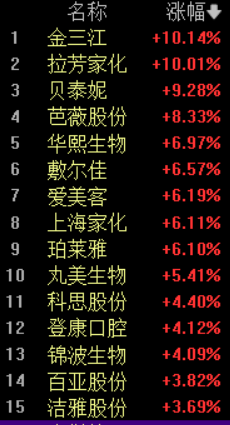
美容护理板块逆势拉升,拉芳家化涨停,贝泰妮涨超9%
Jin Rong Jie· 2026-02-05 02:19
Group 1 - The beauty care sector is experiencing a surge, with companies like Lafang Jiahua hitting the daily limit up, Jin Sanjiang rising over 10%, and others like Beitaini and Babi shares also showing significant gains [1][2] - Men's skincare products are becoming increasingly popular among Generation Z, with brands like C Coffee and Gu Yu seeing sales growth of 1900% and 1000% respectively during the recent holiday season [1] - Shanghai is focusing on consumer upgrades and market innovation, with plans to enhance domestic brands and improve inbound consumer services by 2026 [2][3] Group 2 - The beauty raw materials sector is witnessing a rapid increase in demand for specialized ingredients tailored to Chinese skin types, benefiting companies with core R&D capabilities [4] - Domestic beauty brands are gaining recognition and are expected to continue growing, especially those with innovative products and multi-channel operations [4] - The demand for cosmetic testing services is rising due to stricter regulations and consumer focus on product efficacy, creating opportunities for companies with advanced technical capabilities [5] Group 3 - Lafang Jiahua is a well-established beauty company focusing on hair care and skincare, actively pursuing brand rejuvenation and increasing R&D investments [6] - Huaxi Biological is a leading biotech firm specializing in hyaluronic acid, benefiting from the trend of domestic raw material production and industry upgrades [6] - Porlaia is a top domestic beauty brand known for effective skincare products, expected to increase R&D investments and expand its market leadership [6] - Beitaini specializes in sensitive skin care and has gained market recognition through collaborations with dermatological institutions, poised to benefit from the growing efficacy skincare market [6]


巨子生物(2367.HK):品牌定力与业绩韧性彰显 期待25H2增长提速
Ge Long Hui· 2025-09-10 10:57
Core Viewpoint - The company demonstrates resilience and brand strength with revenue and profit growth in H1 2025 despite external challenges, and is expected to accelerate growth in H2 due to upcoming promotional activities [1] Group 1: Financial Performance - In H1 2025, the company's revenue and profit increased, with revenue growth rates of 22.7% for 可复美 and 26.9% for 可丽金 [1] - The GMV for 可复美 and 可丽金 in July reached 1.72 billion and 0.19 billion respectively, showing year-on-year growth of 48% and 77% [1] - The company maintains its profit forecast with expected net profits of 26.00 billion, 32.03 billion, and 38.12 billion for 2025-2027 [3] Group 2: Product and Innovation - The company has obtained exclusive patents for new products, including a restructured IV type collagen and ginsenoside-rich fermented ginseng products, enhancing its R&D capabilities [2] - The brand is actively promoting its products through various channels, including a successful live-streaming event on September 8 that generated over 16 million in GMV [1][2] Group 3: Market Expansion - The company is expanding its market presence, having entered the Malaysian market and established a joint venture to target Southeast Asia [2] - The brand has also made inroads into the South Korean and French markets, with product launches in key retail locations [2] Group 4: Valuation and Target Price - The company maintains a target price of 85.0 HKD for 2025, reflecting a PE ratio of 31 times, adjusted from a previous target of 82.50 HKD [3] - The valuation considers the company's successful brand promotion and overseas channel development [3]
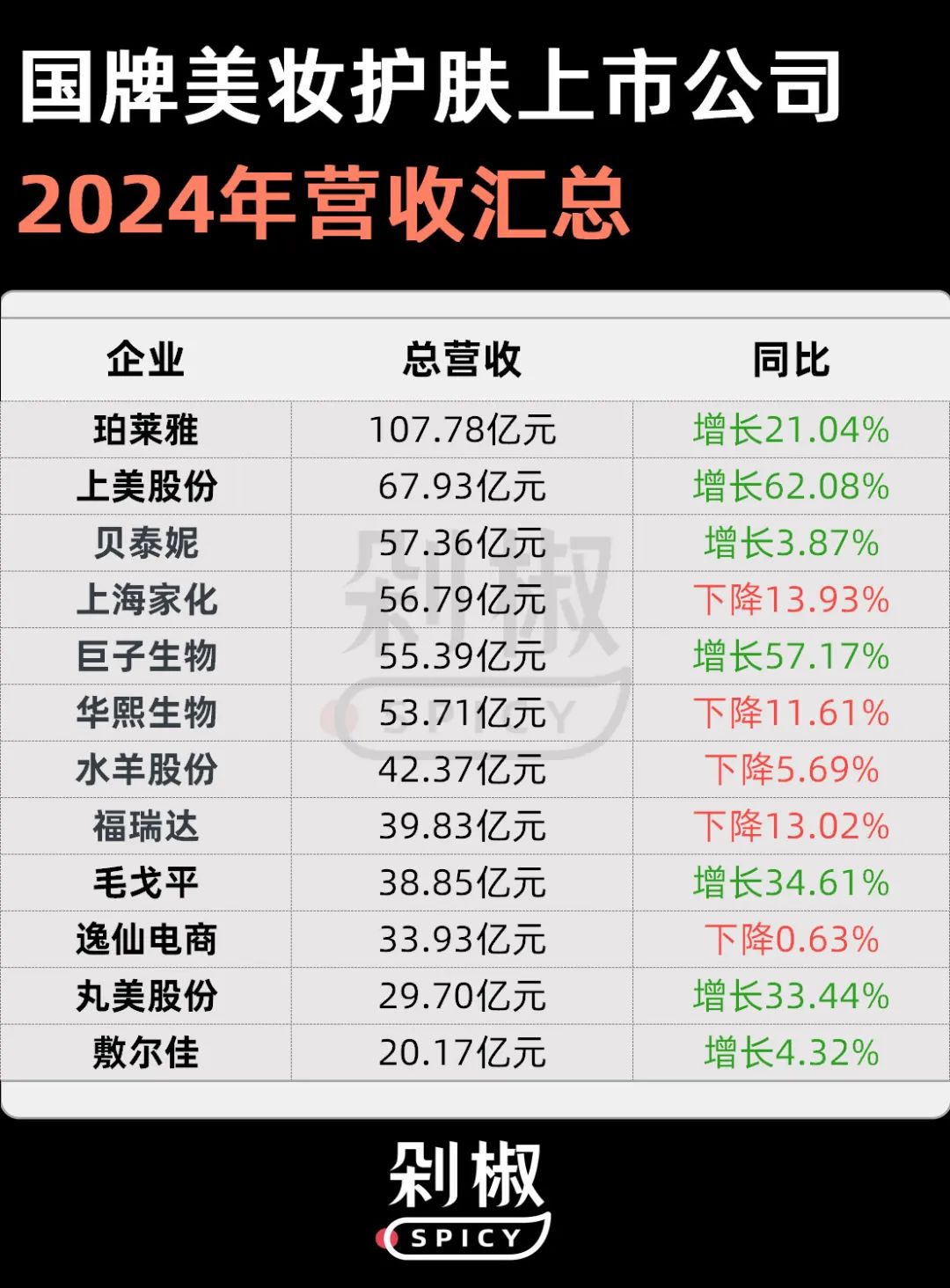
珀莱雅突破百亿、上海家化亏损8亿:国产美妆市场的“洗牌进行时”
3 6 Ke· 2025-05-13 01:56
Core Insights - The performance of domestic beauty companies in China is showing significant divergence, with some achieving remarkable growth while others face declines, indicating a reshaping of the market landscape [1][4][42] Group 1: Company Performance - Proya has become the first domestic beauty company to enter the 10 billion yuan club, with a revenue of 10.778 billion yuan, growing by 21.04% [2] - Other companies like Shangmei and Juzi Biological also reported substantial revenue increases of 62.08% and 57.17% respectively, while Shanghai Jahwa experienced a revenue decline of 13.93% [2][3] - Six beauty companies have revenues exceeding 5 billion yuan, suggesting that this threshold will soon become a significant benchmark for the top 10 domestic beauty brands [1] Group 2: Profitability Trends - Juzi Biological leads in profitability with a profit of 2.062 billion yuan, up 42.06%, while Proya's profit reached 1.552 billion yuan, growing by 30% [3] - In contrast, Shanghai Jahwa reported a loss of 833 million yuan, marking a 266.60% decline, highlighting the stark differences in profitability among companies [3][11] Group 3: Market Dynamics - The current market dynamics indicate a shift towards efficacy-driven products, with companies that successfully launched standout products seeing better performance [4][5] - The competition is intensifying, with new entrants emerging and established brands needing to adapt to changing consumer preferences and market trends [7][30] Group 4: R&D and Strategic Focus - Companies are increasingly focusing on R&D, with most reporting a rise in R&D expenditures, indicating a strategic shift towards innovation and efficacy [20][21] - The trend of acquisitions and investments in technology is becoming a key strategy for companies aiming to enhance market share and scale [23][24] Group 5: Emerging Opportunities - The male skincare market is growing rapidly, presenting new opportunities for brands to capture this segment [36] - The aging population is creating demand for products targeting older consumers, which remains largely untapped [39] - As online sales plateau, brands are shifting focus to offline channels, indicating a potential new battleground for market share [40]