
北京城市副中心建设

Search documents
北京城市副中心将培育壮大未来产业
Xin Lang Cai Jing· 2026-01-27 17:52
Core Viewpoint - The draft regulation for the Beijing Urban Sub-center aims to relieve non-capital functions of Beijing, establish a city-level administrative center, and create a world-class, harmonious, and livable demonstration area, as well as a new urbanization demonstration area and a collaborative development demonstration area for the Beijing-Tianjin-Hebei region [1][2]. Group 1: Spatial Structure and Planning - The draft consists of nine chapters and sixty-five articles, focusing on management systems, planning and construction, industrial layout, green development, smart cities, public services, and collaborative development [2]. - The urban sub-center will adopt a spatial structure of "one belt, one axis, and multiple clusters," and a green space system of "one belt, one axis, two rings, and one core" [2]. - The management system clarifies that the municipal government is responsible for the development of the urban sub-center, with the sub-center management committee acting as its agency [2]. Group 2: Industrial Layout and Economic Development - The urban sub-center will focus on administrative offices, business services, cultural tourism, and technological innovation as its leading functions, aiming to cultivate new productive forces and develop a high-precision industrial structure [3]. - Key industries to be developed include digital economy, modern finance, and advanced manufacturing, among others [3]. - The draft emphasizes the importance of green development, integrating green production, living, and ecology, and establishing a national green development demonstration zone [3]. Group 3: Public Services and Collaborative Development - The regulation aims to enhance the quality and balance of public services, including education, healthcare, and housing, to meet residents' needs [4]. - It specifies the integration of public service groups and home planning, adjusting administrative boundaries as necessary [4]. - The draft promotes collaborative development with neighboring areas, including the integration of planning, resource allocation, and public services [5][4]. Group 4: Legislative Approach and Future Development - The draft regulation aims to solidify the functional positioning of the urban sub-center within local laws, addressing issues such as management system deficiencies and uneven public services [6]. - It emphasizes reform and innovation, granting greater autonomy for development and encouraging the market-oriented allocation of resources [6]. - The regulation balances legislative stability with the need for adaptability, allowing for future innovations and creating a favorable legal environment [6].
北京城市副中心建设迈入新阶段
Yang Shi Wang· 2026-01-25 11:50
Core Viewpoint - The Beijing Sub-Center is a significant part of the national strategy for coordinated development in the Beijing-Tianjin-Hebei region, transitioning from a foundational phase to a new stage of functional enhancement and comprehensive development [1][2] Group 1: Development and Infrastructure - The Beijing Tongzhou Station has officially commenced operations, serving as a crucial node in the "railway network of Beijing-Tianjin-Hebei," which further shortens travel times and expands the "one-hour living circle" [1] - The sub-center has established a clear urban framework with a planned layout of "one belt, one axis, and multiple clusters," including administrative, business, and cultural tourism zones [1] - The annual GDP growth rate of the sub-center during the 14th Five-Year Plan period has exceeded 6% [2] Group 2: Urban Features and Amenities - The area is developing a vibrant urban space with a scientific layout of production, living, and ecological areas, integrating work, residence, transportation, and healthcare [1] - Major educational institutions and hospitals are relocating to the sub-center, enhancing local services, with advanced technologies such as robots improving healthcare efficiency [1] - The construction of a high-line park and a 600-kilometer greenway network is underway, promoting environmental sustainability and connectivity [2] Group 3: Future Plans and Goals - The sub-center aims to accelerate the development of urban vitality areas and update traditional commercial districts to stimulate new consumption growth [2] - Plans include promoting the integration of culture, commerce, tourism, sports, and agriculture to create a world-class tourism destination [2] - The vision for the 15th Five-Year Plan includes building a modern, livable, and business-friendly new urban area with enhanced aesthetic and cultural value [2]
北京城市副中心建设累计完成固定资产投资超9600亿元
Xin Hua She· 2025-11-19 14:19
郑皓表示,"十五五"时期新征程即将开启,北京城市副中心将深入贯彻落实党的二十届四中全会精 神,践行人民城市理念,推动城市内涵式发展,努力建设创新、宜居、美丽、韧性、文明、智慧的现代 化人民城市。 新华社北京11月19日电(记者 张骁)记者19日从北京市人民政府新闻办公室举行的新闻发布会获 悉,北京城市副中心自2016年启动建设至今,累计完成固定资产投资超9600亿元。"十四五"期间,预计 地区生产总值年均增长超6%。 作为国家绿色发展示范区,绿色是北京城市副中心最鲜明的底色。郑皓介绍,"十四五"期间,通州 区PM2.5累计浓度达到国家二级标准,较2020年同期改善24%;重点河流水质达到Ⅲ类以上;相继建成 8个万亩生态公园、600公里绿道,成功创建北京市首个平原地区国家森林城市;聚焦节能降碳,完成公 共建筑节能绿色化改造170.5万平方米,实施超低能耗建筑67.3万平方米。北京市行政办公区、北京城市 绿心森林公园实现100%绿电供应。 北京城市副中心所在地北京市通州区区长郑皓介绍,随着北京城市副中心规划建设工作高质量推 进,投资结构实现优化,从政府主导向社会主导转变,社会投资占比增至总投资的七成以上;非首都功 ...
北京多家市属国企总部,相继落地城市副中心
Bei Jing Ri Bao Ke Hu Duan· 2025-06-26 10:41
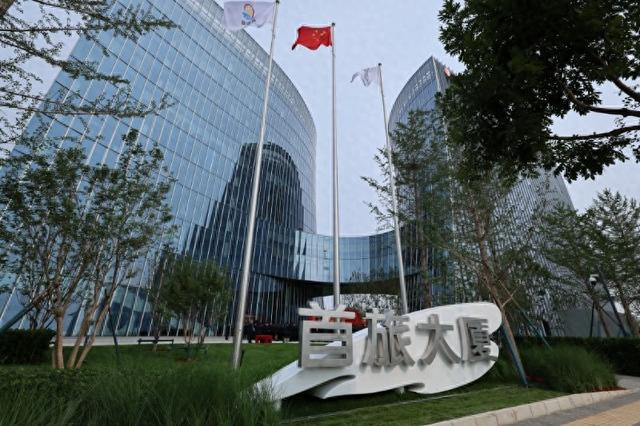
Group 1 - The completion of Shoulv Building marks a new starting point for Shoulv Group, indicating the company's commitment to high-quality development and the creation of a world-class cultural tourism enterprise [2] - Shoulv Group relocated its headquarters to Beijing's sub-center in April 2021, coinciding with the opening of Beijing Universal Resort in September 2021, which serves as a new cultural tourism landmark [2] - The Shoulv Building project commenced construction on November 26, 2022, and is located in the northern part of Beijing Universal Resort, combining office and hotel functions [2] Group 2 - The establishment of Shoulv Building is expected to drive the aggregation of surrounding commercial, exhibition, and cultural creative industries, making it a significant project in the cultural tourism area of Beijing's sub-center [2] - Several state-owned enterprises, including Beijing Architectural Design Institute and Huaxia Bank, have already established their headquarters in the sub-center, contributing to the area's development [3] - Huaxia Bank's main office building is nearing completion, projected to be the largest ultra-low energy consumption demonstration project in Beijing upon completion [3]



北京城市副中心步行和自行车示范段工程将于今年投用
Xin Jing Bao· 2025-05-26 04:36
Group 1: Transportation Infrastructure Development - The Beijing Urban Sub-center Comprehensive Transportation Hub is expected to be operational by the end of this year, with the pedestrian and bicycle demonstration section also set to open [1][3] - Key transportation projects include the acceleration of the construction of Metro Line 22, M101 Line, and the S6 suburban railway, with the 6th Line Phase II southern extension also planned to be operational by year-end [2][3] - The completion of three major traffic hubs, including the East Xiayuan Traffic Hub, is anticipated to significantly enhance regional traffic efficiency, allowing residents to experience reduced transfers and waiting times [3] Group 2: Public Services and Amenities - The sub-center is focusing on enhancing public service resources in culture, education, and healthcare, with several educational and medical projects underway, including the construction of the Capital Children's Hospital Tongzhou Branch [2][4] - Cultural landmarks such as the Urban Green Heart Forest Park and the Beijing Art Center are set to open, along with the completion of the Beijing Grand Canal Museum [4] - The relocation of major hospitals and the establishment of new educational institutions are aimed at improving local healthcare and educational services for residents [4] Group 3: Environmental and Energy Initiatives - The completion of three flood control projects under the "Tongzhou Weir" initiative has established a basic flood prevention system for the city [5][6] - Ongoing ecological restoration projects along the Chaobai River and the construction of energy and communication facilities are expected to provide stable power support for urban development [6] - The implementation of deep geothermal projects at the urban sub-center station is part of a broader initiative to promote smart living and low-carbon energy solutions [6]