
区域战略

Search documents
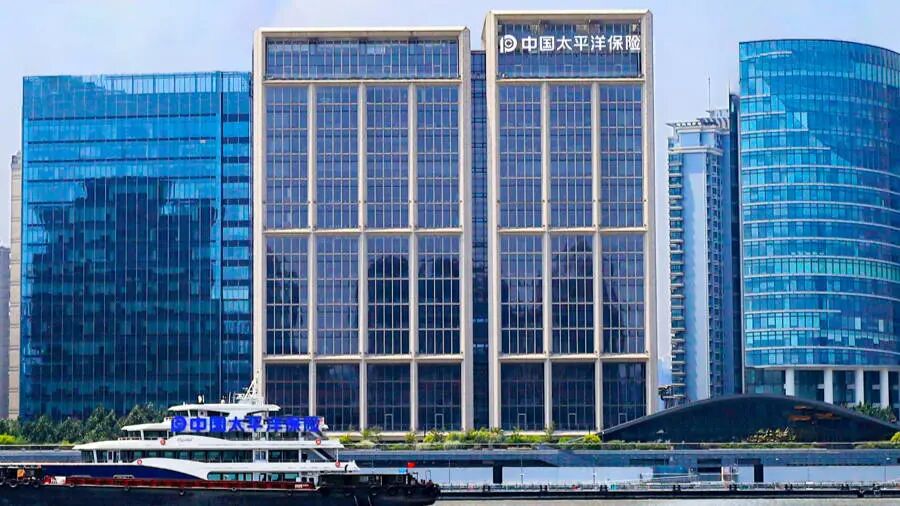
48岁刘龙“上位”中国太保首席投资官,3万亿资金舵手有何来头?
Xin Lang Cai Jing· 2026-01-04 09:48
Core Viewpoint - The appointment of Liu Long as Chief Investment Officer of China Pacific Insurance Group is a strategic move aimed at enhancing the alignment between the group's asset allocation strategy and business development needs [2][3][16] Group 1: Personnel Changes - Liu Long has been appointed as Chief Investment Officer (CIO) of China Pacific Insurance Group, pending regulatory approval, while Su Gang will continue to fulfill the CIO duties until then [2][3][16] - The board meeting also marked the departure of former Chief Actuary Zhang Yuanhan, who has resigned from all positions within the company [2][3][16] - This personnel change is seen as a planned transition, with Liu Long previously serving as Chairman of Taibao Capital, the group's unified insurance private equity fund management platform [4][19] Group 2: Financial Performance - In the first three quarters of 2025, China Pacific Insurance achieved a net profit of 457 billion yuan, with total assets reaching 30,776.4 billion yuan, an increase of 8.6% from the beginning of the year [10][21] - The investment assets of the group amounted to 29,747.84 billion yuan, reflecting an 8.8% growth compared to the end of the previous year [10][21] - The insurance service revenue for the same period was 2,168.94 billion yuan, showing a year-on-year growth of 3.6% [10][21] Group 3: Capital Operations - China Pacific Insurance has been actively expanding its capital operations, launching several funds including a 300 billion yuan strategic new merger fund and a 200 billion yuan private securities investment fund [9][20] - The company has established multiple private equity funds, with a total subscription scale exceeding 400 billion yuan within a year of Taibao Capital's establishment [8][19] - The group is strategically positioning itself to support regional development initiatives, particularly in Shanghai, by collaborating with local enterprises to form new management partnerships [9][20]


经营情况大幅向好!长江证券前三季度成绩出炉
Zhong Guo Zheng Quan Bao· 2025-11-02 09:17
Core Insights - Changjiang Securities reported significant improvement in its operational performance for the first three quarters of 2025, achieving record highs in multiple metrics and ranking among the top listed securities firms [1][2]. Financial Performance - For the first three quarters of 2025, Changjiang Securities achieved total operating revenue of 8.49 billion yuan, ranking 15th among listed securities firms, an improvement of 6 positions year-on-year; this represents a year-on-year growth of 76.66%, ranking 2nd in the industry [2][3]. - The net profit attributable to shareholders reached 3.37 billion yuan, ranking 13th among listed securities firms, an improvement of 4 positions year-on-year; this reflects a year-on-year growth of 135.2%, ranking 7th in the industry [2][3]. - As of the end of Q3 2025, the net assets of Changjiang Securities reached a record high of 41.69 billion yuan, a year-on-year increase of 10% [2]. - The weighted average return on equity for the first three quarters was 9.23%, an increase of 5.21 percentage points year-on-year, ranking 1st among listed securities firms, an improvement of 19 positions [2]. Business Segment Highlights - In the first three quarters of 2025, Changjiang Securities saw significant contributions from its brokerage business, with net income from brokerage fees increasing by 59%, ranking 14th among listed securities firms [3]. - The scale of funds lent in credit business ranked 13th among listed securities firms, improving by 3 positions year-on-year [3]. - Investment business revenue surged by 290%, ranking 1st among listed securities firms; investment income reached 2.362 billion yuan, a year-on-year increase of 615.06% [3]. Strategic Developments - Changjiang Securities is enhancing its service quality and efficiency, focusing on deepening its strategy in Hubei province to provide comprehensive financial services [4]. - In August, the major shareholder completed a share transfer, increasing its stake to 17.41%, with the total shareholding of Changjiang Industry Group and its concerted parties rising to 28.22%, making it the largest shareholder [4]. - The company aims to strengthen its governance structure, which is expected to bring more strategic resources and collaborative development opportunities [4]. - Changjiang Securities is committed to four service functions: supporting the real economy, fostering technological innovation, managing social wealth, and addressing regional strategic needs, while seizing market opportunities to enhance core capabilities [4].

【广发宏观郭磊】四中全会公报关键细节研读
郭磊宏观茶座· 2025-10-23 14:11
Core Viewpoint - The article discusses the key points and timelines related to the "14th Five-Year Plan" (十四五规划) and the upcoming "15th Five-Year Plan" (十五五规划), emphasizing the importance of high-quality development, technological self-reliance, and various strategic initiatives for economic and social progress in China [1][2][3]. Summary by Sections Planning Timeline - The timeline for the "15th Five-Year Plan" includes several key meetings and publications, starting with the Politburo meeting in July, followed by the Fourth Plenary Session in October, and concluding with the National People's Congress in March 2026, which will review and publish the plan's outline [1][8]. Development Goals - The main goals for the "15th Five-Year Plan" include achieving significant results in high-quality development, enhancing technological self-reliance, deepening reforms, improving social civilization, and ensuring national security [2][10][11]. Modern Industrial System - The plan emphasizes maintaining a reasonable proportion of manufacturing, establishing an advanced manufacturing backbone, and fostering new and future industries while optimizing traditional sectors [3][12]. Technological Innovation - The focus is on seizing opportunities from the new technological revolution, enhancing original innovation, and addressing key core technology challenges to establish a leading position in global technological innovation [4][14]. Expanding Domestic Demand - The strategy aims to lead new supply with new demand and create new demand through supply, promoting a healthy interaction between consumption and investment [6][15]. Deepening Reforms and Expanding Opening-Up - The plan outlines over 300 reform measures to be implemented by 2029, focusing on economic system reforms and maintaining a multilateral trade system amid external challenges [5][16][17]. Regional Strategy - The emphasis is on leveraging key regional growth drivers and enhancing marine economic development, indicating a strategic focus on specific areas to boost overall economic growth [6][19]. Agriculture and Livelihood - The plan aims to modernize rural living conditions and promote high-quality real estate development, indicating a shift in policy focus towards improving living standards and housing quality [6][20]. Green Development and National Security - The plan includes accelerating the establishment of a new energy system and enhancing national security capabilities in critical areas such as food and energy security [7][22][23]. Work Deployment for the Current Year - The emphasis is on achieving economic and social development goals for the year, stabilizing employment, businesses, and market expectations, and ensuring effective implementation of existing policies [7][25].

坚持全国一盘棋思想 系统性增强我国经济发展韧性(深入学习贯彻习近平新时代中国特色社会主义思想·学习《习近平经济文选》第一卷专家谈)
Ren Min Ri Bao· 2025-10-21 22:06
Core Viewpoint - The concept of "national chess" is essential for transforming China's institutional advantages into economic resilience, emphasizing coordinated development as a key strategy for success [2][4]. Group 1: National Strategy and Economic Resilience - The "national chess" approach integrates various regional strengths and promotes coordinated development, which is crucial for enhancing confidence and collective efforts in economic growth [3][4]. - This strategy is rooted in Marxist systemic views and China's historical governance practices, aiming to optimize overall goals through collaboration among subsystems [3][4]. - The current complex global environment necessitates a unified approach to address risks and challenges, ensuring national security and long-term development goals [3][4]. Group 2: Economic Development and Challenges - The "14th Five-Year Plan" period is critical for solidifying the foundation of socialist modernization, facing both external geopolitical risks and internal economic transitions [5][6]. - Key internal challenges include the need for deeper integration of technological and industrial innovation, improved financial services for the real economy, and enhanced regional development strategies [6][7]. Group 3: Systematic Approaches to Economic Growth - Emphasizing a systematic and coordinated approach is vital for enhancing the stability and security of economic development, particularly in the face of external pressures [6][7]. - The integration of various sectors and the promotion of a unified national market are essential for maintaining economic circulation and resilience [15][19]. Group 4: Financial and Industrial Development - Financial high-quality development serves as a "shock absorber" for the economy, ensuring that financial systems support real economic growth while managing risks effectively [13][19]. - The development of a modern industrial system characterized by digitalization and sustainability is crucial for fostering new productive forces and enhancing economic resilience [16][17]. Group 5: Regional Coordination and Strategic Development - Strengthening regional strategies and promoting coordinated development across different areas can enhance overall economic resilience and stability [12][18]. - The focus on regional characteristics and advantages allows for a more tailored approach to economic development, fostering collaboration and resource optimization [12][18].