医康养融合

Search documents
医康养融合加速保险业转型
Jing Ji Ri Bao· 2026-01-12 22:12
Core Insights - The aging population is driving the medical and health care industry from a marginal issue to a core component of economic and social development [1] - Insurance is evolving from a mere risk compensation tool to a critical connector within the medical, rehabilitation, elderly care, and payment systems, becoming an indispensable part of the health care industry [1] Demographic Changes - By the end of 2024, the population aged 60 and above in China is expected to exceed 300 million [1] - There is a significant increase in chronic diseases among the elderly, leading to a rising demand for long-term care and medical services [1] Financial Pressures - The growth rate of medical insurance fund expenditures is consistently outpacing income growth due to accelerated aging and advancements in medical technology [2] - A growing "protection gap" is emerging as many rehabilitation, nursing, and special medical expenses remain out-of-pocket for families [2] Role of Insurance - The unique value of insurance lies in its ability to connect customer needs, service supply, and funding payments, creating a closed-loop operational mechanism [2] - Some regions are beginning to integrate insurance products with rehabilitation and nursing services, allowing policyholders to access cash benefits and direct service resources [2] Challenges for Commercial Health Insurance - Current commercial health insurance products often focus on short-term hospitalization, which does not align with the long-term care needs of the elderly [3] - Pricing pressures exist due to high risks and costs associated with elderly care, making it challenging to balance affordability for consumers and sustainability for insurance companies [3] Future Outlook - The medical and health care industry is expected to evolve into a comprehensive system encompassing payment, services, and industry chain collaboration as the "silver economy" and elderly finance become national development priorities [3]
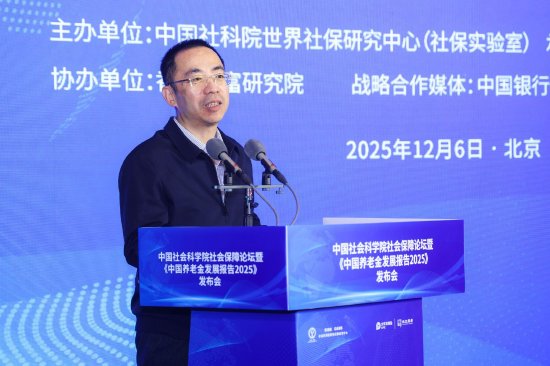
赵宇龙:商业保险在发展养老金融方面具备三方面的独特优势
Xin Lang Cai Jing· 2025-12-06 04:59
Core Viewpoint - The forum highlighted the unique advantages of commercial insurance in developing pension finance, emphasizing its role in addressing longevity risk, long-term fund management, and product diversification [3][4][6]. Group 1: Advantages of Commercial Insurance - Longevity Risk Management: Commercial annuities effectively transfer longevity risk through actuarial techniques and a large pool of insured individuals, allowing for lifelong payouts and addressing insufficient pension savings [4][10]. - Long-term Fund Management: Insurance funds are stable and patient capital, with extensive experience in managing long-term asset-liability matching and risk control, which is essential for the capital-intensive and long-cycle nature of the pension industry [4][10]. - Product Diversification: The evolution of pension services towards home, community, and institutional care has led to a more refined and diverse demand for products, including various types of insurance that cater to different demographics and needs [5][11]. Group 2: Regulatory Support and Industry Development - Regulatory Focus: The National Financial Regulatory Administration is actively supporting the development of commercial pension insurance, with initiatives like the launch of dedicated commercial pension insurance trials in 2021 and their normalization in 2023 [6][12]. - Product Availability: Over 120 personal pension products are currently available in the market, reflecting the industry's response to the growing demand for pension solutions [6][12]. - Financial Contributions: By the "14th Five-Year Plan" period, the accumulated reserves for commercial pension and health insurance reached 11 trillion yuan, with significant payouts for health-related claims and the establishment of 130 pension community projects [6][12].

深耕银发经济,创新国企养老路——金龄健康董事长冯继军专访
Sou Hu Cai Jing· 2025-08-26 03:51
Core Viewpoint - The article discusses how Jining Health Industry Investment (Shandong) Co., Ltd. is addressing the challenges of the aging population in Shandong through a dual approach of "responsibility + innovation" in the silver economy sector [5][6]. Group 1: Company Strategy - Jining Health has been operating the Jinan Elderly Service Center since 2018, contributing to the transformation and upgrading of elderly care services in the city [5]. - The company emphasizes affordable elderly care, offering services at a lower cost compared to market rates, while maintaining high-quality care [5][6]. - The integration of "medical care, health, and elderly care" is a key strategy, ensuring that elderly individuals receive comprehensive services within the same facility [8]. Group 2: Service Innovation - The company has developed a smart elderly care platform that monitors health data in real-time, enhancing service efficiency and supporting precise care [6]. - Jining Health has adopted a "home-like" environment for elderly care, incorporating nostalgic elements to create a comfortable atmosphere for residents [7]. - The company offers a variety of educational and recreational programs for the elderly, addressing their desire for lifelong learning and engagement [7]. Group 3: Future Plans - Future plans include extending service standards from institutional care to home settings and developing age-friendly smart devices to enhance at-home care [9]. - The company aims to balance economic viability with social responsibility, ensuring dignified and quality elderly care for a broader population [9].
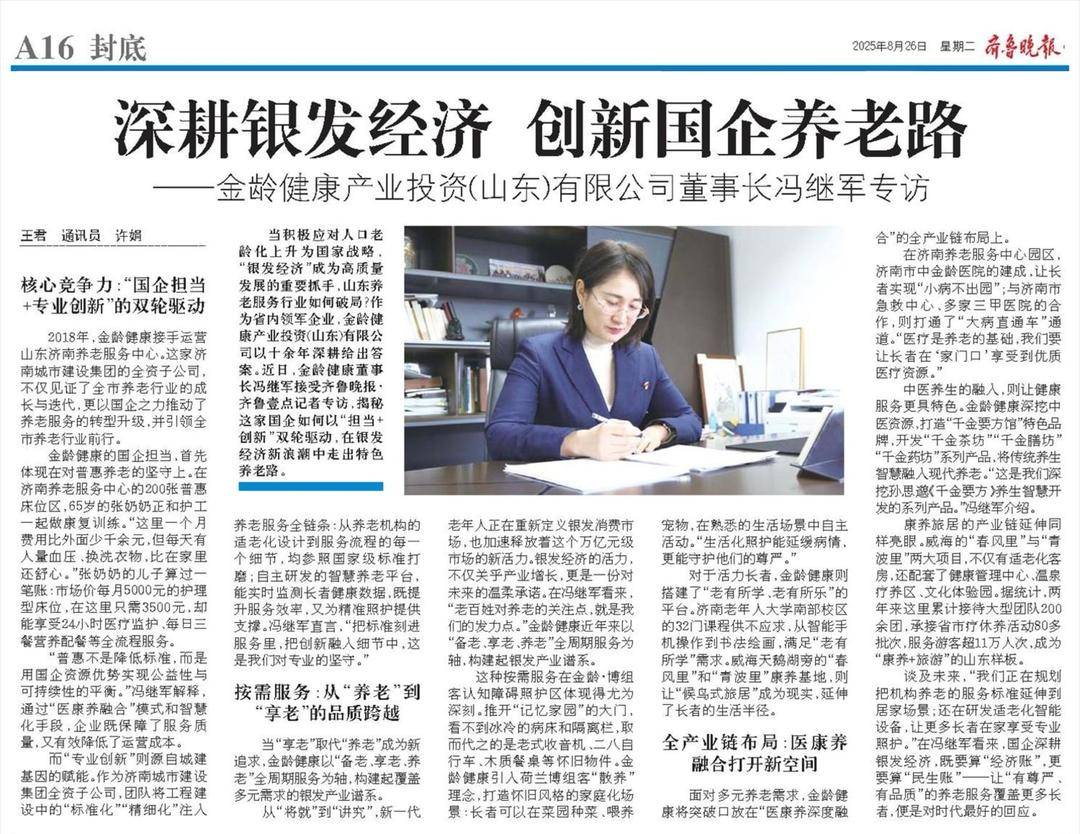
深耕银发经济 创新国企养老路
Qi Lu Wan Bao· 2025-08-25 22:00
Core Viewpoint - The article highlights how Jinling Health Industry Investment (Shandong) Co., Ltd. is addressing the challenges of the aging population in Shandong by leveraging its strengths as a state-owned enterprise to innovate and provide quality elder care services [2][3]. Group 1: Company Strategy - Jinling Health has adopted a dual approach of "responsibility + innovation" to drive its operations in the silver economy, focusing on both public welfare and sustainable development [3]. - The company emphasizes affordable elder care, offering services at a significantly lower cost compared to market rates, while maintaining high-quality care through a "medical-care-nursing integration" model [3][4]. Group 2: Service Innovation - The company integrates standardized and refined engineering practices into elder care services, ensuring that all aspects of service adhere to national standards [4]. - Jinling Health has developed a smart elder care platform that monitors health data in real-time, enhancing service efficiency and supporting precise care [4]. Group 3: Comprehensive Service Offerings - Jinling Health has transitioned from traditional elder care to a more holistic "enjoying old age" approach, providing a full cycle of services that cater to diverse elder needs [5][6]. - The company has created a nostalgic and homely environment for dementia care, allowing seniors to engage in familiar activities, which helps maintain their dignity and slows disease progression [5]. Group 4: Medical Integration - The establishment of Jinling Hospital within the elder care center allows seniors to access medical services conveniently, ensuring that minor health issues can be addressed on-site [7]. - Collaborations with local hospitals and emergency services facilitate a seamless transition for seniors requiring more intensive medical care [7]. Group 5: Future Plans - Jinling Health is planning to extend its service standards from institutional care to home care settings and is developing age-friendly smart devices to enhance at-home care for seniors [8].