
商业医疗保险

Search documents
高效、精准、便捷 金融“活水”润泽消费“沃土”为假日经济添动能
Yang Shi Wang· 2026-02-12 02:51
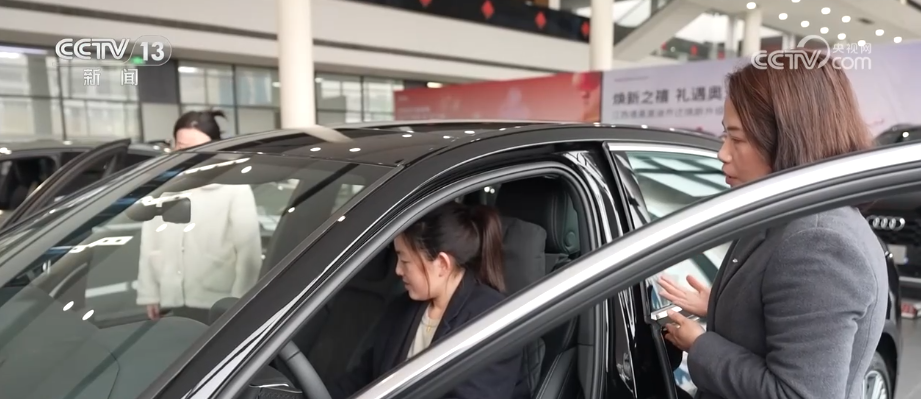
Core Viewpoint - The Chinese government is promoting financial institutions to enhance innovation in financial products and services during the Spring Festival, focusing on key consumer areas to provide efficient and convenient financial services [1] Group 1: Consumer Loan Support - Financial institutions are encouraged to increase personal consumption loan issuance, determining reasonable loan issuance ratios, terms, and interest rates to support the replacement of durable consumer goods such as automobiles, home appliances, and home renovations [3] - The development of comprehensive grading systems for insurance models is being accelerated to effectively promote automobile consumption [3] Group 2: Service Consumption Enhancement - There is a push to develop commercial insurance annuity products that combine elderly risk protection and wealth management functions, as well as commercial medical insurance that benefits chronic disease patients and the elderly [5] - The development of commercial long-term care insurance is being strongly promoted, alongside optimizing financial service models in cultural tourism, sports, entertainment, and education sectors to stimulate service consumption [5] Group 3: New Consumption Models - Financial institutions are encouraged to broaden online financial support channels for consumption, collaborating with merchants to develop financial products and services that cater to new consumption characteristics [7] - Support is being provided for the development of digital consumption, experiential consumption, smart consumption, and customized consumption models [7]

九部门真金白银发力“乐购新春”
Sou Hu Cai Jing· 2026-02-11 23:19
Core Viewpoint - The Ministry of Commerce is launching the "Happy Shopping Spring Festival" initiative to stimulate consumer spending during the upcoming Lunar New Year, with a focus on providing substantial financial support and promotional activities to enhance holiday consumption [1][3]. Group 1: Policy Initiatives - The "Happy Shopping Spring Festival" will mobilize numerous national trade associations and local businesses to participate in activities aimed at boosting consumer demand across various sectors, including food, accommodation, travel, and entertainment [1][3]. - A total of 2.05 billion yuan will be allocated to provide direct benefits to consumers through vouchers, subsidies, and red envelopes during the nine-day holiday period [1][3]. - The initiative includes three major packages: trade-in subsidies, prize invoices, and financial support, with 62.5 billion yuan in national subsidies already distributed to local commerce departments [3]. Group 2: Financial Services - Financial institutions are key participants in the "Happy Shopping Spring Festival," with plans to enhance resource allocation and innovate financial products to meet diverse consumer needs [5]. - There will be an increase in personal consumption loans, particularly for durable goods like automobiles and home appliances, to support the trade-in policy [5]. - The initiative encourages the development of commercial insurance products that cater to specific demographics, such as the elderly and patients with chronic diseases, to enhance service consumption [5][6]. Group 3: Consumer Experience for International Visitors - Policies will be implemented to improve the digital services for foreign visitors, including increased flight capacity on popular international routes [4]. - Multi-language maps of Chinese New Year customs will be promoted to help international travelers engage with local traditions [4]. - A total of 13,000 tax refund stores will offer high-quality products, allowing foreign visitors to enjoy discounts equivalent to 10% off [4]. Group 4: Consumption Trends and Future Outlook - The "14th Five-Year Plan" period is identified as a transformative phase for China's consumption, with retail sales expected to exceed 40 trillion yuan and 50 trillion yuan, making consumption a primary driver of economic growth [7]. - The Ministry of Commerce aims to combine consumer welfare with economic stimulation, promoting a "Buy in China" brand to support domestic market development and high-quality growth [7][8]. - Future initiatives will focus on expanding service consumption and fostering new consumption models, including digital, green, and intelligent consumption [8].

多部门送政策红包
第一财经· 2026-02-11 14:57
Core Viewpoint - The article discusses the Chinese government's initiatives to boost consumer spending during the upcoming Spring Festival, highlighting various financial support measures and promotional activities aimed at enhancing market supply and consumer confidence [3]. Group 1: Consumer Support Initiatives - The government has allocated 20.5 billion yuan to directly benefit consumers, including over 3.6 billion yuan in consumption subsidies and a prize draw for invoices during the 9-day holiday, with a total prize pool exceeding 1 billion yuan [3][5]. - Three major packages have been introduced: 1. Trade-in subsidies for old goods during the holiday [5]. 2. A lottery for invoices in 50 cities, with 10 billion yuan in rewards over six months [5]. 3. Financial support from banks and payment institutions to offer various discounts across multiple consumer sectors [5][6]. Group 2: Financial Support and Policy Adjustments - The financial regulatory authority has optimized two interest subsidy policies, including credit cards in the consumer loan subsidy scope and increasing the subsidy limits [6]. - Financial institutions are encouraged to develop tailored financial products for new consumption patterns, focusing on digital, green, and intelligent consumption [6][7]. - There is a push for increased personal consumption loans, particularly for durable goods like automobiles and home appliances, to stimulate consumption [7]. Group 3: Market Supply Assurance - The Ministry of Commerce has organized measures to ensure the supply of essential goods during the holiday, with significant increases in inventory levels for staple foods [10][11]. - Data shows that key supermarkets have increased their stock of grains, meats, and vegetables by over 20% compared to the previous month [10]. - The government is also implementing price stabilization measures and ensuring that essential goods are available at reasonable prices to support consumer needs during the festive season [12].
“史上最长”春节假期来临,多部门联动送政策红包
Di Yi Cai Jing· 2026-02-11 13:22
Core Viewpoint - The Chinese government is implementing a series of measures to boost consumer spending during the upcoming Spring Festival, including financial support, consumption subsidies, and promotional activities aimed at enhancing market supply and consumer confidence [1][2][7]. Group 1: Consumer Support Measures - The government has prepared three major packages for consumers during the Spring Festival: 1. Trade-in subsidies to encourage consumers to exchange old products for new ones [2]. 2. A lottery for receipts, with over 1 billion yuan allocated for prizes during the holiday period [2]. 3. Financial support from banks and financial institutions to promote various consumer activities, including travel and dining [2][3]. Group 2: Financial Support and Policy Adjustments - Financial regulatory authorities are optimizing interest subsidy policies for consumer loans, including credit cards, to lower financing costs and enhance consumer access to credit [3][4]. - Financial institutions are encouraged to develop tailored financial products for new consumption trends, such as digital and green consumption, to meet diverse consumer needs [3][4]. Group 3: Market Supply Assurance - The government is ensuring sufficient supply of essential goods during the Spring Festival, with significant increases in inventory levels for staple foods and other necessities [7][8]. - Various regions are actively coordinating with suppliers to secure adequate stock and maintain stable prices, with measures such as government reserve meat and vegetable releases [8][9]. Group 4: Cultural and Tourism Activities - The Ministry of Culture and Tourism is promoting diverse cultural and tourism activities to enhance consumer experiences during the holiday, including special events and discounts [5][6]. - The integration of tourism with other sectors, such as sports and health, is being emphasized to create new consumption scenarios and stimulate spending [5].
金融监管总局郭武平:保险公司将针对购物餐饮等各类消费场景开发新产品
Bei Jing Shang Bao· 2026-02-11 09:48
Group 1 - The State Council Information Office held a press conference on February 11 to introduce the 2026 "Lego New Spring" special event and ensure market supply during the Spring Festival [1] - The spokesperson from the Financial Regulatory Administration announced that insurance companies will develop new insurance products targeting various consumption scenarios such as shopping, dining, travel, and sports [1] - In the consumer goods sector, there will be an emphasis on enhancing the functionality of auto insurance platforms and second-hand car information services, along with accelerating the establishment of a comprehensive vehicle classification system to promote automobile consumption [1] Group 2 - In the service consumption sector, there is a focus on integrating consumption promotion with improving people's livelihoods, better meeting the service consumption needs related to elderly care and health [1] - The development of commercial insurance annuity products that combine elderly risk protection with wealth management is encouraged, along with support for commercial health insurance aimed at chronic disease patients and the elderly [1] - There is a strong push for the development of commercial long-term care insurance and the optimization of financial service models in areas such as culture, tourism, sports, and education to stimulate the vitality of improved service consumption [1]
金融监管总局郭武平:鼓励金融机构加大消费领域资源投入
2 1 Shi Ji Jing Ji Bao Dao· 2026-02-11 08:17
Core Viewpoint - The Chinese government is implementing financial support measures to stimulate consumer spending during the 2026 "Lego New Spring" festival, focusing on reducing costs, improving services, benefiting people's livelihoods, and strengthening guarantees [1][2][3] Group 1: Cost Reduction - The financial regulatory authority has introduced interest subsidy policies for personal consumption loans, reducing the interest rate by 1 percentage point [1] - Recent adjustments include expanding the scope of interest subsidies to credit cards and increasing the subsidy amount, with a broader range of financial institutions involved [1] Group 2: Service Improvement - Financial institutions are encouraged to develop tailored financial products for new consumption scenarios such as digital, green, and intelligent consumption, enhancing service adaptability and convenience [2] - Collaboration with key merchants to offer consumer incentives like cash rebates and discounts is emphasized to better serve social welfare [2] Group 3: Livelihood Benefits - Financial institutions are tasked with assisting local governments in organizing consumption promotion activities and providing value-added services [2] - New insurance products targeting shopping, dining, and travel are being developed to optimize coverage and claims services [3] Group 4: Strengthening Guarantees - Financial institutions will ensure adequate branch operations during holidays to meet basic financial service needs [2] - There is a focus on enhancing payment convenience for specific groups such as the elderly and foreign visitors [3] Group 5: Consumer Rights Protection - The financial regulatory authority will strengthen consumer rights protection by improving product information disclosure and data security [3] - Efforts will be made to promote financial literacy among key demographics, including new citizens and the elderly, to encourage rational consumption [3] Group 6: Future Directions - The financial regulatory authority plans to continue guiding policies that encourage increased resource investment in the consumer sector and enhance the quality of financial services [3]
金融监管总局:鼓励开发兼具养老风险保障和财富管理功能的商业保险年金产品
Xin Lang Cai Jing· 2026-02-11 07:00
Core Viewpoint - The "Lego New Spring" special event for the 2026 Spring Festival aims to enhance market supply and stimulate consumption, with financial institutions playing a crucial role in this initiative [1][2]. Group 1: Financial Institutions' Role - Financial institutions are key participants in the "Lego New Spring" event, emphasizing the importance of expanding domestic demand and promoting consumption as part of their service to the real economy [1][2]. - The financial regulatory authority encourages financial institutions to optimize resource allocation and innovate financial products and services, focusing on key consumption areas to provide efficient and precise financial services [1][2]. Group 2: Consumer Services - The initiative aims to combine consumption promotion with improving people's livelihoods, particularly addressing the needs of elderly care and health services [1][2]. - There is encouragement for the development of commercial insurance products that integrate retirement risk protection with wealth management, as well as medical insurance tailored for chronic disease patients and the elderly [1][2]. - The promotion of commercial long-term care insurance is a significant focus, alongside optimizing financial service models in cultural tourism, sports, entertainment, and education sectors to stimulate service consumption [1][2].
金融监管总局:春节期间将加大个人消费贷款投放 支持汽车等产品以旧换新
智通财经网· 2026-02-11 04:02
Core Viewpoint - The Chinese government is launching the "2026 'Happy Shopping Spring Festival'" initiative to boost consumer spending during the upcoming Spring Festival, with a focus on financial support, promotional activities, and enhancing consumer experiences across various sectors [1][2][4]. Group 1: Financial Support and Consumer Loans - Financial institutions are encouraged to increase personal consumption loans, with a focus on supporting durable goods such as automobiles and home appliances through trade-in programs [1][48]. - The government has allocated 62.5 billion yuan in subsidies to support the trade-in program during the nine-day Spring Festival holiday [2][10]. - Financial institutions will collaborate with merchants to offer various promotional measures, covering travel, dining, and entertainment sectors [2][11]. Group 2: Consumer Spending Trends - In 2025, the total retail sales of consumer goods exceeded 50 trillion yuan, with final consumption contributing 52% to economic growth, an increase of 5 percentage points from the previous year [4][28]. - The sales of related goods under the trade-in program reached 2.61 trillion yuan, benefiting 366 million people [4][28]. - The online retail sales during the national online New Year goods festival reached 989.73 billion yuan, indicating a strong consumer demand [19]. Group 3: Promotional Activities and Consumer Engagement - The "Happy Shopping Spring Festival" will feature a series of promotional activities, including a lottery for invoices in 50 cities, with a total prize pool of 10 billion yuan during the holiday [2][10]. - Various sectors, including food, accommodation, transportation, and entertainment, will offer discounts and special packages to enhance consumer experiences [6][10]. - The government aims to create a vibrant consumer atmosphere by organizing numerous cultural and tourism activities during the Spring Festival [34][35]. Group 4: New Consumption Models - The initiative promotes the integration of online and offline services, encouraging financial institutions to develop products tailored to new consumption patterns such as digital and experiential consumption [2][49]. - The focus is on enhancing financial services for elderly and chronic disease patients, with the development of commercial insurance products that combine risk protection and wealth management [1][48]. - The government is also promoting the use of technology, such as big data and the internet, to expand online financial support channels for consumers [2][49].
郑路遥任首席执行官;曾上游任临时负责人;非上市险企Q4业绩出炉
Sou Hu Cai Jing· 2026-02-06 15:39
Policy and Regulation - The State Council held a meeting on February 6, emphasizing the importance of promoting effective investment to stabilize economic growth and enhance development momentum. It aims to innovate and improve policy measures, utilizing central budget investments, long-term special bonds, and local government bonds to support major projects in key areas such as infrastructure and emerging industries [1] - The Financial Regulatory Bureau announced that from June 1, 2026, insurance institutions will be subject to financial licenses, requiring existing insurance license holders to apply for a new financial license between June 1, 2026, and May 31, 2028 [4] Industry Dynamics - In 2025, the insurance industry achieved a record net profit of 666 billion yuan, a 33% increase compared to the previous highest level in 2021, despite a decrease in the number of reporting insurance companies [5] - The property insurance sector reported a total profit of 145.88 billion yuan in Q4 2025, a significant increase of 170.47% year-on-year, with 90.9% of companies reporting profits [6] - The total assets of the insurance industry grew by 15.06% in 2025, reaching 4.13145 trillion yuan, with premium income increasing by 7.43% to 61.194 billion yuan [5][6] Company News - Sheneng Property Insurance emerged as a strong performer in 2025, achieving a net profit increase of nearly 29 billion yuan and surpassing 100 billion yuan in premium income, marking a year-on-year growth of over 370% [15] - China Ping An increased its stake in China Life Insurance H-shares to 10.12% by acquiring 10.895 million shares at an average price of 33.2588 HKD per share, totaling approximately 362 million HKD [24] - China Life Insurance reported a total premium income exceeding 730 billion yuan in 2025, reflecting strong operational performance [16] Personnel Changes - Wang Gang, an "80s" generation executive, has been appointed as the chairman of Lujiazui Guotai Life Insurance, marking a significant leadership change as the company aims for further growth [22] - Several high-level personnel changes occurred at Sunshine Property Insurance, including the appointment of new roles for existing executives [23] Investment Trends - Insurance funds have increasingly participated in cornerstone investments in Hong Kong stocks, with a total subscription amount nearing 1 billion yuan across seven companies in early 2026 [28] - The total amount of cornerstone investments in January 2026 exceeded 18.5 billion HKD, marking a year-on-year increase of over 13 times, primarily driven by insurance funds and foreign institutions [28]


上海:支持市场主体建立第三方国际医疗保险结算平台
Jin Rong Jie· 2026-02-04 02:22
Group 1 - The Shanghai Municipal Government has issued regulations to encourage overseas students to work and start businesses in Shanghai [1] - The regulations promote the development of commercial health insurance products tailored to the medical needs of overseas students by Shanghai insurance companies [1] - Hospitals that meet certain criteria are encouraged to strengthen cooperation with domestic and international insurance companies to join the direct payment network of international medical insurance [1] Group 2 - The regulations support market entities in establishing third-party international medical insurance settlement platforms [1]