南向资金抄底

Search documents
三重压力,恒生科技继续回调,南向资金逆势“抄底”,机构:互联网龙头静待修复
Xin Lang Cai Jing· 2026-03-04 03:00
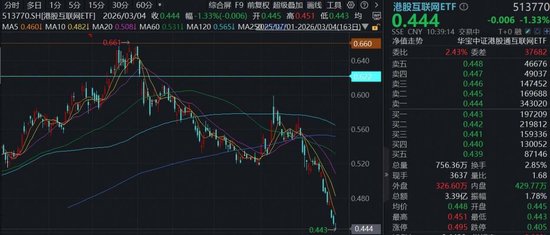
Core Viewpoint - The Hong Kong stock market is experiencing a significant adjustment, particularly in the technology sector, driven by concerns over high expenditures, competition from new AI players, and liquidity pressures due to changing Federal Reserve interest rate expectations [3][11]. Market Performance - On March 4, the Hong Kong stock market opened lower, with the Hang Seng Index and Hang Seng Tech Index both dropping over 1%. The Hong Kong Internet ETF (513770) fell by 1.33%, reaching a new low since July 2025. Major internet companies like Alibaba-W, Meituan-W, and Tencent Holdings saw declines of over 3%, nearly 2%, and 0.88%, respectively [1][9]. Investment Trends - Despite the market downturn, southbound capital has been consistently increasing. As of March 3, there were 27 net inflow trading days out of 36 this year, totaling a net inflow of 181.8 billion HKD. Major internet companies have seen significant increases in holdings, with Tencent's market value exceeding 540 billion HKD and Alibaba's over 320 billion HKD [3][11]. Sector Analysis - Analysts suggest that the current deep adjustment in the Hong Kong tech sector is due to three main pressures: concerns over high spending on delivery subsidies and AI initiatives, competition from emerging AI companies, and liquidity pressures from revised Federal Reserve interest rate expectations [3][11]. - Investment opportunities are emerging in the Hong Kong Internet sector as policies supporting AI development are expected to enhance the growth of internet companies [3][11]. ETF Insights - The Hong Kong Internet ETF (513770) and its linked funds are designed to track the CSI Hong Kong Internet Index, with the top ten holdings including major players like Alibaba-W, Tencent Holdings, and Xiaomi Group, collectively accounting for over 76% of the index [4][12]. - For investors looking to reduce volatility while still gaining exposure to technology, the Hong Kong Large Cap 30 ETF (520560) is recommended, combining high-growth tech stocks with stable dividend-paying companies [14].


南向资金3天扫货超500亿港元 港股“估值底”吸引逆势布局
Shang Hai Zheng Quan Bao· 2026-02-08 17:31
Core Viewpoint - The Hong Kong stock market is experiencing a correction, while southbound funds are actively buying, indicating a potential undervaluation recovery opportunity in the market [1][2]. Group 1: Market Performance - The Hang Seng Index fell by 4.55% and the Hang Seng Tech Index dropped by 9.39% from January 29 to February 6, 2026, while southbound funds saw a net inflow during this period [2]. - From February 4 to February 6, southbound funds net bought 532.09 billion HKD, with daily net purchases exceeding 100 billion HKD for three consecutive days [2]. - Notably, on February 5, the net purchase reached 249.77 billion HKD, marking the first time since August 15, 2025, that a single-day purchase exceeded 200 billion HKD [2]. Group 2: Investment Strategies - Southbound funds are focusing on "technology + dividends" as their bottom-fishing strategy, with significant investments in Tencent Holdings and Xiaomi Group, net buying 128.84 billion HKD and 121.32 billion HKD respectively [2][3]. - Other companies like China Life, China Construction Bank, Pop Mart, and Kuaishou also received net purchases exceeding 50 billion HKD [2]. Group 3: Valuation Insights - As of February 5, the price-to-earnings (PE) ratio of the Hang Seng Index was only 12 times, while the Hang Seng Tech Index was at 25 times, both at historical low percentiles [3]. - Sectors such as consumer goods, healthcare, telecommunications, and utilities have seen valuations drop below their average since 2015, presenting long-term investment appeal [3]. Group 4: Market Outlook - The recent inflow of southbound funds is expected to boost market sentiment and alleviate liquidity pressure in the offshore market, potentially leading to a rebound in undervalued stocks [4]. - Analysts from various institutions maintain a positive outlook for the Hong Kong stock market, attributing recent adjustments to technical and emotional pressures rather than fundamental changes [4]. - The overall market is characterized by a "moderate recovery in fundamentals, synchronized liquidity improvement, and neutral to warm sentiment," suggesting a favorable investment environment [4].


港股反弹韧性大超预期,后市关注三条主线
Mei Ri Jing Ji Xin Wen· 2025-05-12 03:31
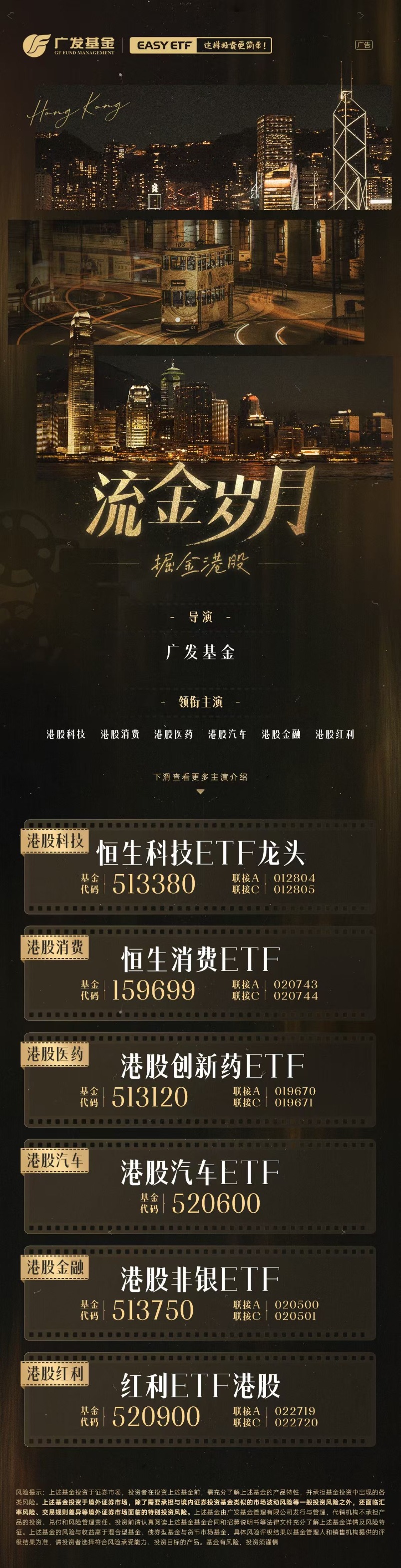
Group 1 - The Hang Seng Index and Hang Seng Tech Index experienced significant declines of 13.2% and 17.2% respectively on April 7, but showed a strong recovery by May 9, with recovery rates of 91.5% and 78.2% from their April lows, indicating unexpected resilience in the market [1] - The unexpected rebound is attributed to three main factors: large-scale southbound capital buying providing support to the Hong Kong stock market; the collective response of major funds injecting confidence into the market; and the return of Asian currencies amid a U.S. Treasury sell-off, increasing demand for local assets [1] - Specific sectors such as Hong Kong automotive, innovative pharmaceuticals, and consumer goods have returned to levels prior to the tariff impact, with the Hong Kong automotive ETF (520600), innovative pharmaceuticals ETF (513120), and Hang Seng Consumer ETF (159699) rising over 21.0%, 20.4%, and 15.3% respectively, ranking among the top in the market [1] Group 2 - Looking ahead, Huatai Securities noted a positive attitude towards capital market policies from the State Council's press conference on May 7, particularly supporting technology and consumer sectors, which positively impacts the Hong Kong stock market [2] - The investment outlook remains optimistic for Hong Kong stocks, with improved policy environment likely to boost risk appetite, suggesting a shift towards more aggressive investment strategies [2] - Mid-term, public fund reforms may further increase domestic capital allocation towards Hong Kong's unique sectors, with a focus on technology and domestic consumption supported by policies, as well as stable performers among dividend stocks [2]