
卡尔达肖夫II级文明

Search documents
卫网君:中国商业航天瓶颈不在复用火箭,而在"兼容性"缺失;马斯克"空天地一体"生态如何重构AI算力版图;太空光伏技术路线全解析
Sou Hu Cai Jing· 2026-02-08 13:31
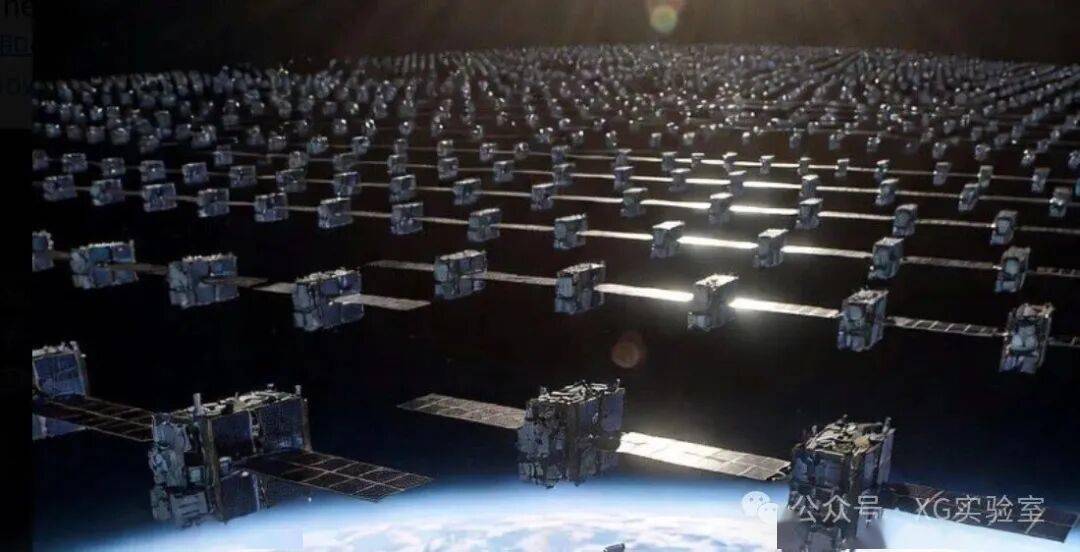
Core Insights - SpaceX has submitted a groundbreaking application to the FCC to launch an "Orbital Data Center System" consisting of up to 1 million satellites, which would be 100 times the current number of satellites in orbit, marking a significant advancement in space infrastructure [3] - The proposed satellite constellation will operate at altitudes between 500 to 2000 kilometers, utilizing a mixed scheme of 30-degree inclination and sun-synchronous orbits to maximize solar energy efficiency [3] - Unlike Starlink, this system is not intended for direct ground communication but is speculated to serve as an AI computing infrastructure, leveraging inter-satellite laser links to create a space-based network powered by solar energy [3] - SpaceX aims to address concerns about space debris by implementing a "design for demise" standard, ensuring that satellites burn up upon failure, with ground casualty risks below 0.01% [3] - If approved, this initiative could usher in a new era of "space as computing power," providing energy and computational support for large-scale AI models and Tesla's Optimus robot network [3] Industry Overview - The space computing industry is transitioning from concept to engineering practice, with SpaceX leveraging its Starlink communication network and Starship launch capabilities to create an integrated "space-earth intelligent internet" [17] - The industry ecosystem includes satellite manufacturing, laser communication, on-orbit computing, and ground gateways, with key players such as SpaceX, Amazon Kuiper, and Telesat [17] - The supply chain involves critical technologies such as spacecraft platforms, efficient energy systems, inter-satellite links, and thermal management in space [17] Technological Developments - SpaceX's plan highlights the potential of space photovoltaics as a solution to energy supply challenges, with advancements in solar technology expected to evolve from gallium arsenide to HJT and ultimately to perovskite tandem cells [20] - Current space power systems primarily use three-junction gallium arsenide, which has high efficiency but is costly; HJT cells are anticipated to dominate low Earth orbit satellites and space data centers from 2026 to 2030 due to their lower cost and strong radiation resistance [20] - The cost of space photovoltaic power supply could be reduced by 22 times compared to ground data centers, making it a promising area for SpaceX's supply chain [20] Competitive Landscape - The competitive landscape includes various players with distinct technological focuses, such as SpaceX's Starlink V3, Google's radiation-resistant TPU chips, and Blue Origin's TeraWave multi-track network [12] - Amazon's Kuiper project faces significant challenges, including a lack of autonomous launch capacity, leading to a reliance on SpaceX for satellite deployment [30] - Blue Origin has shifted its focus from suborbital tourism to lunar exploration, indicating a strategic pivot in response to competitive pressures from SpaceX [33]

刚刚,马斯克收购了马斯克
Sou Hu Cai Jing· 2026-02-03 03:58
Core Viewpoint - SpaceX has officially announced the acquisition of xAI, aiming to create a vertically integrated innovation engine that combines artificial intelligence, rocket technology, satellite internet, and communication systems [2][5]. Group 1: Company Overview - The merged entity is expected to be priced at approximately $527 per share, with a total valuation of $1.25 trillion [4]. - The acquisition is seen as a new chapter for both SpaceX and xAI, focusing on the development of a "conscious sun" to understand the universe and extend consciousness beyond Earth [6]. Group 2: Technological Advancements - The integration of AI and space technology is positioned as a solution to the increasing energy demands of AI, which cannot be met solely by terrestrial data centers [6]. - The plan includes launching a constellation of satellites that will serve as space-based data centers, which is a step towards achieving a Type II Kardashev civilization capable of harnessing the full energy of the sun [6][9]. Group 3: Future Prospects - The company aims to launch one million tons of satellites annually, which could generate an additional 100 GW of AI computing power each year without ongoing operational costs [9]. - The Starship will enhance the capacity for satellite launches, significantly increasing the number of satellites deployed and supporting the development of a sustainable space economy [8][10]. Group 4: Long-term Vision - The initiative includes plans for establishing permanent bases on the Moon and Mars, utilizing local resources for manufacturing and deploying satellites deeper into space [10]. - The overarching goal is to create a self-sustaining base on the Moon and a complete civilization on Mars, ultimately facilitating human expansion throughout the universe [10].
