
天基数据中心

Search documents
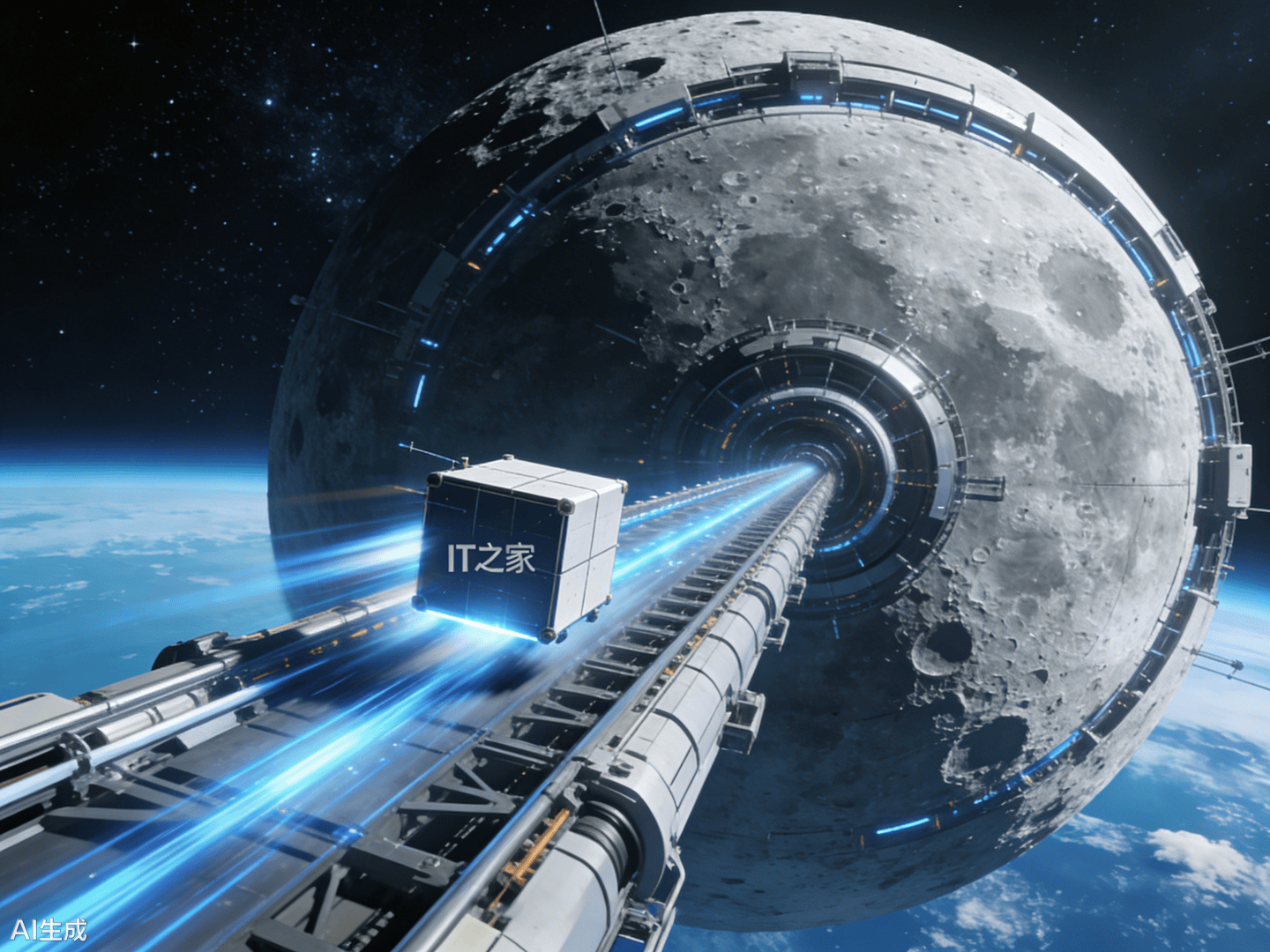
马斯克设想从月球电磁弹射 AI 卫星,计划两三年内实现在太空部署 AI 数据中心
Sou Hu Cai Jing· 2026-02-24 23:51
Core Viewpoint - SpaceX CEO Elon Musk envisions launching satellites into Earth's orbit using an electromagnetic catapult from the Moon to facilitate the deployment of AI-specific data center satellite networks [2][3]. Group 1: Satellite Launch Strategy - Musk plans to construct a giant electromagnetic catapult and a satellite assembly plant on the Moon, which would enhance launch efficiency due to the Moon's low gravity, lack of atmosphere, and abundant solar energy [3]. - The proposed method of launching from the Moon is expected to significantly improve efficiency compared to Earth launches, while also avoiding congestion from existing spacecraft and debris in low Earth orbit [3]. Group 2: AI Infrastructure and Energy Solutions - Musk has expressed concerns that Earth's energy supply cannot meet the explosive growth of AI infrastructure, suggesting that deploying data centers in space could leverage unlimited solar energy to address energy constraints [3]. - The focus will shift to chip production capacity as the primary limiting factor once energy issues are resolved [3]. Group 3: Future Plans and Market Position - Musk indicated that deploying AI data centers in space could be achievable within "two to three years" [3]. - Earlier reports mentioned plans to establish an "orbital data center" network in Earth's orbit, which would create a satellite constellation with unprecedented computing power to support advanced AI models and applications [3]. - SpaceX recently became the highest-valued private company globally, with the core aim of building a space-based data center, which requires continuous satellite launches to ensure stable and scalable revenue in the foreseeable future [3].

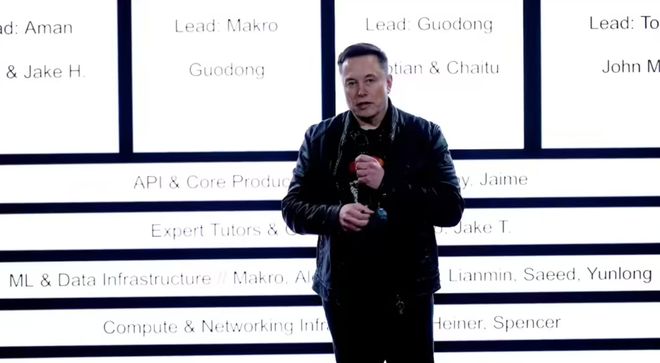
马斯克公布 xAI 新组织架构,提出月球人工智能卫星工厂构想
Huan Qiu Wang Zi Xun· 2026-02-12 03:31
Core Insights - xAI, under Elon Musk, held a rare 45-minute all-hands meeting, revealing its new organizational structure, product development data, and ambitious projects including a lunar AI satellite factory [1][3] Organizational Changes - xAI is undergoing an organizational restructuring, resulting in some employee departures, including members of the founding team. Musk emphasized the need for an adaptable structure in a rapidly growing company, and recruitment efforts are ongoing, particularly for the lunar autonomous vehicle project [3] - The new structure divides xAI into four core teams, each with a specific focus: Team One on Grok chatbot development, Team Two on application coding systems, Team Three on optimizing the Imagine video generation tool, and Team Four on the Macrohard project, which aims to handle a wide range of tasks from simple computer operations to enterprise modeling [3] Product Performance - The latest operational data from xAI and the X platform shows strong market performance, with X's subscription business achieving an annual recurring revenue exceeding $1 billion, attributed to holiday marketing efforts [4] - xAI's Imagine tool generates an average of 50 million videos daily, with over 6 billion images produced in the past 30 days, showcasing its robust content generation capabilities [4] Future Plans - Musk reiterated the importance of a space-based data center, despite existing technical challenges. He proposed the construction of an AI satellite factory on the moon, equipped with a lunar mass driver for satellite launches. This infrastructure could enable the deployment of powerful AI clusters capable of harnessing a significant portion of solar energy and potentially expanding operations to other star systems [4]
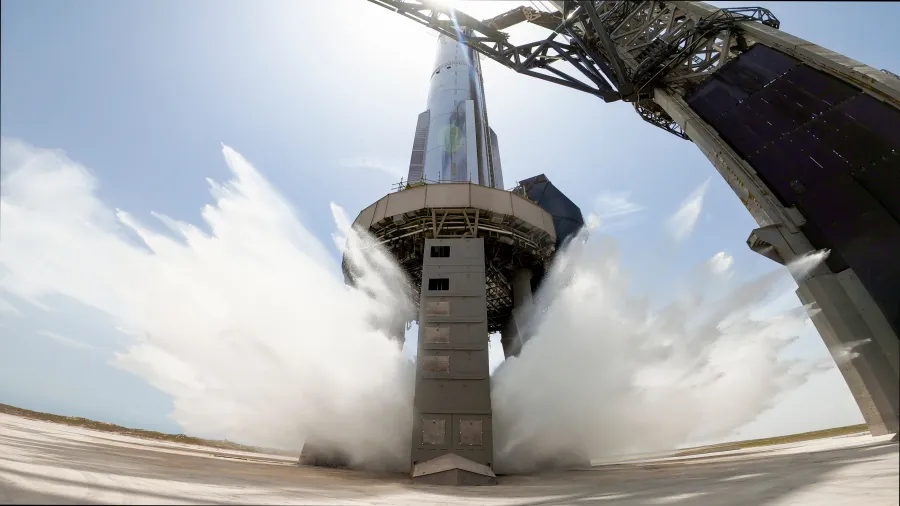
马斯克的 SpaceX 正式收购马斯克的 xAI,计划在太空建造数据中心
Xin Lang Cai Jing· 2026-02-03 12:52
Core Viewpoint - SpaceX has acquired Elon Musk's AI startup xAI, making it the highest-valued private company globally, with a post-merger valuation of $1.25 trillion (approximately 8.7 trillion RMB) [4][11]. Group 1: Acquisition Details - The acquisition aims to create a space-based data center, addressing the high energy consumption and environmental impact of traditional ground-based data centers [3][9]. - xAI is currently facing financial pressure, with a monthly cash burn of approximately $1 billion [6][11]. - SpaceX generates about 80% of its revenue from its Starlink satellite launch business [6][11]. Group 2: Future Plans and Challenges - Musk has indicated that building the space-based data center will require the continuous launch of numerous satellites, which could provide a more stable and larger revenue stream for SpaceX [12]. - Despite the merger's focus on the space data center, SpaceX and xAI have different short-term goals; SpaceX is working on its Starship rocket for lunar and Martian missions, while xAI is competing with major AI firms like Google and OpenAI [12]. - xAI has faced significant competitive pressure, leading Musk to relax usage restrictions on its chatbot Grok, which has raised concerns regarding inappropriate content generation [12].
刚刚,马斯克收购了马斯克
Sou Hu Cai Jing· 2026-02-03 03:58
Core Viewpoint - SpaceX has officially announced the acquisition of xAI, aiming to create a vertically integrated innovation engine that combines artificial intelligence, rocket technology, satellite internet, and communication systems [2][5]. Group 1: Company Overview - The merged entity is expected to be priced at approximately $527 per share, with a total valuation of $1.25 trillion [4]. - The acquisition is seen as a new chapter for both SpaceX and xAI, focusing on the development of a "conscious sun" to understand the universe and extend consciousness beyond Earth [6]. Group 2: Technological Advancements - The integration of AI and space technology is positioned as a solution to the increasing energy demands of AI, which cannot be met solely by terrestrial data centers [6]. - The plan includes launching a constellation of satellites that will serve as space-based data centers, which is a step towards achieving a Type II Kardashev civilization capable of harnessing the full energy of the sun [6][9]. Group 3: Future Prospects - The company aims to launch one million tons of satellites annually, which could generate an additional 100 GW of AI computing power each year without ongoing operational costs [9]. - The Starship will enhance the capacity for satellite launches, significantly increasing the number of satellites deployed and supporting the development of a sustainable space economy [8][10]. Group 4: Long-term Vision - The initiative includes plans for establishing permanent bases on the Moon and Mars, utilizing local resources for manufacturing and deploying satellites deeper into space [10]. - The overarching goal is to create a self-sustaining base on the Moon and a complete civilization on Mars, ultimately facilitating human expansion throughout the universe [10].

马斯克的SpaceX正式收购马斯克的xAI,计划在太空建造数据中心
Sou Hu Cai Jing· 2026-02-02 23:02
Core Viewpoint - SpaceX has acquired Elon Musk's AI startup xAI, making it the highest-valued private company globally, with a post-merger valuation of $1.25 trillion (approximately 8.7 trillion yuan) [1][5]. Group 1: Acquisition Details - The acquisition aims to create a space-based data center, addressing the high energy consumption and environmental impact of traditional ground data centers [4]. - xAI is currently facing financial pressures, with a monthly cash burn of approximately $1 billion [5]. - The merger integrates two companies owned by Musk, both of which are under financial strain [5]. Group 2: Future Plans and Challenges - Musk's vision for the space-based data center involves launching a significant number of satellites, which could provide a more stable and larger revenue stream for SpaceX [5]. - SpaceX is focused on validating its Starship rocket for crewed missions to the Moon and Mars, while xAI is competing with major AI firms like Google and OpenAI [5]. - xAI has relaxed usage restrictions on its chatbot Grok due to competitive pressures, leading to concerns over inappropriate content generation [5]. Group 3: Financial Context - SpaceX generates about 80% of its revenue from its Starlink satellite launch business [5]. - Previous investments in xAI from Tesla and SpaceX amounted to $2 billion each [6].
人类AI算力竞争离开地球表面进入太空,美银报告:巨头都在跟进,极具挑战性
Zhi Tong Cai Jing· 2025-12-18 07:33
Core Viewpoint - The competition for AI computing power is expanding into space, with companies like SpaceX and Blue Origin exploring space-based computing platforms as the next phase of capacity expansion [2][3]. Group 1: Space-Based Computing Platforms - The demand for data centers supporting AI is driving tech and space companies to consider space-based computing platforms for capacity expansion [3]. - Companies such as SpaceX and Blue Origin are actively pursuing opportunities in space to enhance their AI business [3]. - Startups like Starcoud, supported by NVIDIA, are deploying GPUs on satellites to train AI models in orbit, while Google plans to test its hardware and AI models in space by 2027 [3]. Group 2: Technical Challenges - The space environment poses significant technical challenges for the large-scale deployment of high-performance computing payloads [5]. - While sun-synchronous orbits provide strong solar energy, radiation in these environments can damage unshielded electronic devices, necessitating radiation-hardened computing equipment, which increases costs and payload weight [5]. - The thermal management of sensitive chips in the vacuum of space is particularly challenging, with a 1 GW orbital data center potentially requiring heat dissipation 15,000 times greater than that of the International Space Station [5]. Group 3: Launch Demand Growth - The deployment of space-based data centers is expected to increase launch demand, benefiting providers like SpaceX, Blue Origin, and Rocket Lab [6]. - The development of heavy-lift rockets, such as the Starship and New Glenn, may require hundreds of flights to fully deploy a large-scale space data center, creating ongoing launch opportunities [7]. - Even small initial deployments are likely to sustain launch demand exceeding supply, presenting opportunities for major launch providers [7]. Group 4: Impact on Space Infrastructure - The widespread deployment of space-based data centers will generate comprehensive demand for space infrastructure, including satellites, payloads, space stations, and orbital platforms [6][8]. - High-bandwidth secure data transmission required for AI applications will increase the demand for laser communication, with providers like SpaceX and Myani involved in this space [8]. - The deployment of large space assets will create opportunities for developers like Voyager Technologies and Axiom, which plans to deploy orbital data center infrastructure nodes to the International Space Station by 2027 [8].

【特稿】马斯克暗示太空探索技术公司将上市
Xin Hua She· 2025-12-11 11:38
Core Viewpoint - Elon Musk hinted that SpaceX may go public with an IPO, potentially raising over $25 billion and achieving a valuation exceeding $1 trillion [1][2]. Group 1: IPO Plans - SpaceX is reportedly seeking to launch an IPO in mid-2024, with plans to raise over $25 billion [1]. - Bloomberg reported that the IPO fundraising target could exceed $30 billion, with a potential listing timeframe extending to mid-2026 or even 2027 depending on market conditions [1][2]. - The IPO could become the second-largest in history, following Saudi Aramco's IPO in 2019 [1]. Group 2: Financial Projections - SpaceX's revenue is projected to reach approximately $15 billion in 2025, increasing to between $22 billion and $24 billion in 2026, primarily driven by its Starlink business [2]. - The company has maintained positive cash flow for several years and conducts regular stock buybacks to provide liquidity for employees and investors [2]. Group 3: Use of IPO Proceeds - A portion of the funds raised from the IPO is expected to be allocated towards developing space-based data centers, including the purchase of chips [2]. Group 4: Company Status - SpaceX is recognized as the second-highest valued private startup globally, following OpenAI [2].
全球首富马斯克旗下SpaceX计划2026年IPO募资超300亿美元,目标估值约 1.5 万亿美元
Sou Hu Cai Jing· 2025-12-10 03:06
Core Viewpoint - SpaceX is advancing its IPO plan with a fundraising target exceeding $30 billion and a valuation goal of approximately $1.5 trillion [2][3] Group 1: IPO Plans - SpaceX management and advisors are pushing for the company to complete its IPO between mid-2026 and the end of 2026, although the timeline may be adjusted based on market conditions [2] - There is a possibility that the IPO could be delayed until 2027 according to sources [2] Group 2: Revenue Projections - The company is expected to generate approximately $15 billion in revenue in 2025, increasing to between $22 billion and $24 billion in 2026, primarily driven by its Starlink business [3] Group 3: Use of Proceeds - The funds raised from the IPO are intended for the development of space-based data centers, including the procurement of necessary chips for their operation [3] Group 4: Valuation Context - Recent reports indicated that SpaceX is initiating a secondary stock sale, with a potential valuation reaching $800 billion, positioning it to compete with OpenAI for the title of "most valuable private company" globally [3] - However, Elon Musk has denied the accuracy of these reports, stating that the information is incorrect [3]
