
空天地一体

Search documents
中兴通讯(000063) - 2026年3月30日投资者关系活动记录表
2026-03-31 01:50
Group 1: Financial Performance - In 2025, the company's revenue reached 629 billion CNY, a year-on-year increase of 10.4%, marking the best performance in four years [2] - The company's revenue structure shifted from "7-2-1" to "2-1-1," indicating a diversified growth model [3] - The computing power business achieved a 150% year-on-year revenue growth, accounting for nearly 25% of total revenue [4] Group 2: Strategic Direction - The company is committed to the "Connection + Computing Power" dual-drive strategy, focusing on becoming a leader in network connectivity and intelligent computing [4] - The company aims to maintain strategic stability and enhance quality and profitability through resource optimization and ecological collaboration [5] - The focus on AI is evident, with the company developing a full-stack AI solution covering chips, computing infrastructure, large models, and applications [6] Group 3: Market Position and Challenges - The company remains a leading supplier in the domestic network equipment market despite a 10.6% decline in network business revenue due to reduced domestic 5G investment [22] - The company faces challenges in profit margins due to rising raw material costs, particularly in storage [21] - The company is adapting to the AI-driven transformation of operators, focusing on new opportunities in computing power and AI applications [23] Group 4: Technological Advancements - The company has made significant investments in 6G technology, focusing on AI integration and satellite communication as core applications [24] - The company has developed over 30 key technologies in the 6G field, including advancements in AI and wireless technology [25] - The company is leveraging its extensive experience in communication technology to enhance its satellite payload capabilities [27] Group 5: Product Development and Innovation - The company plans to strengthen its terminal product innovation, particularly in AI-native smartphones and gaming devices [5] - The company has launched the AI-native Nubia M153 smartphone, showcasing its commitment to integrating AI into consumer products [4] - The company aims to enhance its product offerings by focusing on scenario-based integration and innovation in terminal products [5]

卫网君:中国商业航天瓶颈不在复用火箭,而在"兼容性"缺失;马斯克"空天地一体"生态如何重构AI算力版图;太空光伏技术路线全解析
Sou Hu Cai Jing· 2026-02-08 13:31
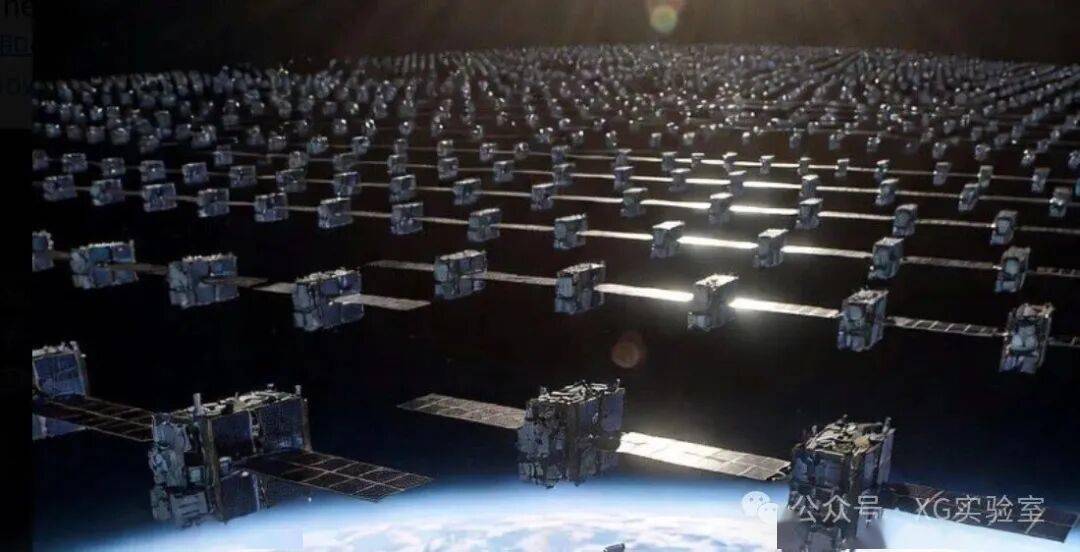
Core Insights - SpaceX has submitted a groundbreaking application to the FCC to launch an "Orbital Data Center System" consisting of up to 1 million satellites, which would be 100 times the current number of satellites in orbit, marking a significant advancement in space infrastructure [3] - The proposed satellite constellation will operate at altitudes between 500 to 2000 kilometers, utilizing a mixed scheme of 30-degree inclination and sun-synchronous orbits to maximize solar energy efficiency [3] - Unlike Starlink, this system is not intended for direct ground communication but is speculated to serve as an AI computing infrastructure, leveraging inter-satellite laser links to create a space-based network powered by solar energy [3] - SpaceX aims to address concerns about space debris by implementing a "design for demise" standard, ensuring that satellites burn up upon failure, with ground casualty risks below 0.01% [3] - If approved, this initiative could usher in a new era of "space as computing power," providing energy and computational support for large-scale AI models and Tesla's Optimus robot network [3] Industry Overview - The space computing industry is transitioning from concept to engineering practice, with SpaceX leveraging its Starlink communication network and Starship launch capabilities to create an integrated "space-earth intelligent internet" [17] - The industry ecosystem includes satellite manufacturing, laser communication, on-orbit computing, and ground gateways, with key players such as SpaceX, Amazon Kuiper, and Telesat [17] - The supply chain involves critical technologies such as spacecraft platforms, efficient energy systems, inter-satellite links, and thermal management in space [17] Technological Developments - SpaceX's plan highlights the potential of space photovoltaics as a solution to energy supply challenges, with advancements in solar technology expected to evolve from gallium arsenide to HJT and ultimately to perovskite tandem cells [20] - Current space power systems primarily use three-junction gallium arsenide, which has high efficiency but is costly; HJT cells are anticipated to dominate low Earth orbit satellites and space data centers from 2026 to 2030 due to their lower cost and strong radiation resistance [20] - The cost of space photovoltaic power supply could be reduced by 22 times compared to ground data centers, making it a promising area for SpaceX's supply chain [20] Competitive Landscape - The competitive landscape includes various players with distinct technological focuses, such as SpaceX's Starlink V3, Google's radiation-resistant TPU chips, and Blue Origin's TeraWave multi-track network [12] - Amazon's Kuiper project faces significant challenges, including a lack of autonomous launch capacity, leading to a reliance on SpaceX for satellite deployment [30] - Blue Origin has shifted its focus from suborbital tourism to lunar exploration, indicating a strategic pivot in response to competitive pressures from SpaceX [33]

北斗智联完成数亿元B轮战略融资 广汽资本领投携手多家产投共筑智能网联新生态 | 融资速递
Tai Mei Ti A P P· 2025-12-10 02:53
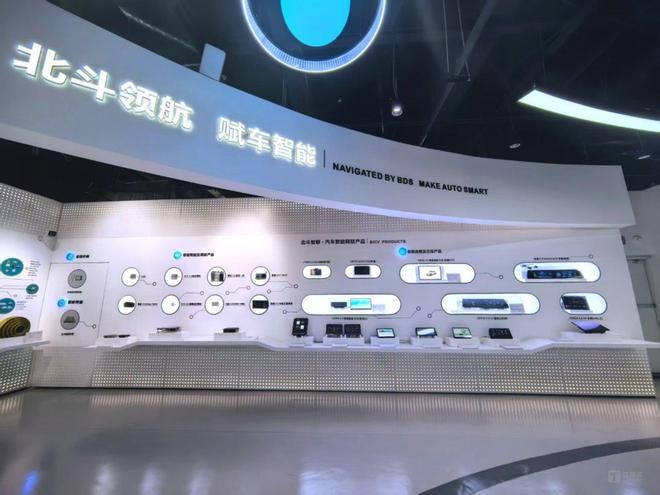
Core Insights - The article highlights the successful financing round led by GAC Capital, showcasing the recognition of Beidou Zhili's strength in the automotive intelligent networking sector amidst fierce market competition [1][18] - Beidou Zhili is positioned as a leading Tier 1 enterprise in automotive intelligence, focusing on a dual-driven strategy of "automotive intelligence + Beidou navigation" [3][8] Group 1: Company Overview - Beidou Zhili has established a comprehensive product line covering intelligent cockpits, intelligent driving, positioning communication, and more, demonstrating full-stack capabilities [3][4] - The company has six R&D centers and three manufacturing bases, with an annual production capacity of 5 million units, ensuring stable product supply [4][5] - Beidou Zhili has a diverse customer base, including major domestic and international automotive companies, with over 200 mainstream models equipped with its core products [4][5] Group 2: Technological Advancements - The company has developed innovative multi-source fusion technology in satellite positioning and communication, achieving centimeter-level accuracy in complex environments [8][10] - Beidou Zhili's "air-ground integration" product concept aims to provide continuous high-precision positioning and reliable communication, supporting future applications in autonomous driving and low-altitude operations [10][11] Group 3: Strategic Growth - The company is focusing on AI integration and has launched multi-domain fusion solutions to upgrade automotive electronic architectures [11][13] - Beidou Zhili aims to become a top global player in the industry, leveraging its experience in overseas product development and establishing local support capabilities [14][16] - The recent financing will accelerate the company's global strategy, enhance its product offerings, and support its IPO process [18][19]
依托“汽车智能 + 北斗通导”战略加速出海,北斗智联完成数亿元B轮战略融资|36氪首发
3 6 Ke· 2025-12-07 23:05
Core Insights - Beidou Zhihui Technology Co., Ltd. has recently completed a strategic B-round financing of several hundred million yuan, led by GAC Capital with participation from various industry investment institutions [1] - The financing will be used for research and development in areas such as Beidou navigation, AI+, embodied intelligence, and low-altitude economy [1] - The company aims to enhance its product offerings and establish a second growth curve through innovative technologies [2][4] Company Overview - Founded in 2019, Beidou Zhihui focuses on "automotive intelligence + Beidou navigation" as its core strategic direction [1] - The product line includes smart cockpits, intelligent driving, positioning communication, smart displays, and vehicle domain control [1] - The company has established partnerships with over 20 domestic and international clients, with core products installed in more than 200 vehicle models and cumulative shipments exceeding 15 million units [1] R&D and Production - Beidou Zhihui has set up six R&D centers in cities including Chongqing, Shenzhen, Chengdu, Suqian, Nanjing, and Shanghai, and three manufacturing bases in Chongqing, Suqian, and Thailand with an annual production capacity of 5 million units [1] - The company has developed a proprietary technology matrix centered on multi-source fusion positioning algorithms and AI positioning enhancement algorithms [2] AI Technology Integration - The company integrates deep learning with positioning technology to enhance signal accuracy and stability, addressing challenges in complex environments [2] - Beidou Zhihui proposes a "space-ground integration" product concept that combines high-orbit Beidou positioning with low-orbit satellite communication and ground 4G/5G networks [2] Strategic Growth Plans - The company has outlined a "hardware + software + scenario definition" strategy to solidify its second growth curve [3] - The first AI scenario-based product is expected to be commercially launched next year, with plans for full product line integration [4] - Beidou Zhihui is expanding its global footprint, with operations in Europe, North America, Southeast Asia, Australia, South America, and the Middle East, and has shipped over 1 million units overseas [4] Long-term Objectives - The company aims to become one of the top ten suppliers in the global industry by deepening its dual-driven strategy of "automotive intelligence + Beidou navigation" [4] - Beidou Zhihui is working on building a comprehensive overseas service system covering R&D, production, sales, and service to enhance market responsiveness and customer service capabilities [4]
中国首个“天通+北斗”国产星基高精度定位服务试商用
Zhong Guo Xin Wen Wang· 2025-11-21 09:44
Core Points - The "Tiantong + Beidou" domestic satellite-based high-precision positioning service has officially launched for trial operation, supporting the large-scale application of Beidou and the autonomous construction of China's comprehensive PNT (Positioning, Navigation, Timing) system [1][2] - The Tiantong satellite system is China's first independently developed satellite mobile communication system, which provides real-time dynamic minute-level convergence and centimeter-level positioning services without relying on ground networks [1] - The satellite-based navigation enhancement system primarily targets remote areas, oceans, low-altitude, and low-orbit regions with weak or no network coverage, with applications in various fields such as surveying, agricultural machinery automation, intelligent navigation, marine positioning, and drone inspections [1] Industry Insights - The satellite internet, as a new type of information infrastructure, is crucial for achieving comprehensive connectivity across land, sea, air, and space, and for realizing the "Internet of Everything" [2] - Recent policies from the Chinese government aim to explore the application potential of high-orbit satellites like Tiantong, promoting direct satellite connections for mobile phones, cars, and airplanes to develop popular satellite communication applications [2] - The next-generation Tiantong satellite system is expected to be operational by 2029, which will expand new business opportunities and market scale [2]

“人防+技防+智防”守护群众生命财产安全
Liao Ning Ri Bao· 2025-08-07 01:16
Core Insights - The city of Shenyang has implemented an advanced flood prevention system called "Qianliyan," which utilizes 90 high-definition cameras across 82 key flood-prone locations to enhance disaster warning timeliness and accuracy [1][2] - The integration of various technologies, including satellite remote sensing, radar monitoring, and artificial intelligence, has created a comprehensive "smart flood prevention network" in Shenyang [1] - The city has established a robust communication system among various departments, allowing for real-time data sharing and analysis to support flood response efforts [2] Group 1 - Shenyang's "Qianliyan" system provides real-time monitoring and alerts for flood-prone areas, significantly reducing the pressure on emergency management [1] - The system's data is synchronized with city and district flood emergency command platforms, enhancing decision-making capabilities [1] - The city has developed a "three warnings, one team, one leader, and one group" flood control system, incorporating more "smart assistants" for effective monitoring [1] Group 2 - The flood prevention command office has connected with various departments to create an integrated rainwater monitoring system, utilizing 116,000 video surveillance resources for remote monitoring [2] - A comprehensive risk monitoring and early warning platform has been established, linking meteorological data with urban drainage and flood risk assessments [2] - The city employs a combination of human, technical, and intelligent defenses to ensure public safety, including automated voice alerts at critical flood points [2]