卷价值

Search documents
一线观察|拥挤的科技金融战场,从“价格战”到“价值战”还有多远?
Zheng Quan Shi Bao Wang· 2025-12-11 03:20
Core Viewpoint - The technology finance sector in China is experiencing intense price competition, transforming from a "blue ocean" to a "red ocean," with some areas even becoming a "dead sea" [1] Group 1: Industry Overview - As of the end of Q3 2025, 275,400 technology-based SMEs received loan support, with a loan approval rate of 50.3%, an increase of 2.8 percentage points year-on-year [1] - The loan balance for technology SMEs reached 3.56 trillion yuan, a year-on-year growth of 22.3%, outpacing the growth of all loans by 15.8 percentage points [1] Group 2: Competitive Strategies - Five industry experts suggested various strategies to counteract the price war, including developing syndicate loans, offering non-financial services, and creating a comprehensive service system from a "commercial bank + investment bank + ecosystem" perspective [2] - The consensus among the experts is to focus on "rolling value" rather than "rolling price" [2] Group 3: Case Study - Luch New Materials - Luch New Materials has become a leader in the rubber conveyor belt industry, producing the world's largest and longest tubular belts and holding 100 patents [3][4] - The company collaborates with Ping An Bank, which offers competitive advantages in terms of precision and speed in financing [3][4] Group 4: Financial Support Mechanisms - Ping An Bank provided a comprehensive credit line of 300 million yuan to Luch New Materials, simplifying the approval process under its specialized credit policy for high-tech enterprises [4] - In June 2024, the bank approved a project loan of 175 million yuan to support Luch New Materials' expansion, expected to save approximately 3 million yuan in annual financial costs [4] Group 5: Banking Practices - The case of Luch New Materials illustrates key banking practices, including the need for specialized incentive policies, competitive pricing to lower financing costs, and expedited approval processes tailored to technology enterprises [5][6] - The bank's approach emphasizes the importance of aligning internal resources and enhancing the enthusiasm of frontline staff in serving technology firms [5][6] Group 6: Future Outlook - The expectation is for banks to shift from "rolling price" to "rolling value" in technology finance by 2026, focusing on enhancing service quality and efficiency [7]

一线观察|拥挤的科技金融战场,从“价格战”到“价值战”还有多远?
券商中国· 2025-12-11 03:01
Core Viewpoint - The article discusses the shift in the technology finance sector from a "blue ocean" to a "red ocean," highlighting the intensifying price wars and the need for banks to focus on "value" rather than "price" in their services [1][2]. Group 1: Industry Overview - As of Q3 2025, 275,400 technology SMEs received loan support, with a loan approval rate of 50.3%, an increase of 2.8 percentage points year-on-year. The loan balance for these SMEs reached 3.56 trillion yuan, growing by 22.3%, which is 15.8 percentage points higher than the overall loan growth rate [1]. - The technology finance sector is experiencing significant competition, with banks struggling to maintain profitability amidst price wars [1]. Group 2: Case Study of Luch New Materials - Luch New Materials, a leader in the rubber conveyor belt industry, has developed the world's largest and longest tubular conveyor belt and holds 100 patents, showcasing its innovation and market leadership [2]. - The company has a strong international presence, with over 60% of its sales coming from overseas markets, which creates liquidity pressures due to long production and payment cycles [3]. Group 3: Banking Support and Strategies - Ping An Bank has actively supported Luch New Materials by providing a comprehensive credit line of 30 million yuan and a project loan of 175 million yuan, which helps the company reduce financial costs by approximately 3 million yuan annually [3][4]. - The bank's approach includes creating specialized incentive policies, optimizing assessment indicators, and implementing a fast-track approval process for technology enterprises, which enhances service efficiency and competitiveness [4][5][6]. Group 4: Future Outlook - The article anticipates a shift in the banking sector towards focusing on "value" in technology finance by 2026, emphasizing the need for improved risk management, diverse product offerings, and a supportive ecosystem for non-bank institutions [6][7].


头部电池厂抢货 磷酸铁锂厂商悄然启动新一轮扩产
Zheng Quan Shi Bao Wang· 2025-10-29 23:20
Core Viewpoint - Leading battery manufacturers are intensifying their investments in lithium iron phosphate (LFP) production, with CATL making a significant investment in a subsidiary of Fulin Precision, aiming to secure high-density LFP capacity in response to strong market demand [1] Industry Summary - Major LFP manufacturers are initiating a new round of capacity expansion driven by robust downstream market demand [1] - The current expansion trend is characterized by a shift from competing on price and scale to focusing on value and technology, reflecting a more rational approach in the industry [1] - Capacity planning is becoming increasingly globalized, indicating a strategic shift in the industry's operational focus [1]


车企转向卷价值卷技术卷品质
Guang Zhou Ri Bao· 2025-06-02 19:03
Core Viewpoint - The Chinese automotive industry is facing challenges due to "involutionary price wars," prompting the China Association of Automobile Manufacturers (CAAM) to advocate for fair competition and sustainable development in the sector [1][2][3]. Group 1: Industry Response - The Ministry of Industry and Information Technology (MIIT) supports CAAM's initiative, emphasizing that price wars disrupt normal operations and threaten the industry's sustainable growth [2][3]. - Industry leaders agree on the need to compete on technology, quality, and service rather than price, highlighting a shift in focus towards value creation [4][5]. Group 2: CAAM's Four Proposals - All enterprises must adhere to fair competition principles and operate within legal frameworks [6]. - Dominant companies should not monopolize the market or harm the survival space of other entities [6]. - Companies should avoid selling below cost and misleading consumers, which disrupts market order and harms industry and consumer interests [6]. - Enterprises are encouraged to conduct self-assessments and rectify any issues in accordance with national laws and regulations [6].
车圈大佬,回应“价格战”!
Zhong Guo Ji Jin Bao· 2025-05-31 08:30
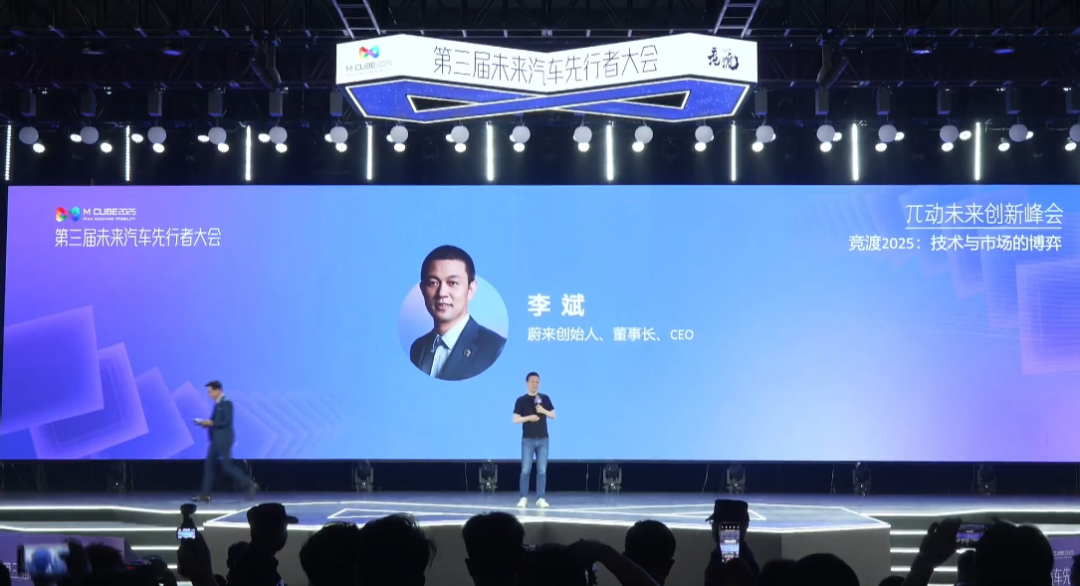
Core Viewpoint - The automotive industry is currently facing a heated debate over "price wars," with industry leaders advocating for competition based on technology, experience, and management rather than pricing strategies [1][2]. Group 1: Industry Responses to Price Wars - NIO's CEO, Li Bin, emphasized the need to focus on "rolling technology" instead of engaging in price wars [1]. - Changan Automobile's VP, Deng Chenghao, stated that future competition will revolve around "rolling technology" and "rolling experience," advocating for a strategy that broadens product offerings [1]. - The China Association of Automobile Manufacturers highlighted that chaotic price wars are detrimental to industry profitability and called for adherence to fair competition principles [1]. Group 2: Internal Transformations and Performance - NIO is undergoing significant internal restructuring, particularly within its second brand, with early signs of improved cost control and efficiency, including a 40% reduction in frontline staff while expecting a 40% increase in delivery volume for May [2][4]. - XPeng Motors' CEO, He Xiaopeng, expressed confidence in exceeding profitability targets by Q4 2025, attributing this to a focus on technology, organization, and global business systems [6][8]. Group 3: Strategic Focus on Technology and Experience - Deep Blue Automotive aims to differentiate itself through superior product, technology, service, and user experience, distancing itself from low-price strategies [8]. - The company has implemented a price protection strategy valid until June 30, 2026, emphasizing the importance of user experience as the "soul" of the automotive industry [8]. - GAC Group's VP, He Xianqing, stated that in a competitive market, price reflects value, and the company is committed to providing value beyond pricing through technological innovations [10][12]. Group 4: Technological Advancements - GAC Group has invested over 55 billion in R&D, developing advanced technologies such as super-fast charging batteries and high-performance chips, which enhance product quality and safety [12][13].