原材料涨价

Search documents
珠海冠宇:存储涨价抑制消费电池需求-20260331
HTSC· 2026-03-31 13:30
Investment Rating - The report has downgraded the investment rating of the company to "Accumulate" [5][6]. Core Views - The company's revenue for 2025 reached 14.41 billion RMB, a year-on-year increase of 24.86%, while the net profit attributable to shareholders was 0.472 billion RMB, up 9.60% year-on-year. However, the net profit fell short of expectations due to rising storage prices, increased raw material costs, and foreign exchange losses [1][5]. - The company maintains a strong position in the laptop battery sector and is accelerating the introduction of mobile phone batteries to major clients like Apple. Adjustments in accounting depreciation policies have released profits, but the impact of rising storage prices on consumer battery demand and increased costs have led to a revision in revenue growth expectations [5][6]. Summary by Sections Financial Performance - In Q4 2025, the company reported revenue of 4.089 billion RMB, a year-on-year increase of 35.2% but a quarter-on-quarter decrease of 3.2%. The net profit attributable to shareholders was 0.085 billion RMB, down 47.8% year-on-year and 68.6% quarter-on-quarter [2]. - The company shipped approximately 100 million consumer battery cells in Q4, with a net profit per cell of about 1.3-1.4 RMB. The decline in profitability was attributed to reduced demand due to storage price increases and rising raw material costs [2]. Business Segments - In the consumer battery segment, the company achieved revenue of 6.341 billion RMB in laptop products, remaining stable year-on-year, with a sales volume increase of 2.5%. In mobile phone products, revenue reached 4.493 billion RMB, up 38.2% year-on-year, with a sales volume increase of 42.0% [11]. - The company's dynamic storage business, particularly in automotive and drone applications, saw significant growth, with revenue from the Zhejiang subsidiary reaching 2.265 billion RMB, a year-on-year increase of 130.7%. The company has secured contracts with major automotive manufacturers and maintained deep cooperation with clients like DJI in the drone sector [4][11]. Profitability and Forecasts - The report anticipates a downward revision of the company's net profit forecasts for 2026 and 2027 to 0.820 billion RMB and 1.069 billion RMB, respectively, reflecting a reduction of 50% and 51% from previous estimates [5][14]. - The expected average PE ratio for comparable companies in 2026 is 18 times, while the company is assigned a PE of 24 times for the same year, with a target price set at 17.28 RMB, down from 35.04 RMB [5][14].

珠海冠宇(688772):存储涨价抑制消费电池需求
HTSC· 2026-03-31 11:31
Investment Rating - The report downgrades the investment rating of Zhuhai Guanyu to "Accumulate" due to the impact of rising storage prices on consumer battery demand and increased costs from raw materials [5][6]. Core Views - The company reported a revenue of 14.41 billion RMB for 2025, a year-on-year increase of 24.86%, with a net profit attributable to shareholders of 0.472 billion RMB, up 9.60% year-on-year. However, the net profit fell short of expectations due to rising storage prices, raw material costs, and foreign exchange losses [1][5]. - The consumer battery segment is facing challenges due to increased storage prices, which are suppressing demand, while the automotive and drone battery segments are showing strong growth [4][5]. Summary by Sections Financial Performance - In Q4 2025, the company achieved a revenue of 4.089 billion RMB, with a year-on-year increase of 35.2% but a quarter-on-quarter decrease of 3.2%. The net profit attributable to shareholders was 0.085 billion RMB, down 47.8% year-on-year and 68.6% quarter-on-quarter [2]. - The company shipped approximately 100 million consumer battery cells in Q4, with a net profit per cell of about 1.3-1.4 RMB, indicating a decline in profitability due to reduced demand and increased costs [2]. Business Segments - The consumer battery segment, including laptops and mobile phones, saw stable performance, with laptop revenue at 6.341 billion RMB and mobile phone revenue at 4.493 billion RMB, reflecting growth of 2.5% and 42.0% respectively [11]. - The automotive and drone battery segment, particularly through its subsidiary Zhejiang Guanyu, reported a revenue of 2.265 billion RMB, a significant year-on-year increase of 130.7%, driven by partnerships with major automotive manufacturers and drone companies [4][11]. Future Projections - The report revises the revenue growth forecast for consumer batteries down to 12.76 billion RMB and 13.85 billion RMB for 2026 and 2027, respectively, due to rising costs and reduced demand [14]. - Conversely, the revenue forecast for the automotive and energy storage segment is revised upward to 3.329 billion RMB and 4.161 billion RMB for 2026 and 2027, respectively, reflecting positive trends in demand [14]. Valuation - The target price for the company is set at 17.28 RMB, down from a previous estimate of 35.04 RMB, with a projected PE ratio of 24 times for 2026 [5][6].
最新!近60家电子元器件企业涨价函汇总
芯世相· 2026-02-28 04:49
Price Increases in the Semiconductor Industry - The semiconductor industry is experiencing a wave of price increases, with multiple companies announcing price hikes due to rising raw material costs and supply chain pressures [2][4][35]. Raw Material and Component Price Increases - Resonac announced a price increase of 30% for copper-clad laminates and adhesive films starting March 1, 2026, due to tight supply and rising costs of key materials [46]. - Nanya Plastics has raised prices for all series of CCL and PP by 8% due to increases in copper prices and other raw materials [50]. - SK Hynix is reportedly increasing DDR5 memory prices by 40%, with some module manufacturers halting quotes [8]. - Micron has announced a general price increase of approximately 20% across its products [8]. - Various passive component manufacturers, including Vishay and Panasonic, are also implementing price increases ranging from 10% to 50% due to rising costs of key materials [10][28][78]. Specific Company Price Adjustments - Intel and AMD are planning to raise server CPU prices by up to 15% to maintain supply stability [94]. - National Semiconductor announced price increases of up to 80% for certain chip products starting January 2026 [95]. - Multiple companies, including ADI and TE Connectivity, are adjusting prices due to ongoing inflationary pressures in raw materials and logistics [30][109]. - Companies like Huazhong Microelectronics and Jiangxi Tianyi Semiconductor are increasing prices for specific products by 10%-20% due to rising production costs [112][114]. Market Trends and Implications - The overall trend indicates a tightening supply chain in the semiconductor industry, with many manufacturers reporting full order books and the potential for further price increases in the future [56][57]. - The demand for AI-related semiconductors is driving significant price increases, particularly in the memory and storage sectors, as companies struggle to meet the growing needs of the market [73][88].


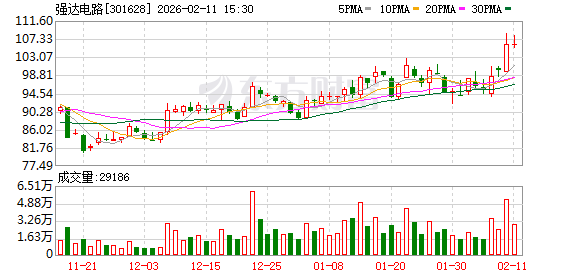
强达电路:PCB上游原材料涨价对公司成本端存在一定压力
Zheng Quan Ri Bao· 2026-02-11 11:41
Core Viewpoint - The company acknowledges that rising prices of upstream raw materials in the PCB industry are exerting cost pressure, which is a common issue across the sector [2] Group 1: Company Response - The company is actively responding to cost pressures by strengthening cost control and optimizing supply chain management, ensuring that the overall impact remains manageable [2] - The company employs a pricing mechanism that adjusts based on the prices of key raw materials, allowing for reasonable adjustments in quotes to maintain a sustainable profit level [2]
2026成本战打响:原材料暴涨与政策退坡下的“生死局”
3 6 Ke· 2026-02-09 07:21
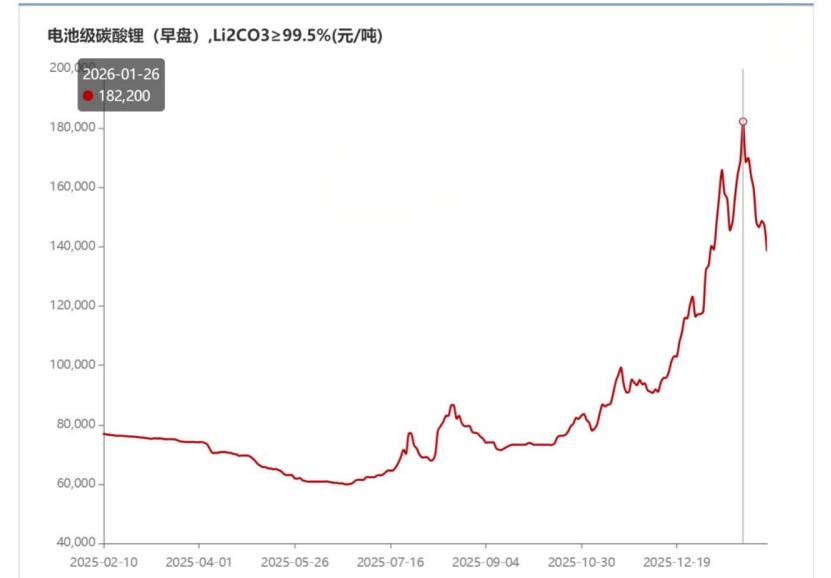
Core Viewpoint - The automotive industry is facing a dual challenge of rising costs and declining demand, with significant price increases in core raw materials and a competitive market environment impacting profitability [1][10]. Group 1: Cost Pressures - The automotive manufacturing sector is experiencing a collective price surge in key raw materials such as lithium, copper, aluminum, and tin, significantly affecting electric vehicle production [2][4]. - The price of battery-grade lithium carbonate has skyrocketed from 75,700 yuan per ton at the beginning of 2025 to 182,200 yuan per ton by January 26, 2026, marking an increase of over 150% [2]. - The cost of copper and aluminum has also risen sharply, with domestic electrolytic copper prices exceeding 100,000 yuan per ton and aluminum prices projected to reach 3,150 USD per ton in the first half of 2026 [4][5]. Group 2: Impact on Electric Vehicles - Electric vehicles, which require significantly more raw materials than traditional fuel vehicles, are particularly vulnerable to these cost increases, with the average vehicle requiring 200 kg of aluminum and 80 kg of copper [4][5]. - The cost of DRAM for automotive applications has surged by 180% in three months, with prices for DDR5 and DDR4 memory chips increasing dramatically due to competition with the AI sector [7][9]. Group 3: Market Dynamics and Policy Changes - The Chinese automotive market is currently experiencing a downturn in consumer confidence, exacerbated by the reduction of tax incentives for electric vehicles and changes to the "trade-in" subsidy policy [10][11]. - The sales profit margin for the automotive industry in China was only 4.1% in 2025, the lowest in five years, with some companies reporting margins as low as 1.8% [11][13]. Group 4: Strategic Responses - Many automotive companies are opting to absorb costs through financial schemes and temporary subsidies rather than raising prices, which could lead to a loss of market share in a highly competitive environment [11][13]. - Leading companies are seeking to strengthen ties with upstream suppliers and expand into overseas markets to mitigate domestic cost pressures [14].

纺织服装行业周报20260125-20260130:推荐纺服上游涨价预期行情
HUAXI Securities· 2026-02-02 02:35
Investment Rating - The industry rating is "Recommended" [5] Core Insights - Anta announced on January 26, 2026, the acquisition of 29.06% of Puma SE for a total of €1.506 billion (approximately ¥12.278 billion), becoming its largest shareholder. This transaction is a key step in Anta's globalization strategy, aiming to integrate its operational capabilities with Puma's global platform, which has an annual revenue exceeding €8.8 billion (2024) [2][14] - Adidas achieved a record high revenue of €24.811 billion in 2025, with operating profit of €2.056 billion exceeding market expectations. The operating profit margin increased by 2.6 percentage points to 8.3%, and the gross profit margin rose to 51.6% [2][14] - VF Corporation reported a revenue of $2.82 billion in Q3 of FY2026, a 4% year-on-year increase (2% growth at constant currency), with a 6% growth in the Americas region after excluding the impact of the sold Dickies brand [3][14] Summary by Sections Investment Recommendations - Manufacturing: Strong expectations for upstream price increases, with wool prices rising since Q3 2025 and domestic cotton prices also starting to rise. Recommended stocks include Baolong Oriental, New Australia, and Fuchun Dyeing & Weaving, with beneficiaries being Taihua New Materials. For growth-oriented midstream, recommended stocks are Jiansheng Group and Kairun Co [3][15] - Brand: Recent signs of recovery in high-end consumption, with potential inflation in 2026 benefiting the consumer sector. Recommended brands with profit elasticity include Jinhong Group, Ge Li Si, Luolai Life, and Stable Medical [3][15] - Procter & Gamble's industrial chain: Recommended stocks include Jieya Co (benefiting from brand-owned capacity transfer), with beneficiaries being Yanjing Co [3][15] Market Review - The SW textile and apparel sector rose by 0.64%, outperforming the Shanghai Composite Index by 1.08%. The top five gainers in the sector included Harsen Co, Zhongwang Fabric, Hongda High-Tech, Mingxin Xuteng, and Aokang International [16] - The main inflow of funds was into Harsen Co, with a net inflow ratio of 10.10%, while the largest outflow was from Sanfu Outdoor, with a net outflow ratio of 4.59% [16][22] Industry Data Tracking - Wool prices increased by 2.49% this week, with a year-to-date increase of 41.94%. The Australian wool market index reached 1689 AUD cents/kg, equivalent to ¥82,085.40/ton [4][35] - The cotton price index in China rose by 3.84% year-to-date, with the 3128B index at ¥16,183/ton [30][32] - In 2025, textile and apparel exports decreased by 2.26% year-on-year, with total exports amounting to $267.79 billion [52]




产业亮点:如何看原材料涨价背景下空调品牌提价效果?
Changjiang Securities· 2026-02-01 13:50
Investment Rating - The report maintains a "Positive" investment rating for the home appliance industry [10] Core Insights - Starting from April 2025, the main raw material for air conditioners, copper, has entered a new price increase cycle, with prices accelerating since mid-November. As of January 14, 2026, the LME copper spot settlement price reached $13,335 per ton, reflecting a 53.5% increase compared to the beginning of 2025. In response to cost pressures, several air conditioning companies, including Aux, Midea, and others, have announced price increases ranging from 3% to 8% [2][4][16] - The report analyzes the impact of rising copper prices on air conditioner gross margins and evaluates the effectiveness of manufacturers' price increase strategies based on a review of the previous raw material price increase cycle [4][16] Summary by Sections Introduction - The report discusses the resumption of the copper price increase cycle starting in April 2025 and its implications for air conditioning manufacturers, highlighting the need for price adjustments in response to rising costs [4][16] Theoretical Impact of Rising Copper Prices on Air Conditioner Profitability - Raw material costs account for approximately 54% of air conditioner production costs, with copper, steel, and plastic comprising 22%, 12%, and 10% respectively. The high proportion of copper makes air conditioners particularly sensitive to copper price fluctuations. The report estimates that if copper prices rise by 15%, 30%, and 50%, air conditioner gross margins would theoretically decline by 2.1, 4.2, and 7.1 percentage points respectively [5][20][25] Effectiveness of Price Increases to Mitigate Cost Pressures - The report suggests that manufacturers would need to raise product factory prices by 3.0%, 5.9%, and 9.8% to effectively counteract the pressure on profitability from copper price increases of 15%, 30%, and 50% respectively. A review of the previous raw material price increase cycle (2020Q2-2022Q1) indicates that while price increases can mitigate cost pressures in the short term, sustained rapid increases in raw material prices may still pose challenges to profitability [6][36][47] Investment Recommendations - In light of the current cost uncertainties, the report recommends focusing on leading white goods companies with significant cost advantages and well-integrated supply chains, specifically highlighting Midea Group, Haier Smart Home, and Gree Electric as key investment opportunities [7][56]



国巨、厚声加入被动元件涨价潮,市场啥情况?
芯世相· 2026-01-27 07:37
Core Viewpoint - The article discusses the recent price increases in passive components, particularly focusing on Taiwanese resistor manufacturers joining the trend, driven by rising raw material costs and increased demand from AI applications [3][4][13][15]. Group 1: Price Increases from Taiwanese Manufacturers - Taiwanese passive component manufacturers, including Yageo, Thick Sound, and Walsin, have announced price hikes for various resistor products, with increases ranging from 15% to 25% [5][6][7]. - Yageo's price adjustments will take effect from February 1, covering specific resistor products like RC0402, RC0603, and others [5]. - Thick Sound and Walsin have also issued price increase notifications, indicating a collective movement among Taiwanese manufacturers to raise prices due to rising material costs [6][7]. Group 2: Market Reactions and Trends - Following the announcements, the passive component market experienced a temporary halt in quotations and price increases, but most channels have since returned to normal pricing [9][10]. - The overall price of resistors has increased by approximately 10-20% since the New Year, particularly for sizes 0201 to 1206, with fluctuations stabilizing after initial increases [10][11]. - Distributors have noted that the initial price hikes did not significantly impact the market, as many customers had already begun stockpiling components prior to the announcements [11]. Group 3: Underlying Causes of Price Increases - The primary reasons for the price hikes include rising raw material costs, particularly for metals like silver, palladium, and others, which have seen significant price increases [13][14]. - Additionally, the surge in demand driven by AI applications has contributed to the rising prices of passive components, with projections indicating a substantial increase in demand for components like MLCCs in AI servers [15][16].

行业竞争加剧与原材料涨价双重挤压,武汉凡谷2025年预亏1000万元至1500万元
Ju Chao Zi Xun· 2026-01-26 13:50
Core Viewpoint - Wuhan Fangu Electronics Technology Co., Ltd. anticipates a significant decline in net profit for the fiscal year 2025, projecting a loss between 10 million to 15 million yuan compared to a profit of 53.25 million yuan in the previous year [2] Financial Performance - The company expects a net profit loss of 23 million to 28 million yuan after deducting non-recurring gains and losses, down from a profit of 39.91 million yuan in the previous year [2] - The anticipated losses represent a substantial year-on-year decline in profitability [2] Industry Context - The radio frequency device industry continues to experience intense market competition, leading to significant pricing pressure from customers on the company's main products [2] - The proportion of low-margin products in the company's overall sales has been increasing due to competitive pressures [2] Cost Factors - The prices of bulk metal raw materials required for production have surged significantly during the reporting period [2] - Despite the company's efforts to reduce costs and improve efficiency, these measures have not fully offset the impacts of substantial price reductions on products and rising raw material costs [2] - The overall gross margin has declined, contributing to the expected losses for the fiscal year 2025 [2]


涨价、暂停报价,被动元件现在咋样了?
芯世相· 2026-01-16 06:37
Core Viewpoint - The passive component market is experiencing a price increase and order suspension due to rising demand and material costs, particularly in resistors and capacitors, driven by AI and other technological advancements [4][20]. Group 1: Market Situation - Before the New Year, many passive component manufacturers issued price increase notices, leading to a suspension of quotes and orders in the market [4][6]. - Distributors reported that the main reason for suspending quotes was the uncertainty of price increases from manufacturers, which could render pre-holiday quotes ineffective [6][9]. - After the New Year, most channels resumed normal quoting, but some specific models remained in short supply, causing continued order suspensions [6][9]. Group 2: Price Changes - Resistors have seen significant price increases, with some models rising by 10-30%, while capacitors experienced more moderate increases, particularly in high-demand types like polymer tantalum capacitors [7][9]. - The price of magnetic beads and inductors has also risen significantly, reflecting broader trends in the passive component market [8][9]. Group 3: Causes of Price Increases - The current price surge is attributed to two main factors: rising raw material costs, particularly for precious metals like silver, and increased demand driven by AI technologies [15][16]. - Silver prices surged by 143% in 2025, significantly impacting the cost structure of passive components, especially inductors [16][17]. - The rapid growth in AI demand is pushing the need for high-end components, further driving prices up [18][19]. Group 4: Future Outlook - The demand for passive components is expected to remain stable in 2025, with significant increases in AI-related applications, particularly for MLCCs [9][20]. - The market is likely to see a structural differentiation where high-end products maintain stable growth while standard consumer-grade components may struggle [19][20].