
双碳目标等

Search documents
智库书单 | 2026年经济工作八项重点任务怎么干?
Sou Hu Cai Jing· 2025-12-13 10:55
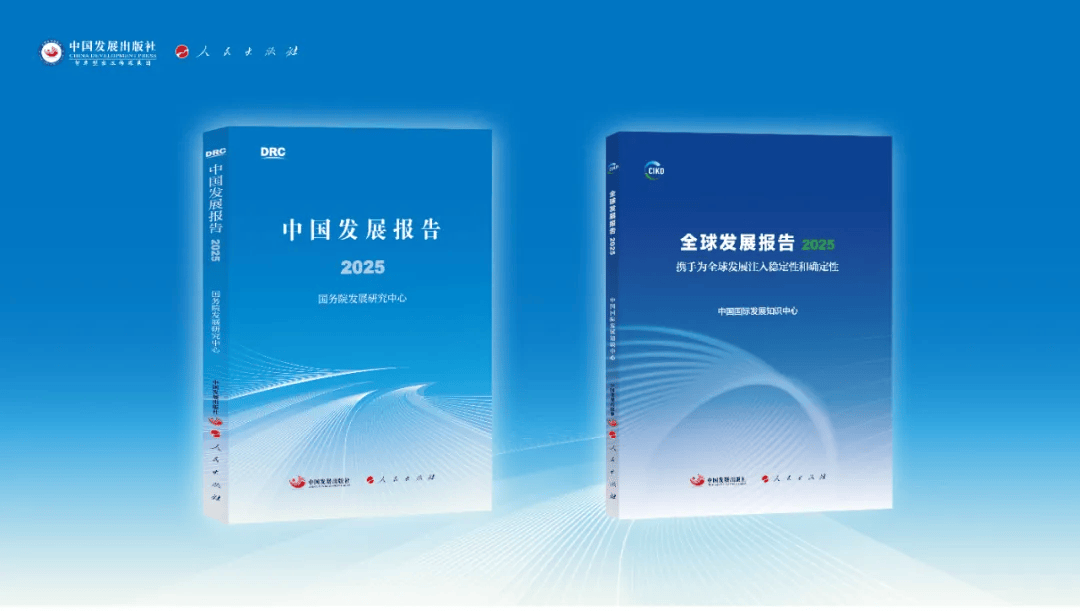
Group 1 - The Central Economic Work Conference held from December 10 to 11 in Beijing summarized the economic work for 2025, analyzed the current economic situation, and deployed tasks for 2026, emphasizing the need to maintain stability while seeking progress and improving quality and efficiency [1] - In 2026, eight key tasks will focus on enhancing macroeconomic governance effectiveness through integrated effects of existing and new policies, and increasing counter-cyclical and cross-cyclical adjustments [1] Group 2 - The "China Development Report 2025" records the ideological, institutional, and practical achievements formed during the advancement of Chinese-style modernization in 2024, including four significant research outcomes from the State Council Development Research Center [3] - The "Global Development Report 2025" analyzes major instability and uncertainty factors facing the world and their profound impacts on global development, focusing on issues such as global trade, climate change, health, food security, poverty reduction, and cooperation among developing countries [3] Group 3 - The report on "Silver Economy" from Shanghai highlights the city's exploration in capturing new demands and creating new scenarios to empower high-quality growth in new economic formats, drawing insights from international best practices [10] - The "Turning to Consumption Driven" report enriches theoretical understanding of expanding domestic demand and proposes innovative paths and mechanisms for constructing a complete domestic demand system [12] Group 4 - The "International Consumption Center Cities" report analyzes the conditions and foundations for major cities in China to transition into international consumption centers, providing overall strategies and policy recommendations [14] - The "Digital Trade Development and Cooperation Report (2022-2023)" clarifies the concept of digital trade and analyzes the current state and trends of global digital trade development, showcasing China's achievements and efforts in promoting international digital trade cooperation [41] Group 5 - The "New Quality Productivity Practice and Exploration" compiles research on the theoretical origins, practical paths, and innovative models of new quality productivity, clarifying its essential differences from traditional productivity [22] - The "Artificial Intelligence Major Application Scenarios Series" covers over ten typical scenarios, integrating theory and practice to explore the governance of artificial intelligence in various sectors [21]

十个维度看未来五年我国职业新图景
Xin Hua She· 2025-11-28 03:14
Group 1: Emerging Industries - The proposal emphasizes the cultivation and expansion of emerging industries, including new energy, new materials, aerospace, and low-altitude economy, which will create new job opportunities across the entire industry chain [2] - The low-altitude economy alone is projected to have a talent gap of 1 million for drone operators, with the market expected to exceed 1 trillion yuan by 2030 [2] Group 2: Digital Economy - The rise of AI and automation is replacing traditional jobs but simultaneously creating high-value new occupations, with over 20 new professions related to AI identified in the past five years [3] - The proposal includes advancing digital technology and AI innovation, which will require a significant workforce skilled in these areas [3] Group 3: Service Sector - The proposal aims to enhance living standards and consumer spending, leading to increased labor demand in health, elderly care, and domestic services [4] - The service sector is expected to absorb more employment, with a projected increase in its share of total employment from over 48% to around 55% in the next five years [5] Group 4: Flexible Employment - Flexible employment is on the rise, with over 84 million new employment forms emerging, providing diverse job opportunities for various skill levels [6] - The proposal includes measures to promote high-quality employment and improve social security for flexible workers [6] Group 5: Cross-Border Employment - The proposal outlines plans for expanding high-level openness, with cross-border e-commerce becoming one of the fastest-growing employment sectors, potentially creating 45 million jobs by 2030 [7] - There is a growing demand for global talent skilled in international rules and cross-cultural communication [7] Group 6: Rural Entrepreneurship - The proposal encourages rural modernization and the integration of agriculture with other industries, creating new job opportunities for rural entrepreneurs [8] - Over 12 million individuals are currently engaged in rural entrepreneurship, with increasing numbers of urban professionals returning to rural areas [9] Group 7: Cultural Industry - The cultural industry is projected to generate approximately 19.14 trillion yuan in revenue by 2024, with a growing demand for talent that combines cultural and technical skills [10] - New professions such as virtual reality content creators are emerging, with a predicted demand for over 6.8 million positions by 2030 [10] Group 8: Elderly Care - The aging population is creating a significant demand for elderly care services, with a notable shortage of caregivers [11] - The proposal aims to establish a comprehensive care system for the elderly, expanding the market for elderly care services [12] Group 9: Green Jobs - The development of green industries is leading to the creation of new green jobs, with a tenfold increase in related positions in recent years [15] - The green sector is expected to grow significantly, driven by policies aimed at carbon neutrality and sustainable development [16] Group 10: Regional Employment - The proposal highlights a shift in employment patterns from urban-centric to a more balanced regional distribution, promoting job opportunities in various cities [18] - The focus on county-level urbanization is expected to create employment circles that encompass multiple industries [18]