发展经济学

Search documents
沈明高卸任广发证券全球首席经济学家
2 1 Shi Ji Jing Ji Bao Dao· 2026-02-04 11:48
Group 1 - The core point of the news is that Shen Minggao, the global chief economist and head of the industry research institute at GF Securities, is reaching the legal retirement age in February 2026 and will no longer hold his positions, which is not a resignation as speculated [1] - GF Securities confirmed that Shen Minggao will continue to participate in internal research activities in the near future [1] - Shen Minggao has a strong academic background and extensive industry experience, holding degrees from Nanjing Agricultural University, the Chinese Academy of Social Sciences, and Stanford University [1] Group 2 - Shen Minggao has been engaged in macroeconomic, development economics, and financial market research for a long time [2] - He highlighted Guangdong's advantages in market-oriented reforms, including location, industrial application scenarios, and relatively low local government debt, which can be leveraged during the 14th Five-Year Plan period for growth and innovation [2]

基金经理投资笔记 | 锚定三重闭环,拥抱基本面慢牛
Sou Hu Cai Jing· 2026-01-26 03:04
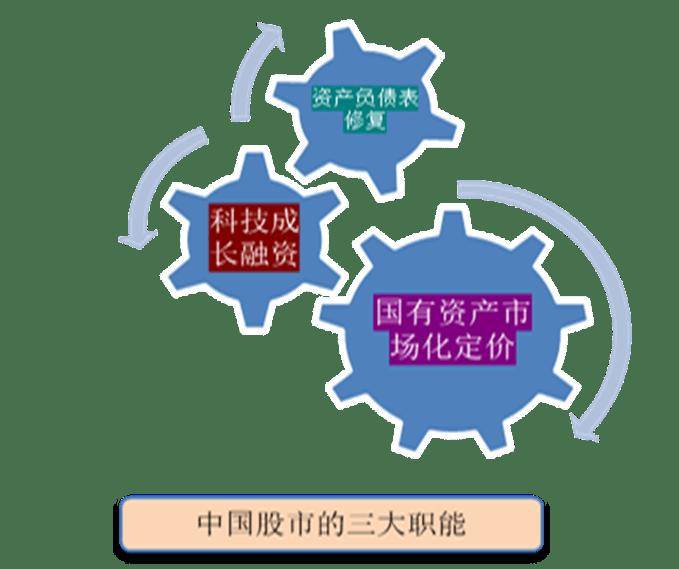
Group 1: Core Views - The narrative trading trend in the market has shown signs of fatigue, with a return to a fundamentals-driven slow bull market logic [1] - Regulatory measures on online information management aim to curb the risks associated with narrative trading, which can lead to significant market fluctuations [1] - The government's guidance for investors to shift from narrative trading to fundamentals trading is seen as a necessary response to market failures [1] Group 2: Positioning and Functions of the Stock Market - The Chinese stock market has evolved beyond a simple financing and trading platform, becoming a core hub connecting public welfare, industrial upgrades, and national strategy [2] - The core functions of the stock market can be summarized as "balance sheet repair, financing for technological growth, and market-based pricing of existing assets" [2] Group 3: Balance Sheet Repair Function - The health of household balance sheets directly influences consumption and economic resilience, with the stock market providing a means for wealth appreciation through a profit-driven slow bull market [3] - This function aims to ensure that financial market returns benefit households, thereby supporting the micro-foundation of common prosperity [3] Group 4: Financing for Technological Growth - The stock market plays a crucial role in providing long-term capital for strategic sectors such as hard technology and high-end manufacturing through market-based pricing and governance improvements [4] - This function embodies the principle of "finance serving the real economy," transforming capital into a long-term partner for innovation [4] Group 5: Market-Based Pricing of Existing Assets - The stock market's public pricing mechanism allows for the revaluation and circulation of existing assets, enhancing operational efficiency and governance structures [5] - This function emphasizes the market's decisive role in resource allocation, breaking away from traditional administrative valuations [5] Group 6: Current Functionality Assessment - As of early 2026, the A-share market shows an uneven performance in its three core functions, highlighting the need for government intervention to address market failures [8] - The asset balance sheet repair function has lagged, with household stock assets accounting for less than 10% of total wealth, compared to 20%-30% in developed countries [8] - The financing function for technological growth has been more robust, with over 1,200 hard technology companies raising more than 1.5 trillion yuan, but narrative trading still poses risks [8] - The market-based pricing function for state-owned assets faces challenges, with low valuations for state-owned enterprises indicating a lack of market recognition for existing asset values [9] Group 7: Historical Lessons from Market Volatility - Historical lessons indicate that the stock market must remain anchored to its core functions to avoid falling into cycles of policy-driven speculation and bubble bursts [11] - Past market booms have often led to significant wealth losses for households, emphasizing the unsustainability of trends detached from real economic support [11] Group 8: Government Intervention - Government intervention is deemed necessary to correct market failures, ensuring that the stock market continues to serve its three core functions effectively [13] - The government aims to protect household wealth, maintain industrial upgrades, and ensure the strategic value of state-owned assets through appropriate interventions [14] Group 9: Asset Allocation Insights - In the context of China's modernization, asset allocation should focus on the three core functions of the stock market, emphasizing long-term stable growth rather than short-term speculation [16] - Investors are encouraged to prioritize broad-based assets that can enhance wealth effects and support household balance sheet repair [17] - Strategic allocations should target hard technology and new productive forces, with a focus on companies with genuine technological barriers [17] - Attention should also be given to the revaluation opportunities of quality existing assets as market pricing mechanisms evolve [17]

新华社权威快报丨新华社国家高端智库发布《新时代县域经济学》智库报告
Xin Hua She· 2025-11-21 07:44
Core Insights - The report titled "New Era County Economics" was released by the Xinhua News Agency's National High-end Think Tank during the 2025 "Belt and Road" International Think Tank Cooperation Forum in Nanjing, Jiangsu [4] - It emphasizes the importance of county-level economies as foundational units of Chinese modernization, exploring how these economies can achieve high-quality development under the guidance of Xi Jinping's economic thought [4] - The report highlights China's nearly 3,000-year-old tradition of county governance, asserting that counties serve as crucial hubs connecting urban and rural areas, as well as bridging different administrative levels [4] Summary by Sections - **Guiding Principles**: The report is guided by Marxist political economy and incorporates knowledge from regional economics, development economics, and urban economics, creating a unique and relatively complete knowledge system based on China's county economic development practices [4] - **Economic Models**: It identifies various successful development models in counties, including traditional industry upgrades, emerging industry tracks, agricultural industrialization, ecological value transformation, cultural tourism integration, and East-West cooperation [4] - **Strategic Importance**: The report posits that the vitality of counties directly influences the prosperity of cities, provinces, and the strength of the nation, indicating that understanding county economics is essential to grasping China's development miracle [4] - **Future Outlook**: As a key focus during the 14th Five-Year Plan period, the high-quality development of county economies is expected to propel China towards becoming a modernized strong nation [4]
北京大学林毅夫教授,荣获新奖项
Sou Hu Cai Jing· 2025-07-12 07:30
Core Points - The 52nd Eurasia Business and Economics Society (EBES) conference will be held in Istanbul, Turkey from July 3-5, 2025, where Professor Lin Yifu from Peking University will receive the EBES Fellow Award for his outstanding contributions in development economics, agricultural economics, and economic transformation research, marking the first time this award is given to a Chinese scholar in its ten-year history [1][2] - The EBES, established in 2008, is an international academic organization aimed at promoting research in economics and business, with over 2,500 members from more than 80 countries, including academia, government, business, and non-profit sectors [1] - The EBES Fellow Award, established in 2015, is the highest honor of the society, awarded annually to a scholar who has made lifelong outstanding contributions in economics and business research, selected based on rigorous academic achievements [2] Summary of Lin Yifu's Speech - During the conference, Lin Yifu delivered a keynote speech titled "What Drives Development Success? New Institutional Economics Meets New Structural Economics," comparing the perspectives of new institutional economics and new structural economics [5] - Lin criticized the institutional hypothesis proposed by Nobel laureates Acemoglu, Johnson, and Robinson, stating it failed empirical testing and had issues with empirical data and historical evidence [5] - From the perspective of new structural economics, the success or failure of a country's development hinges on whether its government chooses a development strategy that aligns with its endowment structure and comparative advantage [5] - The hypothesis of new structural economics is supported by empirical testing of cross-country data from 1960 to 2023, suggesting that every country has the opportunity for dynamic growth if it can identify and strengthen its advantageous industries with government support [5]