
可再生能源革命

Search documents
“在可再生能源领域,若还在犹豫要不要与中国合作,将越来越被甩进尘埃里”
Xin Lang Cai Jing· 2026-02-19 14:49
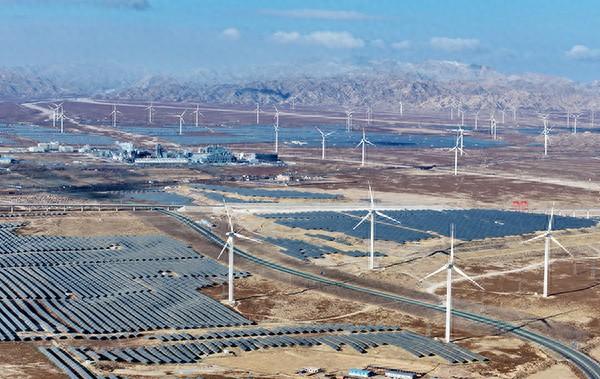
Core Insights - The article emphasizes China's leading position in the global renewable energy revolution, suggesting that countries hesitant to collaborate with China will fall behind [1][4]. Group 1: China's Renewable Energy Dominance - China has established a significant advantage in renewable energy and technology, making collaboration with China a necessity for other nations [1][4]. - According to the International Energy Agency, one in every seven solar panels globally is produced by a single Chinese factory, highlighting China's dominance in solar energy [1][4]. - China accounts for over 80% of the global solar supply chain and produces more than 70% of electric vehicles, with its clean technology exports reaching nearly every country [4][5]. Group 2: Cost Reduction and Market Impact - The cost of solar components has decreased by approximately 90% since 2010, while lithium-ion battery prices have dropped by 80% to 90%, making renewable technologies more affordable [5][6]. - China's solar power generation capacity has surged from 0.1 GW in 2010 to over 1063 GW today, showcasing rapid growth in large-scale solar installations [5][6]. Group 3: Global Energy Transition - China's clean energy development is seen as a crucial factor in reducing global carbon emissions, with exports of Chinese products contributing to billions of tons of emissions reduction [4][6]. - The construction of extensive renewable energy infrastructure in regions like Gansu and Xinjiang demonstrates China's unmatched scale in green energy development [6][7]. Group 4: Ecological Benefits - Large-scale solar installations in Inner Mongolia are contributing to ecological restoration, helping to combat desertification and improve soil conditions [7].

古特雷斯敦促发达国家兑现气候资金承诺:1.5℃是唯一红线
Zhong Guo Xin Wen Wang· 2025-11-21 01:48
Core Points - The UN Secretary-General Antonio Guterres urged developed countries to fulfill their climate finance commitments and emphasized that limiting global warming to 1.5 degrees Celsius is the only acceptable threshold [1][2] - Guterres highlighted that the negotiations are at a critical stage, with the world closely watching the outcomes in Belem, Brazil [1] - Scientific assessments indicate that global temperatures are likely to exceed 1.5 degrees Celsius by the early 2030s, leading to severe consequences such as extreme heat, hunger, and displacement [1] - Immediate action could still potentially bring temperature increases back below 1.5 degrees Celsius by the end of the century [1] - The renewable energy revolution presents an opportunity, with clean energy being cheaper and more abundant than ever [1] - Guterres called for countries to view their current national contributions as a starting point rather than a ceiling for emission reductions [1] Funding Commitments - Guterres pointed out that the commitment of developed countries to double adaptation funding is falling short [2] - He urged the establishment of clear and feasible financing pathways to mobilize at least $300 billion annually by 2035, moving towards a target of $1.3 trillion per year [2] - Guterres expressed confidence that a compromise is possible and emphasized the urgency of demonstrating leadership to prevent failure at COP30 [2]
中国光伏赋能全球绿色低碳转型
Ren Min Ri Bao· 2025-11-10 22:10
Core Insights - The report highlights significant achievements in China's photovoltaic (PV) construction, showcasing its role as a key driver in global energy transition over the past decade [1][2] - As of June 2023, China's installed PV capacity reached approximately 1.1 billion kilowatts, with an addition of 223 million kilowatts from January to July 2023, which is 5.3 times the new capacity from thermal power during the same period [1] Group 1: Development Patterns - China has established a "west-to-east" development pattern for PV generation, with western provinces like Inner Mongolia, Qinghai, Xinjiang, Gansu, and Ningxia focusing on large-scale PV bases due to their desert and barren land resources [2] - Central and southern regions adopt a mixed strategy of centralized and distributed PV systems, utilizing low-efficiency lands and water surfaces for PV station construction, while densely populated areas focus on distributed PV [2] - Eastern coastal provinces such as Shandong, Jiangsu, and Zhejiang integrate distributed PV into industrial upgrades, creating "zero-carbon parks," "green factories," and "PV villages" [2] Group 2: Innovative Models - The "PV+" composite model is widely promoted across the country, exemplified by projects like the agricultural and PV integration in Yancheng, Jiangsu, which enhances land efficiency while ensuring crop sunlight [2] - In Guizhou, PV construction replaces firewood consumption in rocky desertification areas, aiding ecological restoration and improving livelihoods [2] - The "fishing and PV complement" project in Guangxi establishes aquaculture bases under PV panels, helping farmers increase their income [2] Group 3: Future Outlook - Experts and representatives at the conference believe that the renewable energy revolution driven by technology, policy, and public participation lays the foundation for China to achieve its 2035 target of 3.6 billion kilowatts of wind and solar installed capacity [2] - The developments in China's PV sector provide a replicable and scalable "Chinese solution" for global energy transition [2]
全球可再生能源发电量首次超过化石燃料:中国贡献过半清洁能源增长
Jing Ji Guan Cha Bao· 2025-10-08 11:31
Group 1 - The core point of the article highlights that renewable energy generation has surpassed fossil fuels for the first time, with China contributing over half of the global clean energy growth [1][2] - In the first half of this year, global solar power generation increased by nearly one-third, meeting 83% of the global electricity demand growth, while wind power generation grew slightly over 7% [1] - Developing countries, particularly China, are leading the clean energy development, while wealthier nations like the US and EU are increasingly reliant on fossil fuel power generation [1] Group 2 - China's clean energy sector met all new electricity demand, resulting in a 2% year-on-year decrease in coal and natural gas generation, and a reduction of 46 million tons in CO2 emissions in the first half of the year [1] - In contrast, CO2 emissions in the US and EU increased during the same period, with global fossil fuel generation declining by less than 1% [1] - By August 2025, driven by a surge in electric vehicle (26% growth) and battery (23% growth) sales, China's clean technology exports reached a record $20 billion, with the total value of electric vehicles and batteries more than double that of solar panel exports [1] Group 3 - The International Energy Agency (IEA) reports that renewable energy capacity is expected to double by 2030, indicating a rapid acceleration of the global "renewable energy revolution" [2] - China is projected to maintain its position as the largest market for renewable energy growth, while India is expected to become the second-largest market for renewable energy growth for the remainder of the century [2]