
可持续增长模式

Search documents
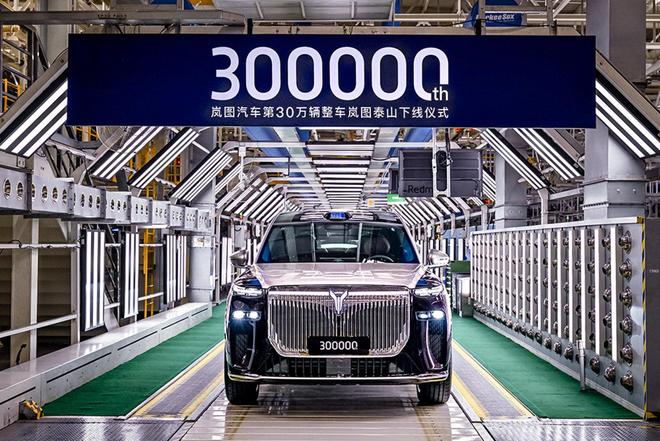
站在30万辆的山脚下,岚图还要面对更陡峭的挑战
Tai Mei Ti A P P· 2025-11-16 06:47
Core Insights - The achievement of producing the 300,000th vehicle marks a significant milestone for Lantu, reflecting its growth amidst a challenging market environment characterized by price wars and supply chain disruptions [2][3][6] - Lantu's growth strategy contrasts with the industry's trend of using price cuts for growth; instead, it focuses on building a stable product structure and user trust through consistent quality and experience [5][10] Group 1: Market Performance - Lantu has demonstrated stable sales growth, achieving a year-on-year increase of over 82% from January to October, while maintaining profitability amidst industry losses [3][10] - The company has improved production efficiency, with a vehicle rolling off the production line every 63 seconds, indicating significant advancements in scale compared to previous years [3][10] Group 2: Product Strategy - The launch of the Lantu Taishan model symbolizes the culmination of five years of development, aiming to compete in the high-end SUV market with advanced features and a comprehensive system engineering approach [6][9] - Lantu's strategy emphasizes not just product features but also the importance of brand perception and long-term user experience in the luxury market [6][15] Group 3: Challenges Ahead - Moving forward, Lantu faces challenges in establishing brand recognition in the luxury SUV segment, particularly against established competitors [15][16] - The transition to higher levels of autonomous driving (L3) will require clear delineation of responsibilities between in-house development and partnerships, posing additional complexity [15][16] - As Lantu scales operations, maintaining organizational efficiency and consistent quality will be critical, as increased complexity can amplify operational pressures [16]

越南将充分利用自贸协定打造营商环境
Shang Wu Bu Wang Zhan· 2025-11-08 03:15
Core Insights - Vietnam has signed and negotiated 20 free trade agreements (FTAs), with 17 currently implemented or in progress with major global economies, covering 90% of global GDP [1][2] - The EVFTA has significantly boosted bilateral trade between Vietnam and the EU, increasing from $48.9 billion to nearly $78 billion over five years, with an average annual growth rate of 10.1% [1] - The EU market is shifting towards green and sustainable consumption, requiring compliance with labor and environmental standards, which poses competitive pressure on Vietnamese goods [2] Group 1 - Vietnam is one of the developing countries with the most FTAs, including CPTPP, RCEP, and EVFTA [1] - The Ministry of Industry and Trade is building an FTA ecosystem to support enterprises in maximizing FTA benefits and enhancing competitiveness [1] - The average annual growth rate of exports to the EU market is 11.7%, while imports have grown at 6.1% [1] Group 2 - Experts highlight the need for Vietnamese enterprises to adapt to new market standards and enhance competitiveness to maintain and expand their market share in the EU [2] - The EU is implementing the European Green Deal, aiming for a modern, resource-efficient economy and carbon neutrality by 2050 [2] - To effectively utilize FTA benefits, Vietnamese companies must prepare to meet increasing market standards and engage deeply in global value chains [2]
Coca-Cola FEMSA(KOF) - 2025 Q3 - Earnings Call Transcript
2025-10-24 16:00
Financial Data and Key Metrics Changes - Consolidated volume declined 0.6% to reach 1.04 billion unit cases, showing sequential improvement compared to the second quarter [6] - Total revenues grew 3.3% to $71.9 billion pesos, driven by revenue management initiatives, despite volume decline and unfavorable currency translation effects [7] - Gross profit increased 0.9% to $32.4 billion pesos, with a margin contraction of 100 basis points to 45.1% [8] - Operating income rose 6.8% to $10.3 billion pesos, with operating margin expanding 50 basis points to 14.3% [8] - Adjusted EBITDA increased 3.2% to $14.4 billion pesos, with EBITDA margin remaining flat at 20.1% [9] - Majority net income slightly increased to $5.9 billion pesos, driven mainly by operating income growth [9] Business Line Data and Key Metrics Changes - In Mexico, volumes declined 3.7% due to a soft macroeconomic backdrop, while Coca-Cola Zero grew 23% year on year [10][11] - Guatemala saw a volume increase of 3.2% to 50.8 million unit cases, with Coca-Cola Zero growing 16.9% year on year [14][15] - In Brazil, volumes increased 2.6% year on year, driven by share gains and a successful campaign for Coca-Cola Zero, which grew volumes by 38% [17][18] - Colombia's volumes grew 2.9%, supported by share gains in brand Coca-Cola and flavors [19][20] - Argentina's volumes increased 2.9%, with a focus on enhancing affordability and leveraging digital initiatives [20][21] Market Data and Key Metrics Changes - Mexico faced a soft macroeconomic environment impacting consumer preferences, while South America showed a more resilient macro and consumer environment [5] - The recent excise tax increase in Mexico is expected to impact volume performance in 2026, with anticipated modest economic growth of 1.5% [13] - In Brazil, despite lower average temperatures and signs of slower growth, the company managed to increase volumes due to share gains [17] - Colombia's economy is gradually recovering, driven by improving sectors such as commerce and agriculture [19] Company Strategy and Development Direction - The company aims to focus on sustainable growth, RGM affordability initiatives, and cost control measures to navigate challenging operating conditions [6][14] - The strategy includes enhancing affordability, accelerating single-serve mix, leveraging digital initiatives, and maintaining a lean cost structure [21][23] - The company is committed to incentivizing low and non-caloric products in response to the new excise tax [13][76] Management's Comments on Operating Environment and Future Outlook - Management expressed confidence in adapting to challenging conditions, particularly in Mexico, while also highlighting the importance of community support initiatives following recent storms [4][5] - The company anticipates a challenging year for volume performance in Mexico due to the excise tax increase, but expects positive brand equity impacts from the World Cup [13] - Management noted that the operational structure has been adjusted to align with current volume conditions, preparing for expected challenges [39] Other Important Information - The company has engaged with the government regarding proposed excise taxes and reaffirmed its commitment to low and non-caloric products [13] - The company has locked in a significant portion of its main commodities for the remainder of the year, providing visibility and comfort for the fourth quarter [30] Q&A Session Summary Question: Insights on profitability improvement in Mexico and Central America - Management indicated that profitability improvements were driven by savings initiatives and operational adjustments, despite ongoing gross profit pressures [36][39] Question: Strategies for Argentina, Colombia, and Guatemala - Management discussed the importance of maintaining household penetration and adapting strategies to local market conditions, emphasizing the need for a sustainable long-term growth model [40][43] Question: CAPEX adjustments for next year - Management confirmed that CAPEX would be rethought, primarily delaying investments in distribution centers due to expected volume declines [48][49] Question: Volume outlook for Mexico next year - Management provided a preliminary outlook of low to mid-single-digit volume declines for Mexico, influenced by the upcoming excise tax [53][61] Question: Pricing strategies in response to new taxes - Management plans to pass through the excise tax while maintaining consumer choice and gradually shifting towards low or non-caloric options [76] Question: Consumer dynamics in Brazil - Management acknowledged softer consumer dynamics in Brazil but noted that share gains and a strong base from the previous year supported growth [59][60]
