合资车企本土化

Search documents
合资车企本土化避坑指南
Zhong Guo Qi Che Bao Wang· 2025-12-25 01:56
Group 1 - Joint venture car companies are at a crossroads, facing challenges from the rise of domestic brands, the wave of electrification, and the revolution of intelligence, with domestic brands capturing 65% market share from January to November this year, while some joint venture brands saw sales drop by over 30% [2] - To avoid marginalization, joint venture car companies must move beyond the comfort zone of "global technology input and local adaptation" and initiate a comprehensive localization transformation that involves systematic restructuring of technology, brand, and culture [2][3] - The reliance on global technology input is becoming a constraint for joint venture car companies in the competitive Chinese market, as the cost of core components is approximately 30% higher than that of domestic brands due to complex supply chains [3] Group 2 - Embracing local innovation and shifting the R&D focus to China is essential for joint venture car companies to gain a competitive edge in the automotive industry transformation [4] - Successful examples of localization, such as GAC Toyota's "China Chief Engineer System," demonstrate the benefits of empowering local teams with decision-making authority throughout the product development process [4] - Joint venture brands must avoid the pitfall of creating localized models that deviate from their core brand identity, as this can lead to a loss of market competitiveness [5] Group 3 - The structural change in consumer demographics highlights the importance of precise positioning, with 68% of "post-90s" car buyers prioritizing smart cockpit features, leading to a decline in joint venture brands' penetration among younger consumers [7] - To avoid ambiguous positioning, joint venture car companies need to establish a closed loop of "user insight - brand adaptation - product implementation" while maintaining brand identity during localization [7] - The erosion of engineering culture due to short-term market pressures can undermine the core competitiveness of joint venture car companies, as they may rush to market with products lacking in quality and innovation [8][9] Group 4 - The mismatch between R&D cycles and market rhythms is a root cause of short-termism, with joint venture brands averaging 46 months for new car development compared to 28 months for domestic brands, leading to a loss of technical accumulation [9] - The current challenges faced by joint venture car companies represent both a crisis signal and an opportunity for transformation, emphasizing the need for deep integration of technology, brand, and culture in localization efforts [9]


合资卖电车,再也不谈品牌溢价
3 6 Ke· 2025-11-24 00:14
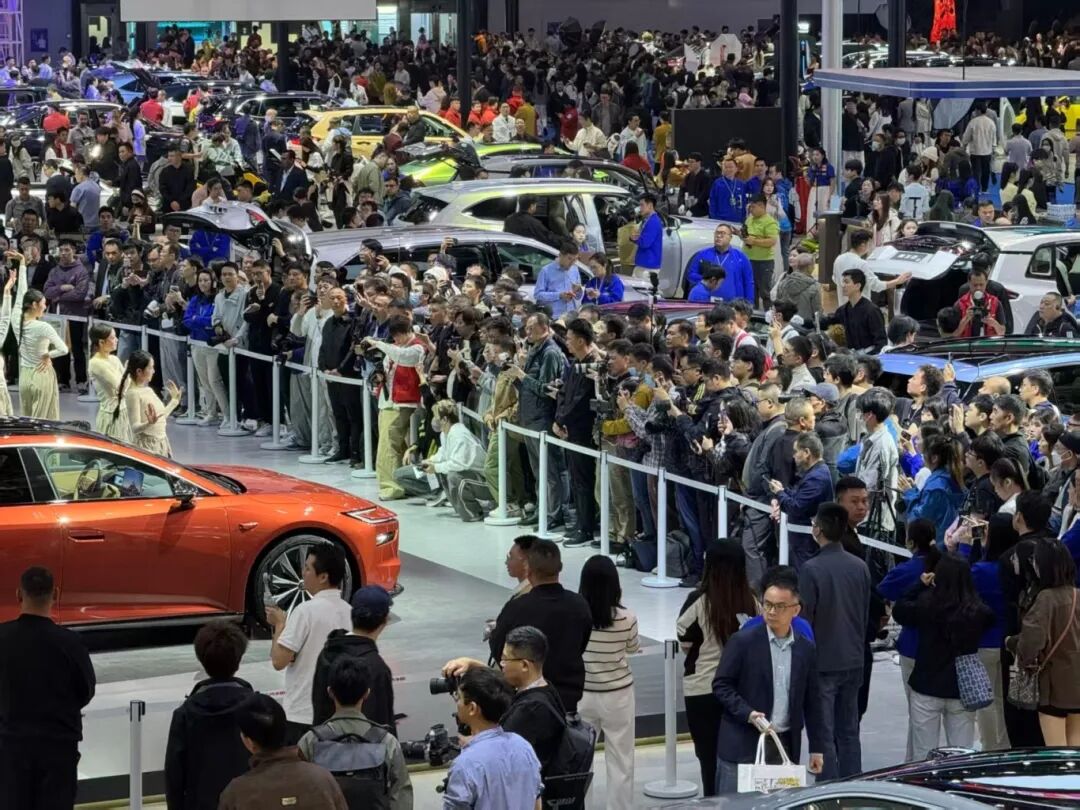
Core Viewpoint - The article discusses the evolving landscape of the Chinese automotive market, particularly focusing on the challenges and strategies of joint venture (JV) car manufacturers in the context of increasing competition from domestic brands and the shift towards electric vehicles (EVs) [1][11]. Group 1: Market Dynamics - The upcoming Guangzhou Auto Show is set against a backdrop of local purchase subsidies and confirmed tax exemptions for vehicle purchases, raising concerns about the future of the car market [1]. - Joint venture car manufacturers, once dominant, are now facing significant pressure as they adapt to the rapidly changing market, particularly in the electric vehicle sector [3][11]. - The competitive landscape is characterized by a price war and a shift in consumer expectations, with a growing demand for vehicles that meet local needs rather than relying on brand prestige [8][9]. Group 2: Joint Venture Strategies - Joint ventures are increasingly adopting a more humble approach, learning from local consumer preferences to enhance their product offerings [3][4]. - The launch of models like the GAC Toyota's Platinum 3X and Nissan's N7 signifies a renewed commitment to align with Chinese consumer demands, showcasing a shift in strategy [6][11]. - The need for deep localization in production, R&D, and decision-making processes is emphasized as essential for joint ventures to remain competitive in the Chinese market [11][13]. Group 3: Future Outlook - The article predicts that by 2026, joint ventures will need to abandon the notion of brand premium and focus on product quality and local relevance to survive [8][13]. - The integration of local technology partners, such as Huawei and CATL, is seen as a crucial step for joint ventures to enhance their technological capabilities and meet market demands [11][13]. - The overall message is that joint ventures must embrace a strategy of "in China, for China" to rebuild their competitive edge in the evolving automotive landscape [11][13].