
同频共振

Search documents
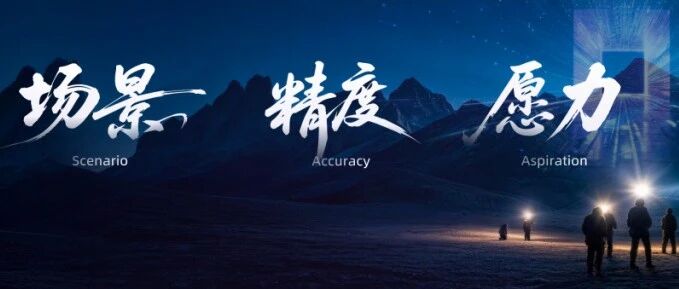
汇川董事长朱兴明年度演讲:同频才能共振
半导体芯闻· 2026-02-02 10:32
Core Insights - The core message emphasizes the need for companies to upgrade their operational mindset and focus on "scenes" rather than just products, as the future will be defined by ecological competition rather than product competition [1][4]. Group 1: Scene Thinking - Companies must enter, reconstruct, and create scenes to avoid being eliminated in the market [3]. - The concept of "scene" is crucial, as it requires product managers to deeply understand and engage with the context in which their products operate [4][6]. - The evolution of company focus from merely looking at customers to understanding the broader industry and geopolitical context is essential for identifying opportunities [8][9]. Group 2: Spatial Thinking - Spatial thinking involves recognizing the interconnectedness of suppliers, customers, and the broader industry landscape, moving beyond a narrow focus on immediate clients [6][8]. - Companies must be aware of larger spatial dynamics to accurately assess trends and make informed decisions [9]. Group 3: Temporal Thinking - Understanding economic cycles is vital, as companies must align their strategies with global macroeconomic trends, which follow a cycle of recovery, prosperity, decline, and recession [10][11]. - The current economic cycle is influenced by technology, capital, demographics, and emotions, with AI being a significant factor [11][12]. Group 4: Frequency Thinking - Frequency thinking emphasizes the importance of resonance and shared values among partners and employees, which is crucial for building a successful ecosystem [15][17]. - Companies should focus on aligning their core values and strategies with those of their partners to achieve mutual success [17]. Group 5: Precision Management - The concept of "precision" in management is highlighted, where the focus should be on managing value rather than just numerical targets [20][21]. - Companies face several paradoxes in management, such as the low-price paradox and the innovation paradox, which need to be navigated to achieve success [22][23]. Group 6: Value Creation - Value creation, assessment, and distribution are essential components of effective management, requiring a focus on the smallest units of value [25][29]. - The introduction of "meta" concepts, such as meta-organizations and meta-modules, can enhance organizational efficiency and clarity [25][26]. Group 7: Employee Engagement - The concept of "willingness" is crucial for motivating employees to embrace change and contribute to the company's vision [36][39]. - Companies must foster an environment where employees feel empowered and aligned with the company's mission to enhance their engagement and productivity [44][46]. Group 8: Future Challenges - Companies must navigate three major challenges: the AI technology revolution, the energy revolution, and the geopolitical dynamics between the US and China [48]. - Embracing AI and adapting to energy changes are critical for future competitiveness, while also preparing for potential disruptions in supply chains due to geopolitical tensions [48].


万亿资本加速进场!投研产“共振”,上海三大先导产业基金遴选新子基金
Hua Xia Shi Bao· 2025-07-30 10:44
Group 1 - The 2025 WAIC highlighted the acceleration of the artificial intelligence (AI) industry chain in research, production, and investment [1] - Shanghai established a seed fund for AI with a total scale of 2 billion yuan and launched a corporate venture capital (CVC) fund with an initial scale of 3 billion yuan [1] - The Shanghai government aims to leverage market selection mechanisms to deepen cooperation with leading enterprises in the three major pilot industries [1][2] Group 2 - Shanghai Guotou's three major pilot mother funds have made significant investments, totaling 25.955 billion yuan across 36 projects, attracting over 100 billion yuan in social capital [3] - The investment strategy focuses on supporting integrated circuits, biomedicine, and AI, ensuring funds are directed towards key industry development [2][3] - The AI industry is expected to experience a tenfold amplification effect, attracting trillions in social capital [3] Group 3 - The Long Triangle region's AI industry is projected to exceed 30 trillion yuan in scale over the next five years, driven by significant investments and development [8] - The AI core industry in China is nearing 600 billion yuan, with the Long Triangle region accounting for over one-third of the national total [8] - By 2030, China's AI core industry is expected to reach 1 trillion yuan, with related industries potentially reaching 10 trillion yuan [8]
