
愿力

Search documents
人在职场:能力是标配,心力是高配,愿力是顶配
洞见· 2026-03-12 12:20
Core Viewpoint - The article emphasizes that job security is not provided by others but earned through personal development and resilience in the workplace [4][66]. Group 1: Importance of Capability - Capability is described as the fundamental basis for career stability, with the assertion that those who can solve significant problems deserve greater opportunities [19][20]. - The narrative of a seasoned journalist adapting to the new media landscape illustrates the necessity of continuous learning and skill enhancement to remain relevant in changing industries [10][18]. - The article argues that regardless of external circumstances, having solid skills provides individuals with the confidence to face challenges [21][22]. Group 2: Resilience in the Workplace - Resilience, referred to as "heart power," is highlighted as essential for enduring pressure and overcoming setbacks in a competitive environment [24][25]. - The story of a successful entrepreneur showcases how perseverance and the ability to withstand adversity can lead to significant achievements, even in the face of repeated failures [28][34]. - The article points out that many professionals fail not due to a lack of ability but because they cannot handle emotional stress and pressure [35][39]. Group 3: The Role of Willpower - Willpower is defined as an intrinsic desire to pursue goals relentlessly, even in the face of obstacles [43][46]. - The example of an athlete who pursued his passion for skiing despite numerous challenges illustrates the power of will and determination in achieving one's dreams [49][61]. - The article concludes that those who possess a strong internal drive will thrive in a future where routine tasks may be automated, emphasizing the importance of passion in career fulfillment [63][65].


汇川董事长朱兴明年度演讲:同频才能共振
半导体芯闻· 2026-02-02 10:32
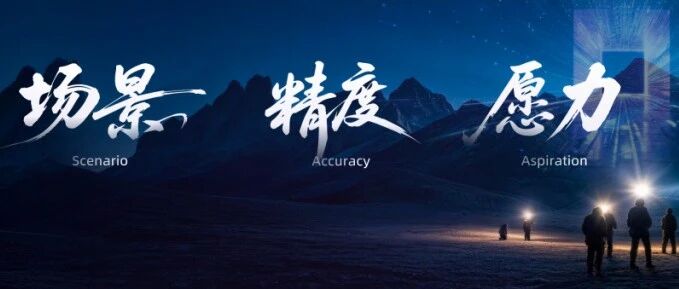
Core Insights - The core message emphasizes the need for companies to upgrade their operational mindset and focus on "scenes" rather than just products, as the future will be defined by ecological competition rather than product competition [1][4]. Group 1: Scene Thinking - Companies must enter, reconstruct, and create scenes to avoid being eliminated in the market [3]. - The concept of "scene" is crucial, as it requires product managers to deeply understand and engage with the context in which their products operate [4][6]. - The evolution of company focus from merely looking at customers to understanding the broader industry and geopolitical context is essential for identifying opportunities [8][9]. Group 2: Spatial Thinking - Spatial thinking involves recognizing the interconnectedness of suppliers, customers, and the broader industry landscape, moving beyond a narrow focus on immediate clients [6][8]. - Companies must be aware of larger spatial dynamics to accurately assess trends and make informed decisions [9]. Group 3: Temporal Thinking - Understanding economic cycles is vital, as companies must align their strategies with global macroeconomic trends, which follow a cycle of recovery, prosperity, decline, and recession [10][11]. - The current economic cycle is influenced by technology, capital, demographics, and emotions, with AI being a significant factor [11][12]. Group 4: Frequency Thinking - Frequency thinking emphasizes the importance of resonance and shared values among partners and employees, which is crucial for building a successful ecosystem [15][17]. - Companies should focus on aligning their core values and strategies with those of their partners to achieve mutual success [17]. Group 5: Precision Management - The concept of "precision" in management is highlighted, where the focus should be on managing value rather than just numerical targets [20][21]. - Companies face several paradoxes in management, such as the low-price paradox and the innovation paradox, which need to be navigated to achieve success [22][23]. Group 6: Value Creation - Value creation, assessment, and distribution are essential components of effective management, requiring a focus on the smallest units of value [25][29]. - The introduction of "meta" concepts, such as meta-organizations and meta-modules, can enhance organizational efficiency and clarity [25][26]. Group 7: Employee Engagement - The concept of "willingness" is crucial for motivating employees to embrace change and contribute to the company's vision [36][39]. - Companies must foster an environment where employees feel empowered and aligned with the company's mission to enhance their engagement and productivity [44][46]. Group 8: Future Challenges - Companies must navigate three major challenges: the AI technology revolution, the energy revolution, and the geopolitical dynamics between the US and China [48]. - Embracing AI and adapting to energy changes are critical for future competitiveness, while also preparing for potential disruptions in supply chains due to geopolitical tensions [48].

罗振宇2026时间的朋友跨年演讲:在AI时代,成为那个“不可救药的乐观派”
2 1 Shi Ji Jing Ji Bao Dao· 2026-01-03 22:45
Core Insights - The central theme of the event is "the world 1000 days from now," focusing on survival and development strategies for individuals and organizations in the AI era [1] - The concept of 1000 days is presented as a manageable timeframe for planning and witnessing transformative changes [1] Group 1: AI and Human Collaboration - AI is redefined as a tool that uplifts humans rather than replacing them, with real-world examples demonstrating how AI enhances safety and efficiency in various industries [2] - The emergence of "purple-collar" workers, who are adept at using AI tools to solve complex problems, is anticipated to create significant employment opportunities in the future [3] Group 2: Education in the AI Era - The rapid pace of AI advancements renders traditional educational pathways obsolete, with the suggestion that students should focus on creating unique career paths rather than following conventional routes [4] - Innovative educational models, such as those in Shenzhen and Shanghai, emphasize entrepreneurship and practical experience over traditional academic achievements [4][5] Group 3: Core Competencies in the AI Age - A three-tier model for human-AI interaction is proposed, highlighting the importance of collaboration and responsibility in leveraging AI for complex solutions [7] - The unique human advantage lies in "willpower," which drives individuals to pursue ambitious goals despite uncertainties [7] Group 4: Future Predictions - Three optimistic predictions for the world 1000 days from now include: a democratization of healthcare through AI, a shift towards valuing skills over formal qualifications in employment, and advancements in real-time language translation capabilities [9][10] - The event concludes with a call for optimism and creativity in navigating the uncertainties of the future, encouraging individuals to build their unique contributions to society [10]
罗振宇2026“时间的朋友”跨年演讲:在AI时代,成为那个“不可救药的乐观派”
Xin Lang Cai Jing· 2026-01-01 14:37
Core Insights - The central theme of the event was "The World 1000 Days Later," focusing on survival and development strategies for individuals and organizations in the AI era [1] - The concept of 1000 days is presented as a balanced timeframe for planning and witnessing change, avoiding the extremes of too long or too short [1] Group 1: AI and Human Interaction - AI is redefined as a tool that uplifts humans rather than replacing them, with examples showing how AI enhances efficiency and safety in various industries [2] - Real-world cases illustrate the collaboration between humans and AI across sectors, from mining to community services, highlighting the growing trend of deep human-machine cooperation [2] Group 2: Future Workforce - A new category of workers termed "purple-collar" is emerging, characterized by their ability to leverage AI tools to solve complex problems, with an estimated 31 million such positions expected in China by 2035 [3] Group 3: Education in the AI Era - The challenges posed by AI extend to education, with the notion that traditional knowledge may quickly become obsolete, necessitating a shift in how education is approached [4] - The idea that children should focus on creating unique careers rather than following conventional paths is emphasized, with examples of innovative educational institutions supporting entrepreneurial endeavors [4][5] Group 4: Core Competencies in AI - A three-tier model for human-AI interaction is proposed, suggesting that individuals should aim to work alongside AI, take responsibility for AI outputs, and provide complex solutions beyond basic tasks [7] - The unique human advantage in the AI age is identified as "willpower," which drives individuals to pursue ambitious goals despite uncertainties [7] Group 5: Future Predictions - Three optimistic predictions for the world 1000 days later include the democratization of healthcare through AI, a shift towards valuing skills over degrees in employment, and advancements in real-time language translation [8][9] - The event concluded with a call for optimism and creativity in the face of change, encouraging individuals to build their unique contributions to society [9]
得到App创始人罗振宇:AI不是工具,AI是伙伴
Xin Lang Cai Jing· 2026-01-01 04:08
Core Insights - The core message of the article revolves around the transformative impact of AI technology, as articulated by Luo Zhenyu, the founder of the "Get" app, during his New Year's speech. He emphasizes that AI is not merely a tool but a partner in exploration and creativity [3][4][6]. Group 1: AI Technology Revolution - Luo Zhenyu compares the current AI revolution to past technological revolutions, noting that unlike previous advancements which had visible societal markers, the AI revolution lacks such clear indicators [3][6]. - He expresses a sense of wonder and surprise in his interactions with AI, suggesting that it feels more like a relationship with a charismatic friend rather than just using a tool [3][6]. Group 2: Human vs. AI Capabilities - Luo challenges the notion that human qualities such as aesthetic sense, creativity, and emotional perception are inherently superior to AI, admitting that he often finds AI's outputs to be impressively insightful [4][7]. - He introduces the concept of "willpower" as a unique human trait that distinguishes humans from AI, referencing Kant's philosophical ideas about subjective and objective judgments [4][7].

Momenta曹旭东谈企业文化:用“愿力”和“危心”,选一条难而正确的路
Xin Lang Cai Jing· 2025-12-24 10:09
Core Insights - Momenta's CEO, Cao Xudong, introduced two cultural principles of the company: "Willingness" and "Caution" [1][3] - "Willingness" embodies the spirit of an explorer, requiring value insight, courage, passion, resilience, and optimism to choose a difficult yet correct path [1][3] - "Caution" emphasizes the importance of using scientific methods and hypothesis testing rather than unfounded worries [1][3] Resource Management - Due to limited resources and time, it is essential to adopt smart, low-cost, and short-cycle methods to validate approaches [1][3] - The goal is to ensure that the correct path can be identified within the constraints of limited resources and time [1][3] Decision-Making Process - Many can identify a general direction, but within that direction, there may be hundreds or thousands of paths, with only one being correct [1][3] - It is crucial to conduct low-cost and short-cycle tests to determine which path is correct to achieve success [1][3]

逆天改命的关键是什么?愿力:任正非43岁创业,靠一股子精神成功
Sou Hu Cai Jing· 2025-10-08 02:06
Core Viewpoint - The essence of success lies in the spirit and determination of individuals, as exemplified by Ren Zhengfei's journey in founding Huawei despite facing significant challenges and financial difficulties [1][3][6]. Group 1: Entrepreneurial Spirit - Ren Zhengfei's entrepreneurial journey began at the age of 43, driven by a strong will rather than a mere pursuit of wealth [3][5]. - The initial phase of Huawei was characterized by a lack of resources, relying solely on human intellect and determination to create value [1][3]. - The importance of having a strong inner drive and vision is emphasized, as it is crucial for overcoming obstacles and achieving success [5][11]. Group 2: Vision and Mission - Huawei's mission is to fulfill customer dreams in the electronic information sector, contributing to national prosperity and community development [3][12]. - The concept of "willingness" is highlighted as a core driving force, suggesting that true change comes from within and is fueled by a sense of purpose [5][8]. - The narrative stresses that altruism and a sense of mission are essential for both personal and corporate success, as seen in the examples of influential figures like Steve Jobs and Ren Zhengfei [8][9]. Group 3: Personal Growth and Potential - The text argues that willingness can unlock an individual's full potential, enabling them to change their fate and achieve their desires [13]. - It is suggested that having a clear vision and strong determination can lead to significant personal and professional growth, distinguishing individuals from their peers [12][13]. - The importance of sincerity and genuine intent in achieving one's goals is reiterated, as it fosters trust and credibility [9][11].


一个人开始变富的征兆:愿力强大
洞见· 2025-08-31 12:35
Core Viewpoint - The essence of wealth is the aggregation and competition of willpower, which is a combination of belief, resilience, and perseverance [3][4][5] Group 1: Importance of Willpower - Strong willpower leads to a greater desire for wealth and higher resilience against difficulties [5][9] - Individuals with weak willpower tend to complain and give up easily when faced with setbacks, which hinders their potential for success [8][11] - The ability to rebound from failures is crucial for achieving wealth, as only those with strong willpower can maintain resilience under pressure [12][17] Group 2: Examples of Willpower in Action - A story of an employee who lost motivation after a setback illustrates how a lack of willpower can lead to a decline in performance and opportunities [8][9] - The journey of a successful entrepreneur who faced multiple failures but maintained a strong belief in her ability to succeed demonstrates the power of willpower in overcoming challenges [12][20] Group 3: Strategies to Enhance Willpower - Cultivating mindfulness and a positive mindset can help individuals attract more opportunities and maintain a strong willpower [16] - Transforming willpower into action is essential; without execution, even the best plans remain mere wishes [16][18] - Building resilience to setbacks is vital; strong individuals view failures as opportunities for growth rather than insurmountable obstacles [17][19]

人就是活在一场自我预言里
Hu Xiu· 2025-08-15 01:57
Group 1 - The article discusses the influence of Buddhist philosophy on business practices and personal development, emphasizing the importance of "cause and effect" thinking in decision-making [5][6][10] - It highlights the concept of "willingness" and how setting sincere intentions can lead to personal empowerment and success, suggesting that belief in a higher power can enhance one's determination [13][14][17] - The narrative includes examples of ethical decision-making in business, illustrating how returning a deposit can align with Buddhist principles and ultimately benefit one's reputation and future opportunities [8][9][19] Group 2 - The article suggests that understanding the nature of "repetition" and "opportunity" is crucial for achieving goals, as consistent effort can lead to success over time [20][21] - It emphasizes the importance of maintaining "willingness" during challenges, viewing every experience as a learning opportunity that contributes to personal growth [24][25] - The discussion concludes with the idea that both belief and non-belief in Buddhism can provide guidance and support, encouraging a mindset focused on positive actions and personal development [31][32]