启运港退税

Search documents
2025年陕西企业通过中欧班列(西安)进出口货值415.4亿元 占班列总货值的56.9%
Xin Lang Cai Jing· 2026-01-23 14:47
Group 1 - The core point of the article highlights the significant growth and operational efficiency of the China-Europe Railway Express (Xi'an) in 2025, with a total of 28,000 enterprises involved in import and export activities, achieving a 11.7% year-on-year increase in trade value to 41.54 billion yuan [2] - In 2025, 347 enterprises from Shaanxi province contributed to the total trade value, which accounted for 56.9% of the total value of the railway express, indicating an increasing compatibility between Shaanxi's industrial structure and the railway transport [2] - The Xi'an Customs has implemented innovative models to optimize the business environment, enhancing the railway's consolidation capacity, with 39.52 billion yuan of goods passing through the Xi'an Comprehensive Bonded Zone, representing 54.2% of the total import and export value [2] Group 2 - The article discusses the promotion of trade integration, with the Xi'an Customs providing one-stop customs guidance and customized regulatory services for the export of advantageous industries such as new energy vehicles and photovoltaic products to Central Asia, achieving nearly 2 billion yuan in exports [3] - The import side has seen improvements as well, with the daily operational capacity of designated supervision sites for imported grain increasing from 40 standard containers to over 200, and the inspection and release time reduced to under 5 days [3] - Trade with Kazakhstan and Uzbekistan has been particularly active, with a direct "point-to-point" connection enhancing cross-border logistics efficiency, leading to a trade volume of 5.32 billion yuan with Kazakhstan, marking a 19.1% increase [3]

60多万能买到120万的卡宴?海南正式封关,打飞的到海南买进口车可行吗?
Sou Hu Cai Jing· 2025-12-19 13:09
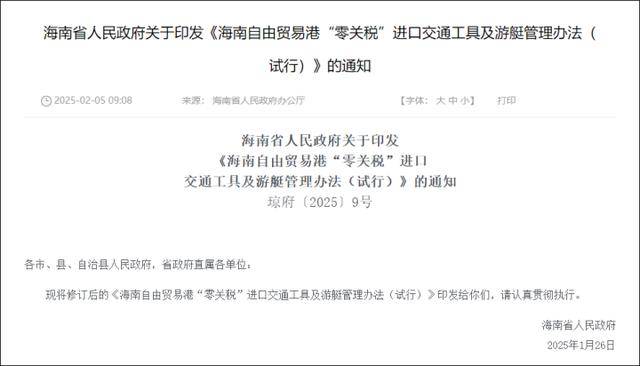
Group 1 - The "zero tariff" policy for imported cars in Hainan has officially been implemented, significantly reducing car prices by eliminating three major taxes: customs duty, value-added tax, and consumption tax, which previously totaled up to 31.26% - 116.58% [2][5] - For example, a 3.0T imported SUV that costs 30 million yuan at the port could reach over 50 million yuan after taxes, while the first "zero tariff" vehicle in Hainan, a Toyota Hiace, saw a price reduction of nearly 40% due to tax exemptions [2][4] - The policy is expected to benefit the automotive industry in China, as it allows companies to import complete vehicles or core components for modification and assembly, provided they add value of over 30%, thus creating a compliant low-cost entry into the Chinese market [9][11] Group 2 - The "zero tariff" policy is not available for individual consumers; it is restricted to enterprises engaged in transportation and tourism, requiring vehicles to be used for operations and meet specific conditions [5][7] - Even for companies, there are strict regulations, including the requirement that vehicles must be registered for operational use, cannot be freely transferred, and must not exceed 120 days of stay outside Hainan [7][8] - The policy may indirectly benefit consumers through lower rental prices for vehicles, as local car rental companies can purchase zero-tariff vehicles and offer them at reduced rates to tourists [8]
广东湛江“并行港”物流模式一年承运货物逾76万吨
Zhong Guo Xin Wen Wang· 2025-09-26 10:28
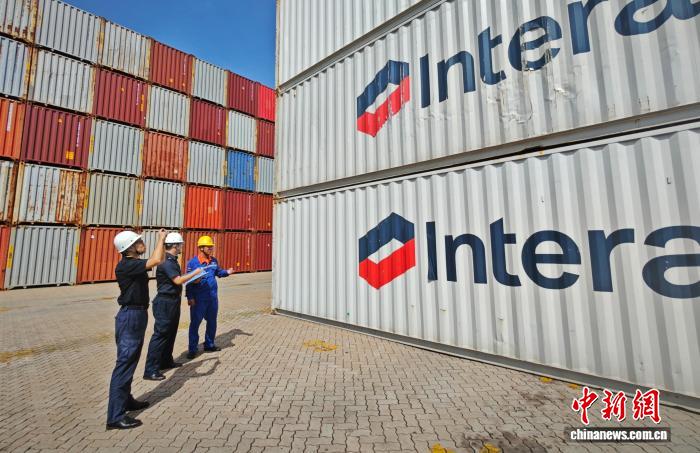
Core Insights - The "Parallel Port" logistics model in Zhanjiang, Guangdong, has successfully transported over 766,100 tons of goods in one year, demonstrating significant growth and efficiency in cross-border logistics [3][4]. Group 1: Logistics Model Overview - The "Parallel Port" logistics model was initiated by Zhanjiang Customs in collaboration with Shenzhen and Haikou Customs, leveraging Zhanjiang's strategic location to connect the Guangdong-Hong Kong-Macao Greater Bay Area and Hainan Free Trade Port [3]. - In its first year, the model has expanded from a pilot program to over 100 participating enterprises, with a diverse range of goods now being transported [3][4]. - The shipping capacity has improved significantly, with vessel loading rates increasing from 30% to approximately 80%, indicating enhanced logistics efficiency [3]. Group 2: Innovations and Policies - The model integrates multiple ports, including Shekou, Zhanjiang, Yangpu, and Nansha, creating an efficient maritime transport network akin to a "bus loop" [3]. - New policies have been introduced, such as the "Parallel Port + Departure Port Tax Refund" service, which has reduced tax refund processing time from over 20 days to just 3 days, improving capital turnover for enterprises [4]. - The "Parallel Port + Western Land-Sea New Corridor" initiative has lowered overall logistics costs by about 25%, facilitating a new export route for the western region through Hainan Free Trade Port [4].