和平预期

Search documents
美元疲软债务隐忧下 黄金站上5000美元后怎么走?
Jin Tou Wang· 2026-01-28 06:06
Core Viewpoint - Gold prices have maintained a level around $5,000 per ounce, with a year-to-date increase of nearly 22%, marking the best start to a year since 1980. Despite multiple supportive factors for gold prices, analysts caution that unexpected resilience in the global economy may weaken safe-haven demand, potentially limiting future price increases [1]. Fundamental Analysis - Ole Hansen, the head of commodity strategy at Saxo Bank, indicated that speculative buying could push gold prices up to $5,500 per ounce. He identified three main concerns driving current gold prices: uncontrolled fiscal debt expansion, a weakening dollar due to the decline of American exceptionalism, and geopolitical uncertainties exacerbated by unpredictable presidential policies. However, he emphasized that these risk factors have not yet materialized significantly [1]. - The U.S. debt continues to grow, but the market is absorbing risk premiums through a steepening yield curve. Although the dollar is weakening, it has not collapsed, and multiple geopolitical fronts have not escalated into destructive conflicts. Hansen believes that while safe-haven demand may cool marginally, there is little basis for a significant price adjustment, suggesting that gold is more likely to enter a consolidation phase rather than a deep correction [1]. Latest Spot Gold Market Analysis - The expectation of peace may create short-term pressure on gold prices, but the market is more inclined to view this as a buying opportunity rather than a signal for a trend reversal. Additionally, the Trump administration's preference for a weaker dollar continues to exert pressure, with the dollar index experiencing a technical rebound after hitting a four-year low of 95.57, yet this does not alter the mid-term downtrend, providing solid underlying support for gold [3]. - Given the significant uncertainties surrounding the potential geopolitical agreement and the possible trust deficit, gold's safe-haven attributes will provide strong resilience against declines, allowing it to maintain price stability during a long-term bull market [3].
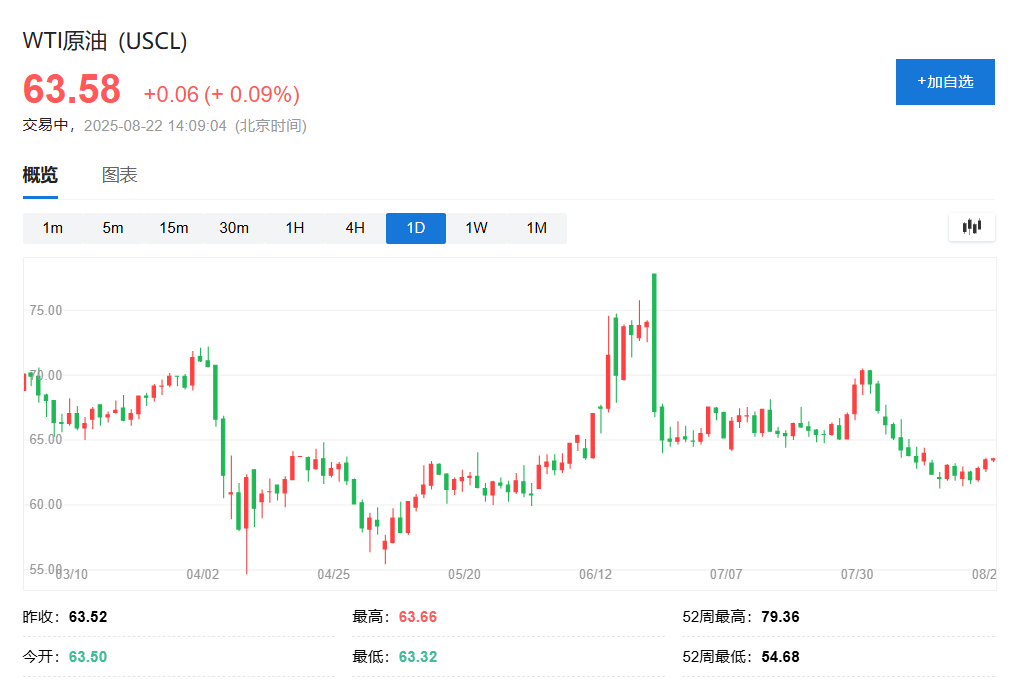
从“促和”到“促攻”,短短四天特朗普对乌克兰立场急转,油价有望终结两周连跌
Hua Er Jie Jian Wen· 2025-08-22 06:45
Core Viewpoint - The geopolitical risks surrounding the Russia-Ukraine conflict have overshadowed peace expectations, leading to a rebound in international oil prices after two weeks of decline [1][8]. Group 1: Geopolitical Developments - President Trump's stance on the Russia-Ukraine situation shifted dramatically from promoting peace to advocating for military action within just four days [1][7]. - Initial optimism in the market was fueled by Trump's meetings with Ukrainian President Zelensky and European leaders, where he expressed intentions to arrange talks between Russian and Ukrainian leaders [6][7]. - The peace process has faced significant obstacles, with external interventions complicating negotiations, and proposed peacekeeping forces being rejected by the Kremlin [6][7]. Group 2: Military Support and Strategy - The U.S. appears to be adjusting its strategy towards Ukraine, potentially using military pressure as leverage in negotiations [7]. - Trump's recent comments suggest a shift from providing military aid as a gift to selling weapons to Ukraine, indicating a change in U.S. support policy [7]. - Vice President Pence emphasized that European nations should bear the primary responsibility for Ukraine's security, indicating a desire to transfer costs to allies [7]. Group 3: Oil Market Reactions - The dimming prospects for peace have led to a resurgence of geopolitical risk, which typically drives up oil prices due to increased market uncertainty [8][9]. - Brent crude oil futures rose by 2.7% during the week, signaling a potential end to the previous downward trend in oil prices [1][8]. - The U.S. Energy Information Administration reported a significant decrease in crude oil inventories, which further supported oil prices amid rising demand concerns [9].