品牌信任修复

Search documents
雀巢全球召回奶粉并裁员,大中华区业绩持续承压
Jing Ji Guan Cha Wang· 2026-02-13 19:20
Recent Events - On January 6, 2026, Nestlé announced a precautionary recall of certain infant formula products in 31 countries due to potential contamination with Bacillus cereus from a supplier's arachidonic acid oil. This recall affects 30 batches of products in the Chinese market, including brands like "力多精" and "铂初能恩." The potential impact on brand trust and supplier relationships warrants ongoing attention [2]. Strategic Initiatives - In October 2025, Nestlé announced plans to lay off approximately 16,000 employees globally (6% of total workforce) over the next two years, focusing on optimizing white-collar and marketing positions. The goal is to achieve annual cost savings of 1 billion Swiss francs by 2027. The Chinese market is included in this restructuring framework. Starting January 1, 2026, Nestlé will merge its infant nutrition business with Wyeth Nutrition to form the "Nestlé Nutrition Business," led by谢国耀. Additionally, the CEO of the China region, 马凯思, is driving a shift from a "channel-driven" to a "demand-driven" approach, integrating e-commerce teams to enhance efficiency [3]. Performance Overview - For the first three quarters of 2025, Nestlé's organic growth rate in the Greater China region was -6.1%, with the third quarter dropping to -10.4%. The pricing contribution rate remained negative at -3.2%, indicating that price reductions did not effectively boost sales. Global sales amounted to 65.9 billion Swiss francs, reflecting a year-on-year decline of 1.9% [4]. Stock Performance - On January 6, 2026, Nestlé's U.S. stock trading volume surged by 88.91%, with the stock price declining by 1.22% to $95.55. Over the past 60 days, the cumulative increase was 3.21%, but there was a cumulative decline of 3.27% from the beginning of the year to January 6 [5]. Industry Environment - The competitive landscape in the Chinese market is intensifying, with domestic brands such as 飞鹤 and 君乐宝 increasing their market share in the infant formula sector. Brands like 瑞幸 and Manner are also diverting coffee consumption demand. Additionally, historical food safety issues, such as the 2023 recall incident in Canada, combined with the recent recall, may prolong the brand trust recovery period [6].

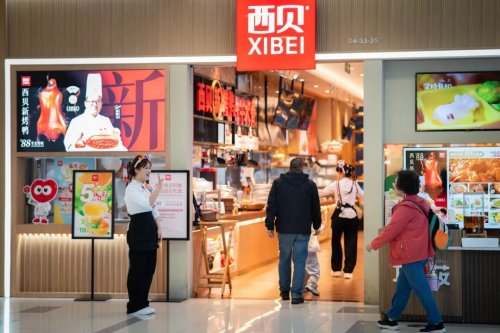
西贝从舆论靶心到餐桌回暖,年内将开8家新店
Zhong Guo Shi Pin Wang· 2025-11-13 09:42
Core Insights - The crisis has significantly impacted Xibei, a well-established restaurant brand, leading to a sharp decline in customer traffic and a damaged brand image, but recovery signs have emerged within two months [1][4][17] - The company has implemented a series of strategic changes, including price reductions and a return to on-site cooking, to regain customer trust and stabilize operations [9][10][11] Group 1: Crisis Management - During the peak of the crisis, Xibei experienced a 40% drop in dine-in traffic, prompting immediate action from management [1][4] - The founder, Jia Guolong, adopted a low-profile approach by clearing social media accounts and refraining from public statements, which was a departure from his previous outspoken style [5][7] - Internal measures included a nationwide meeting with 18,000 employees, prohibiting layoffs, and providing financial bonuses to frontline staff to maintain morale [6][7][18] Group 2: Operational Adjustments - Xibei shifted its focus back to on-site cooking, with key dishes being prepared in front of customers to enhance transparency and trust [10][11] - The company launched a promotional campaign offering millions of vouchers and reduced prices on over 30 dishes, achieving an average price drop of about 20% [11][18] - Despite some store closures, the company plans to open new locations, indicating a strategic shift rather than a retreat [14][15][16] Group 3: Industry Context - The restaurant industry is undergoing a significant adjustment, with many brands moving from rapid expansion to a focus on quality and efficiency [15][16] - Xibei's recent challenges reflect broader trends in the industry, where many establishments are closing due to rising costs and changing consumer preferences [15][16] - The crisis has prompted Xibei to reassess its operational strategies, emphasizing the importance of maintaining quality and customer trust in a competitive market [16][18]