哑铃型社会

Search documents
都说“一人公司”好,那为什么没有遍地都是?
虎嗅APP· 2025-12-24 10:17
Core Viewpoint - The article discusses the emergence of "One-Person Companies" (OPC) in the AI era, highlighting how individuals can leverage technology to create successful businesses with minimal resources, contrasting this with traditional business models [4][6][12]. Group 1: Emergence of One-Person Companies - A new business model is emerging where a few employees can connect seamlessly to global markets, generating millions in revenue as "super individuals" [5][6]. - Sam Altman predicted that the AI era would give rise to a new type of startup: the one-person unicorn company [6][7]. - Nathan Baschez noted that startups are becoming "smaller, faster, cheaper, and weirder" [9]. Group 2: Characteristics of One-Person Companies - The key differentiator for OPCs is leverage, with AI acting as a powerful tool that allows individuals to achieve productivity levels previously only possible with larger teams [14][16]. - Examples include Pieter Levels, who operates a one-person company generating $2.5 million annually without employees, and Vivian Kaye, who achieved over $6 million in sales with her brand [16][18]. - The operational model of OPCs often involves a "front-end individual, back-end network" approach, utilizing AI and outsourcing to manage tasks efficiently [19][20]. Group 3: Challenges Faced by One-Person Companies - Many OPCs face a revenue ceiling, with most generating between $100,000 and $500,000 annually, which can lead to operational challenges if they attempt to scale beyond this range [30][31]. - The lack of redundancy in OPCs makes them vulnerable; any personal issue can jeopardize the entire business [33][34]. - There is a risk of becoming overly dependent on platforms, where changes in algorithms can drastically affect business viability [36][37]. Group 4: The Chinese Context - Lingang Experiment - The Lingang area in China is developing a more resilient and systematic growth model for OPCs, addressing key pain points such as cost anxiety and resource isolation [38][39]. - The Lingang ecosystem, termed "OPC5," aims to provide support in cost, connectivity, opportunity, convenience, and community for individual entrepreneurs [40][41]. - The area offers significant cost advantages, such as rent-free first-year support, and fosters a collaborative community among entrepreneurs [43][44]. Group 5: Future Economic Structure - The article suggests a shift towards a "dumbbell" economic structure, with a few large platforms at one end and numerous super individuals at the other, while traditional mid-sized companies may struggle to survive [56][57]. - Investment strategies are evolving, focusing more on investing in individuals rather than companies, with a potential rise in revenue-sharing models [59][60]. - The Lingang OPC model presents an attractive option for young entrepreneurs, allowing them to achieve financial independence and creative freedom without the pressures of traditional corporate structures [62].


中产大撤退
商业洞察· 2025-12-08 10:52
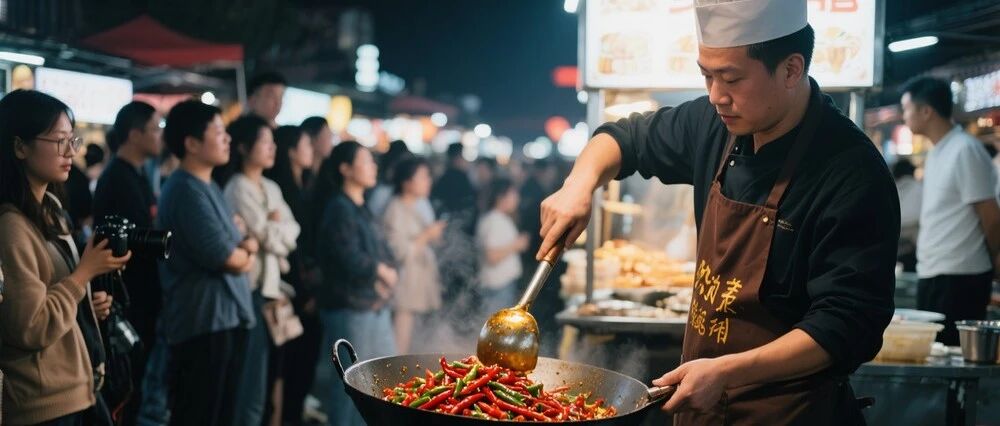
Core Viewpoint - The rise of Jiangxi cuisine in major cities reflects a significant shift in consumer preferences, driven by economic pressures and a desire for authenticity and value in dining experiences [8][11][56]. Group 1: Changes in Dining Preferences - Traditional high-end restaurants are experiencing a decline, with many closing down, as consumers seek more affordable and genuine dining options [15][44]. - Jiangxi cuisine has seen a 42% increase in orders, becoming the most popular choice among consumers, indicating a shift towards regional and less pretentious food [9][10]. - The appeal of Jiangxi cuisine lies in its fresh preparation methods and affordability, with average meal costs ranging from 40 to 70 yuan, making it accessible for the working class [25][56]. Group 2: Societal and Economic Context - The article discusses the emergence of a "dumbbell-shaped" society in China, characterized by a small elite and a large lower class, contrasting with the previously envisioned "spindle-shaped" society [35][36]. - Many individuals who once identified as middle class are now facing economic challenges, leading to a retreat from luxury dining to more budget-friendly options [43][46]. - The economic downturn has resulted in a significant decline in consumer confidence, with many individuals prioritizing basic needs over luxury experiences [40][41]. Group 3: Psychological and Emotional Factors - Jiangxi cuisine serves as an emotional outlet for consumers, providing a sense of comfort and a way to cope with the stresses of modern life [26][30]. - The intense flavors of Jiangxi dishes are seen as a form of catharsis, allowing individuals to momentarily escape their daily pressures [28][30]. - The shift towards practical and satisfying meals reflects a broader change in consumer mindset, moving away from status-driven consumption to a focus on genuine enjoyment and utility [50][56].

江西菜爆火,预示哑铃型社会的到来
虎嗅APP· 2025-12-01 13:21
Core Viewpoint - The rise of Jiangxi cuisine reflects a broader societal trend towards affordable, spicy, and high-quality local dishes, driven by changing consumer preferences and economic conditions [7][21][28]. Group 1: Jiangxi Cuisine Popularity - Jiangxi cuisine has gained significant attention recently, with a notable increase in online searches and restaurant visits, particularly in major cities like Beijing and Shanghai [10][11]. - The popularity of Jiangxi dishes, such as Nanchang mixed noodles, has surged, with a reported 42% year-on-year increase in orders, making it the fastest-growing regional cuisine in China [10][21]. - The emergence of restaurants like "Ou Ji Dapaidang" in Beijing, which emphasizes fresh cooking and local flavors, indicates a shift in consumer interest towards Jiangxi cuisine [9][11]. Group 2: Economic Context - The restaurant industry is facing its most severe crisis in decades, with nearly 3 million closures projected in 2024, particularly affecting high-end cuisines that rely on business dining [15][16]. - The economic downturn and changing consumer behavior have led to a preference for affordable, hearty meals over expensive dining experiences, with Jiangxi cuisine fitting this demand perfectly [19][28]. - The average consumer spending in the restaurant sector has dropped significantly, with a reported 7.7% decrease year-on-year, reflecting a shift towards value-oriented dining [19][28]. Group 3: Societal Changes - The rise of Jiangxi cuisine is indicative of a broader societal shift towards practicality and value, as consumers prioritize cost-effective and satisfying meals amidst economic pressures [28][31]. - The changing landscape of consumer preferences highlights a move away from brand loyalty and towards seeking high-quality, affordable options, as seen in the popularity of Jiangxi dishes [27][35]. - The emergence of a "dumbbell-shaped" society, characterized by a small wealthy elite and a large base of low-income consumers, is influencing dining choices, with a focus on extreme value at the lower end of the market [32][35].