商业化闭环

Search documents
2026漫剧开年爆款复盘:一漫剧8天破2亿,广告厂商跨界凭什么?
3 6 Ke· 2026-02-04 12:29
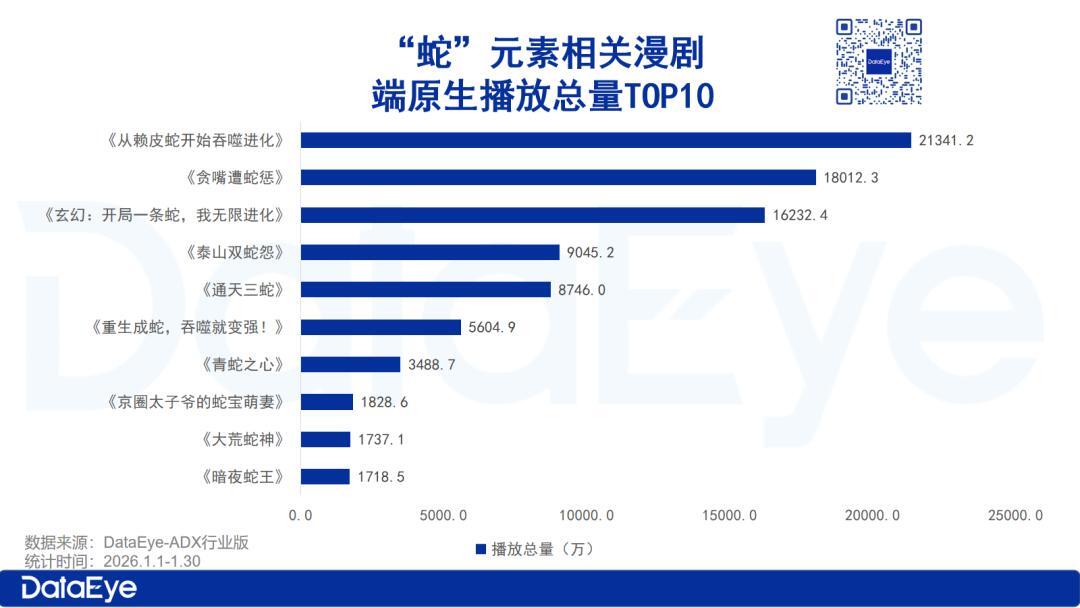
Core Insights - The emergence of a blockbuster in the comic drama market, "From the Lazy Snake Begins to Devour Evolution," has set a precedent for the 2026 comic drama landscape, achieving over 200 million views within a week of its release [1][3] - The success of "Lazy Snake" has triggered a surge in related content, particularly in the "snake" theme, indicating a trend in the comic drama industry [2][3] Industry Trends - The "snake" element has become a significant variable in the comic drama sector, with 223 related dramas aired by January 28, 2026, and 50 new "snake" themed dramas launched in January alone, accounting for 22.42% of the total [2] - The narrative structure of successful dramas like "Lazy Snake" focuses on themes of "weak beasts' counterattack," aligning with current audience emotional needs [5][10] Production Quality - "Lazy Snake" stands out due to its high-quality production, utilizing AI technology to enhance visual appeal and avoid common pitfalls of low-cost productions [11][13] - The integration of emotional depth, such as themes of family and national pride, adds layers to the viewer's experience, making it more relatable and engaging [10][20] Cross-Industry Collaboration - The success of "Lazy Snake" highlights the entry of advertising firms into the comic drama space, with companies like New Media Group leveraging their advertising expertise to create a seamless production and monetization process [15][20] - The ability of these firms to utilize existing advertising channels and data-driven insights allows for efficient content creation and distribution, setting them apart from traditional film production companies [22][25] Future Outlook - The comic drama industry is moving towards a model that emphasizes industrialized production and cross-industry integration, with a focus on data-driven content creation and monetization strategies [27][28] - Companies that can effectively integrate resources across production, technology, and distribution will likely thrive in the evolving landscape of comic dramas [19][21]

“太空快递”来了?全国首个民营飞船成功“上天”!背后公司创始人:正积极开发“中型货运飞船”低成本产品
Xin Lang Cai Jing· 2025-12-16 14:02
Core Insights - The successful launch of the Di'er No. 5 space experiment module marks a new phase for private spaceflight in China, laying the groundwork for broader space scientific research, technology validation, and cargo transportation [1][10] - The focus of the capital market and industry is shifting from mere technological breakthroughs to the commercial viability of private space enterprises, indicating a transition from storytelling to actual business operations [1][10] Group 1: Launch and Significance - The Di'er No. 5 was successfully launched by the Kuaizhou-11 rocket from the Jiuquan Satellite Launch Center, achieving its mission objectives [1][3] - This launch is seen as a validation of the commercial viability of small cargo spacecraft, establishing a standardized space service system independent of state-led large missions [3][14] Group 2: Market Opportunities - With the completion of the Chinese Tiangong space station and its transition to regular operations, there is an emerging demand for small, low-cost, and frequent cargo services, presenting an optimal entry point for private enterprises [4][15] - Private commercial spacecraft are likened to a flexible "space express," catering to the growing market demand for rapid round trips and in-orbit services, distinguishing them from state-operated heavy-lift missions [5][15] Group 3: Business Model and Customer Engagement - The launch demonstrated the ability of the company to provide mature customer service, having carried over 300 kilograms of payload for multiple clients, including 34 experimental payloads from various sectors [8][19] - The evolving customer ecosystem in commercial spaceflight is shifting towards seeking specific solutions rather than just payload delivery, indicating a rich and diverse application landscape [20] Group 4: Policy and Economic Context - The success of the Di'er No. 5 is attributed to a combination of policy support, capital investment, and regional economic development, marking 2025 as a pivotal year for commercial spaceflight [21][22] - The establishment of regulatory frameworks and the involvement of private enterprises in standard-setting reflect a maturing industry poised for high-quality and orderly development [21][22]

1分钟答题赢门票!把握储能不确定性中的确定性
行家说储能· 2025-12-16 09:21
Core Viewpoint - The new energy storage industry is entering a paradigm shift in 2025, characterized by rapid growth in installed capacity, a transition from policy-driven to market-driven growth, and a shift from price competition to value competition, focusing on the deepening of the electricity market and the integration of digital intelligence [2][4]. Group 1: Market Dynamics - The market is a certain battleground, but the capabilities that determine victory are uncertain [3]. - With the exit of "mandatory storage" and the acceleration of a unified national electricity market, new energy storage will gradually establish a revenue model primarily based on energy and capacity, with other market revenues as supplementary [4]. - Understanding and adapting to electricity market rules, building core capabilities under market demand, and enhancing storage value for users will become the core competitiveness and decisive factors for storage companies in the future [4]. Group 2: Digital Intelligence Integration - Digital intelligence is a definite trend, but the path to achieving it remains uncertain [5]. - AI, IoT, and big data are no longer just enhancements but are central to reconstructing the value of energy storage systems [6]. - The emergence of new business models such as virtual power plants and smart microgrids raises questions about how to embed technological capabilities into different provincial electricity market rules to design replicable and profitable commercial loops [6]. Group 3: Industry Event and Insights - The "Electricity Market and Digital Intelligence Energy Storage Enterprise Innovation Practice Summit" will be held on January 8 in Shenzhen, aiming to gather decision-makers, technical experts, and market operators from the energy storage industry to explore sustainable profitability paths [6]. - The summit will provide in-depth analysis of the evolution of the electricity market and commercial paths, clarifying the strategic opportunities as the industry transitions from policy-driven to market-driven [7]. - The event will feature over twenty heavyweight guests from policy, academia, industry, and capital, sharing strategic insights and practical experiences [11].

从SU7到芯片,小米商业化闭环的野心
Bei Jing Shang Bao· 2025-06-16 15:02
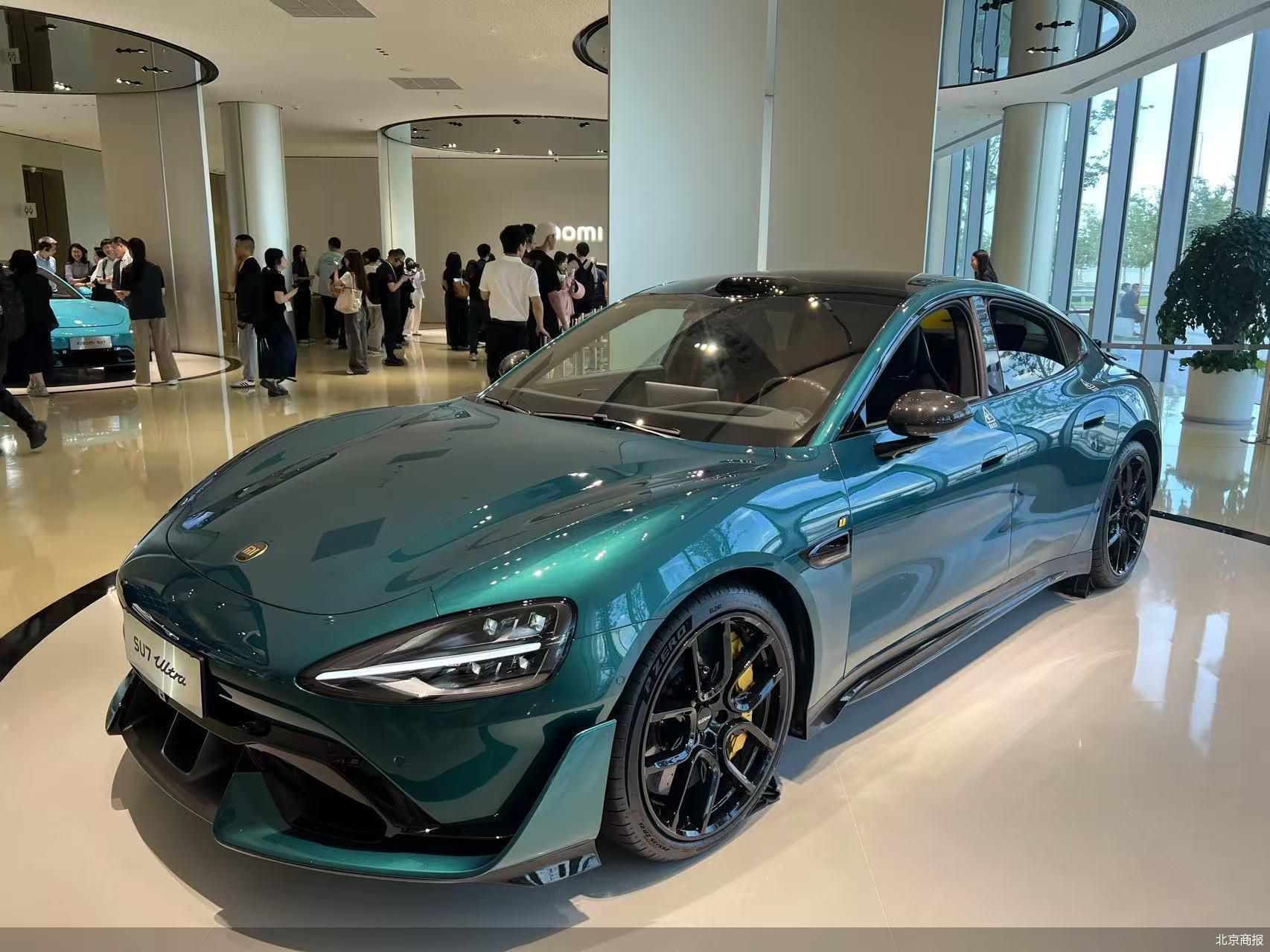
Group 1: Core Insights - Xiaomi's launch of the Xuanjie O1 chip marks a significant milestone in its ambition to create a comprehensive "human-vehicle-home ecosystem" [1][6] - The company has invested 13.5 billion yuan over the past four and a half years in developing the Xuanjie O1, which is part of a broader strategy to enhance its technological capabilities [1][6] - Xiaomi's SU7 vehicle has achieved remarkable sales, becoming the best-selling model in the 200,000 yuan and above category, with 250,000 units sold within 14 months [4][6] Group 2: Manufacturing and Production - Xiaomi's super factory employs over 700 robots, achieving 100% automation in key manufacturing processes, including die-casting and assembly [3] - The factory's integrated die-casting production line simplifies 72 parts into one, reducing production time by 74% [3] - Once fully operational, the factory can produce a new SU7 vehicle every 76 seconds, with a monthly capacity of 28,000 to 29,000 units [4] Group 3: Research and Development - Xiaomi plans to invest an additional 200 billion yuan in R&D over the next five years, building on its previous commitment of 102 billion yuan from 2021 to 2025 [7] - The company has seen a 30.1% year-on-year increase in R&D investment, reaching 6.7 billion yuan in Q1 2025, with total R&D personnel rising to 21,731 [7] - Xiaomi's focus on long-term investment in core technologies aims to establish itself as a leading hard-tech company globally [6][7] Group 4: Strategic Importance of Chip Development - The re-launch of Xiaomi's "big chip" strategy is crucial for building a self-sufficient technological moat and reducing supply chain dependencies [8] - Self-developed chips are expected to enhance product performance and user experience, supporting Xiaomi's high-end market penetration [8] - The integration of chips, operating systems, and AI is seen as essential for creating a cohesive ecosystem across devices [7][8]