
商业实用主义

Search documents
中美人形机器人的路径对决:实用主义VS理想主义
Robot猎场备忘录· 2026-02-10 07:59
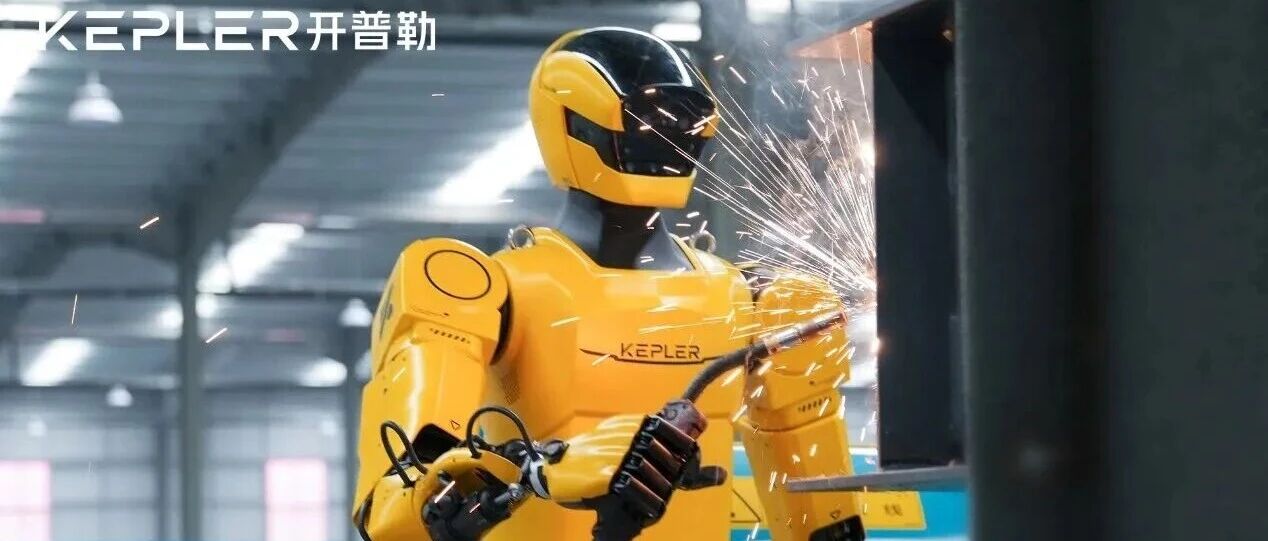
Core Viewpoint - The article highlights the competitive landscape of humanoid robots, emphasizing the practical application and commercial viability of Kepler Robotics' K2 "Bumblebee" in industrial settings, contrasting it with North American counterparts that focus on technological demonstrations rather than real-world deployment [12][27][41]. Group 1: Industry Overview - Kepler Robotics' K2 "Bumblebee" is actively engaged in high-altitude welding tasks, showcasing its capabilities in real industrial environments [2][17]. - The humanoid robot industry is experiencing a shift from experimental models to practical applications, with Kepler leading the way in China by focusing on real-world scenarios and operational efficiency [12][14][41]. Group 2: Competitive Analysis - North American companies like Boston Dynamics and Tesla are still in the experimental phase, with their humanoid robots struggling to achieve continuous operation in industrial environments [11][15][41]. - Kepler's K2 "Bumblebee" has established a significant advantage in load capacity (30 kg) and operational endurance (8 hours) compared to competitors like Tesla's Optimus and Figure 03, which have lower specifications [32][34]. Group 3: Technological Innovations - The K2 "Bumblebee" utilizes a unique hybrid architecture combining planetary roller screw actuators and rotary actuators, ensuring both high load capacity and precision [33][34]. - Kepler's self-developed immersive remote control system allows operators to control the robot with high precision, significantly reducing deployment time and enhancing safety in hazardous environments [18][20]. Group 4: Market Applications - The K2 "Bumblebee" has successfully penetrated key sectors such as automotive manufacturing, logistics, and 3C production, achieving high operational success rates (up to 99.4%) [21][22][26]. - The robot's ability to operate continuously for extended periods (up to 450 days) in complex environments demonstrates its reliability and scalability for industrial applications [26][27]. Group 5: Policy and Industry Support - The Chinese government is actively promoting the development of humanoid robots through policies that encourage innovation and application in industrial settings, aligning with Kepler's business model [14][27]. - Kepler is also fostering collaboration with educational institutions to integrate humanoid robotics into academic research and training, further solidifying its position in the industry [28].

中国AI,需不需要更多的李彦宏?
3 6 Ke· 2025-05-13 07:47
Core Insights - The article discusses the duality of Li Yanhong's role in AI development in China, highlighting his long-term vision and commitment to practical applications of AI technology [2][3][4] - It emphasizes the contrasting approaches of Baidu compared to Alibaba and Tencent, focusing on Baidu's unique integration of AI across its business model while facing challenges in commercialization [8][9][11] Group 1: Li Yanhong's Role and Vision - Li Yanhong has been a key figure in promoting AI in China, acting as a "preacher" for new technologies over the past decade [6][7] - His commitment to AI is evident through significant investments in research and development, with annual R&D expenditures exceeding 10 billion yuan since 2015, representing about 15% of revenue [9][11] - The article notes that Li Yanhong's vision for AI extends beyond Baidu, aiming to reshape societal resource allocation through an "intelligent operating system" driven by AI [6][10] Group 2: Baidu's AI Strategy and Challenges - Baidu has established a comprehensive AI ecosystem, integrating chips, frameworks, models, and applications, yet its market value remains lower than that of Alibaba and Tencent [2][3][11] - The company has faced criticism for the perceived lack of commercial success of its AI products, with the Wenxin model receiving mixed reviews for its impact [2][3][9] - Baidu's approach to AI commercialization has evolved, with a shift from a closed-source model to embracing open-source strategies to foster developer engagement and expand its ecosystem [10][11][12] Group 3: Industry Context and Future Outlook - The article highlights the broader industry challenge of aligning AI technology with commercial viability, noting that many companies, including Baidu, struggle with the mismatch between technological advancement and profitability [11][12] - Baidu's focus on enterprise-level solutions in AI, particularly in autonomous driving and intelligent applications, positions it uniquely compared to competitors like ByteDance and Alibaba [12][16] - The future success of Baidu in the global AI landscape will depend on its ability to balance open-source initiatives with effective commercialization strategies [12][18]
