
人形机器人Atlas

Search documents
30年老将罗伯特・普莱特宣布卸任波士顿动力CEO,CFO临时接班
Sou Hu Cai Jing· 2026-02-11 00:20
Core Viewpoint - Boston Dynamics is undergoing leadership changes as CEO Robert Playter announces his resignation, with CFO Amanda McMaster stepping in as interim CEO during the search for a successor [3]. Group 1: Leadership Changes - Robert Playter announced his resignation as CEO in an internal memo, effective immediately [3]. - Amanda McMaster, the Chief Financial Officer, will temporarily assume the CEO role while the company searches for a new leader [3]. - Playter has been with Boston Dynamics for 30 years and took over as CEO in 2020 from founder Marc Raibert [3]. Group 2: Company Background - Boston Dynamics was founded in 1992 by Marc Raibert, who was a professor at MIT [3]. - The company was acquired by Alphabet, Google's parent company, in 2013, sold to SoftBank in 2017, and then acquired by Hyundai Motor Group in 2021 [3]. - The company is well-known for its quadruped robot Spot, which was commercialized shortly after Playter took over, and it recently released the humanoid robot Atlas [3].


中美人形机器人的路径对决:实用主义VS理想主义
Robot猎场备忘录· 2026-02-10 07:59
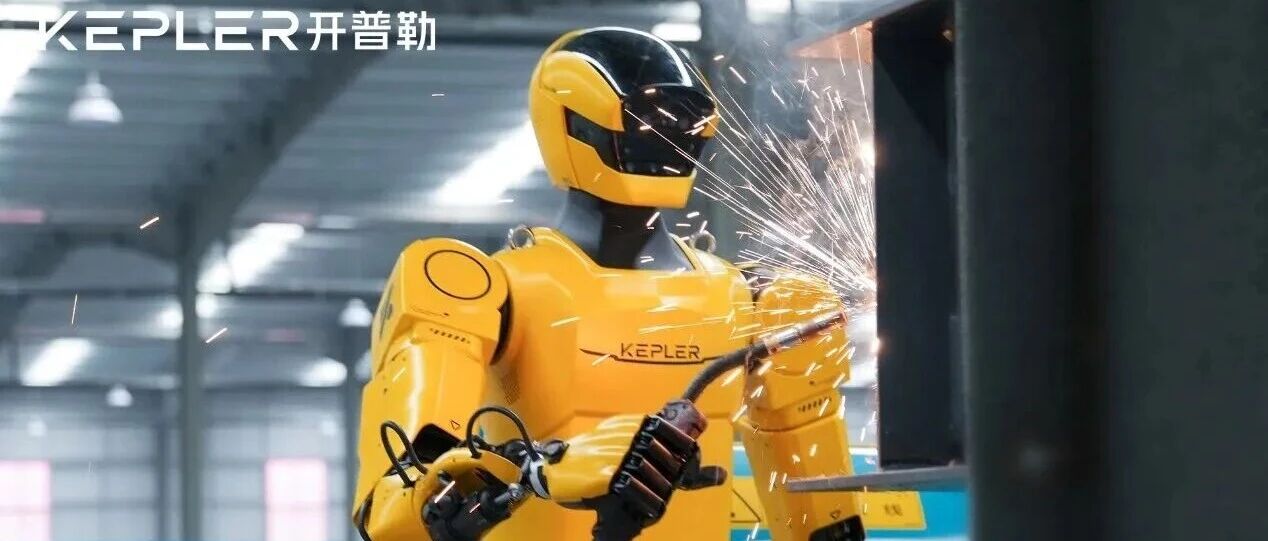
Core Viewpoint - The article highlights the competitive landscape of humanoid robots, emphasizing the practical application and commercial viability of Kepler Robotics' K2 "Bumblebee" in industrial settings, contrasting it with North American counterparts that focus on technological demonstrations rather than real-world deployment [12][27][41]. Group 1: Industry Overview - Kepler Robotics' K2 "Bumblebee" is actively engaged in high-altitude welding tasks, showcasing its capabilities in real industrial environments [2][17]. - The humanoid robot industry is experiencing a shift from experimental models to practical applications, with Kepler leading the way in China by focusing on real-world scenarios and operational efficiency [12][14][41]. Group 2: Competitive Analysis - North American companies like Boston Dynamics and Tesla are still in the experimental phase, with their humanoid robots struggling to achieve continuous operation in industrial environments [11][15][41]. - Kepler's K2 "Bumblebee" has established a significant advantage in load capacity (30 kg) and operational endurance (8 hours) compared to competitors like Tesla's Optimus and Figure 03, which have lower specifications [32][34]. Group 3: Technological Innovations - The K2 "Bumblebee" utilizes a unique hybrid architecture combining planetary roller screw actuators and rotary actuators, ensuring both high load capacity and precision [33][34]. - Kepler's self-developed immersive remote control system allows operators to control the robot with high precision, significantly reducing deployment time and enhancing safety in hazardous environments [18][20]. Group 4: Market Applications - The K2 "Bumblebee" has successfully penetrated key sectors such as automotive manufacturing, logistics, and 3C production, achieving high operational success rates (up to 99.4%) [21][22][26]. - The robot's ability to operate continuously for extended periods (up to 450 days) in complex environments demonstrates its reliability and scalability for industrial applications [26][27]. Group 5: Policy and Industry Support - The Chinese government is actively promoting the development of humanoid robots through policies that encourage innovation and application in industrial settings, aligning with Kepler's business model [14][27]. - Kepler is also fostering collaboration with educational institutions to integrate humanoid robotics into academic research and training, further solidifying its position in the industry [28].
波士顿动力人形机器人新技能:侧手翻丝滑接后空翻
Xin Jing Bao· 2026-02-08 22:57
Core Insights - Boston Dynamics has showcased new skills of its humanoid robot Atlas, including performing a smooth side flip followed by a clean backflip [1] - The company demonstrated the process of Atlas mastering these movements, highlighting the robot's multiple falls during training [1] - In a previous event in January, Atlas nearly failed to execute a backflip, resulting in a stumble and a hand detachment [1]

机构:现代汽车或从Boston Dynamics获得巨大估值提振
Xin Lang Cai Jing· 2026-01-21 00:49
Core Viewpoint - Hyundai Motor is expected to see a significant valuation boost from its investment in Boston Dynamics, which is projected to reach a valuation of 53.3 trillion KRW by 2027, potentially adding 14.4 trillion KRW to Hyundai's valuation [1] Group 1 - Hyundai holds a 27.1% stake in Boston Dynamics through its investment in HMG Global, which controls the humanoid robot manufacturer [1] - Analyst Ha Neul from NH Investment & Securities anticipates that Boston Dynamics' valuation will enhance Hyundai's overall valuation [1] - KB Securities analyst Kang Seong-jin projects that by 2035, Boston Dynamics' valuation could reach approximately 128 trillion KRW, contributing about 35 trillion KRW to Hyundai's valuation [1]
Arm成立物理AI部门,发力机器人市场
Xin Lang Cai Jing· 2026-01-08 05:09
Core Insights - Arm Holdings has restructured to establish a physical artificial intelligence department to enhance its influence in the robotics market [1][4] - The company now operates three main business lines: cloud computing and AI, Edge (including mobile devices and PCs), and physical AI (including its automotive business) [1][4] - Robotics and automotive sectors are central to physical AI, sharing existing sensor technologies and hardware [1][4] Business Strategy - Arm aims to expand its focus on physical AI as part of a broader effort to grow its business [1][4] - Since CEO Rene Haas took over four years ago, Arm has been working to increase the pricing of its latest technologies and is considering its own full-chip designs [1][4] Market Potential - Arm executives believe that robotics technology has significant long-term growth potential [2][5] - The newly formed department plans to increase staff dedicated to robotics technology [2][5] - The integration of automotive and robotics technologies is due to similar customer requirements regarding power constraints, safety, and reliability [2][5] Client Collaboration - Arm collaborates with numerous automotive manufacturers and robotics companies, including Boston Dynamics under Hyundai Motor Group [6] - Hyundai announced plans to deploy production-ready humanoid robots, Atlas, in its U.S. factories starting in 2028 [6]

中国机器人,在韩国需求量渐起
Huan Qiu Wang· 2025-10-10 07:34
Group 1: Industry Overview - The APEC meeting in late October will focus on the cooperation and competition in the robotics sector between China and South Korea, with Chinese companies preparing to mass-produce robots tailored for the South Korean market by the end of this year [1][9] - South Korea's Ministry of Trade, Industry and Energy has announced a plan to invest 1 trillion KRW (approximately 0.84 billion USD) by 2030 to enhance humanoid robot technology, aiming to achieve global leadership in emerging industries, including robotics [1][3] Group 2: Market Demand and Opportunities - There is a strong demand for robots in South Korea, with numerous inquiries from Korean enterprises and educational institutions, indicating a growing interest in Chinese robotic technology [2][5] - The cloud-based robot inspection solutions, such as the industrial-grade robot dog developed by Hangzhou Yundongchu Technology, are expected to save significant labor hours in inspections, showcasing the practical benefits of adopting Chinese robotic solutions [3][4] Group 3: Competitive Landscape - South Korean companies like Hyundai and Samsung are actively investing in robotics, with Hyundai acquiring an 80% stake in Boston Dynamics for 800 million USD and Samsung investing approximately 0.62 billion RMB in Rainbow Robotics [3][4] - Chinese robots are perceived as more cost-effective and have more practical deployment experience compared to South Korean counterparts, which face challenges in commercializing advanced humanoid robots [4][5] Group 4: Collaboration and Development - Chinese companies are open to collaboration with South Korean firms, focusing on integrating their technologies and platforms to enhance operational efficiency [7][8] - The trend of "second development" is prevalent, where foreign partners seek to customize and adapt Chinese robots for local needs, indicating a flexible approach from Chinese manufacturers [7][8] Group 5: Production and Supply Chain - The demand for Chinese robots in overseas markets is surging, leading to challenges in meeting production capacity, with some partners expressing concerns over long delivery times [8][9] - Plans are in place for mass production of robots tailored for the South Korean market by the end of this year, with potential future strategies including supplying key components for local assembly [9]
黄仁勋「组局」,具身智能的核心玩家们聊了聊人形机器人的落地与未来
Founder Park· 2025-04-16 12:56
文章转载自 「 Linguista」 今年的 GTC 大会,英伟达发布了通用机器人模型 GR00T N1,老黄特别提到未来重点关注的趋势是「Physical AI」(物理 AI)。 不仅如此,老黄还把当下机器人领域的核心玩家都喊了过来,针对人形机器人领域当下的技术路径、数据问题以及通用模型和通用机器人等问题进行了深 入探讨,有不少很有价值的观点。 嘉宾阵容很强大,1X、Skild AI、Agility Robotics、Boston Dynamics……堪称具身智能领域的「华山论剑」。 嘉宾介绍: TLDR: Founder Park 正在搭建开发者社群,邀请积极尝试、测试新模型、新技术的开发者、创业者们加入,请扫码详细填写你的产品/项目信息,通过审核 后工作人员会拉你入群~ Bernt Børnich,人形机器人创企 1X 的创始人兼 CEO。1X 致力于构建完全自主的人形机器人。此前曾推出专注于家庭场景的人形机器人 NEO。 Deepak Pathak,具身智能创企 Skild AI 的 CEO 兼联创。Skild AI 致力于打造机器人通用「大脑」。此前曾推出曾推出可扩展的机器人基础模型「Skild B ...
