
善意文明执行

Search documents
北京高院:涉欠薪案件呈现“隐蔽式”多发、规避执行等现象
Xin Lang Cai Jing· 2026-02-05 12:01
Core Viewpoint - The article highlights the increasing prevalence of "covert" wage arrears cases in Beijing, emphasizing the challenges in enforcement and the tactics used by employers to evade payment obligations [1][2]. Group 1: Judicial Actions and Outcomes - In 2025, Beijing courts received 28,597 wage arrears cases and resolved 27,243, with an enforcement amount of 950 million yuan [1]. - Measures taken included restricting high consumption for 13,817 individuals and listing 716 people as dishonest executors [1]. - The courts have established a comprehensive mechanism to enhance mediation and execution processes, effectively resolving wage disputes and protecting workers' rights [1][3]. Group 2: Case Examples and Enforcement Strategies - A specific case involved a company that, due to poor management, owed wages to 19 employees. The court allowed the company to continue operations under supervision to facilitate wage payments [2]. - The enforcement judge discovered that the company was transferring income through external accounts and personal WeChat, leading to the implementation of strict measures, including detaining the legal representative [2]. - The court's approach combines both punitive and educational measures to ensure compliance, demonstrating a balance between enforcing the law and supporting business operations [3]. Group 3: Broader Implications for Social Governance - The enforcement work is framed as a means to maintain social fairness and protect livelihoods, with a focus on safeguarding workers' financial interests [3]. - Innovative enforcement methods, such as "active sealing" of production equipment, are employed to ensure companies can generate revenue while fulfilling wage obligations [3]. - The article suggests that these practices can serve as replicable models for addressing similar wage arrears cases in other regions [3].
退渔还耕,2.45万亩盐碱地如何变良田?
Xin Lang Cai Jing· 2026-02-03 21:52
Core Viewpoint - The article discusses the successful execution of a project aimed at converting saline-alkali land back to arable land in Yancheng, Jiangsu Province, where 662 shrimp farming structures were dismantled to facilitate agricultural development, highlighting the collaborative efforts of various judicial bodies to balance ecological restoration and the livelihoods of local farmers [1][7]. Group 1: Project Background - A state-owned enterprise developed approximately 24,500 acres of saline-alkali land in the late 1990s, which was later leased to farmers for aquaculture [1]. - The project aims to "return fishing to farming" during the 14th Five-Year Plan period, with a focus on ensuring food security and high-standard farmland construction [1][2]. Group 2: Execution Challenges - The execution faced significant resistance from farmers who were reluctant to vacate 443 acres of land, leading to potential conflicts [2][3]. - The complexity of the situation was compounded by the presence of 662 shrimp ponds and multiple layers of sub-leasing among farmers [2][4]. Group 3: Collaborative Execution Strategy - The Jiangsu High Court implemented a "three-part method" to address the challenges, which included separate resolution of disputes, phased delivery of land, and step-by-step construction of agricultural land [4][5]. - The execution involved a collaborative effort among the Nanjing Maritime Court, Yancheng Intermediate Court, and Dongtai Court, leveraging their respective resources for effective execution [4][5]. Group 4: Resolution and Outcomes - By the autumn of the previous year, the involved parties had voluntarily dismantled the shrimp farming facilities and returned the land, allowing for the timely progress of the saline-alkali land restoration project [7]. - The first season of rice cultivation on the reclaimed land yielded an impressive average of 950 pounds per acre, demonstrating the successful transformation from saline-alkali land to high-standard farmland [7]. Group 5: Broader Implications - The article highlights Jiangsu's pioneering efforts in integrating execution with bankruptcy procedures, which has led to the successful rehabilitation of 328 distressed enterprises, positioning the province as a leader in this area nationally [8]. - The use of technology, such as electronic seals and IoT monitoring, has facilitated a more humane and efficient execution process, benefiting over 4,251 enterprises [9].
上海阿姨“躺在百万拆迁款上睡觉”咋回事?法官详解焦点问题
Yang Shi Wang· 2025-12-25 05:13
Core Viewpoint - The case of a woman in Shanghai, who allegedly hoarded over 2.8 million yuan in demolition compensation, highlights issues of family disputes, legal enforcement, and social psychology regarding compliance with judicial decisions [1][3]. Group 1: Legal Proceedings - The court ruled that the demolition compensation of over 2.8 million yuan should belong to the mother, as the daughter had not lived in the family home and had received government benefits elsewhere [3]. - After the ruling, the daughter refused to comply, which could lead to legal consequences such as judicial detention, fines, and credit penalties [3][4]. - The court had previously detained the daughter for her non-compliance, emphasizing the seriousness of her refusal to execute the court's decision [3]. Group 2: Enforcement and Discovery - The enforcement officers suspected that cash might be hidden at the daughter's home due to her frugal lifestyle and lack of significant expenditures, alongside evidence of large cash withdrawals [4]. - During the search, officers discovered over 2.4 million yuan hidden in various locations within her home, including under the bed and in boxes [1]. Group 3: Mediation and Resolution - Despite the successful enforcement, the court opted for mediation to promote family harmony, considering the daughter's care for her mother and the need for a peaceful resolution among siblings [6][10]. - The siblings agreed to forgo some interest on the debt, allowing the daughter to fulfill her remaining obligations and achieve a family reconciliation [7]. Group 4: Social and Judicial Implications - The case reflects broader social issues, such as the psychological state of individuals who resist legal authority, often driven by desperation or a misguided sense of entitlement [8][9]. - The court's approach balances strict enforcement with compassion, aiming to restore familial relationships while ensuring compliance with the law [9][10]. - The entire process from litigation to enforcement and mediation illustrates a judicial philosophy that prioritizes fairness, efficiency, and the well-being of the community [10].


镇江中院召开涉企执行发布会,35.62亿元执结款护航营商环境
Yang Zi Wan Bao Wang· 2025-12-24 11:51
Core Viewpoint - The Zhenjiang Intermediate People's Court is enhancing the legal business environment to support high-quality economic and social development through effective execution of enterprise-related cases [1][3]. Group 1: Execution Work Overview - In 2025, Zhenjiang Court concluded 8,306 cases where enterprises were the applicants, recovering 3.562 billion yuan [3]. - The court emphasizes a balance between "lawful enforcement" and "civilized execution," aiming to both realize creditors' rights and save enterprises [3]. - The court has implemented measures like "active sealing and active deduction" to minimize the impact of enforcement on normal business operations [3]. Group 2: Measures and Achievements - A total of 627 enterprises voluntarily fulfilled their obligations or reached settlements during the grace period under the credit punishment system [3]. - The court facilitated 2,796 enterprises to reach settlements with creditors through various methods, including installment payments and third-party funding [3]. - The court has successfully rescued 39 enterprises through bankruptcy reorganization and reconciliation procedures [3]. Group 3: Future Directions - The city courts will continue to implement higher court directives to optimize the legal business environment and enhance the execution of enterprise-related cases [5]. - The court plans to further standardize execution work for enterprise cases to provide high-quality judicial services that support economic development [5].
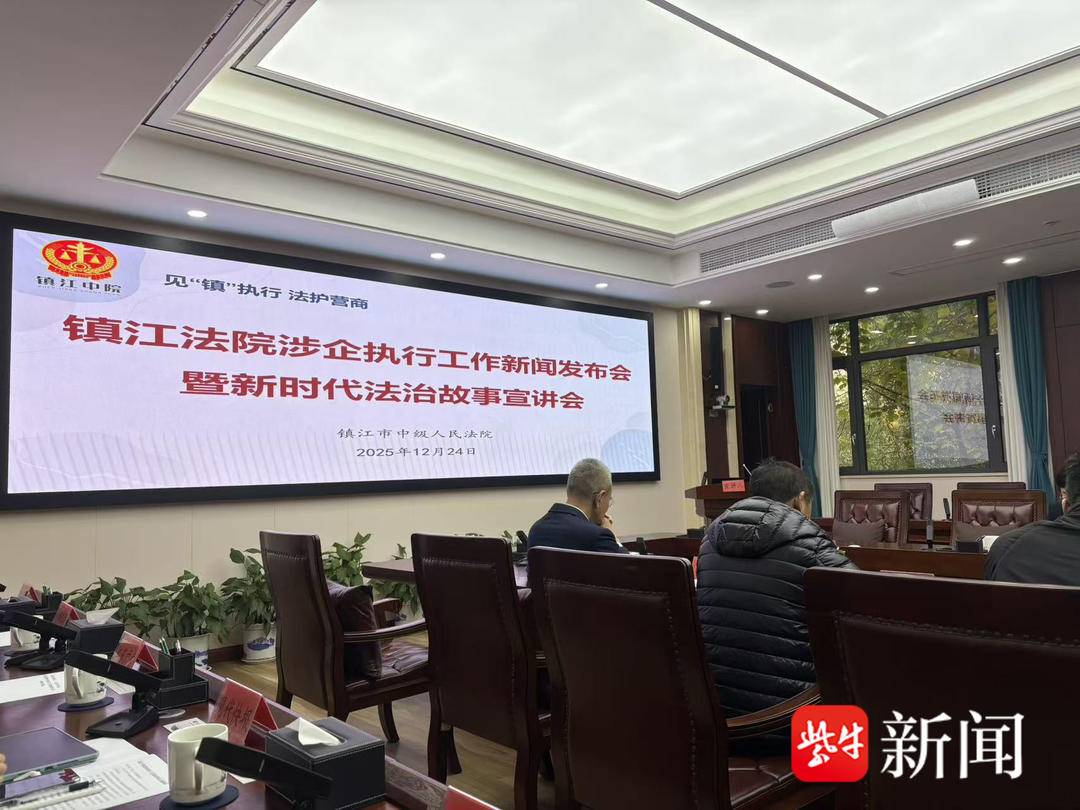
全国首例!法院联手京东平台,不上架拍品却上架了一份“和解协议”
Yang Zi Wan Bao Wang· 2025-09-23 07:04
Core Viewpoint - The case highlights an innovative approach to asset resolution through public disclosure of settlement agreements, which effectively avoids the negative impacts of auction processes and leads to a swift conclusion of a long-standing dispute [1][6]. Group 1: Legal Proceedings and Financial Obligations - In February 2015, a court ruled that a new materials company must repay a bank a principal amount of 170 million RMB and interest of approximately 7.89 million RMB [2]. - The company failed to fulfill its obligations, prompting the bank to seek enforcement through the court, which led to the involvement of a different court due to jurisdictional issues [2]. Group 2: Challenges in Asset Liquidation - The court's attempts to auction the collateral resulted in multiple failed attempts, leading to the termination of the enforcement process due to the inability to liquidate the assets [3]. - The bank subsequently transferred the non-performing asset to a state-owned asset management company, which sought to restart the enforcement process [3]. Group 3: Resolution Strategies - The court adopted a collaborative approach, facilitating negotiations between the parties to reach a consensus on the asset's value, ultimately leading to a settlement agreement in April 2025 [4]. - The settlement included a unique public disclosure clause, allowing for transparency and the opportunity for third parties to raise objections or make higher offers [5]. Group 4: Implications of the Settlement - The asset management company successfully publicized the settlement agreement, which, after a designated period without objections, allowed for the resolution of the case and the unfreezing of the debtor's assets [5]. - This case is noted as the first instance of a public disclosure of a settlement agreement on the JD asset trading platform, setting a precedent for future asset resolutions in a declining auction market [6]. Group 5: Judicial Perspectives - The execution judge emphasized the importance of transparency in asset disposal processes, noting that the public disclosure approach mitigated risks of undervaluation and potential loss of state assets [7]. - The case exemplifies a flexible and efficient method for resolving disputes, particularly in cases involving unique asset types or where parties are willing to negotiate alternative settlement terms [7].

杭州法院开展集中执行行动 单日执行到位2.39亿元
Zhong Guo Xin Wen Wang· 2025-09-16 13:17
Core Viewpoint - The Hangzhou court has launched a concentrated execution action named "Protecting Business - Kunpeng Execution 2025," successfully executing cases worth 239 million yuan in a single day, focusing on various types of cases including those related to people's livelihoods and enterprises [1][2]. Group 1: Execution Action Details - On September 16, the Hangzhou court mobilized 689 personnel, conducted investigations at 356 locations, detained 128 individuals, and reclaimed 74 properties, concluding 588 cases [1]. - The action targeted cases with small amounts, involving people's livelihoods, enterprises, and finance, employing various enforcement measures against non-compliant defendants [1][2]. Group 2: Execution Statistics and Performance - Since the beginning of the year, the Hangzhou court has concluded 81,435 cases, representing an increase of 86.6% year-on-year, with a total of 14.924 billion yuan executed [2]. - The court has also detained 2,599 individuals and seized 1,935 vehicles, with 221 cases referred to public security for suspected refusal to execute, marking a 33% increase [2].
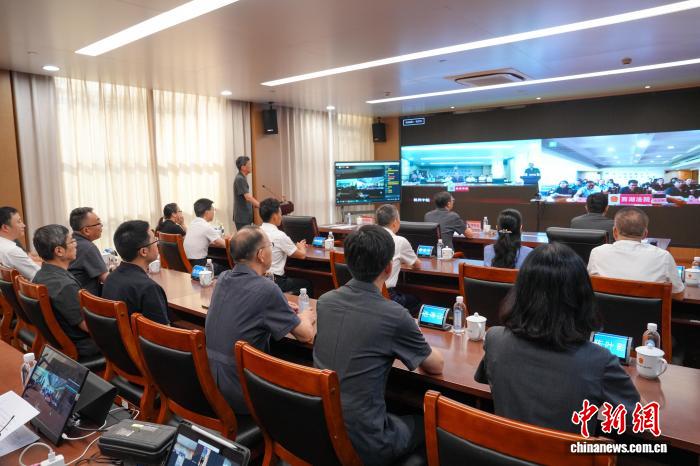
努力将胜诉当事人“纸上权益”兑现为“真金白银”——访最高人民法院执行局副局长王富博
Zhong Guo Jing Ji Wang· 2025-03-08 03:02
Core Viewpoint - In 2024, the People's Courts are effectively addressing complex execution cases and long-standing historical cases through designated and elevated execution methods, aiming to convert the "paper rights" of winning parties into "real money," with a notable decrease in the number of individuals on the dishonesty list for the first time in ten years [1] Group 1: Execution Progress - In 2024, over 260,000 cross-execution cases were handled nationwide, resulting in substantial progress or resolution of 130,000 cases, with an execution amount exceeding 130 billion yuan [2] - The Supreme Court has conducted on-site research and tailored 32 cross-execution "health checklists" for various high courts, ensuring effective resource allocation and addressing local protectionism [2][6] - The execution environment has significantly improved, with a number of cases being held accountable [3] Group 2: Execution Statistics - The execution work in 2024 is characterized by "two decreases and two increases": the number of first-time execution cases and individuals on the dishonesty list both decreased, while the execution rate and actual execution amount increased [4] - Over 8.8 million first-time execution cases were accepted, showing a decline of over 6%, while the number of individuals on the dishonesty list decreased by over 20% [4] Group 3: Civilized Execution Initiatives - The courts have been promoting a civilized execution approach, focusing on distinguishing between dishonesty and "inability," and implementing systems for credit repair and warnings [5] - In 2024, 2.457 million new individuals were added to the dishonesty list, a decrease of 23.4%, while 2.821 million individuals successfully returned to the market through credit repair, an increase of 35.4% [5] Group 4: Collaborative Measures - The Supreme Court has expanded its collaborative efforts with 13 central ministries to enhance execution capabilities, achieving over 10 breakthroughs in locating individuals and assets [6] - A total of over 100 joint punitive measures against dishonest individuals have been implemented, with significant progress in the construction of a credit supervision and warning mechanism [6]