国产算力资本化

Search documents
A股盘前播报 | 高层发声扩内需!建立和完善扩大居民消费的长效机制
智通财经网· 2025-12-16 00:54
Industry Insights - The domestic and international autonomous driving sector is experiencing significant positive developments, with the Ministry of Industry and Information Technology granting approval for the first batch of L3 autonomous driving models, including vehicles from Chongqing Changan Automobile and BAIC Blue Valley Magna [2] - Tesla is set to initiate road testing of its Robotaxi without safety drivers, indicating a shift in the industry's core logic from "electrification" to "intelligentization and embodiment" [2] - The domestic computing power sector is witnessing a wave of capital activity, with companies like Molybdenum Thread, Muxi Co., and Biran Technology making strides in the market, although they are still in the early stages of commercialization [4] Macro Insights - The China Securities Regulatory Commission (CSRC) is focusing on deepening capital market reforms to support employment, enterprises, and market stability, with 12 key measures identified for reform, particularly in the ChiNext and STAR Market [3] - The recent economic work conference emphasized the need for a comprehensive domestic demand system and a long-term mechanism to enhance consumer spending, which is crucial for sustainable economic growth [1]
昆仑芯赴港上市:股权激励如何成为新经济企业的“必选题”与“压舱石”
Sou Hu Cai Jing· 2025-12-09 07:26
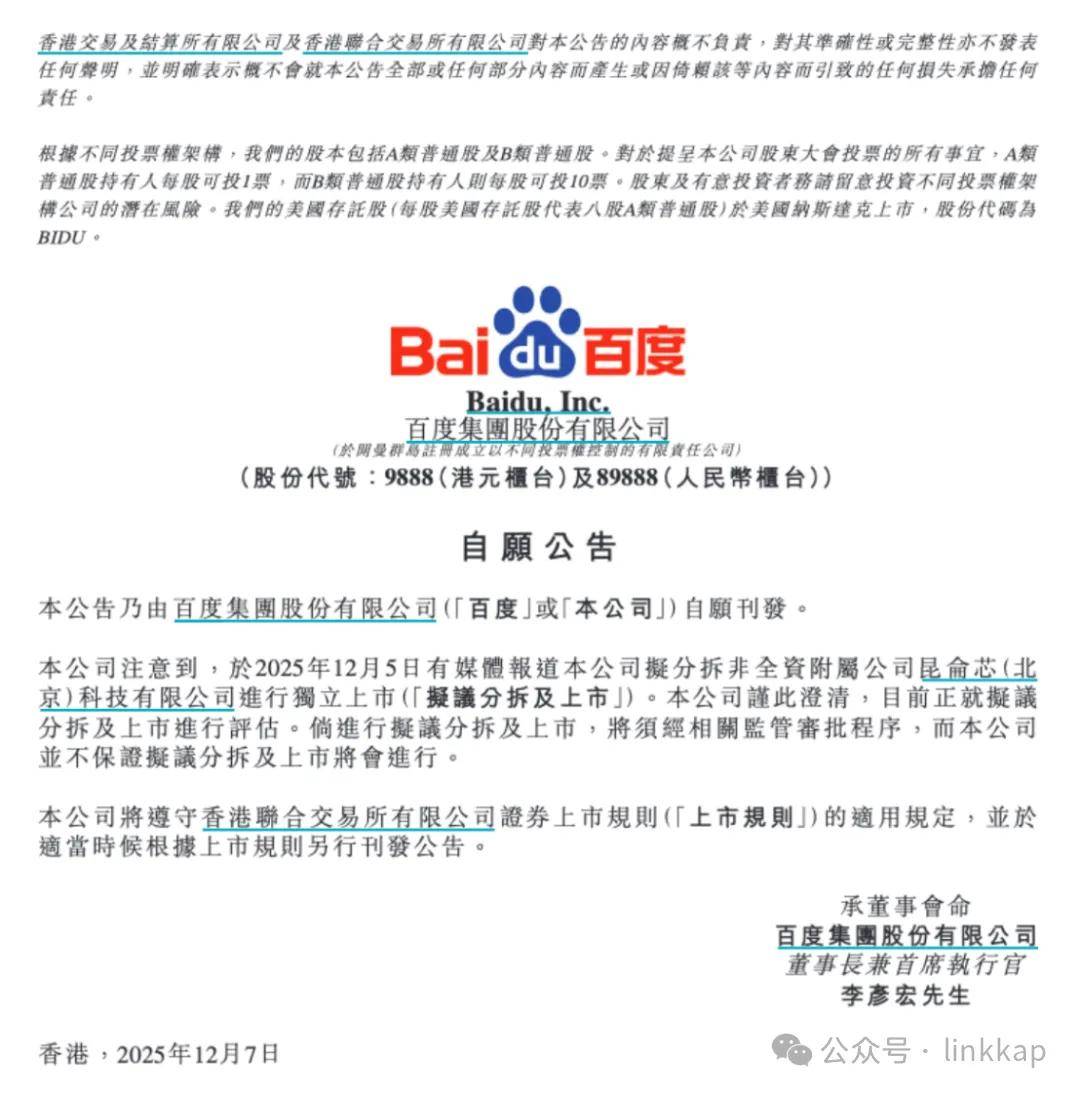
Group 1 - Kunlun Chip, a subsidiary of Baidu, plans to spin off and list in Hong Kong, with projected revenue exceeding 1 billion yuan in 2024 and a valuation of 21 billion yuan after the latest financing round [1] - The listing of Kunlun Chip reflects a broader trend of domestic AI chip companies entering the public market, with significant interest from capital markets in domestic computing assets [3][4] - The long and uncertain process of going public necessitates a well-designed equity incentive plan, which has become essential for companies like Kunlun Chip to navigate the listing process successfully [4][6] Group 2 - The semiconductor and AI industries show a high dependency on equity incentives, with an average of 52.48% of employees in the semiconductor sector receiving incentives, significantly higher than the 22.12% median for new economy sectors [5] - In the AI sector, the average incentive per person is 0.2798%, approximately ten times that of the semiconductor industry, highlighting the reliance on top talent for core technologies [5] - Equity incentives are crucial for retaining talent during the lengthy IPO process, with long vesting periods acting as "golden handcuffs" to stabilize core teams [7][8] Group 3 - A scientifically designed equity incentive plan is a valuable asset for companies approaching an IPO, demonstrating a stable and competitive core team to investors and regulators [8] - The flexibility of Hong Kong's equity incentive rules allows companies to create tailored plans, but compliance and foresight are critical [9] - The use of options remains prevalent, with 46.92% of companies favoring them, while restricted stock units (RSUs) are gaining importance as companies near their IPOs [10] Group 4 - The majority of companies (99.33%) opt for indirect shareholding structures to address control, tax planning, and compliance issues, while deep discounts on incentive pricing are common [11] - Effective incentive plans must link vesting conditions to company strategy and individual performance, ensuring that resources are directed towards value creation [12] - Kunlun Chip's case illustrates the importance of aligning equity incentives with business strategy, particularly in high-end AI chip development [14][15]