国内成品油定价机制

Search documents
油价1月6日24时或上涨,95、92号汽油今日价格,2026年首次油价调整落地
Sou Hu Cai Jing· 2026-01-07 06:10
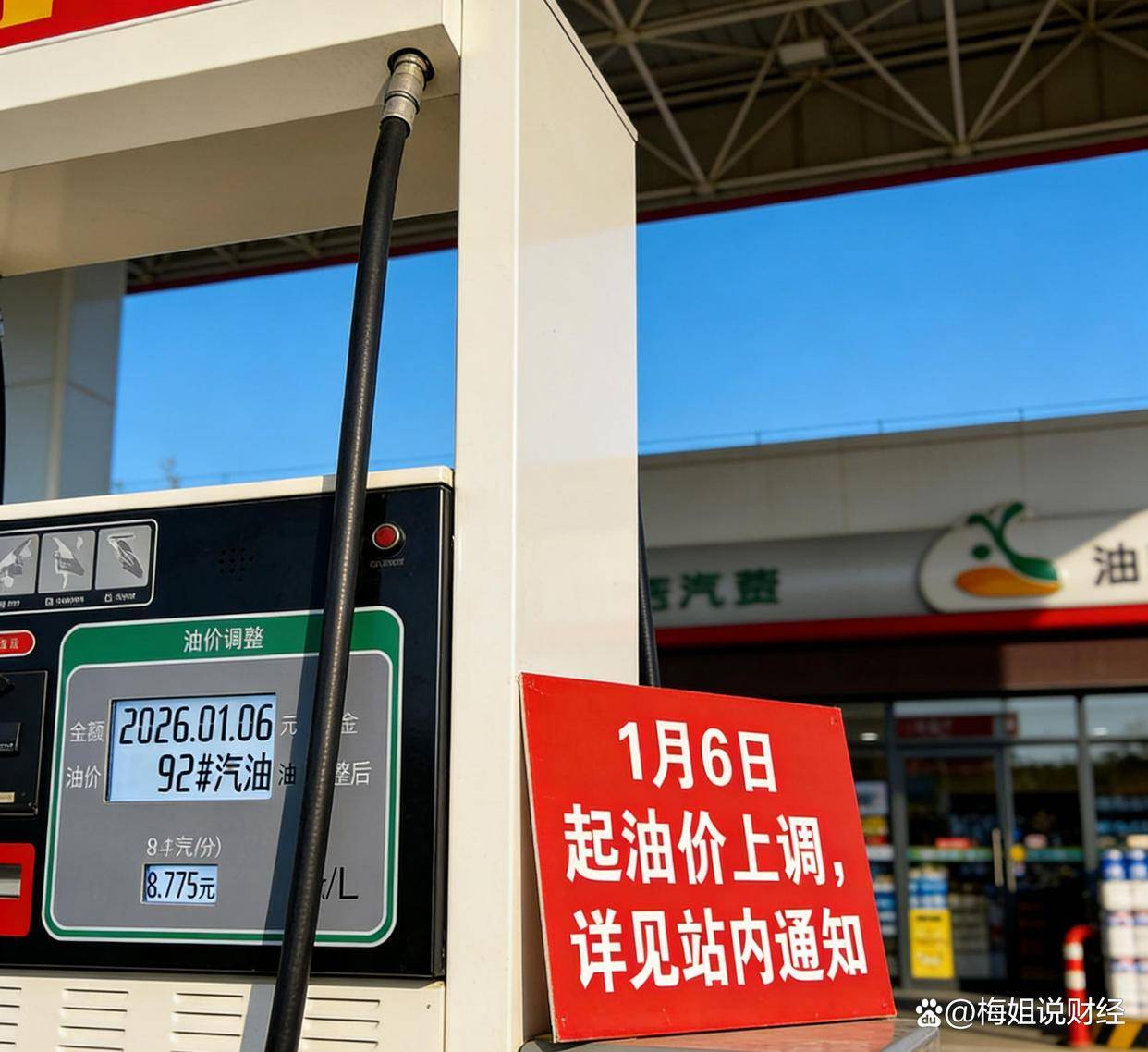
Core Viewpoint - The recent adjustment in domestic fuel prices in China, effective from January 6, 2026, has led to an increase in gasoline and diesel prices, with 92 octane gasoline rising by approximately 0.05 yuan per liter and 95 octane gasoline by about 0.06 yuan per liter [1][3]. Price Adjustments - The new prices for 92 octane gasoline in major cities are as follows: Beijing increased from 6.70 yuan to 6.75 yuan, Shanghai from 6.67 yuan to 6.72 yuan, and Guangzhou from 6.72 yuan to 6.77 yuan [3][4]. - For 95 octane gasoline, the adjusted prices are: Beijing at approximately 7.20 yuan, Shanghai at about 7.16 yuan, and Guangzhou at around 7.26 yuan [3][4]. - Diesel prices also saw an increase, with 0 diesel rising by about 0.05 yuan per liter [1][3]. Pricing Mechanism - The domestic fuel price adjustment follows a "ten working days" rule, where prices are reviewed and potentially adjusted if the average international crude oil price changes by more than 50 yuan per ton [3]. - The recent fluctuations in international crude oil prices were influenced by geopolitical risks and expectations of global supply surplus, leading to price volatility [3]. Historical Context - In 2025, domestic fuel prices underwent 25 adjustments, concluding with a "three consecutive declines," resulting in a total reduction of 915 yuan per ton for gasoline and 880 yuan per ton for diesel compared to the end of 2024 [6][7]. - The last two price reductions in December 2025 led to a cumulative decrease of 225 yuan per ton, bringing prices to a four-year low, with some regions seeing 95 octane gasoline drop below 7 yuan per liter [7]. Future Outlook - The next price adjustment window is set to open on January 20, 2026, at 24:00 [7].

印度拒收俄原油后,俄罗斯对中国降价出售?能否影响国内油价?
Sou Hu Cai Jing· 2025-12-26 06:31
Core Viewpoint - The U.S. sanctions against Russian oil have led Indian refineries to withdraw from purchasing, resulting in discounted Russian crude oil, with China emerging as the primary buyer. However, the impact of these low-priced Russian oils on domestic fuel prices remains uncertain [1][3][19]. Group 1: U.S. Sanctions and Indian Response - The U.S. Treasury imposed sanctions on Russian oil companies, including major producers, effective from November 21, leading Indian refiners to halt all Russian oil purchases [1][3]. - Indian companies like Reliance Industries and Bharat Petroleum decided to pause procurement due to compliance with Western sanctions, indicating a lack of autonomy in their purchasing decisions [3][7]. - The share of Russian oil in India's total imports surged from 2% before the Ukraine conflict to over 40% by late 2024, marking a 20-fold increase in just two years [4]. Group 2: China's Role as a Buyer - China has become the largest importer of Russian oil, with imports reaching 108 million tons valued at $62.4 billion in 2024, accounting for 19.6% of China's total crude imports [11]. - Chinese imports of Russian oil occur through pipelines and maritime routes, with significant volumes handled by private refineries in Shandong [13][15]. - Despite the sanctions, China remains cautious, implementing port bans on sanctioned vessels and ensuring compliance with legal frameworks in its procurement [15]. Group 3: Pricing Dynamics and Market Conditions - The average price of Russian oil imported by China in November 2024 was $534 per ton, which is $30 cheaper than Saudi oil, but the price advantage is diminishing compared to previous years [17][21]. - The global oil market is characterized by oversupply, with predictions of non-OPEC+ countries increasing supply by 1.5 million barrels per day in 2025, leading to downward pressure on prices [23]. - Domestic fuel prices in China are determined by a pricing mechanism based on the average international market prices, which means that discounts on Russian oil do not directly influence retail fuel prices [22].