国民收入分配

Search documents
人均可支配收入超4.3万元,消费支出占比第二是居住,统计公报提到这些关键数据
Sou Hu Cai Jing· 2026-02-28 03:20
Group 1 - The core viewpoint of the news is that the per capita disposable income of residents in China has shown a steady increase in 2025, indicating a positive trend in economic growth and consumer spending capacity [1][2][5] Group 2 - In 2025, the national per capita disposable income reached 43,377 yuan, reflecting a 5.0% increase from the previous year, with an actual growth of 5.0% after adjusting for price factors [1] - The median per capita disposable income for residents was 36,231 yuan, which grew by 4.4% [1] - Urban residents had a per capita disposable income of 56,502 yuan, up by 4.3%, while rural residents saw a 5.8% increase to 24,456 yuan [1] - The income ratio between urban and rural residents was 2.31, a slight decrease of 0.03 from the previous year [1] Group 3 - The national per capita consumption expenditure in 2025 was 29,476 yuan, marking a 4.4% increase, with an actual growth of 4.4% after price adjustments [5] - Service consumption expenditure per capita was 13,602 yuan, representing a 4.5% increase and accounting for 46.1% of total consumption expenditure [5] - Major components of consumption included food, tobacco, and alcohol at 8,631 billion yuan (29.3%), housing at 6,397 billion yuan (21.7%), and transportation and communication at 4,308 yuan (14.6%) [5] Group 4 - The Central Economic Work Conference emphasized the need to implement a plan for increasing urban and rural residents' income to enhance consumer capacity and willingness [2][4] - The National Development and Reform Commission highlighted the importance of increasing the share of residents' income in national income distribution and improving labor remuneration [2] - Measures to enhance consumer willingness include improving the social security system and increasing pension levels to the minimum living standard [4]


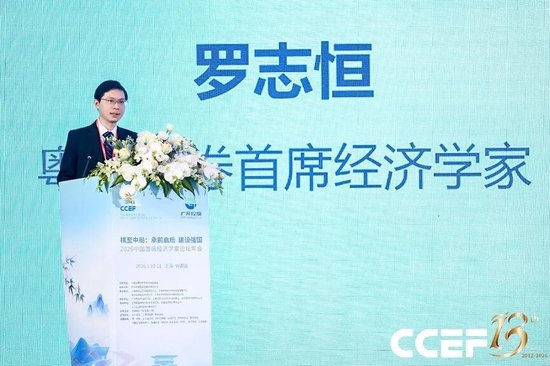
罗志恒:优化国民收入分配的思考——如何提高居民收入
Xin Lang Cai Jing· 2026-01-12 00:06
Core Viewpoint - The speech emphasizes the importance of optimizing national income distribution to enhance residents' income, addressing the current economic challenges of strong supply and weak demand, particularly in the context of consumption stagnation [3][38]. Group 1: Economic Background - The current economic situation is characterized by "strong supply and weak demand," with the core issue being weak consumption [3][38]. - The government has implemented measures such as consumer incentives and fiscal subsidies to stimulate consumption, which have shown positive results [3][38]. - To fundamentally resolve consumption issues, income distribution reform is essential, focusing on improving consumption capacity, willingness, and supply-demand adaptability [3][38]. Group 2: Characteristics of National Income Distribution - China's national income distribution exhibits four main characteristics: 1. Residents have the highest income share among the three sectors, followed by enterprises, with the government having the lowest share [6][21]. 2. The share of residents' income is moderately low compared to international standards, primarily due to low property income [12][21]. 3. The enterprise sector's income share is relatively high, ranking fifth among 20 sample economies, influenced by the high proportion of state-owned enterprises [13][21]. 4. The government sector has a low income share and weak redistributive capacity, with a significant reliance on indirect taxes [15][21]. Group 3: Factors Influencing Income Distribution - The income distribution structure is determined by development stages, resource endowments, and industrial structures [22][30]. - The transition from a supply-shortage to a demand-shortage economy necessitates a shift in the income distribution model towards labor compensation [22][30]. - The relationship between industrial structure and income distribution indicates that labor-intensive sectors tend to have higher resident income shares, while capital-intensive sectors do not [22][30]. Group 4: Recommendations for Optimizing Income Distribution - To address the imbalance of low resident income share and high enterprise share, two main strategies are proposed: 1. Increase state-owned enterprise contributions to the fiscal budget to enhance social security benefits for residents [25][30]. 2. Encourage listed companies to increase dividends and implement equity incentives to boost residents' property income [25][30]. - Establish a long-term wage growth mechanism to stabilize employment and promote wage increases through fiscal support for companies that raise salaries [26][30]. - Enhance the direct tax system to improve its redistributive function, including optimizing personal income tax deductions and introducing property taxes [28][30].