居民增收

Search documents
全国政协委员刘尚希:财政更大力度扩内需,力促投资企稳回升
21世纪经济报道· 2026-03-09 05:18
Economic Growth Target - The economic growth target for 2026 is set in a range of 4.5% to 5%, with 4.5% being the minimum to ensure achievement and 5% not being a ceiling, indicating potential for higher growth [2][4][3] Fiscal Policy - The fiscal policy for this year includes a deficit rate of around 4%, with a total deficit scale reaching 5.89 trillion yuan, an increase of 230 billion yuan from last year [6] - The general public budget expenditure is expected to exceed 30 trillion yuan, marking an increase of approximately 1.27 trillion yuan compared to the previous year [6] Special Funds for Domestic Demand - A special fund of 100 billion yuan is established to promote domestic demand, which is expected to leverage over 1 trillion yuan in domestic consumption through various financial tools [2][9] - The government will continue to support the consumption of durable goods through policies like trade-in programs, focusing on key products that have a broad impact [8][10] Resident Income Growth - Resident income consists of four components: wage income, operating income, property income, and transfer income, with wage income being the primary source [12] - To increase property income, it is essential to enhance financial investment channels and develop capital markets to facilitate asset capitalization [13][14]


居民收入增长和经济增长同步 拓宽居民增收渠道
Jing Ji Ri Bao· 2026-03-06 03:01
Group 1 - The government work report emphasizes the implementation of an urban and rural resident income increase plan, focusing on practical measures to boost income for low-income groups, enhance property income, and improve salary and social security systems [1] - The representative from Hunan Province highlights that the continuous optimization of the disposable income ratio for urban and rural residents lays a solid foundation for high-quality economic and social development [1] - To encourage consumption, it is essential for families to have savings for education and risk prevention, along with expectations and confidence in income growth, creating a virtuous cycle between income growth and consumption [1] Group 2 - The representative advocates for systematic policies to empower rural residents, activating the endogenous motivation for rural development and ensuring farmers share in the benefits of industrial development [2] - Strategies include developing moderately scaled agricultural operations, new rural collective economies, and enhancing rural specialty industries, while improving the interest connection mechanism between farmers and agriculture to ensure stable and continuous income growth for farmers [2]

人均可支配收入超4.3万元,消费支出占比第二是居住,统计公报提到这些关键数据
Sou Hu Cai Jing· 2026-02-28 03:20
Group 1 - The core viewpoint of the news is that the per capita disposable income of residents in China has shown a steady increase in 2025, indicating a positive trend in economic growth and consumer spending capacity [1][2][5] Group 2 - In 2025, the national per capita disposable income reached 43,377 yuan, reflecting a 5.0% increase from the previous year, with an actual growth of 5.0% after adjusting for price factors [1] - The median per capita disposable income for residents was 36,231 yuan, which grew by 4.4% [1] - Urban residents had a per capita disposable income of 56,502 yuan, up by 4.3%, while rural residents saw a 5.8% increase to 24,456 yuan [1] - The income ratio between urban and rural residents was 2.31, a slight decrease of 0.03 from the previous year [1] Group 3 - The national per capita consumption expenditure in 2025 was 29,476 yuan, marking a 4.4% increase, with an actual growth of 4.4% after price adjustments [5] - Service consumption expenditure per capita was 13,602 yuan, representing a 4.5% increase and accounting for 46.1% of total consumption expenditure [5] - Major components of consumption included food, tobacco, and alcohol at 8,631 billion yuan (29.3%), housing at 6,397 billion yuan (21.7%), and transportation and communication at 4,308 yuan (14.6%) [5] Group 4 - The Central Economic Work Conference emphasized the need to implement a plan for increasing urban and rural residents' income to enhance consumer capacity and willingness [2][4] - The National Development and Reform Commission highlighted the importance of increasing the share of residents' income in national income distribution and improving labor remuneration [2] - Measures to enhance consumer willingness include improving the social security system and increasing pension levels to the minimum living standard [4]

中国青年报:超半数受访者期待落实好职工带薪年休假
Xin Lang Cai Jing· 2026-02-25 23:03
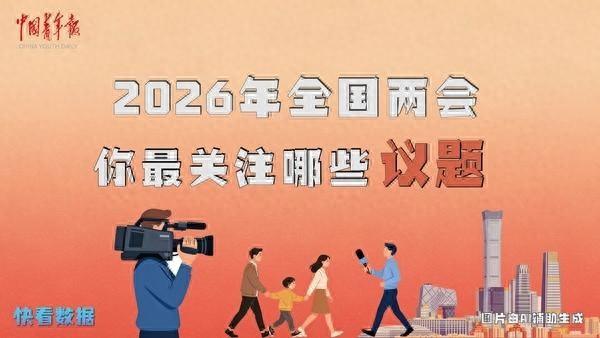
Group 1 - The core focus of the upcoming National Two Sessions is on employment, entrepreneurship, and income increase, with a significant portion of respondents expressing interest in these topics [3][4] - 52.0% of respondents expect the implementation of paid annual leave for employees, highlighting a strong demand for labor rights protection [5] - 45.2% of respondents wish to improve the service guarantee system for vulnerable groups such as empty-nest elderly, children in difficulties, and disabled individuals [6] Group 2 - There is a notable concern regarding the regulation of AI technology, with 47.5% of respondents wanting to address the misuse of deepfake technology [5] - 41.5% of respondents advocate for increased support for employment and entrepreneurship, indicating a need for policies that foster job creation [6] - The survey indicates a strong desire for improved medical insurance coverage, with respondents seeking better financial protection for significant medical expenses [7]
居民人均可支配收入增长5.1%
Xin Lang Cai Jing· 2026-02-06 00:21
Group 1 - The core viewpoint of the news is the economic development and income growth strategies of Haibei Tibetan Autonomous Prefecture, aiming for a per capita disposable income of 29,400 yuan by 2025, representing a growth of 5.1% [1] - In 2025, Haibei will implement 146 projects funded by 468 million yuan for rural revitalization, focusing on industrial development and rural construction [1] - The rural residents' per capita disposable income is expected to grow by 6.3%, surpassing the national average and ranking first in the province, with efforts to eliminate poverty risks for 1,965 monitored individuals [1] Group 2 - The region will prioritize employment, aiming to secure 194 million yuan in various employment funds, benefiting over 106,000 people, with 2,369 new urban jobs and 48,000 rural laborers engaged in employment transfer [1] - Haibei will leverage its agricultural, pastoral, forestry, community, scenic, and industrial advantages to create a multi-industry integration development model at the county and township levels [1] - The implementation of the "Strong Village" project will focus on cultivating high-quality rural economic entities, including agritourism and boutique homestays, to enhance collective economic growth in 214 villages [1][2]
如何推动能消费敢消费愿消费(经济新方位·对话·奋进2026)
Ren Min Ri Bao· 2026-01-28 00:37
Core Viewpoint - Consumption is a crucial engine for China's economic growth, with insufficient demand being a prominent issue in the current economic operation. The central economic work conference has prioritized "domestic demand-led growth" and emphasized the need to boost consumption [1]. Group 1: Promoting Stable Income and Employment - Promoting stable income is fundamental to expanding consumption, which includes enhancing employment quality and optimizing income distribution structures. The goal is to increase the middle-income group and advance common prosperity [2]. - In the "14th Five-Year Plan" period, Beijing's per capita disposable income rose from 69,000 yuan in 2020 to 89,000 yuan, with a low urban unemployment rate [2]. - Shanxi aims to create 473,000 new urban jobs by 2025, addressing structural employment challenges due to resource-based economic transitions [2]. - In Sichuan, the per capita disposable income is expected to grow by 5.5% by 2025, but income structure remains relatively single, with a significant urban-rural income gap [3]. Group 2: Clearing Consumption Restrictions - The central economic work conference highlighted the need to eliminate unreasonable restrictions in the consumption sector to unleash consumption potential [6]. - Beijing is reforming to remove barriers to consumption, such as streamlining approval processes for large events and enhancing promotional activities [6]. - Shanxi is optimizing the business environment by removing market barriers and ensuring equal participation for various business entities in consumption activities [6]. Group 3: Enhancing Quality of Goods and Services - There is a significant gap between China's consumption rate and that of developed countries, particularly in service consumption [10]. - In Beijing, the per capita service consumption expenditure reached 59.3%, with a 6.5% year-on-year growth in education, culture, and entertainment spending [10]. - Shanxi is focusing on cultural tourism as a key area for promoting service consumption, with a projected 1.2 billion visitors to monitored scenic spots by 2025, a 14.8% increase [10]. - Sichuan's per capita service consumption expenditure is expected to reach 45.1% by 2025, with ongoing efforts to enhance high-quality supply in cultural tourism and health services [11].
与东中西三省份发改委、政研室负责人对话——如何推动能消费敢消费愿消费(经济新方位·对话·奋进2026)
Ren Min Ri Bao· 2026-01-27 22:17
Core Viewpoint - Consumption is a crucial engine for China's economic growth, with insufficient demand being a prominent issue in the current economic operation. The central economic work conference has prioritized "domestic demand-led growth" and emphasized the need to boost consumption as part of its eight key tasks [1] Group 1: Promoting Stable Income and Employment - Promoting stable income is fundamental to expanding consumption, which includes enhancing employment quality and optimizing income distribution structures to increase the middle-income group [2][3] - In the "14th Five-Year Plan" period, Beijing's per capita disposable income rose from 69,000 yuan in 2020 to 89,000 yuan, with a low urban unemployment rate [2] - Shanxi aims to create 473,000 new urban jobs by 2025, addressing structural employment challenges due to resource-based economic transitions [2][4] - Sichuan's per capita disposable income is expected to grow by 5.5% by 2025, but faces challenges with income structure and employment mismatches [3][5] Group 2: Clearing Consumption Restrictions - The central economic work conference emphasizes the need to eliminate unreasonable restrictions in the consumption sector to unleash consumption potential [6] - Beijing is reforming to remove barriers to consumption, such as optimizing large event management and promoting regular promotional activities [6][7] - Shanxi is working to improve the business environment by removing market barriers and ensuring equal participation in consumption activities [6][8] - Sichuan is simplifying processes in various sectors, including second-hand car transactions and housing loans, to encourage consumption [7] Group 3: Enhancing Quality of Goods and Services - There is a significant gap between China's consumption rate and that of developed countries, particularly in service consumption [9][10] - Beijing's per capita service consumption expenditure reached 59.3%, with a 6.5% increase in education, culture, and entertainment spending [10] - Shanxi is focusing on cultural tourism to boost service consumption, with a projected 14.8% increase in tourist numbers by 2025 [10][11] - Sichuan's service consumption expenditure is expected to reach 45.1% by 2025, with plans to enhance high-quality supply in cultural tourism and health services [11][12] Group 4: Expanding Rural Consumption - Rural consumption is constrained by low income and inadequate service systems, with rural residents' per capita consumption at 19,818 yuan, 76% of the provincial average [12] - Sichuan plans to improve rural consumption services and support rural e-commerce to stimulate local economies [12]
专访粤开证券罗志恒:加大国资收益上缴,用于提高居民养老金
Nan Fang Du Shi Bao· 2026-01-25 04:49
Group 1 - The core focus of the article is on China's economic outlook for 2026, emphasizing the importance of "resident income increase" and "investment in people" as key strategies to boost domestic demand and enhance economic growth [2][7] - The article highlights that in 2025, China's economy is expected to surpass 140 trillion yuan, with a growth rate of 5%, driven by strong exports, a robust capital market, and ongoing structural optimization [5][6] - It notes that the real estate market is still undergoing significant adjustments, with a projected 17.2% decline in real estate investment in 2025, indicating challenges in the housing sector [6] Group 2 - The article discusses the need for income distribution reform to address weak consumer demand, suggesting measures such as establishing a "special fund for urban and rural resident income increase" and adjusting pension policies to improve income for low-income groups [8][9] - It emphasizes the importance of "investment in people" to enhance human capital, advocating for increased public service investment and improved access to education and training [10][11] - The article outlines the expected continuation of the A-share bull market in 2026, driven by macroeconomic policies, industry transformation, and capital market reforms, with a focus on technology and industrial metals as key investment opportunities [12][13]

华夏时评:增收为本,投资于人
Hua Xia Shi Bao· 2026-01-23 10:51
Core Viewpoint - In 2025, China's economy demonstrated resilience under various pressures, achieving a GDP of over 140 trillion yuan, with a year-on-year growth of 5.0% and a per capita GDP of 13,953 USD, maintaining above 13,000 USD for three consecutive years [2] Economic Performance - China's manufacturing sector remains the largest globally, and the retail sales of consumer goods rank among the top in the world, indicating steady growth in new productive forces [2] - The economic performance in 2025 exceeded expectations in areas such as export growth, capital market performance, and breakthroughs in the technology sector [2] Macroeconomic Policy Direction - The primary task for 2026 is to "insist on demand-led growth and build a strong domestic market," focusing on strengthening domestic circulation and expanding domestic demand [3] - The National Development and Reform Commission (NDRC) plans to optimize support policies and subsidies, establish a national-level merger fund, and promote the construction of a unified national market [3] Fiscal Policy - The Ministry of Finance will implement a more proactive fiscal policy in 2026, increasing overall fiscal spending and ensuring that spending in key areas remains strong [3] - New policies include a special guarantee plan for private investment and interest subsidies for small and micro enterprises, aimed at stimulating private investment and promoting consumer spending [3] Monetary Policy - The People's Bank of China (PBOC) indicated that there is still room for further interest rate cuts and will maintain a moderately loose monetary policy to support stable economic growth and reasonable price recovery [4] - The macroeconomic policies are expected to contribute positively to China's economic performance in the first quarter of 2026 [4] Long-term Economic Strategy - The focus on stimulating domestic demand will require attention to two key areas: increasing residents' income and investing in human capital [4][5] - Proposed strategies include improving wage growth mechanisms, gradually increasing income for employees, and enhancing public services in areas such as healthcare, education, and vocational training [5]

扩内需战略实施方案将出台,正研究制定居民增收计划
第一财经· 2026-01-20 14:48
Core Viewpoint - The article emphasizes the Chinese government's commitment to expanding domestic demand and stabilizing economic growth through a series of policies aimed at enhancing consumer spending and effective investment [3][4][6]. Group 1: Policy Announcements - The National Development and Reform Commission (NDRC) plans to implement a strategic plan for expanding domestic demand from 2026 to 2030, focusing on creating an economy driven by domestic consumption and endogenous growth [3][6]. - The Ministry of Finance announced six policies to stimulate private investment and promote consumer spending, with adequate budgetary arrangements for these initiatives in 2026 [3][6][14]. Group 2: Economic Growth and Consumer Confidence - Economic recovery relies on enhancing endogenous growth momentum, primarily through boosting consumer confidence and increasing household income [4][6]. - The government is working on plans to increase urban and rural residents' income, which is crucial for enhancing consumer spending capacity [5][6]. Group 3: Investment and Consumption Strategies - The article highlights the importance of effective investment and consumer spending as key drivers of economic growth, with a focus on reducing financing costs and barriers for private enterprises [14][15]. - The "Two New" policy, which promotes equipment upgrades and the replacement of old consumer goods, has significantly contributed to stabilizing investment and expanding consumption [10][11]. Group 4: Future Economic Outlook - The Chinese economy is projected to grow by 5% in 2025, with a significant contribution to global economic growth [6]. - The first quarter of 2024 is expected to see a GDP growth of approximately 4.9%, supported by various fiscal measures and investment plans [15].