
国防军工ETF

Search documents
主动量化周报:12月末或为建仓时点:小盘迎来强势期-20251228
ZHESHANG SECURITIES· 2025-12-28 12:26
- The report discusses the performance of BARRA style factors, highlighting that fundamental factors showed increased differentiation, with growth being preferred over value. Profitability-related factors entered a retracement phase, while trading-related factors like high turnover and short-term momentum provided significant excess returns. Additionally, mid-cap style factors outperformed, with both size and non-linear size factors showing positive excess returns[24][25] - The report identifies that high turnover stocks achieved an excess return of 0.9%, short-term momentum stocks provided 0.7%, and non-linear size factors contributed 0.7% in excess returns. Meanwhile, profitability-related factors like earnings quality and investment quality showed negative returns of -0.1% and -0.3%, respectively[25]
ETF盘中资讯 | 军工领跑全市场,512810再创阶段新高!商业航天题材火爆,多股涨超10%,行业重磅大会今日召开
Jin Rong Jie· 2025-12-23 17:59
Core Viewpoint - The commercial aerospace sector is experiencing a strong resurgence, significantly boosting the defense and military industry, which is leading the market with the highest gains and net inflows [1] Group 1: Market Performance - As of the morning of December 18, the defense and military industry has the highest increase and net inflow among all sectors [1] - The National Defense and Military ETF (512810) opened lower but rose nearly 2%, reaching a two-month high with a trading volume exceeding 56 million yuan [1] - Key stocks in the commercial aerospace sector, such as Platinum and Zhongke Xingtong, surged by 12%, while China Satellite hit the daily limit [1] Group 2: Industry Developments - The 2025 Third China Commercial Aerospace Development Conference and the Fourth Zhongguancun Commercial Aerospace Conference were held in Beijing, indicating ongoing positive developments in the commercial aerospace sector [2] - Recent advancements include the successful launch of the Zhuque-3 rocket and the completion of multiple missions by Long March 12, accelerating the deployment of low-orbit satellite constellations [3] - The spillover of advanced military technology into civilian applications is creating new industries worth trillions, such as commercial aerospace, low-altitude economy, and deep-sea technology [3] Group 3: Investment Opportunities - The National Defense and Military ETF (512810) covers various hot themes, including commercial aerospace, controlled nuclear fusion, low-altitude economy, and military AI, serving as an efficient tool for investing in core military assets [3]


盘前资讯|多只ETF产品变更基金简称
Sou Hu Cai Jing· 2025-12-19 01:34
Group 1 - On December 19, multiple ETFs under Huabao Fund announced changes to their fund expansion securities abbreviations, such as the Defense Industry ETF changing to Military Industry ETF Huabao and the Food ETF changing to Food and Beverage ETF Huabao. This change is in accordance with the regulations from the Shanghai and Shenzhen Stock Exchanges, which state that existing ETFs must include the fund manager's abbreviation by March 31, 2026 [1] - On December 19, the Guangfa CSI All Share Food ETF and the Huatai-PB CSI Sci-Tech Innovation and Entrepreneurship AI ETF were listed for trading, with the former having 253 million shares and the latter 404 million shares available for trading [1] - The People's Bank of China has 120.5 billion yuan in 7-day reverse repos maturing today, and the Bank of Japan announced its interest rate decision today [1]
“春季躁动”值得期待吗?商业航天再爆发,国防军工ETF盘中涨逾2.1%!创业板人工智能ETF获2亿份净申购
Xin Lang Cai Jing· 2025-12-18 11:44
Market Overview - A-shares showed mixed performance on December 18, with the Shanghai Composite Index slightly up by 0.16%, while the Shenzhen Component and ChiNext Index fell by 1.29% and 2.17% respectively. The total trading volume exceeded 1.6 trillion yuan, a decrease of over 150 billion yuan compared to the previous day [1][18]. Banking Sector - The banking sector led the market with significant gains, as 36 out of 42 listed banks saw their stocks rise by over 1%. Major banks like Shanghai Bank and Chongqing Rural Commercial Bank surged over 3%, while the largest bank ETF (512800) increased by 1.85%, recovering three key moving averages [4][21]. - The banking sector's price-to-book (PB) ratio has improved from 0.5 to 0.7 since the low in 2022, indicating potential for further valuation recovery. Despite this, most banks remain below their net asset value [6][23]. - Institutions are optimistic about the banking sector's performance in 2026, driven by favorable macro policies and increased strategic investments from insurance and asset management companies [7][24][25]. Defense and Aerospace Sector - The defense and aerospace sector experienced a significant boost, with the defense ETF (512810) reaching a three-month high, driven by strong inflows of 95.6 billion yuan, the highest among all sectors [10][28]. - Key stocks in the commercial aerospace segment, such as Aopu Optoelectronics and Platinum Power, achieved historical highs, reflecting strong market sentiment and institutional support [26][30]. - Analysts suggest that the upcoming "14th Five-Year Plan" will provide a solid foundation for the defense sector, with expectations of increased demand and investment opportunities [30]. Artificial Intelligence Sector - The AI sector is seeing increased capital inflow, particularly in light of the ongoing demand for AI computing power. The leading AI ETF (159363) experienced a net subscription of 200 million yuan, indicating strong investor interest [1][31]. - Despite a recent pullback in AI stocks, the overall sentiment remains positive, with institutions highlighting the ongoing supply-demand imbalance in AI computing resources [14][35]. - The AI industry is expected to continue its growth trajectory, with significant investments anticipated in the coming years, particularly in light of advancements in AI capabilities and applications [35].

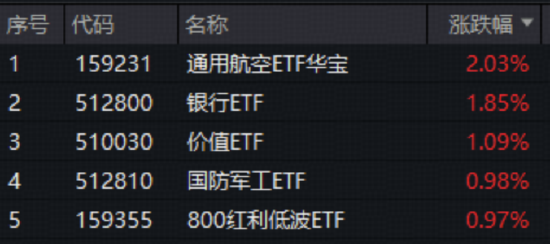
军工领跑全市场,512810再创阶段新高!商业航天题材火爆,多股涨超10%,行业重磅大会今日召开
Xin Lang Cai Jing· 2025-12-18 03:32
Group 1 - The commercial aerospace concept is experiencing a strong resurgence, leading the defense and military industry to outperform the entire market, with the defense and military sector showing the highest increase and net inflow among all industries [1][5] - The Defense and Military ETF (512810) opened low but rose nearly 2% during the day, reaching a new high in nearly two months, with trading volume exceeding 56 million yuan, close to the total trading volume of the previous day [1][5] - Key stocks related to commercial aerospace surged, with Plutotech and Zhongke Xingtong rising by 12%, and China Satellite hitting the daily limit [6][8] Group 2 - Continuous positive news for commercial aerospace includes the hosting of the 2025 Third China Commercial Aerospace Development Conference and the Fourth Zhongguancun Commercial Aerospace Conference in Beijing [3][8] - Significant achievements in the launch sector include the successful orbit insertion of Zhuque-3, and the completion of multiple launch tasks by Lijian-1 and Long March 12, accelerating the networking of low-orbit satellite constellations [8] - The spillover of advanced military technology into civilian sectors is creating new trillion-level industries such as commercial aerospace, low-altitude economy, future energy, deep-sea technology, and large aircraft, fostering a virtuous cycle of "military technology for civilian use" [3][8] Group 3 - The Defense and Military ETF (512810) covers various popular themes including commercial aerospace, controllable nuclear fusion, low-altitude economy, large aircraft, deep-sea technology, and military AI, serving as an efficient tool for investing in core military assets [9]

ETF日报|A股放量上攻!国产AI王者归来,科创人工智能ETF(589520)劲涨2.12%!国际机构坚定看好中国经济
Sou Hu Cai Jing· 2025-12-12 14:08
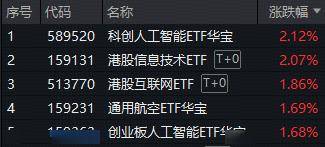
Market Overview - The three major A-share indices collectively rose on December 12, with the Shanghai Composite Index up 0.41%, the Shenzhen Component Index up 0.84%, and the ChiNext Index up 0.97. The total trading volume in the Shanghai and Shenzhen markets reached 2.09 trillion yuan, an increase of over 230 billion yuan compared to the previous day [1] AI Industry - The AI industry chain regained momentum, with the Sci-Tech Innovation Artificial Intelligence ETF (589520) and the ChiNext Artificial Intelligence ETF (159363) both rising over 2% during trading. The former focuses on the domestic AI industry chain [1][4] - The Sci-Tech Innovation Artificial Intelligence ETF saw a significant increase in trading volume, with a rise of 2.12% and a total trading volume of 47.29 million yuan, up 92% from the previous day [4][6] - Among the 30 constituent stocks of the Sci-Tech Innovation Artificial Intelligence ETF, 28 stocks rose, with over 60% of them increasing by more than 2%. Notable performers included Hehe Information, which surged over 13%, and other companies like Chipone and Yuntian Lifei [6][7] Policy and Economic Outlook - A significant meeting held on December 11 outlined economic work for 2025 and analyzed the current economic situation, emphasizing the need for qualitative improvements and reasonable growth in quantity for the upcoming "14th Five-Year Plan" [2] - International organizations such as the World Bank and the International Monetary Fund have raised their economic growth forecasts for China for the coming year, highlighting the country's long-term growth potential through technological innovation and improved resource allocation [2] Defense and Aerospace Sector - The defense and aerospace sector has shown strong performance, with the high-profile Defense Industry ETF (512810) reaching a new high not seen in over a month. This ETF has benefited from themes such as commercial aerospace, controllable nuclear fusion, and superconductivity [1][20] - The defense industry is evolving from a reliance on domestic demand to a model driven by internal demand, foreign trade expansion, and civilian applications, creating a more sustainable growth dynamic [20] Hong Kong Market - In the Hong Kong market, technology stocks experienced a broad rally, with the Hong Kong Information Technology ETF (159131) rising 2.07% and the Hong Kong Internet ETF (513770) increasing by 1.86%, recovering key moving averages [1][12] - The Hong Kong Information Technology ETF focuses on the "Hong Kong chip" industry chain, with a significant portion of its holdings in semiconductor and electronic companies, indicating a strong investment opportunity in this sector [17]
ETF日报|三大指数齐跌!AI赛道突现回调,159363回踩五日线!可控核聚变逆市活跃,国防军工ETF(512810)盘中涨超1%!
Sou Hu Cai Jing· 2025-12-11 14:59
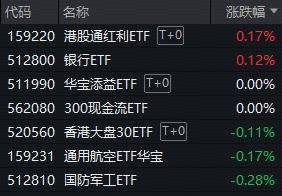
Market Overview - The A-share market experienced a collective pullback on December 11, with the Shanghai Composite Index down 0.70%, the Shenzhen Component down 1.27%, and the ChiNext Index down 1.41. The total trading volume exceeded 1.8 trillion yuan, an increase of over 70 billion yuan compared to the previous day [1] - In the Hong Kong market, some dividend stocks rose against the trend, with the Hong Kong Dividend ETF (159220) closing up 0.17% [2] Sector Performance - The banking sector saw significant gains, with the largest bank ETF (512800) closing in the green despite the overall market decline [1] - The commercial aerospace and controllable nuclear fusion sectors were active, with the General Aviation ETF (159231) and the high-profile National Defense and Military Industry ETF (512810) showing intraday price increases of over 1% [1] - Conversely, the AI sector faced adjustments, particularly in optical module CPOs, leading to a decline of 3.63% in the AI ETF (159363), which has over 56% exposure to optical modules [1][14] Federal Reserve Impact - The Federal Open Market Committee (FOMC) announced a 25 basis point rate cut, lowering the federal funds rate target range to 3.50%-3.75%. The statement indicated that further rate cuts would depend on evidence of labor market deterioration [3] Future Market Outlook - Analysts from Huajin Strategy suggest that the spring market rally may begin in mid-December, driven by positive short-term policies and external events, as well as potential liquidity easing [4] - Zhongtai Strategy indicates that after mid-December, market uncertainties may gradually ease, leading to a potential "cross-year market" with increased institutional buying [4] Sector-Specific Insights - The General Aviation ETF (159231) showed resilience, maintaining all moving averages despite a slight decline of 0.17% at the close [5] - The National Defense and Military Industry ETF (512810) saw significant interest, with a trading volume of 81.05 million yuan, reflecting a strong inflow of funds despite a slight decline of 0.28% [10] - The commercial aerospace sector is expected to benefit from recent regulatory support and increased satellite launch frequencies, indicating a robust growth trajectory [12] AI Sector Analysis - The AI sector, particularly optical modules, is experiencing a short-term pullback due to profit-taking and reduced capital expenditure expectations. However, long-term demand remains strong, with projections indicating significant growth in optical module demand by 2026 [16][17]
军转民投资机会凸显!商业航天、可控核聚变逆市活跃,主力资金大手笔押注国防军工
Xin Lang Cai Jing· 2025-12-11 12:02
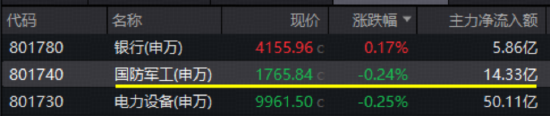
Core Viewpoint - The defense and military industry ETF (512810) has shown resilience in the market, with a slight decline of 0.28% after an initial rise of over 1%, outperforming the broader market [1][8]. Market Performance - The ETF saw a trading volume of 81.05 million yuan, an increase of over 20% compared to the previous day [1][8]. - Among the ETF's constituent stocks, 27 rose, 1 remained flat, and 51 declined, indicating a mixed performance [3][10]. Sector Highlights - Commercial aerospace and controllable nuclear fusion concept stocks led the market, with Western Superconducting rising by 4.95% and China Satellite reaching a 10-year high with a 4.89% increase [3][10]. - Major weight stocks like China Shipbuilding and AVIC Shenyang Aircraft fell by 1.64% and 2.54%, respectively, contributing to the overall decline in the ETF [3][10]. Industry Trends - The commercial aerospace sector is gaining momentum, driven by the goal of becoming a "space power," with increased satellite launch frequencies and accelerated overseas business [3][11]. - The upcoming IPO of SpaceX, expected to raise over $30 billion, is anticipated to open new opportunities in satellite networking and space computing [3][11]. Future Outlook - Analysts suggest that the integration of military technology into civilian applications is creating a new trillion-yuan industry, fostering a positive cycle that benefits the defense industry [11]. - CITIC Securities predicts a shift in China's defense industry from a reliance on domestic demand to a three-pronged growth model: domestic demand foundation, foreign trade expansion, and civilian support [11].
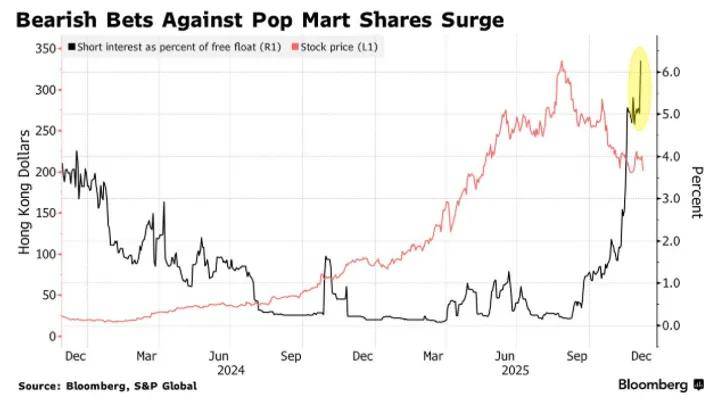
泡泡玛特大跌!做空新消费的人越来越多
Sou Hu Cai Jing· 2025-12-09 03:44
Core Viewpoint - The recent surge in short-selling funds against Pop Mart has led to a significant decline in its stock price, with the short-selling activity reaching a one-year high since September [1][4]. Group 1: Short-Selling Activity - The cumulative funds for short-selling Pop Mart have reached a new high over the past year, contributing to the continuous decline in its stock price [1]. - An increasing number of foreign institutions have published bearish views on Pop Mart, echoing concerns similar to those seen during the AI bubble, indicating a lack of immediate evidence to confirm or refute these views [4]. Group 2: Market Sentiment and Performance - The stock price of Pop Mart is expected to remain stagnant in the short term due to the absence of strong data supporting either bullish or bearish positions, leading to a stalemate [4]. - Concerns have been raised regarding the sustainability of high growth driven by the Labubu product, with fears of a high base effect impacting future performance [6][10]. Group 3: Future Outlook - The ideal time for bottom-fishing in Pop Mart would be when the premium expectations for Labubu diminish and market hopes for new hit products are low [5]. - Pop Mart is currently positioned between the expansion and peak phases of its product cycle, with market fears that it may soon transition into a downturn phase if new hit products are not developed [8][10].

越跌越买!加仓
Zhong Guo Ji Jin Bao· 2025-12-03 06:07
Group 1 - On December 2, the A-share market experienced a collective decline, with the ChiNext Index down 0.69%, the Shenzhen Component Index down 0.68%, and the Shanghai Composite Index down 0.42% [1] - Despite the market volatility, stock ETFs saw a relatively stable fund flow, with a net inflow of 16.19 billion yuan on the same day [1] - Dividend ETFs, non-ferrous metal ETFs, and securities ETFs attracted significant capital, while the CSI 300 ETF, defense industry ETF, and banking ETF experienced minor outflows [1] Group 2 - As of December 2, the total scale of 1,267 stock ETFs in the market reached 4.55 trillion yuan, with a net inflow of 16.19 billion yuan for the day [2] - The dividend sector saw a notable net inflow of 20.2 billion yuan, with the E Fund's Hang Seng Dividend Low Volatility ETF alone attracting 1.56 billion yuan, reaching a record high of 64.06 billion yuan [2] - Other dividend ETFs, including those from Hua Bao, Hua An, and Morgan, also reported net inflows [2] Group 3 - The non-ferrous metals, securities, pharmaceuticals, and Hang Seng Technology sectors also saw significant net inflows, amounting to 6.4 billion yuan, 5.7 billion yuan, 4 billion yuan, and 3.8 billion yuan respectively [3] - E Fund's ETFs reported a total scale of 807.68 billion yuan, with a net inflow of 5.1 billion yuan on the previous trading day, and a total increase of 207.03 billion yuan since 2025 [3] - Other notable inflows included the Hang Seng Technology ETF with 1.22 billion yuan, and various ETFs from Hua Xia, including the benchmark government bond ETF and the AI ETF, which saw inflows of 3.44 billion yuan and 1.98 billion yuan respectively [3] Group 4 - The broad-based ETFs experienced significant outflows, with a total net outflow of 25.2 billion yuan, primarily from the CSI 300 and CSI 500 index ETFs, each seeing outflows of 7 billion yuan [4] - Other sectors with notable outflows included defense industry, petrochemical, and banking, each exceeding 3 billion yuan in net outflows [4]