
国防科技

Search documents
AeroVironment, Inc. (NASDAQ: AVAV) Earnings Preview: Key Insights and Analyst Expectations
Financial Modeling Prep· 2026-03-10 19:00
Core Insights - AeroVironment, Inc. is a key player in the defense technology sector, focusing on unmanned aircraft systems and tactical missile systems, with third-quarter earnings results expected on March 10, 2026, anticipating an EPS of $0.72 and revenue of approximately $484.4 million [1][6] Financial Performance Expectations - There is a discrepancy in analyst expectations, with Wall Street estimating an EPS of $0.72, while other projections suggest a lower EPS of 68 cents, and revenue estimates ranging from $473 million to $476 million, indicating uncertainty in financial performance [2][6] - The company has a price-to-sales ratio of approximately 8.13 and an enterprise value to sales ratio of about 8.47, reflecting a high market valuation, while its debt-to-equity ratio is low at 0.19, indicating conservative debt usage [4] Growth Drivers - AeroVironment's growth is driven by increased demand for its Switchblade systems and the strategic acquisition of BlueHalo, alongside securing a three-year contract worth $97.4 million with the U.S. Army's Aviation and Missile Technology Consortium [3][5] - Despite positive developments, the company's shares experienced a slight decline of 1.1%, closing at $227.29 [3] Strategic Considerations - Investors are closely monitoring the upcoming earnings release to assess financial health and strategic direction, with exposure to government contract risks, potential shifts in defense budgets, and procurement delays adding complexity to growth prospects [5] - The company maintains a strong liquidity position with a current ratio of 5.08, indicating robust financial stability [5]


“钢铁脊梁·国之重器”国防科技嘉年华2026年初春亮相首钢园
Bei Jing Ri Bao Ke Hu Duan· 2026-02-13 06:52
Core Viewpoint - The "Steel Backbone: National Heavy Equipment - A Century of Shougang and National Defense Technology Immersive Experience Carnival" is set to open on February 15, 2026, in Shijingshan Shougang Park, aiming to create an engaging event that combines deep technology and cultural experiences for the public [1]. Group 1 - The carnival is an upgraded continuation of the first National Defense Military Industry Cultural Expo, emphasizing "deep immersion" and "personal participation" [3]. - The event will feature an exhibition area of approximately 5,000 square meters, allowing attendees to closely observe and interact with models of major national equipment such as the J-20 and Fujian aircraft carrier [3]. - Interactive projects will include MR space missions, robotic dogs, and military laser tactical confrontations, designed to meet diverse sensory and knowledge acquisition needs [3]. Group 2 - The event follows the theme "Technology with Warmth, Cultural Creativity is Fun," with a narrative line of "Glorious Past - Brilliant Present - Bright Future" [3]. - It aims to provide a lively public lesson on national defense education for families, schools, and the general public, fostering national pride and confidence in technology [3]. - The initiative particularly targets youth, aiming to instill the idea of "I contribute to a strong nation" and bringing miniature models of national heavy equipment into households [3].

鲁比尼:欧洲的真正生存威胁在于经济和科技的落后
Di Yi Cai Jing· 2026-01-25 12:48
Core Viewpoint - The European Union faces existential threats primarily due to its economic and technological lag, rather than immigration or cultural politics, as mischaracterized by the U.S. National Security Strategy [1] Economic Performance - From 2008 to 2023, the U.S. GDP grew by 87%, while the EU's GDP only increased by 13.5% [1] - The EU's per capita GDP relative to the U.S. dropped from 76.5% to 50% during the same period [1] - Even the poorest U.S. state, Mississippi, has a higher per capita income than major European economies like France and Italy [1] Technological Leadership - The competition for future industries, including AI, semiconductors, and defense technology, shows Europe at a disadvantage [2] - The U.S. and China are seen as the primary competitors in technology, with Europe lagging significantly [2] - Innovation in Europe is largely confined to a few countries, namely the UK, Germany, France, and Switzerland [2] Barriers to Growth - Europe's fragmented regulatory environment hinders the growth of startups compared to the U.S., where a single regulatory framework exists [3] - The internal market barriers in the EU are equivalent to tariffs of 44% and 110% for goods and services, respectively [3] - Cultural attitudes towards risk-taking differ significantly, with Europe historically penalizing failure more than the U.S. [3] Defense Spending and Innovation - European leaders often view increased defense spending as a trade-off between security and social welfare, which has historically limited innovation [4] - To maintain its social model, Europe must increase defense spending to meet NATO's target of 3.5% of GDP [4] Future Outlook - If Europe does not address its technological gap, it risks long-term stagnation and economic decline relative to the U.S. and China [4] - However, there are signs of optimism as policymakers are beginning to implement substantial reforms to enhance competitiveness [4] Advantages and Opportunities - Europe possesses high-quality human capital, an excellent education system, and world-class research institutions that can support higher levels of innovation [5] - By improving the entrepreneurial environment, Europe can leverage its high per capita income and large domestic market to stimulate investment [5] - Even if Europe cannot lead in cutting-edge technology, it can significantly enhance productivity by adopting and adapting innovations from the U.S. and China [5]
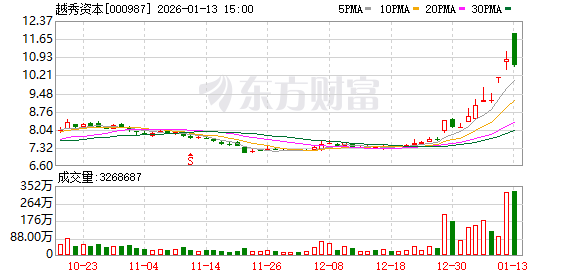
越秀资本:公司控股子公司越秀产业基金重点关注国防科技与商业航天等领域
Zheng Quan Ri Bao· 2026-01-13 13:42
Group 1 - The core viewpoint of the article is that Yuexiu Capital is focusing on investment in sectors aligned with national strategic development, particularly in defense technology and commercial aerospace [2] - Yuexiu Capital's subsidiary, Yuexiu Industrial Fund, has established a commercial aerospace fund to invest in the aerospace industry chain [2] - The fund has invested in several quality projects such as China Aerospace Science and Technology Corporation, Aerospace Feihong, and Micro-Nano Star, contributing to the development of the national aerospace industry [2] Group 2 - The investment is not expected to have a significant impact on the company's operating performance [2]

美国盯上的,还有委内瑞拉的这种资源?!
中国能源报· 2026-01-09 01:30
Core Viewpoint - The article discusses the shifting focus of U.S. interest from Venezuela's oil resources to its rare earth minerals, highlighting the potential benefits for both Venezuela and the U.S. [2][5] Group 1: Oil Resources - U.S. officials, including former envoy Elliott Abrams, have indicated that while Venezuela has significant oil reserves, its international market position is not strong, leading to a lack of investment interest from U.S. companies [3][6]. - Abrams emphasized that the oil's significance has been exaggerated by some, suggesting that the focus should be redirected to other resources [2][3]. Group 2: Rare Earth Minerals - Abrams pointed out that Venezuela's rare earth resources should receive more attention from U.S. enterprises, as they could be mutually beneficial [5][6]. - U.S. media outlets have begun to highlight Venezuela's rare earth resources, which are deemed crucial for artificial intelligence and defense technologies [7][8]. - The U.S. Commerce Secretary has expressed intentions to assist Venezuela in revitalizing its mining industry, which has been described as "rusty" [10]. Group 3: Challenges and Concerns - Despite the potential of Venezuela's rare earth resources, political instability poses significant risks that deter U.S. companies from entering the market [10][12]. - Experts have noted that while mining is a starting point, the real challenge lies in the processing and refining of these minerals, an area where Venezuela currently lacks capabilities [12].

福建舰、辽宁舰或将“双航母演练”,震慑谁?丨管见天下
Xin Lang Cai Jing· 2025-12-26 04:41
Core Insights - The recent docking of China's Fujian aircraft carrier alongside the Liaoning carrier has sparked discussions about potential dual aircraft carrier exercises, highlighting the growing capabilities of China's naval forces [2][3] - The Fujian carrier, as China's first domestically developed electromagnetic catapult aircraft carrier, signifies a new era in China's blue-water navy, marking the transition into a three-carrier operational capability [3][4] - The Fujian carrier has already conducted its first live training exercises shortly after its commissioning, demonstrating its operational readiness and advanced capabilities [3][4] Military Developments - The Fujian carrier's entry into service is seen as a significant milestone in China's naval modernization efforts, with expectations for regular dual carrier exercises to become a norm [3][4] - Recent military activities in the Yellow Sea and Bohai Sea, including exercises conducted by the People's Liberation Army (PLA), have drawn attention from international observers, particularly in light of rising tensions with Japan [4][5] - The Chinese defense ministry has responded firmly to perceived threats from Japan, emphasizing the PLA's commitment to safeguarding national sovereignty and territorial integrity [5] Technological Advancements - The recent release of a video showcasing the Fujian carrier's electromagnetic catapult capabilities has generated significant interest, illustrating the advanced technology behind its operations [7][8] - The rapid launch capabilities of the carrier, with a catapult launch time of just two seconds, reflect over two decades of development and innovation in China's naval technology [8][9] - The unexpected speed and efficiency of the Fujian carrier's operations have challenged traditional military analysis, indicating a shift in the understanding of modern military capabilities [9][10]

The new battlefield: where capital, regulation and technology collide
Yahoo Finance· 2025-11-25 14:00
Core Insights - Private capital inflows into the defense sector have increased more than eighteen-fold over the past decade, driven by geopolitical instability, battlefield digitization, and the inadequacy of public procurement systems to meet rapid capability demands [1] Group 1: Current Landscape - The speed of innovation and adaptability is as crucial as military might in the evolving conflict landscape, characterized by autonomy, cyber operations, commercial satellites, AI-enabled decision support, and low-cost precision systems [2] - NATO governments are increasing defense spending, but industrial mobilization has not kept pace with operational needs, leading to a mismatch between demand for advanced technologies and traditional supply pipelines [3] Group 2: Market Dynamics - The gap in traditional defense procurement has created opportunities for venture-backed and private-equity-backed companies that leverage commercial innovation models and agile development processes [4] - Speed alone is insufficient; companies must also demonstrate mission-solution fit, integration capabilities, security readiness, and procurement literacy to succeed in the defense sector [5][7] Group 3: Regulatory Environment - The regulatory landscape for defense investments has become more stringent, with factors such as CFIUS review, ITAR and EAR export controls, and beneficial ownership transparency influencing deal structures and timelines [6]
探索前沿技术 点亮国防初心
Zhong Guo Qing Nian Bao· 2025-10-21 23:10
Core Insights - The 2025 National Youth Intelligent Unmanned System Application Competition finals took place in Shanghai, featuring over 200 teams from 106 military and civilian institutions, showcasing advancements in unmanned technology and promoting national defense education [1] Group 1: Competition Overview - The competition included five main events: fiber-optic remote flying challenge, ground anti-drone swarm challenge, air-ground coordinated confrontation, unmanned vehicle cluster racing, and air-ground joint support transport [1] - The design of the events emphasizes the integration of peacetime and wartime applications, testing educational curricula, talent cultivation, and technological innovation [1] Group 2: Participant Insights - Participants came from diverse academic backgrounds, with both military and civilian students demonstrating unique strengths; military students excelled in operational skills, while civilian students brought innovative thinking [2] - Many competitors were key members of their school's innovation clubs, leveraging prior competition experience to enhance their performance [2] Group 3: Technical Innovations - Teams designed and built their own vehicles for the air-ground joint support transport event, focusing on cost-effectiveness and skill development; for instance, a team created a wheeled transport vehicle for better maneuverability [3] - Participants utilized advanced materials like carbon fiber and 3D printing to enhance the capabilities of their drones, such as developing a six-axis drone for improved load capacity and stability [4] Group 4: Educational Integration - Educational institutions incorporated national defense education into their curricula, with students participating in training sessions and practical applications related to unmanned systems [5] - The competition aligns with broader national defense initiatives, reflecting the increasing relevance of unmanned systems in military applications [5]
AeroVironment Inc (NASDAQ:AVAV) Sees Positive Analyst Outlook Amid Defense Sector Strength
Financial Modeling Prep· 2025-09-29 19:03
Core Insights - AeroVironment Inc (NASDAQ:AVAV) is a key player in the defense technology sector, specializing in unmanned aircraft systems and tactical missile systems [1] - Analysts from RBC Capital Markets and Raymond James have set optimistic price targets for AVAV, reflecting confidence in the company's growth prospects [2][6] Company Performance - AVAV's stock is currently priced at $316.18, showing an increase of approximately 4.97% or $14.98, with a trading range today between $308.40 and $316.70 [4][6] - The company has a market capitalization of approximately $15.79 billion, indicating a strong presence in the defense tech industry [5] Analyst Outlook - Brian Gesuale from Raymond James has set a new price target for AVAV at $348, suggesting a potential increase of 10.62% from its current trading price [1][6] - RBC Capital Markets has raised its target price for AVAV to $330 from $300, driven by confidence in key programs like Golden Dome and space communications [2][6] Market Dynamics - Despite potential risks such as a government shutdown affecting bookings and cash flow, analysts believe the underlying demand for defense technology remains strong [3] - Companies like AVAV, Karman Space & Defense, and Kratos Defense & Security Solutions are well-positioned to benefit from robust demand drivers in the sector [3]
银华心怡一季报出炉!美的(000333.SZ)获李晓星大幅加仓 阿里巴巴(09988)遭减持
智通财经网· 2025-04-21 12:50
Group 1 - The core viewpoint of the report highlights the significant changes in the portfolio of the Yinhua Xinyi fund, with major increases in holdings of Midea Group and BYD, while Alibaba and SMIC saw slight reductions [1][3] - Midea Group has become the top holding in the fund, with a total of 4,170,120 shares valued at approximately 327.35 million yuan, representing 6.07% of the fund's net asset value [2] - The fund's stock holdings accounted for 89.74% of its total assets by the end of the first quarter [2] Group 2 - As of the end of the first quarter, the net asset value of Yinhua Xinyi Flexible Allocation Mixed A fund was 2.7219 yuan, with a net growth rate of 14.79%, outperforming the benchmark return of 2.64% [3] - The fund manager expressed optimism about the equity market for the year, maintaining a high equity position and focusing on sectors such as Hong Kong technology, consumption, and A-share manufacturing [3][4] - The manager emphasized the importance of investing in high-quality companies with reasonable valuations that align with national development strategies, indicating a positive outlook for the overall market [4]


