国际交流

Search documents
在海口,美国设计师开了黎锦小店
Xin Lang Cai Jing· 2026-02-22 00:26
Core Viewpoint - The article highlights the cultural exchange and innovation in traditional crafts, particularly through the work of a designer named Xie Min, who integrates traditional Li brocade with contemporary designs in her shop located in Haikou, Hainan [1][2]. Group 1: Cultural Significance - The shop features various crafts, including Li brocade, which is deeply rooted in the local culture and symbolizes strength in Li ethnic culture [1]. - Xie Min aims to revitalize Li brocade by blending traditional elements with modern interpretations, making it more appealing to a global audience [1][3]. Group 2: International Exchange - The shop serves as a venue for international cultural exchange, showcasing not only Li brocade but also designs from friends around the world, including items from American, Russian, and South African artists [2]. - With the increased openness of Hainan's free trade port, the shop attracts more inbound tourists, becoming a popular spot for purchasing souvenirs and sharing local culture [2]. Group 3: Creative Transformation - Xie Min emphasizes the importance of creative transformation and innovative development of traditional Chinese culture, which has provided her with numerous opportunities [2]. - The products in the shop reflect a combination of traditional patterns and modern expressions, facilitating dialogue between Eastern and Western cultures [3].
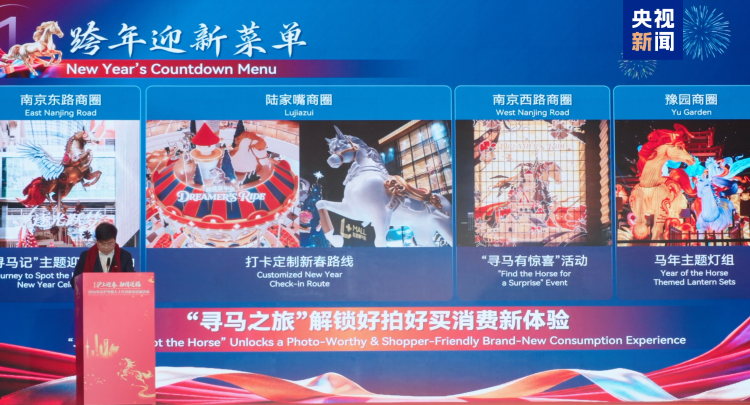
外国人春节来沪热度攀升 上海百余场文旅消费活动更新新春“菜单”
Xin Lang Cai Jing· 2026-02-03 17:46
Core Viewpoint - The event "Welcoming Spring in Shanghai, Sending Blessings" marks the beginning of the 2026 New Year celebration for foreign representatives in Shanghai, showcasing traditional Chinese culture through performances and interactions [2][4]. Group 1: Event Highlights - A performance of the Kunqu opera "Peony Pavilion: Dream of Surprise" was held, attended by over 70 representatives from 23 countries and regions, including consulates, multinational companies, and business associations [2]. - The event featured various cultural performances, including traditional instrumental music, classic opera segments, and award-winning acrobatics, allowing attendees to deeply appreciate the uniqueness of Chinese culture [2]. Group 2: Cultural Experience and Activities - The event included interactive experiences of intangible cultural heritage, enhancing the festive atmosphere of the Spring Festival for both Chinese and foreign participants [4]. - Foreign representatives toured historical sites like the Shenyuli Shikumen architecture and the Suhewan waterfront "Cultural Tourism and Business Exhibition" complex, experiencing Shanghai's efforts to optimize the business environment and support foreign investment transformation [4]. Group 3: Spring Festival Initiatives - Shanghai has launched a comprehensive Spring Festival cultural tourism and business exhibition with 2,570 events, including traditional lantern festivals and major exhibitions like "Extraordinary Picasso" [6]. - During the Spring Festival, various themed products and services will be offered, including "Accommodation+" packages and discounts, alongside numerous sports events such as the "New Year Cup: Tennis Legends 2026" [6]. - The city aims to become the preferred destination for global visitors to experience "Chinese New Year," with activities designed to engage foreign nationals and promote cultural exchange [6]. Group 4: Future Outlook - Shanghai will continue to uphold an open and inclusive city spirit, optimizing its international business environment and creating more platforms for communication and collaboration with foreign individuals [7].

【视线】第三届“京韵天桥”文化活动启幕
Xin Lang Cai Jing· 2026-01-24 20:40
Core Viewpoint - The "Jingyun Tianqiao" cultural series event aims to revitalize the Tianqiao area in Beijing by integrating intangible cultural heritage, cultural benefits for the public, artistic innovation, and international exchange, transforming it into a cultural hub for the community [1][2] Group 1: Event Overview - The third "Jingyun Tianqiao" cultural series event opened on January 21 at the Tianqiao Art Center, featuring a diverse cultural ecosystem [1] - The event includes four main chapters supported by a book and two mechanisms, focusing on the integration of traditional arts and modern cultural practices [1] Group 2: Community Engagement - Residents like Zhang Guilan express satisfaction with the cultural revival, highlighting the shift from a chaotic marketplace to a high-quality cultural service area [1] - The initiative aims to make intangible cultural heritage accessible and relevant to everyday life, emphasizing community involvement [2] Group 3: Publication and Collaboration - The newly released book "Tianqiao Has Unique Skills" documents the evolution of the Tianqiao market and the artistic talents that once performed there [2] - Collaborations with eight cities for intangible cultural heritage exchanges and educational initiatives are being established to inject new vitality into traditional arts [2] Group 4: Cultural Transformation - The "Jingyun Tianqiao" initiative has evolved from a single event into a well-recognized cultural brand, contributing to the transformation of the old street from dilapidation to a culturally vibrant area [2] - The area has seen artistic murals and workshops established in previously unused spaces, enhancing community engagement through cultural activities [2]
一切为了“让孩子们成长得更好”
Zhong Guo Qing Nian Bao· 2026-01-23 06:30
Core Viewpoint - The Beijing Youth Palace has evolved over 70 years into a significant institution for youth education and development, supported by historical leaders and adapting to modern educational needs [1][2][6]. Group 1: Historical Background - Established in January 1956, the Beijing Youth Palace was created to address the lack of extracurricular activities for children, with support from prominent revolutionary leaders [1]. - The institution has received continuous attention from national leaders, including Mao Zedong and Deng Xiaoping, who have participated in its activities and supported its mission [2]. Group 2: Development and Achievements - The Beijing Youth Palace has developed various interest groups and educational programs, attracting over 210,000 participants in its first year alone, with a total of 1.2 million activity participations [2]. - Notable alumni include world champion athletes and dedicated educators who have contributed significantly to youth education and cultural activities [3]. Group 3: Innovation and Modernization - In the 1970s, the Beijing Youth Palace began to innovate and diversify its programs, transitioning from a simple activity center to a modern, professional youth development space [4]. - The establishment of various clubs and projects in sports, technology, and arts has been a core focus, enhancing the educational experience for children [4]. Group 4: International Exchange - The Beijing Youth Palace has facilitated international exchanges, hosting delegations from nearly 20 countries between 1979 and 1990, and has continued to promote global engagement for Chinese youth [5]. Group 5: Recent Developments - In 2013, President Xi Jinping emphasized the importance of holistic development for children during a visit, reinforcing the institution's commitment to nurturing well-rounded individuals [6]. - The Beijing Youth Palace has organized numerous events to celebrate national milestones and promote cultural heritage, engaging students in meaningful activities [7].
卢森堡、波兰等逾30个境外团组将“赴约”河南投洽会
Zhong Guo Xin Wen Wang· 2025-09-19 16:37
Core Points - The 15th China Henan International Investment and Trade Fair will be held from September 26 to 28 in Zhengzhou, with over 30 foreign delegations and more than 10 international organizations invited, confirming 12,000 attendees [1][2] - The event aims to enhance economic cooperation between Henan and Europe, particularly with Poland and Luxembourg, focusing on various sectors including culture, tourism, sports, trade, and education [1] - The theme of the fair is "Jointly Discussing Open Cooperation and Winning Development Future," featuring over 1,000 selected exhibiting companies across 10 sectors, including 126 leading enterprises in automotive manufacturing [2] Group 1 - The fair will facilitate high-level international exchange and cooperation activities, establishing a platform for collaboration [1] - Zhengzhou has developed a comprehensive logistics network connecting Europe and ASEAN countries, making it a key hub for global economic interactions [1] - The event will see the signing of 80 major projects during the opening ceremony, covering areas such as industrial cooperation, foreign trade, and cross-border e-commerce [2] Group 2 - The participation of government officials from Slovakia and Poland, along with representatives from the EU Carpathian Cooperation Committee, highlights the focus on deepening ties with European nations [1] - The fair will also showcase new standards, services, and products, indicating a commitment to innovation and development in various industries [2]
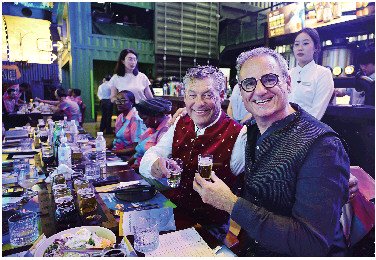
多国语言在此汇聚成一句“干杯、青岛”
Qi Lu Wan Bao· 2025-07-29 21:31
Core Insights - The Qingdao International Beer Festival has evolved from a local celebration into an international cultural symbol over its 35-year history, showcasing the city's identity and fostering global connections [6][8]. Group 1: Festival Evolution - The first Qingdao International Beer Festival took place in June 1991, attracting over 100 breweries and more than 100,000 attendees, marking the beginning of a significant cultural event [3][4]. - By 1994, the establishment of the Qingdao International Beer City solidified the festival's location, with 500,000 attendees and 200 tons of beer sold, indicating rapid growth [4]. - The festival has expanded its duration from 24 days to one month in 2025, featuring over 2,300 beer varieties, the highest in its history [4][6]. Group 2: Economic Impact - The 34th festival attracted 6.36 million visitors, with beer consumption reaching over 2,800 tons and generating significant economic activity, including 500 cultural events and 1,807 competitions [6][7]. - The festival's activities have driven local tourism and consumption, with the West Coast venue and Laoshan venue contributing to a total revenue of 350 million yuan for surrounding businesses [6][7]. Group 3: International Engagement - The festival serves as a bridge for international exchange, with increasing numbers of foreign tourists, particularly from South Korea, drawn to the event [8][9]. - Various international activities and collaborations are being introduced, including the "Beer Festival Theme Cross-Border Travel" initiative, aimed at creating a tourism ecosystem that promotes cultural exchange [9].