
国际化消费

Search documents
未知机构:其他消息①商务部将启动建设国家数字贸易示范区制-20260127
未知机构· 2026-01-27 02:00
Summary of Key Points from Conference Call Industry and Company Involvement - The conference call discusses various companies and industries, including: - Digital trade standards related to the national digital trade demonstration zone (Shengguang Group, Small Commodity City) [1] - International consumption environment pilot cities (He Bai Group, Shanghai Jiubai) [2] - Robotics partnership for the 2026 Spring Festival Gala (Yushu Technology, Changsheng Bearing, Wolong Electric Drive) [3] - Global hydrogen energy industry development (Houpus Co., Ltd., Shudao Equipment) [4] Core Insights and Arguments - The Ministry of Commerce will initiate the construction of a national digital trade demonstration zone and formulate relevant digital trade standards [1] - The Ministry of Commerce is organizing "city-specific" events in 15 international consumption environment pilot cities to enhance local consumption [2] - Yushu Technology has been selected as the robotics partner for the 2026 Spring Festival Gala, marking its third appearance at this event [3] - The global hydrogen energy industry is entering a more rational and critical development phase, indicating potential investment opportunities [4] Other Important but Possibly Overlooked Content - The emphasis on digital trade standards suggests a growing focus on digitalization in commerce, which may impact various sectors [1] - The pilot city events could lead to increased consumer engagement and spending, benefiting the involved companies [2] - The repeated partnership of Yushu Technology with a high-profile event like the Spring Festival Gala may enhance its brand visibility and market position [3] - The commentary on the hydrogen energy industry indicates a shift towards more sustainable energy solutions, which could attract future investments [4]
扩容·创新·超越——从解放碑进阶,看重庆国际化消费竞争力如何“立体生长”
Sou Hu Cai Jing· 2025-12-10 10:54
Core Insights - The Chongqing Jiefangbei business district has transformed from a traditional shopping area to an international consumption landmark, showcasing the city's growing competitiveness in global consumer markets [1][3][5] - The district has undergone two significant expansions, increasing its area from 0.92 square kilometers to 3.2 square kilometers, enhancing its capacity to attract both local and international consumers [3][11] - Jiefangbei has been recognized for its international consumption competitiveness, being selected by Forbes as one of China's top CBDs for three consecutive years [1][3] Expansion and Development - The first expansion in 2019 increased the main street area to 1.2 square kilometers, while the second expansion in 2021 further extended the area to 3.2 square kilometers, connecting key landmarks and improving accessibility [3][12] - The district now features a 7.5-kilometer underground ring road, accommodating 23,000 parking spaces and 28 underground garages, addressing traffic challenges in the mountainous city [3][9] - Jiefangbei attracts over 800,000 daily visitors, with 297 key enterprises and 98 Fortune 500 companies establishing a presence in the area, contributing to 2.9% of the city's GDP [3][4] Night Economy and International Appeal - The district has developed a vibrant night economy, with a consumption scale exceeding 100 billion yuan, making it the first in the western region to achieve this milestone [4][5] - The presence of 15 consulates and over 700 foreign enterprises enhances its status as an "inland open window," attracting international attention [4][5] Future Prospects - By 2030, the GDP of the Jiefangbei CBD is projected to exceed 130 billion yuan, with retail sales surpassing 150 billion yuan, indicating a significant growth trajectory [11][12] - The district aims to leverage its unique geographical advantages and cultural assets to become a lifestyle destination rather than just a shopping hub [11][12] - The integration of digital payment solutions and cross-border e-commerce is expected to further enhance the district's international consumer appeal [9][12]

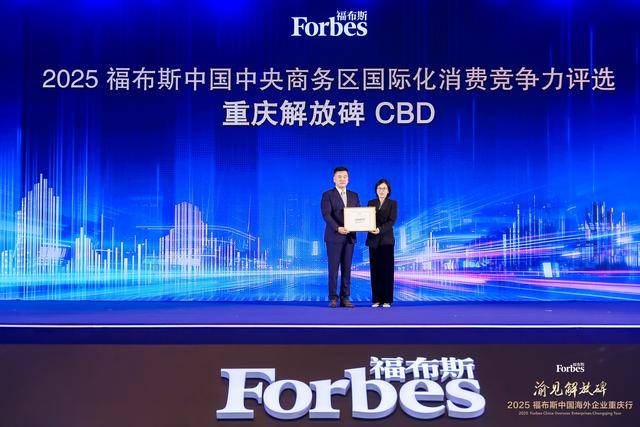
活动|消费聚势,格局重塑:“2025福布斯中国中央商务区国际化消费竞争力评选”结果正式发布
Sou Hu Cai Jing· 2025-11-28 06:13
Core Insights - The article emphasizes the critical role of consumption in China's economic growth, particularly in the context of optimizing economic structure and transforming development momentum [2][19] - The 2024 Forbes China Central Business District (CBD) Consumption Competitiveness Evaluation highlights how cities are evolving under the dual trends of "internationalization + localization" and "digitalization + experiential consumption" [2][3] Evaluation Framework - The evaluation employs a multi-dimensional assessment system with nearly 40 comprehensive indicators, integrating quantitative data and qualitative information [4] - Key evaluation dimensions include consumption market prosperity, payment convenience, international consumption attractiveness, resource aggregation, and policy leadership, each contributing 20% to the overall score [5] Selected CBDs - The evaluation identified ten representative CBDs, maintaining a consistent list from the previous year while introducing new focus areas such as "consumption resources" and "consumption policies" [17] - The top three CBDs are Beijing, Shanghai, and Guangzhou, with Beijing leading due to its international financial focus [17] Consumption Market Performance - China's total retail sales of consumer goods reached 487,895 billion yuan in 2024, growing by 3.5% year-on-year, with Shanghai and Chongqing leading in sales figures [19] - Notably, Chongqing surpassed Shanghai in retail sales in the first half of 2025, temporarily positioning itself as China's "consumption capital" [19] Internationalization as a Key Indicator - Internationalization is a crucial metric for assessing CBD capabilities and global positioning, with Beijing and Shanghai excelling due to their established international business ecosystems [20][21] - Initiatives like tax refund services and mobile payment innovations are aimed at enhancing the international consumer experience in these cities [21] Policy and Scene Integration - CBDs are leveraging policy incentives and innovative business models to drive consumption upgrades, with cities like Guangzhou and Chongqing implementing targeted strategies to enhance their consumption landscapes [22] - The transformation of CBDs from traditional business hubs to integrated consumption scenes reflects a broader trend of merging commerce, culture, tourism, and digital services [22] Regional Collaboration and Functional Differentiation - The evaluation highlights the emergence of multiple CBDs within the same city, each focusing on distinct functions, thereby enhancing overall economic resilience and functionality [23] - This "multi-core" development model is particularly evident in regions like the Yangtze River Delta and the Pearl River Delta, where CBDs collaborate through transportation, industry, and policy integration [23]
商务部再选 10 城:郑州落选!长沙武汉却进了国际化消费试点城市名单!
Sou Hu Cai Jing· 2025-11-26 04:05
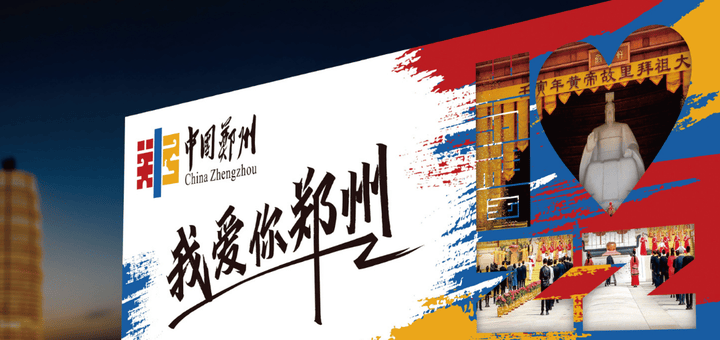
Core Viewpoint - Zhengzhou was not selected as an "International Consumption Center City" due to its weak international consumption capabilities, particularly in attracting international tourists and gathering international brands, compared to Wuhan and Changsha [10]. Group 1: Selection Criteria and Results - The Ministry of Commerce and the Ministry of Finance announced the list of "International Consumption Environment Construction Pilot Cities," with five initial cities receiving 200 million yuan each and ten new pilot cities receiving 100 million yuan each [1]. - Zhengzhou, despite being a major city with a retail sales total of 588.5 billion yuan in 2024, was not selected due to its lack of international vision and attractiveness to foreign businesses [1][3]. Group 2: Comparative Analysis - In 2025, Zhengzhou's inbound tourist numbers were projected to be only one-third of Changsha's and significantly lower than Wuhan's, indicating a lack of international appeal [5][9]. - Zhengzhou has only 14 international friendly cities, while Wuhan has over 60, highlighting its limited international influence [5][9]. - The city has a low number of traditional Chinese brands, with only three compared to Changsha's ten and Wuhan's seven, indicating a deficiency in cultural consumption resources [5][9]. Group 3: Economic Indicators - Zhengzhou's per capita consumption expenditure in 2024 was approximately 31,400 yuan, nearly 10,000 yuan lower than Wuhan, reflecting a mismatch between consumption quality and international standards [6]. - The city has a limited number of international routes and lacks significant international policies, such as the 240-hour visa-free transit policy available in Changsha and Wuhan [5][9]. Group 4: Future Opportunities - Despite not being selected, Zhengzhou is part of the "New Consumption Formats, New Models, New Scenarios" pilot cities, which may provide national policy support to enhance its consumption innovation capabilities [3].
华强北商圈国际化升级提速!离境退税商店已有20家,有望进一步扩容
Sou Hu Cai Jing· 2025-06-14 07:28
Core Viewpoint - The "Huaqiangbei Business District" is leveraging the outbound tax refund policy to enhance its international competitiveness and attract foreign tourists, with 20 tax refund stores currently operational in the area, accounting for nearly a quarter of the stores in the Futian District [1][2]. Group 1: Outbound Tax Refund Policy - The outbound tax refund policy is seen as a crucial engine for enhancing the international capability of the business district, attracting foreign consumer spending, and promoting the upgrade of consumption quality [1]. - The Huaqiangbei Business District has a natural advantage for developing outbound tax refund services due to its status as a globally recognized electronic industry hub, strong commercial foundation, and rich brand resources [1]. Group 2: Business District Features - Huaqiangbei is recognized as the first 5G street in the country, a national innovation and entrepreneurship base, and a 3A-level scenic area in Shenzhen's Futian District, with peak daily foot traffic exceeding one million [2]. - The area has seen an average daily foreign visitor flow of over 8,000 people, and it has optimized payment experiences for foreign customers by implementing a service standard of "large card payments, small QR code payments, and cash as a backup" [2]. Group 3: Expansion of Tax Refund Stores - The outbound tax refund initiative is rapidly being implemented, with 20 tax refund stores already established, creating an initial clustering effect [2]. - Shenzhen has been expanding its outbound tax refund stores, with over 400 stores listed in nine batches, and sales of tax refund goods from January to May this year have increased by over 2.1 times year-on-year [2]. - The tenth batch of outbound tax refund store selection is currently underway, with an expected addition of over 100 new stores [3].