均衡

Search documents
主动优选策略,挑选出来的基金经理如何配置?|投资小知识
银行螺丝钉· 2025-11-14 14:05
Core Viewpoint - The article discusses various investment styles that yield long-term returns, emphasizing the importance of selecting the right investment strategy based on valuation and growth potential [3]. Group 1: Investment Styles - Deep Value: Focuses on undervalued assets [3] - Growth Value: Emphasizes the quality of the company, typically investing in firms with high Return on Equity (ROE) [3] - Balanced: Considers both valuation and profit growth rate, prioritizing cost-effectiveness [3] - Growth: Concentrates on profit growth rate [3] - Deep Growth: Focuses on the growth potential of the company [3] Group 2: Fund Pool Construction - A fund pool is constructed to minimize individual risks, featuring a selection of fund managers under each investment style, similar to index fund construction [4]. - In case of fund manager changes, such as departure or retirement, a backup manager of the same style will be selected to replace them [4]. Group 3: Valuation Adjustments and Rebalancing - The active selection of advisory portfolios will consider valuations for rebalancing [5]. - Styles that are cheaper and more valuable will have a higher allocation in the portfolio, while overvalued styles will undergo profit-taking [5]. - The rebalancing of advisory portfolio funds is automated, requiring no manual intervention from investors, making it more convenient [5].


中信银行行长芦苇:以三大“透过”实现上半年“难中求成”
2 1 Shi Ji Jing Ji Bao Dao· 2025-08-28 03:39
Core Viewpoint - China CITIC Bank emphasizes a "steady, balanced, and sustainable" development approach, achieving positive results in a complex environment during the first half of the year, driven by three main aspects [1] Group 1: Performance Indicators - The bank reported positive growth in net profit, improved revenue margins, effective cost control, stable asset quality, and quality growth in scale [1] Group 2: Capability Insights - The development is supported by the bank's capability in managing volume and price balance, light capital development, comprehensive risk management, and customer operations [1] Group 3: Future Structure - Continuous optimization of asset, liability, and customer structures has led to a balanced revenue structure of 40% from retail, 40% from corporate, and 20% from financial market businesses, enhancing the bank's ability to withstand economic cycles [1]

六部门详解国家版民生“大礼包” 民生建设更加注重“公平、均衡、普惠、可及”
Shang Hai Zheng Quan Bao· 2025-06-10 18:08
Core Viewpoint - The Chinese government has introduced a series of policies aimed at improving and safeguarding the livelihoods of its citizens, focusing on addressing urgent public concerns in areas such as education, healthcare, and social security [1][2]. Group 1: Policy Initiatives - The government has outlined 10 policy measures across four main areas to enhance social security and support low-income groups, emphasizing fairness in social welfare [1][2]. - By 2025, the budget for education, social security, and employment is projected to reach approximately 4.5 trillion yuan, with increases of 6.1% and 5.9% respectively [2]. - The central government's investment in social services is expected to rise by over 30% compared to the end of the previous five-year plan [2]. Group 2: Education and Childcare - A focus on improving educational resources includes plans to build or expand over 1,000 high-quality high schools and achieve standardized construction in compulsory education schools within five years [3]. - The government is implementing tax deductions for families with children under three years old and has introduced subsidies and vouchers to lower childcare costs [3]. - More than half of the provinces are prioritizing childcare services as part of local livelihood initiatives [3]. Group 3: Healthcare Improvements - The government aims to enhance the sharing of quality healthcare resources, with a strategy to resolve general illnesses at the city and county levels by 2025 [3]. - The per capita financial subsidy for basic public health services will increase to 99 yuan annually, while the subsidy for urban and rural residents' health insurance will rise to 700 yuan [4]. Group 4: Elderly and Child Services - The government plans to improve the elderly care and childcare service systems, including community-based home care services and the establishment of a childcare subsidy system [5]. - Policies will be developed to better accommodate flexible employment and new job forms, ensuring that these workers have access to social insurance [5].
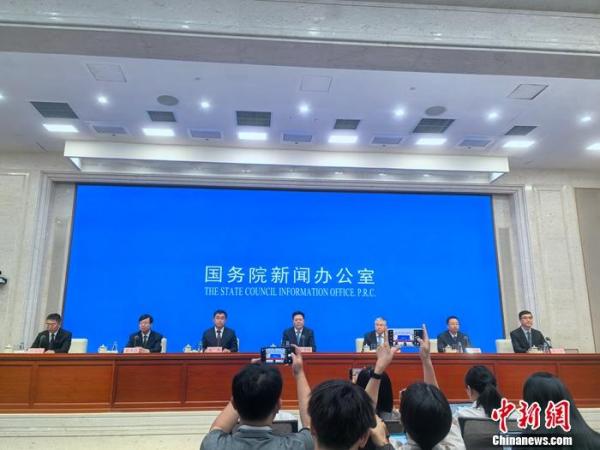
中央重磅民生文件突出“准、实、新”
Zhong Guo Xin Wen Wang· 2025-06-10 06:04
Core Viewpoint - The document outlines a comprehensive set of policies aimed at improving and safeguarding the livelihoods of the population, focusing on fairness, accessibility, and quality of basic public services [1][4]. Group 1: Policy Focus Areas - The document emphasizes placing fairness at the forefront of livelihood policies, aiming to enhance the equity of social security and expand coverage for low-income groups [3][4]. - It highlights the need for equal access to basic public services for all citizens, regardless of urban or rural status, and proposes measures to improve the quality and efficiency of these services [3][4]. - The document addresses key concerns in education, healthcare, elderly care, and childcare, proposing initiatives to enhance the inclusivity of basic livelihood services [3][4]. Group 2: Implementation Strategies - The policies are designed to be precise, practical, and innovative, focusing on addressing specific pain points in the livelihood sector [4][5]. - For rural low-income populations, the document proposes actions to increase income through industry development, job transfers, skill enhancement, and targeted support [5]. - It sets clear goals for educational quality improvement, healthcare infrastructure, and the provision of elderly and childcare services, including specific targets for new facilities and service coverage [5][6]. Group 3: Financial Commitment - By 2025, the government plans to increase financial investment in the livelihood sector, with education, social security, and employment expenditures nearing 4.5 trillion yuan, reflecting growth rates of 6.1% and 5.9% respectively [7]. - The central government will allocate 667.4 billion yuan for employment support, including measures to stabilize jobs and assist vulnerable groups [7]. - Basic pension standards will be raised by 20 yuan per month, benefiting over 300 million elderly individuals through enhanced financial support [8]. Group 4: Specific Initiatives - The document outlines initiatives to improve basic medical insurance and public health service funding, increasing per capita subsidies for urban and rural residents [8]. - It emphasizes the need for educational resource optimization and support for disadvantaged groups, with a budget of 809.45 billion yuan for student assistance [8]. - The government aims to enhance community-based elderly care and childcare services, ensuring that these services meet the growing demands of the population [9].