基金行业马太效应

Search documents
2026公募生死局:中小公募的规模坍塌、治理失序与突围困境
市值风云· 2026-02-24 10:12
Core Viewpoint - The article highlights the severe challenges faced by small and medium-sized public fund companies in China, emphasizing the widening gap between leading firms and their smaller counterparts, which are struggling for survival in a harsh market environment [3][4]. Governance Issues - Frequent changes in management have become a norm for many small public funds, undermining their strategic continuity and stability [5]. - An example is Zhongke Wotu Fund, which has seen its general manager replaced four times in five years, leading to a drastic reduction in its management scale to 0.75 billion yuan, a nearly 75% decline year-on-year [5]. - Xinhua Fund also faces governance challenges, with seven executives leaving and joining in a short period, resulting in a lack of clear long-term strategy [6]. Scale Challenges - The collapse of management scale and product survival crises are evident, particularly as small public funds struggle to compete in a market dominated by ETFs [8]. - Xinhua Fund's ETF, despite a strong performance, was forced into liquidation due to its scale falling below 50 million yuan for 50 consecutive days [9]. - Some small funds resort to aggressive "shell protection" tactics to avoid liquidation, which undermines their credibility and long-term viability [10]. Financial Struggles - The shrinking scale has severely impacted the financial health of small public funds, which rely heavily on scale for management fee income [11]. - In the first half of 2025, leading firms like Huaxia Fund reported daily revenues exceeding 23 million yuan, while smaller firms like Ruida Fund struggled to maintain daily revenues of just a few thousand yuan [11]. - The financial pressure has even led to personal financial issues for executives, exemplified by the chairman of Kaishi Fund facing consumption restrictions due to unpaid debts [12]. Path to Survival - Despite the dire situation, there is potential for small public funds to survive by focusing on niche markets and leveraging unique resources [13]. - Successful examples include Xinyuan Fund, which achieved significant scale by specializing in fixed income through strong ties with its banking shareholder [13]. - The industry may see a shift towards a coexistence of "platform giants" and "boutique firms," with smaller funds needing to find their unique positioning to thrive [13].


一文看懂2026年基金行业市场研究报告:行业马太效应进一步凸显
Xin Lang Cai Jing· 2026-02-09 10:21
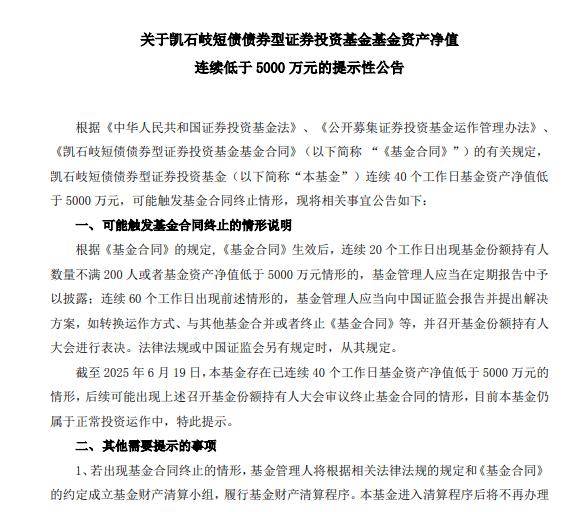
Core Insights - The real estate industry is transitioning to a stable development phase, leading to a shift in public investment needs from mere preservation to diversified value growth [1][15] - There is a significant adjustment in national asset allocation, with funds moving from traditional savings and real estate to standardized equity and fixed-income fund products [1][15] - The fund industry in China is expected to see substantial growth, with a projected total of 151,286 funds by October 2025, including 13,381 public funds and 137,905 private funds, with a total scale of 590,112.3 billion yuan [1][15] Overview of the Fund Industry - Funds, or securities investment funds, pool capital from multiple investors to create an independent asset managed by professional fund managers, allowing for diversified investment and risk sharing [2][16] - The benefits of funds include lower investment thresholds for ordinary investors, risk diversification, and professional management, although they still carry inherent market risks [2][16] Fund Classification - Funds can be categorized based on various criteria, including: - **By fundraising method**: Public funds (open to the public) and private funds (targeted at specific investors) [3][17] - **By investment object**: Money market funds, bond funds, stock funds, mixed funds, index funds, ETF funds, LOF funds, FOF funds, and QDII funds [3][17] - **By investment philosophy**: Active funds (managed to outperform the market) and passive funds (aiming to replicate market indices) [3][17] - **By operation mode**: Open-end funds (allowing continuous buying and selling) and closed-end funds (fixed size, traded on exchanges) [3][17] - **By trading venue**: On-exchange funds (traded like stocks) and off-exchange funds (purchased through fund companies or banks) [3][17] Development History - The development of China's fund industry has evolved through five key phases: pilot exploration, regulatory initiation, rapid expansion, transformation and adjustment, and high-quality development [6][20] - Recent trends indicate a shift towards professionalization, diversification, and internationalization, with innovative products like public REITs and ESG-themed funds emerging [6][20] Market Policies - The Chinese government emphasizes the importance of the fund industry for the stability of the capital market and the support of the real economy, implementing various policies to encourage and regulate its development [8][22] - Key policies include initiatives for green finance, support for technology enterprises, and measures to enhance financial services for housing rental markets [8][22] Current Market Status - The fund industry is experiencing a migration of capital from traditional savings and real estate to standardized equity and fixed-income products, indicating a broadening of investment strategies among the public [1][15] - The multi-layered fund product system in China is now capable of meeting diverse wealth management needs, with significant growth potential in the coming years [1][15]
罕见!转让“独苗”,这家公司公募产品要“归零”
Zhong Guo Ji Jin Bao· 2026-01-26 14:14
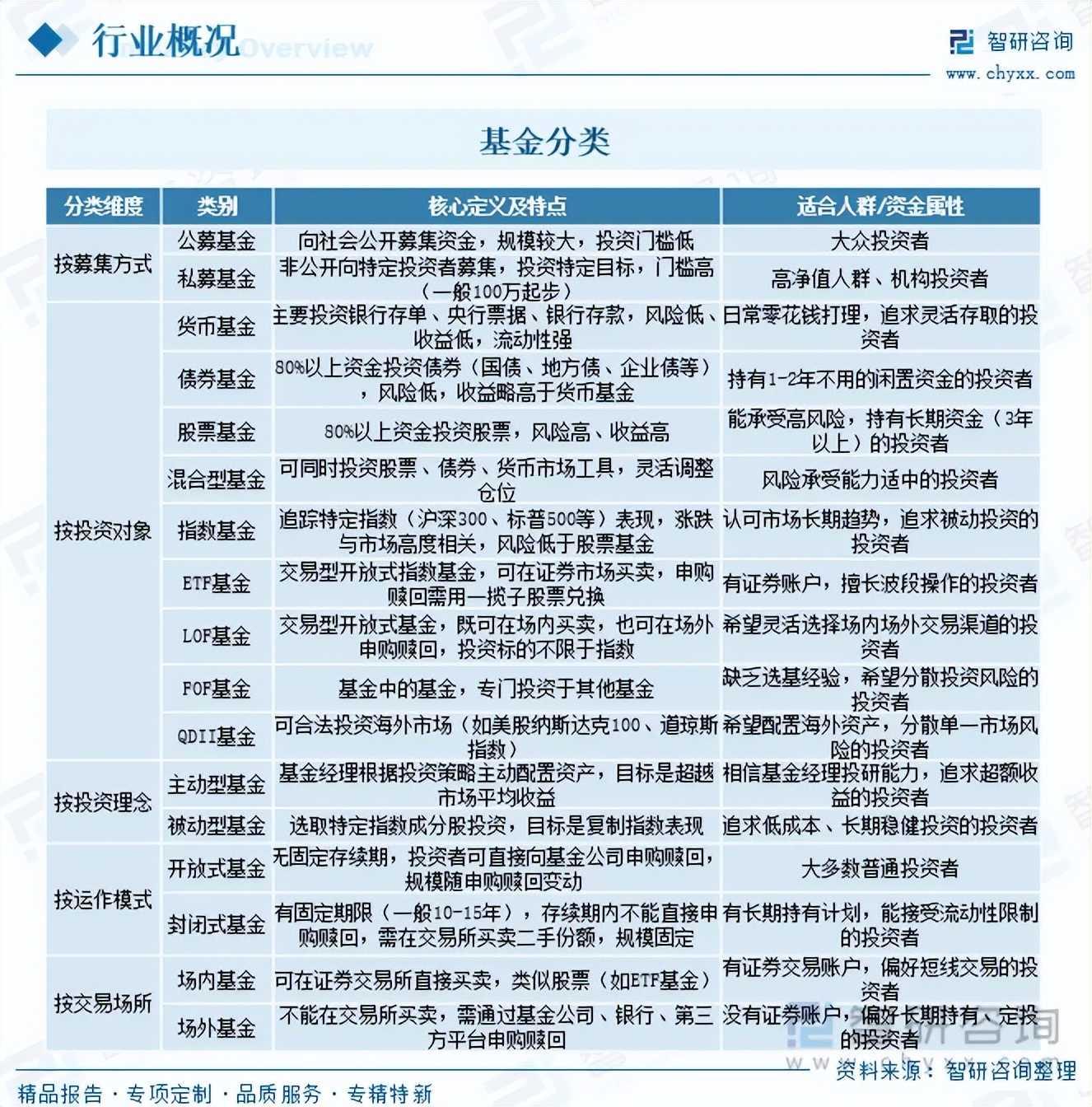
Core Viewpoint - Huachen Future Fund plans to transfer its only fund, Huachen Future Steady Income Bond Fund, to Fortune Fund, indicating a trend of "survival of the fittest" in the public fund industry as smaller asset management firms face potential exit or acquisition [1][2][5] Group 1: Fund Management Change - Huachen Future Fund announced a meeting to change the fund manager of Huachen Future Steady Income Fund to Fortune Fund, aiming to better meet investor needs and protect their interests [2][4] - The change only affects the Huachen Future Steady Income Fund and does not impact the company's other operations or involve investment risk [4][6] Group 2: Fund Performance and Financial Health - The Huachen Future Steady Income Fund experienced a significant net value drop of 7.41% over four trading days from November 27 to December 2, 2025, leading to a total annual decline of 6.60%, ranking in the bottom quartile among peers [4] - The fund's total scale decreased from 189 million yuan at the end of Q3 2024 to 43 million yuan [4] - Huachen Future Fund has struggled financially, reporting a revenue of 4.01 million yuan and a net loss of 20.01 million yuan in 2024, with a further loss of 11.40 million yuan in the first three quarters of 2025 [9] Group 3: Ownership and Market Position - Huachen Future Fund was established in 2012 with a registered capital of 200 million yuan, but has faced challenges in growth, with its fund scale only briefly exceeding 1 billion yuan in late 2023 and early 2024 [8][9] - The major shareholder, Huachen Trust, is looking to sell a 40% stake in Huachen Future Fund for 4.8 million yuan, a significant drop from the initial listing price of 17.2 million yuan [9]
从凯石岐短债看迷你基金的生存困境
Sou Hu Cai Jing· 2025-06-24 21:52
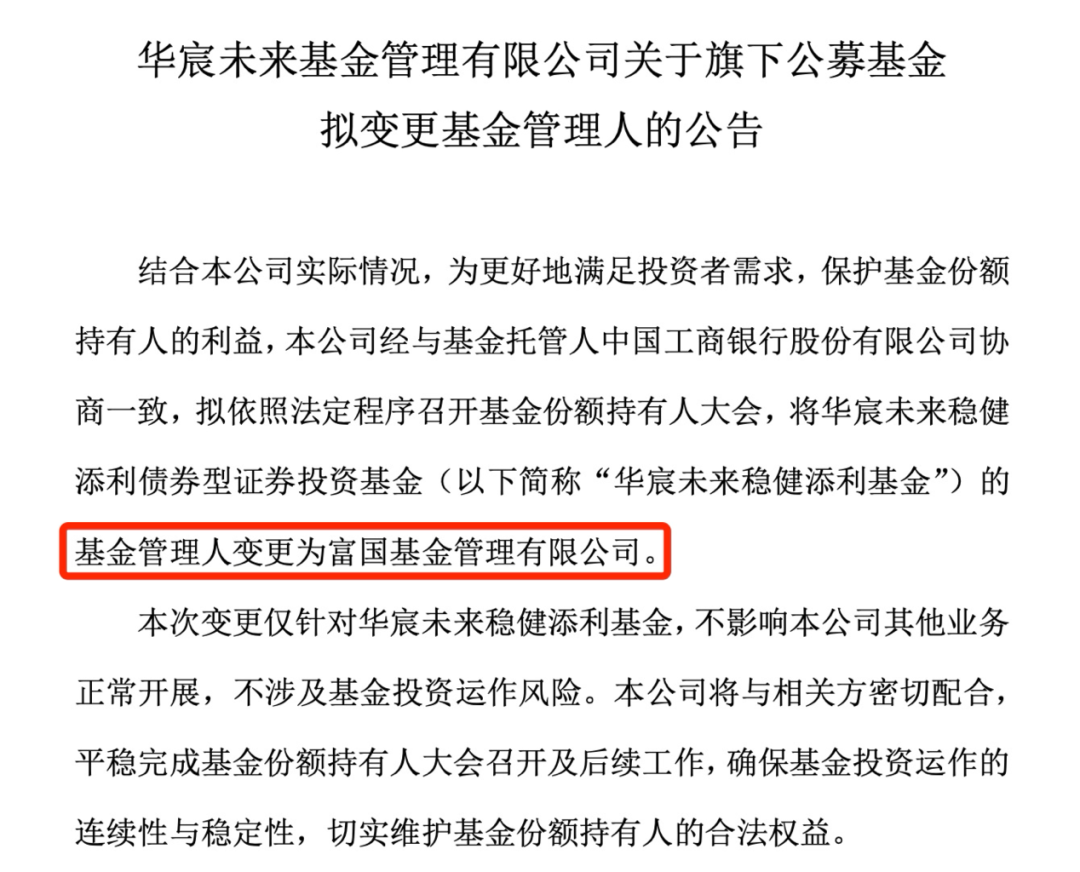
Core Viewpoint - The Kaishi Qi Short Bond Fund is facing potential liquidation due to its net asset value being below 50 million yuan for 40 consecutive working days, with only 20 more days before a mandatory holder meeting is required to discuss its future [1][4]. Group 1: Fund Performance and Challenges - The short bond fund, typically seen as a stable investment option, is experiencing significant challenges in the current market environment, including fierce competition from money market funds and bank wealth management products [4]. - Investors are increasingly demanding higher yields, while short bond funds offer relatively limited returns, contributing to the fund's struggles [4]. - Limited marketing resources for fund companies mean that smaller funds often do not receive adequate attention and promotion, exacerbating their difficulties [4]. Group 2: Fund Management and Investor Considerations - Fund managers need to reflect on their risk management and communication strategies with investors, especially when faced with declining fund sizes [4]. - Investors are reminded to consider factors beyond just yield when selecting funds, such as fund size and the stability of the management team, particularly for smaller funds that may face liquidation risks [4][5]. Group 3: Industry Trends - The situation highlights the increasing "Matthew Effect" in the fund industry, where larger funds continue to grow while smaller funds struggle to survive, raising questions about the fairness and diversity of the industry [5].