
私募基金

Search documents
基金大赚却害怕到睡不着?可能是这个“心跳指数”太高了!
私募排排网· 2026-03-31 10:00
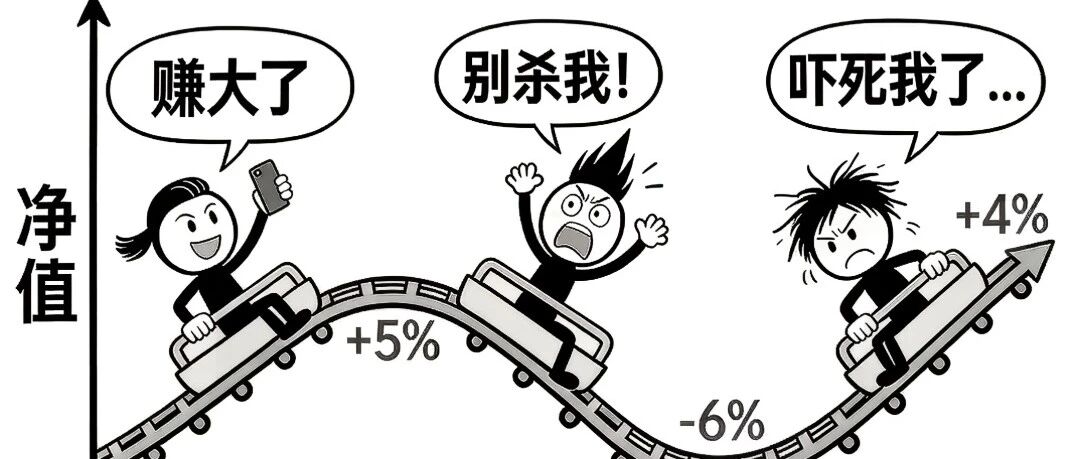
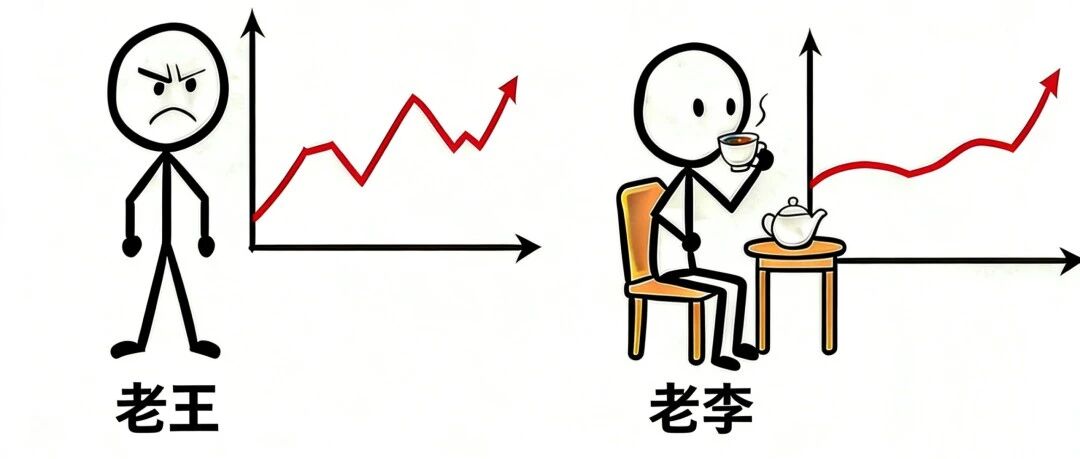
Core Viewpoint - The article discusses the concept of annualized volatility in investment funds, illustrating its significance through a narrative involving two characters, Lao Wang and Lao Li, who explore the implications of high volatility in fund performance [5][6][11]. Group 1: Understanding Annualized Volatility - Annualized volatility measures the degree of fluctuation in a fund's returns, standardized to a yearly timeframe, providing a score for the fund's net value fluctuations [6]. - High volatility is likened to a challenging and unpredictable journey, while low volatility represents a smoother, more stable investment experience [7]. Group 2: Implications of High Volatility - High volatility funds can yield significant gains during market upswings but may also incur substantial losses during downturns, making recovery more challenging [11]. - The calculation of annualized volatility involves determining the standard deviation of returns, which reflects the extent of return fluctuations [14]. Group 3: Practical Insights - Investors should not compare different types of funds directly, as equity funds naturally exhibit higher volatility than bond funds [16]. - A lower volatility is preferable for conservative investors seeking stability, while aggressive investors must be prepared for the emotional rollercoaster associated with high volatility [19]. - High volatility does not necessarily indicate a poor fund; a fund with a long-term upward trend may justify its fluctuations [21]. - Short-term volatility may not accurately represent a fund's true nature; long-term volatility trends provide a better understanding of the fund's characteristics [23].

公募基金周报:公私募规模齐扩张,权益市场仍处于震荡调整区间-20260330
BOHAI SECURITIES· 2026-03-30 10:08
1. Report Industry Investment Rating - No relevant content provided 2. Core Views - From March 23 to March 27, 2026, all major equity market indices declined, with the ChiNext Index experiencing the largest drop of 1.68%. Among the 31 Shenwan primary industries, 9 industries rose, with non - ferrous metals, public utilities, chemicals, pharmaceutical and biological, and textile and apparel being the top five gainers, while non - bank finance, computer, agriculture, forestry, animal husbandry and fishery, beauty care, and national defense and military industry were the top five losers [1][12] - The scale of public funds exceeded 38 trillion yuan, and the total scale of private funds reached 22.60 trillion yuan. The equity market is still in an oscillating adjustment phase. Among them, the decline of equity - biased funds was the smallest, with an average decline of 0.31% and a positive return ratio of 32.20%; the average return of fixed - income + funds was 0.05%, with a positive return ratio of 58.03%; the average return of pure - bond funds was 0.07%, with a positive return ratio of 98.49%; the average return of pension target FOF was - 0.02%, with a positive return ratio of 45.73%. In addition, the average return of QDII funds was - 0.57%, with a positive return ratio of 27.70% [2][28][29] - Last week, the overall ETF market had a net capital outflow of 6.679 billion yuan. Structurally, bond - type ETFs had a significant net inflow of 21.479 billion yuan. In terms of liquidity, the average daily trading volume of the overall ETF market last week reached 532.374 billion yuan, the average daily trading volume reached 222.049 billion shares, and the average daily turnover rate was 9.31% [3][40] - Last week, 25 new funds were issued, the same as the previous period; 51 new funds were established, an increase of 5 compared to the previous period. New funds raised a total of 26.149 billion yuan, a decrease of 8.033 billion yuan compared to the previous period [4][51] 3. Summary by Relevant Catalogs 3.1 Market Review 3.1.1 Domestic Market Situation - From March 23 to March 27, 2026, all major equity market indices declined, with the ChiNext Index dropping 1.68%. Among the 31 Shenwan primary industries, 9 industries rose, with non - ferrous metals, public utilities, chemicals, pharmaceutical and biological, and textile and apparel being the top five gainers, while non - bank finance, computer, agriculture, forestry, animal husbandry and fishery, beauty care, and national defense and military industry were the top five losers. In the bond market, the ChinaBond Composite Full - Price Index rose 0.04%, the total full - price indices of ChinaBond Treasury bonds, financial bonds, and credit bonds fluctuated between a decline of 0.02% and an increase of 0.02%, the China Securities Convertible Bond Index rose 1.28%, and in the commodity market, the Nanhua Commodity Index fell 0.25% [12] 3.1.2 European, American and Asia - Pacific Market Situation - Last week, most major indices in European, American and Asia - Pacific markets declined. Among them, in the US stock market, the S&P 500 Index fell 1.56%, the Dow Jones Industrial Average fell 0.99%, and the Nasdaq Index fell 3.23%; in the European market, the French CAC40 rose 0.47%, and the German DAX fell 0.35%; in the Asia - Pacific market, the Hang Seng Index fell 1.29%, and the Nikkei 225 remained unchanged [18] 3.1.3 Market Valuation Situation - Last week, the valuation quantiles of most major market indices declined. In terms of the historical quantiles of price - to - earnings ratio, the Shanghai Composite 50 Index had the largest decline of 3.8 pct.; in terms of the historical quantiles of price - to - book ratio, the Shanghai Composite 50 Index also had the largest decline of 17.1 pct. Among industries, the top five industries with the highest historical quantiles of price - to - earnings ratio in the Shenwan primary index last week were real estate, building materials, comprehensive, chemicals, and electronics. Among them, the price - to - earnings ratio quantile of the real estate industry remained at a high level, and the price - to - earnings ratio quantile of the building materials industry reached 86.8%. Attention should be paid to the potential correction risk in the future. The five industries with relatively low historical quantiles of price - to - earnings ratio last week were non - bank finance, food and beverage, household appliances, agriculture, forestry, animal husbandry and fishery, and beauty care. Among them, the valuation of the non - bank finance industry was close to the historical low since 2013 [21] 3.2 Active Public Fund Situation 3.2.1 Market Hotspots - The scale of public funds exceeded 38 trillion yuan. As of the end of February 2026, there were 165 public fund management institutions in China, including 150 fund management companies and 15 asset management institutions with public fund management qualifications. The total net asset value of public funds managed by these institutions was 38.61 trillion yuan. The total number of funds in the market reached 13,821, an increase of 96 compared to the end of January. The share and net value increased to 32,768.6 billion shares and 38,605.2 billion yuan respectively, with a month - on - month increase of about 2.7% and 2.2% respectively, indicating a net inflow of funds. The capital structure showed the characteristics of continuous capital inflow into fixed - income and cash management funds, short - term pressure on equity funds, and increasing cross - border allocation. The market risk appetite was still in the process of recovery but had not fully rebounded [28] - The total scale of private funds reached 22.60 trillion yuan. As of the end of February 2026, the outstanding scale of private funds was 22.60 trillion yuan, continuing the steady expansion trend since 2025 and maintaining at a historical high level. The number of outstanding funds was 140,300, and the industry's capital - carrying capacity remained stable. Structurally, the scale of private equity investment funds was 11.16 trillion yuan, accounting for nearly half, still being the core support; the scale of private securities investment funds was 7.35 trillion yuan, showing strong elasticity in the context of market recovery; the scale of venture capital funds was 3.80 trillion yuan, continuing to play a supplementary role [29] 3.2.2 Fund Performance - The equity market is still in an oscillating adjustment phase. The decline of equity - biased funds was the smallest, with an average decline of 0.31% and a positive return ratio of 32.20%; the average return of fixed - income + funds was 0.05%, with a positive return ratio of 58.03%; the average return of pure - bond funds was 0.07%, with a positive return ratio of 98.49%; the average return of pension target FOF was - 0.02%, with a positive return ratio of 45.73%. In addition, the average return of QDII funds was - 0.57%, with a positive return ratio of 27.70% [2][29] 3.2.3 Industry Position and Overall Position of Active Equity Funds - Through the calculation of the industry positions of active equity funds, the top three industries with the largest increase in positions last week were basic chemicals, coal, and electronics; the top three industries with the largest decrease in positions were banks, public utilities, and transportation. The overall position of active equity funds on March 27, 2026, was 77.29%, an increase of 5.61 pct. compared to the previous period [2][37][38] 3.3 ETF Fund Situation - Last week, the overall ETF market had a net capital outflow of 6.679 billion yuan. Structurally, bond - type ETFs had a significant net inflow of 21.479 billion yuan. In terms of liquidity, the average daily trading volume of the overall ETF market last week reached 532.374 billion yuan, the average daily trading volume reached 222.049 billion shares, and the average daily turnover rate was 9.31%. In terms of individual bonds, last week, funds showed the characteristics of risk aversion and concentration on core assets at the index level: funds significantly flowed into low - risk and broad - based large - cap indices such as CSI AAA Science and Technology Innovation Corporate Bonds, short - term financing bonds, and CSI 300, while high - elasticity sectors such as chemicals, Hong Kong stock Internet, and CSI 1000 continued to experience outflows, indicating a decline in overall risk appetite and a more conservative allocation [3][40][44] 3.4 Fund Issuance Situation Statistics - Last week, 25 new funds were issued in China, the same as the previous period. Among them, there were 9 active equity - biased funds and 11 passive index funds. All 11 passive index funds were equity - type, mainly tracking indices such as CSI Science and Technology Innovation and Entrepreneurship Artificial Intelligence, CSI Hong Kong Stock Connect Information Technology Composite, CSI All - Share Household Appliances, and CSI All - Share Electric Power and Public Utilities. Currently, the issuance share of active equity funds is still at a historical low, but there has been an obvious upward trend since this year. 51 new funds were established last week, an increase of 5 compared to the previous period. New funds raised a total of 26.149 billion yuan, a decrease of 8.033 billion yuan compared to the previous period. Among them, Tianhong Honghua Hybrid A managed by Hu Yu had the largest fundraising scale, approximately 4.087 billion yuan [4][48][51]
基金砸下去的坑,一般多久能填平?
私募排排网· 2026-03-25 08:07
Core Viewpoint - The article emphasizes the importance of understanding drawdowns and recovery in investment funds, highlighting that deeper losses require greater percentage gains to recover, and that controlling drawdowns is more crucial than chasing high returns [5][13]. Summary by Sections Understanding Drawdowns - A drawdown is defined as the maximum decline in fund value from a peak to a trough, exemplified by a fund dropping from 2 yuan to 1.6 yuan, representing a 20% drawdown [8]. Recovery from Drawdowns - The recovery required to return to the original value after a drawdown is not linear; for instance, a 20% drop necessitates a 25% increase to recover [5][11]. - A table illustrates the recovery percentages needed for various drawdown levels, indicating that a 50% drop requires a 100% gain to return to the original value [10][11]. Factors Influencing Recovery Speed - The speed of recovery from a drawdown is influenced by three main factors: 1. **Cause of the Drawdown**: Systematic risks (market-wide declines) may lead to uncertain recovery times, while individual risks (like poor fund management) can complicate recovery due to loss of trust [16][17]. 2. **Fund Manager's Offensive Capability**: Some managers excel at minimizing losses and capitalizing on rebounds, while others may lack proactive strategies [18][19]. 3. **Stability of Investor Capital**: If many investors redeem their shares during a drawdown, fund managers may be forced to sell assets at low prices, hindering recovery [20][21]. Practical Advice for Investors - Investors should consider both the drawdown and the recovery time when evaluating funds, as a long recovery period may indicate poor performance [22]. - The ability of fund managers to recover from drawdowns is a critical metric; funds that experience smaller drawdowns and recover quickly are preferable [23]. - During a drawdown, investors are advised to assess the reasons behind it and their original investment rationale before making decisions to sell or hold [25][26].

再融资政策优化,资管规模稳步提升
HTSC· 2026-03-16 02:20
Investment Rating - The report maintains an "Overweight" rating for the banking and securities sectors [10] Core Insights - The optimization of refinancing policies is expected to support the development of asset management products, with a long-term upward trend in the capital market [2] - The asset management industry is characterized by stable growth across various segments, including bank wealth management, public funds, insurance asset management, trust, and private equity [17] Summary by Sections Bank Wealth Management - In February, the total number of newly issued wealth management products decreased by 17.8% month-on-month, with a total of 2,243 products issued [3] - The total outstanding scale of bank wealth management products reached 31.67 trillion yuan, a slight increase of 0.10 trillion yuan month-on-month [3][37] - The average yield for wealth management products was 1.70%, down 192 basis points from the previous month [3] Public Funds - In February, the issuance of public funds was 90.6 billion units, a decrease of 25% month-on-month [4] - The total market size of public funds was 36.31 trillion yuan, with a slight increase of 0.03% month-on-month [4] Private Funds - As of the end of January 2026, the total scale of private fund products was 22.44 trillion yuan, with a month-on-month increase of 1.30% [6] - In January, the newly registered scale of private funds was 64.1 billion yuan, a year-on-year increase of 38% [6] Insurance Asset Management - By the end of Q4 2025, the balance of insurance funds reached 38.48 trillion yuan, a year-on-year increase of 16% [7] - The proportion of stock investments in insurance asset management increased by 0.65 percentage points month-on-month [7] Securities Asset Management - As of the end of Q3 2025, the scale of securities asset management was 6.37 trillion yuan, with a quarter-on-quarter increase of 4% [5] - In February, the newly issued scale was 4.574 billion units, a decrease of 42% month-on-month [5] Trust - As of the end of June 2025, the industry asset scale was 32.43 trillion yuan, an increase of 10% from the beginning of 2025 [8] - In February, a total of 933 trust products were issued, amounting to 101.1 billion yuan, a month-on-month decrease of 25% [8]




2026年1月财富管理月报:居民持续边际增配权益,股票ETF规模收缩
GUOTAI HAITONG SECURITIES· 2026-03-13 13:30
Investment Rating - The report assigns an "Overweight" rating for the industry [6] Core Insights - In January 2026, residents' asset allocation remains primarily in low-risk deposits, with a marginal increase in equity investments. Securities firms, as key intermediaries for equity assets, will benefit from the influx of resident funds into the market [2][10] - The total market for wealth management products reached 353.2 trillion yuan, with a quarter-on-quarter change of +0.7% and a year-on-year change of +10.3%. The net increase in wealth management products was 2.5 trillion units, with a quarter-on-quarter change of -38.9% [7][11] - The equity market experienced fluctuations, but residents' risk appetite remained high, indicating a shift of funds from deposits to higher-yielding assets [12][16] Summary by Sections 1. Wealth Management Market Overview - In January 2026, the direction of residents' asset allocation is still primarily low-risk, with a marginal increase in equity investments. The total market for wealth management products reached 353.2 trillion yuan, with a quarter-on-quarter change of +0.7% and a year-on-year change of +10.3% [11][12] 2. Public Funds: Significant Increase in Equity New Issuance, Noticeable Reduction in Bond Funds - The total scale of public funds reached 37.8 trillion yuan, with a quarter-on-quarter change of +0.1% and a year-on-year change of +18.3%. The new issuance of equity funds increased significantly by 66.5% [23][31] - The total number of public fund units was 31.9 trillion, with a quarter-on-quarter change of -0.4% and a year-on-year change of +8.8% [24][25] 3. Private Fund/Asset Management: Steady Growth in Private Fund/Asset Management Scale - The scale of private funds reached 22.4 trillion yuan, with a quarter-on-quarter change of +1.3%. The scale of private asset management reached 12.4 trillion yuan, with a quarter-on-quarter change of +0.6% [11][12] 4. Wealth Management/Insurance/Deposits: Fixed Income Management Still Favored - The scale of bank wealth management reached 29.7 trillion yuan, with a quarter-on-quarter change of -0.15%. The scale of resident deposits was 168.0 trillion yuan, with a quarter-on-quarter change of +1.3% [11][12] 5. Investment Recommendations: Securities Firms Overall Benefit from Resident Funds Entering the Market - The low-interest-rate environment and the profit effect of the equity market are driving residents to gradually invest in the market. Securities firms are expected to benefit from the influx of incremental funds. Recommended stocks include Industrial Securities and GF Securities [7][12]
2026年1月财富管理月报:居民持续边际增配权益,股票ETF规模收缩-20260313
GUOTAI HAITONG SECURITIES· 2026-03-13 11:15
Investment Rating - The report assigns an "Overweight" rating for the industry [6] Core Insights - In January 2026, residents' asset allocation remains primarily in low-risk deposits, with a marginal increase in equity investments. Securities firms, as key intermediaries for equity assets, will benefit from the influx of resident funds into the market [2][10] - The total market for wealth management products reached 353.2 trillion yuan, with a quarter-on-quarter change of +0.7% and a year-on-year change of +10.3%. The net increase in wealth management products was 2.5 trillion units, with a quarter-on-quarter change of -38.9% [7][11] - The equity market experienced fluctuations, but residents' risk appetite remained high, indicating a shift of funds from deposits to higher-yielding assets [12][16] Summary by Sections 1. Wealth Management Market Overview - In January 2026, the direction of residents' asset allocation is still primarily low-risk, with a marginal increase in equity investments. The wealth management financial products include public funds, private funds, private asset management plans, insurance products, and bank wealth management [10][11] 2. Public Funds: Significant Increase in Equity New Issuance, Noticeable Reduction in Bond Funds - The total scale of public funds reached 37.8 trillion yuan, with a quarter-on-quarter change of +0.1% and a year-on-year change of +18.3%. The market saw a slight increase in public fund assets, while bond funds experienced a significant reduction [23][24] - In January 2026, new public fund issuance reached 1.2021 trillion units, with a quarter-on-quarter change of +6.2% and a year-on-year change of +44.4%. Equity funds saw a substantial increase in new issuance, while bond funds faced pressure [31] 3. Private Asset Management/Funds: Stable Growth in Private Fund/Asset Management Scale - The scale of private funds reached 22.4 trillion yuan, with a quarter-on-quarter change of +1.3%. The new registration scale of private funds was 64.06 billion yuan, with a quarter-on-quarter change of -35.2% [11][12] 4. Wealth Management/Insurance/Deposits: Fixed Income Wealth Management Remains Popular - The scale of bank wealth management reached 29.7 trillion yuan, with a quarter-on-quarter change of -0.15%. The total resident deposit scale was 168.0 trillion yuan, with a quarter-on-quarter change of +1.3% [11][12] 5. Investment Recommendations: Securities Firms Overall Benefit from Residents' Market Entry - The low-interest environment and the profit effect of the equity market are driving residents' funds into the market steadily. Securities firms are expected to benefit from the influx of incremental funds, with recommendations for specific firms such as Industrial Securities and GF Securities [7][12]
老王懵了:赚一样的收益,为啥我拿得心惊肉跳?
私募排排网· 2026-03-12 10:00
Core Viewpoint - The article emphasizes the importance of understanding dynamic drawdown as a key risk indicator for funds, highlighting that high alpha returns do not guarantee a good investment experience if the drawdown is significant [6][12][18]. Summary by Sections Dynamic Drawdown Explanation - Dynamic drawdown is defined as the percentage change in a fund's net value relative to its previous peak, calculated in real-time as the net value updates [8][11]. - An example illustrates that if a fund's net value rises from 1.0 to 1.2 and then drops to 0.9, the dynamic drawdown is -25% [8]. - If the fund reaches a new high, the dynamic drawdown resets to 0, indicating no drawdown at that moment [10]. Importance of Dynamic Drawdown - Dynamic drawdown serves as a measure of a fund manager's ability to maintain stable returns, contrasting with alpha returns which indicate profit generation [12]. - A smaller dynamic drawdown suggests a more stable net value trajectory and better risk management by the fund manager, while a larger drawdown indicates greater volatility and difficulty in recovering losses [12][17]. Principles for Evaluating Dynamic Drawdown - Investors should consider the overall trend of dynamic drawdown rather than isolated data points, as short-term fluctuations may not reflect the fund's long-term performance [14][16]. - The relationship between dynamic drawdown and returns should be assessed for value; a fund with a lower drawdown but minimal returns may not be a better choice [16]. - Historical dynamic drawdown data should be contextualized within current market conditions, as past performance does not guarantee future results [16]. Conclusion - Dynamic drawdown is calculated as (current net value - previous peak net value) / previous peak net value × 100%, serving as a core indicator of a fund's risk management and investor experience [17]. - A dynamic drawdown closer to 0 indicates a stable fund performance, while significant deviations suggest deeper adjustments and weaker risk management capabilities [17].
首部私募基金信息披露行政规章发布
Shang Hai Zheng Quan Bao· 2026-02-27 19:04
Core Viewpoint - The newly released disclosure measures for private equity funds emphasize the responsibilities of fund managers, custodians, and sales institutions in ensuring comprehensive and transparent information disclosure to protect investor rights and enhance regulatory compliance [1][2][3] Group 1: Disclosure Responsibilities - The disclosure measures clarify the primary responsibility of private fund managers for information disclosure, while also defining the responsibilities of custodians and sales institutions [1] - The measures require information to be disclosed to investors in a non-public manner, addressing long-standing issues related to opaque nested investments [1] Group 2: Risk Disclosure and Investor Protection - Fund managers are mandated to comprehensively and objectively disclose investment operation risks in fund contracts and disclosure documents, especially for complex and high-risk funds [1] - The measures specify disclosure requirements for related transactions, derivative assets, and cross-border investments, enhancing the mechanisms for investors to access information [1] Group 3: Differentiated Disclosure Arrangements - The disclosure measures establish differentiated arrangements for private securities and equity funds, requiring specific financial information and investment details tailored to each fund type [2] - Custodians are tasked with timely review and verification of financial information for private securities funds, with obligations to report significant negative impacts on investor rights to regulatory authorities [2] Group 4: Penalties for Non-Compliance - The measures introduce stricter penalties for violations of disclosure regulations, with fines reaching up to 1 million yuan, and up to five times the illegal gains for controlling shareholders or partners of fund managers [3]
证监会发布新规,今年9月1日起施行
Jin Rong Shi Bao· 2026-02-27 12:22
Core Viewpoint - The China Securities Regulatory Commission (CSRC) has announced the implementation of the "Private Investment Fund Information Disclosure Supervision and Management Measures," effective from September 1, 2026, aimed at enhancing transparency and protecting investors' rights in the private fund sector [1][2]. Group 1: Overview of the Regulation - The "Private Fund Information Disclosure Measures" consists of seven chapters and forty-four articles, focusing on five main areas [2]. - It establishes the principles for information disclosure by private fund managers, custodians, and sales institutions [2]. Group 2: Basic Disclosure Requirements - Private fund managers are required to disclose information according to the fund contract, including content, channels, methods, and frequency [2]. - The regulation outlines the responsibilities of custodians regarding information disclosure and the review of financial information [2]. - It prohibits certain disclosure practices, such as promising investors against losses or guaranteeing minimum returns [2]. Group 3: Reporting Requirements - The regulation specifies the types and content of regular reports for private securities and equity investment funds [3]. - Fund managers must prepare and disclose interim reports promptly in the event of significant occurrences [3]. - Clear guidelines are provided for the disclosure of liquidation announcements and related significant information [3]. Group 4: Management of Disclosure Affairs - Fund managers and custodians are required to establish robust information disclosure management systems [3]. - There are obligations for shareholders, partners, and actual controllers to cooperate in information disclosure [3]. Group 5: Supervision and Legal Responsibilities - The CSRC will supervise the information disclosure activities of private fund managers, custodians, and sales institutions, with the authority to impose administrative penalties for violations [3]. - The regulation will be enforced starting September 1, 2026, with new private funds needing to comply with the new rules upon submission [3]. Group 6: Future Actions - The CSRC plans to enhance the enforcement of the new disclosure measures and promote the healthy development of the private fund industry [4]. - Ongoing efforts will be made to implement the "Private Fund Supervision Regulations" and improve the regulatory framework for private fund operations [4].
证监会最新发布!私募基金迎信披领域行政规章
Zheng Quan Ri Bao Wang· 2026-02-27 11:06
Core Viewpoint - The China Securities Regulatory Commission (CSRC) has released the "Private Investment Fund Information Disclosure Supervision and Administration Measures," which will take effect on September 1, 2026, marking a significant step in enhancing the regulatory framework for private investment funds in China [1][9]. Group 1: Regulatory Framework - The "Private Fund Information Disclosure Measures" is the first administrative regulation implementing the "Private Investment Fund Supervision Regulations," establishing a comprehensive information disclosure system for private funds [1][2]. - The CSRC aims to create a clear and complete regulatory rule system covering all aspects of private fund operations, enhancing the institutional foundation for standardized operations in the private fund industry [1][2]. Group 2: Information Disclosure Responsibilities - The regulation clarifies the information disclosure responsibilities of various market participants, including private fund managers, custodians, and sales institutions, emphasizing the primary responsibility of fund managers to disclose accurate and timely information [3][4]. - It requires custodians to fulfill their disclosure duties related to fund management and to report any significant issues affecting investor rights [3][5]. Group 3: Disclosure Requirements - The regulation specifies detailed disclosure requirements, including the nature, frequency, and content of reports, while reinforcing the principle of non-public disclosure to protect investor privacy [4][5]. - It mandates enhanced transparency regarding nested investments, requiring disclosure of underlying assets to address long-standing transparency issues [4][5]. Group 4: Risk Disclosure and Investor Protection - The regulation strengthens risk disclosure requirements, ensuring that investors are informed about the risks associated with fund operations, particularly for complex and high-risk funds [5][6]. - It establishes mechanisms for investors to obtain information and seek clarification on disclosure matters, enhancing their ability to protect their rights [5][6]. Group 5: Penalties for Non-compliance - The regulation increases penalties for violations of disclosure requirements, with fines up to 1 million yuan for fund managers and related parties, aiming to improve compliance and transparency in the industry [7][8]. - It also stipulates that penalties can reach five times the illegal gains for shareholders and partners of fund managers who violate the disclosure rules [7][8]. Group 6: Implementation Timeline - The "Private Fund Information Disclosure Measures" will be implemented starting September 1, 2026, allowing market participants time to adapt to the new requirements [9].