
外溢效应

Search documents
未知机构:国联民生策略周思考冲突持续升级市场需要等待原油见顶美以联-20260309
未知机构· 2026-03-09 02:15
Summary of Conference Call Notes Industry Overview - The notes discuss the impact of escalating conflicts in the Middle East, particularly the joint airstrikes by the US and Israel on Iran, which have led to significant disruptions in the Strait of Hormuz, affecting global oil and LNG transportation [1][2]. Key Points and Arguments 1. **Market Dynamics**: The market has shifted to an "event-driven" mode, where oil price movements are expected to directly influence market direction. A sustained increase in oil prices could lead to a rapid "Risk Off" scenario due to potential supply chain disruptions [1]. 2. **Conflict Escalation**: The expectation has shifted from a "lightning war" to a "protracted war," with military actions anticipated to continue for approximately four weeks, and Iran claiming it has over six months of high-intensity warfare capability [1][2]. 3. **Energy Sector Impact**: The shipping in the Strait of Hormuz has seen substantial stagnation, with insurers withdrawing coverage for the area, affecting about 20-25% of global oil transport and 20% of LNG transport [2]. 4. **Asset Price Outlook**: Three scenarios for asset price movements are outlined: - **Scenario One**: Quick resolution of the conflict leading to a peak and subsequent decline in oil prices, which would stabilize market liquidity and risk appetite [4][5]. - **Scenario Two**: Prolonged conflict with manageable intensity, resulting in fluctuating oil prices and a gradual increase in precious metals while risk assets remain volatile [5]. - **Scenario Three**: Long-term escalation of the conflict, leading to persistent high oil prices and a stagflation environment, with a risk of rapid declines in equity assets [6]. Additional Important Content - **Market Volatility**: The current market is experiencing tightening liquidity alongside constrained oil supply, leading to various asset classes, including equities and precious metals, facing downward pressure [3]. - **Equity Market Strategy**: The A-share market is in a medium volatility state, with expectations for a return to lower volatility levels before significant upward movement can occur. The correlation between A-shares and US stocks suggests that monitoring US market conditions could be beneficial for A-share strategies [7]. - **Investment Opportunities**: Short-term cyclical industries, particularly energy, are expected to enter a price increase cycle due to supply chain constraints. Conversely, sectors like aviation and social services may face pressure from rising costs and increased travel risks [9]. Conclusion - The ongoing geopolitical tensions and their implications for oil prices and market dynamics are critical for investors. The outlined scenarios provide a framework for understanding potential market movements and investment strategies in the current environment.
图解2025|火线上的博弈
Xin Lang Cai Jing· 2025-12-24 00:16
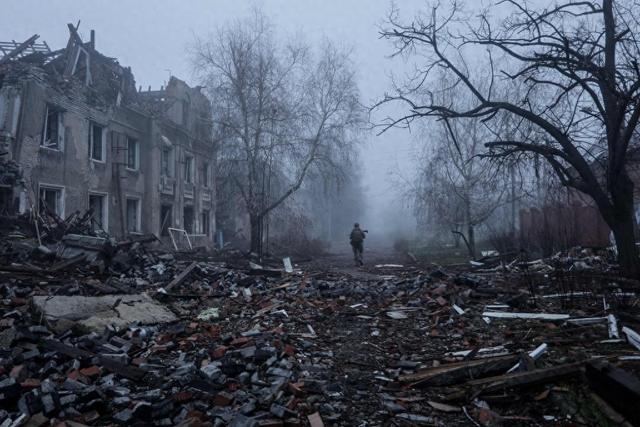
Core Insights - The world in 2025 is overshadowed by conflicts, with technological advancements, great power rivalries, and historical grievances intertwining, leading to complex and easily spread forms of warfare [1] - The Global Peace Index report indicates that the overall level of peace has reached its lowest point in nearly two decades, with 59 armed conflicts involving state actors occurring globally, marking the highest number since World War II [1] Group 1: Ongoing Conflicts - Major conflicts such as the Russia-Ukraine war and the escalating Israel-Palestine conflict are interconnected, affecting global energy prices, food supply, and regional stability [3] - The Russia-Ukraine conflict has evolved into a high-tech war, with extensive use of drones, electronic warfare systems, and artificial intelligence, influencing other conflict regions [5] - The Israel-Palestine conflict has seen multiple ceasefires and escalations, impacting broader regions, including threats to the Red Sea shipping lanes and frequent clashes along the Lebanon-Israel border [13][14] Group 2: Humanitarian Impact - The humanitarian crisis resulting from wars is severe, with millions displaced and reliant on international aid, and significant destruction of infrastructure, including schools and hospitals [28] - Over 50 million children are estimated to be out of school due to conflicts, and long-term conflicts are fracturing social structures, complicating future reconciliation efforts [28] - The economic foundations in conflict zones are devastated, with agriculture, factories, and critical infrastructure destroyed, leading to long-term poverty in affected areas [40] Group 3: Global Political Dynamics - The positions and actions of major powers significantly influence the development of conflicts, with NATO's expansion and differing support levels for Ukraine testing the alliance's unity [48] - Russia's military-technical cooperation with Iran has strengthened, creating a practical "anti-sanction cooperation network" [50] - Countries in the Global South, such as Brazil and South Africa, are asserting independent positions on conflict issues, emphasizing dialogue and the UN's core role [55] Group 4: Economic and Supply Chain Implications - Global supply chains are being restructured with a focus on "security," as countries, particularly in the West, push to relocate critical supplies to political allies, leading to a potential fragmentation of the global trade system [59] - The U.S. is enhancing its critical mineral supply chain security through initiatives with allies like Japan, India, and Australia, reflecting a shift towards economic resilience [61]

承接环球度假区外溢效应,北京通州再添新酒店
Bei Jing Shang Bao· 2025-09-28 14:31
Group 1 - The Beijing Universal Resort is experiencing significant growth, with surrounding tourism and hospitality developments enhancing its appeal [1][4] - The "Yi He Live" commercial complex has opened in the Zhangjiawan Design Town, introducing two new hotels to cater to business needs and the overflow effect from the Universal Resort [2][3] - The opening of multiple high-end hotels around the Universal Resort is strategically timed to capture the increased demand during the upcoming Mid-Autumn and National Day holidays, with booking rates already reaching 50%-60% [3] Group 2 - The 2023 Global Theme Park and Museum Report indicates that visitor numbers to Beijing Universal City reached 9 million, a 109% increase from 4.3 million in 2022, highlighting the resort's strong growth trajectory [4] - New entertainment projects, such as the Beijing Haichang Ocean Park and a family-oriented park featuring international IPs, are under construction to further enhance the area's tourism offerings [4] - The economic impact of a large theme park can be substantial, with a reported consumption leverage effect of 1:18.8, meaning every 1 yuan spent at the park can stimulate 18.8 yuan in local economic activity [4][5]