外资涌入

Search documents
外资涌入+美元走弱 菲律宾比索迎14年来最佳年度开局
Zhi Tong Cai Jing· 2026-02-27 04:45
Core Insights - The Philippine peso is experiencing its strongest annual start since 2012, appreciating nearly 2% year-to-date, driven by foreign capital inflows and a weakening US dollar [1] - After eight years of net capital outflows, foreign investments have returned to the Philippine stock market for two consecutive months, pushing the benchmark index close to bull market territory [1] - Analysts warn that the peso's strength may diminish towards the end of the year due to rising expectations of interest rate cuts, with BMI predicting a decline in the peso to 59.50 against the dollar by the end of 2026 [1] Group 1 - The Philippine peso's appreciation is primarily attributed to the weakening US dollar rather than improvements in domestic fundamentals [1] - BMI forecasts a 25 basis point interest rate cut by the Philippine central bank by the end of 2026, which could reduce the peso's attractiveness due to a narrowing interest rate differential with the US [1] Group 2 - A significant corruption scandal has led to the lowest economic growth rate in 14 years, excluding the pandemic period [2] - The Philippine central bank governor has stated that the bank will support the economy without triggering inflation [2]
日本股市成“特朗普风暴”避风港!2025年外资大量涌入,净买入额创12年新高
智通财经网· 2026-01-08 11:09
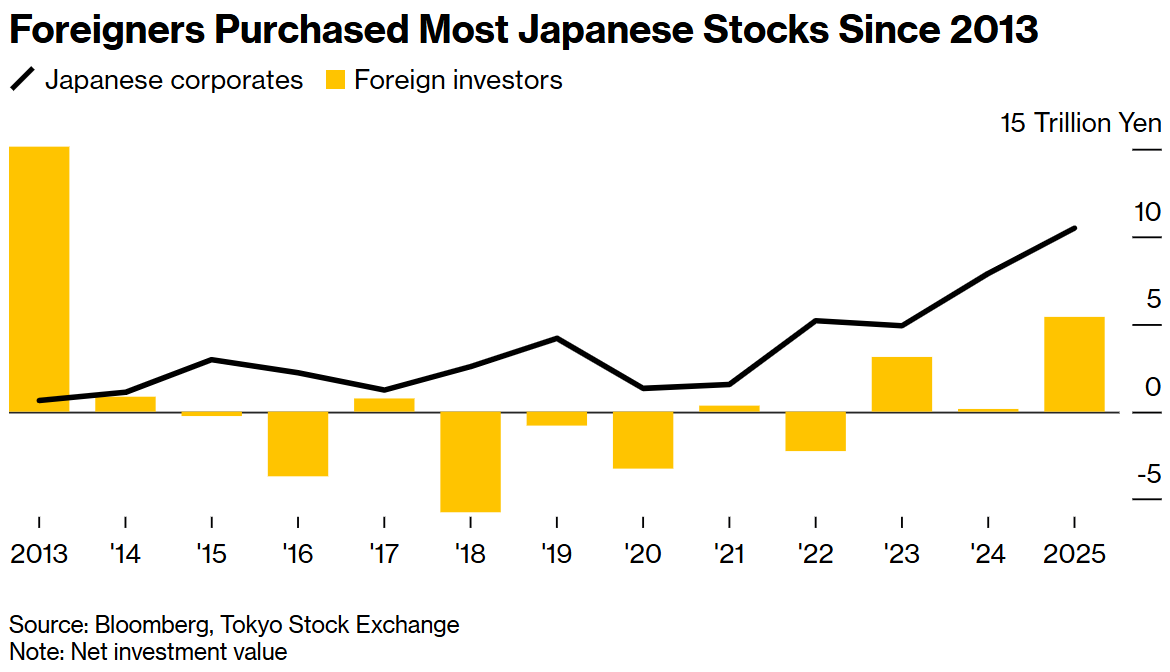
Group 1 - Foreign investors significantly increased their purchases of Japanese stocks, reaching the highest level since 2013, with net buying of approximately 5.4 trillion yen (about 35 billion USD) in 2025, which is 35 times the amount bought in 2024 [1][4] - The buying activity of foreign investors was second only to domestic companies, which net bought 10.5 trillion yen of domestic stocks last year [4] - The optimistic sentiment towards the Japanese economy and the Bank of Japan's stable monetary policy normalization were key drivers of the aggressive foreign buying [4] Group 2 - Japan emerged as an attractive alternative for investors amid increasing uncertainty in the U.S. economy due to Trump's tariff policies, especially considering Japanese companies' efforts to improve capital efficiency and shareholder returns [4] - There is a stark contrast between the bullish attitude of foreign investors and the bearish stance of domestic retail investors, who net sold 3.6 trillion yen of Japanese stocks last year [4] - Caution is advised as Japanese stock indices have reached historical highs, potentially leading to more selective choices by foreign investors this year [4]

日资房产市场升温,外资涌入创新高,中国楼市对比显冷清
Sou Hu Cai Jing· 2025-09-01 14:06
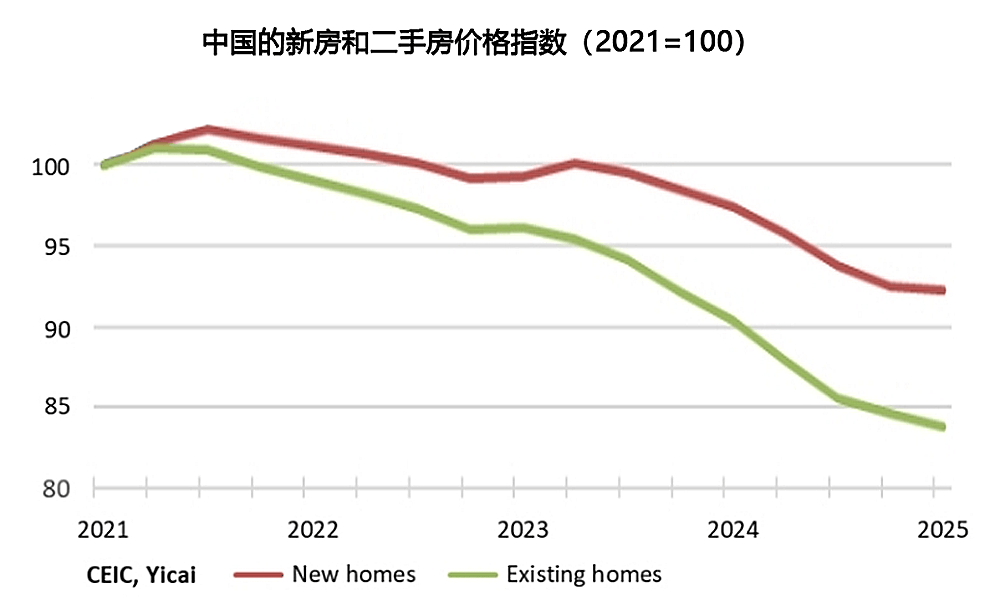
Group 1 - The Japanese real estate market experienced an unprecedented influx of foreign investment in the first half of 2025, with investment amounts surging by 45%, surpassing 1 trillion yen [1][6] - The continuous rise in land prices in Japan for four consecutive years, driven by yen depreciation, a strong recovery in tourism, and persistent inflationary pressures, has made the market highly attractive [1][3] - Tokyo's rental yield reached 4.2%, with occupancy rates consistently above 96%, showcasing the market's resilience and appeal [1][4] Group 2 - In contrast, the Chinese real estate market saw a decline during the same period, with real estate investment dropping by 11.2% and rental prices in 50 major cities decreasing by 1.37% [1][3] - The average land price in Japan increased by 2.7%, marking the strongest performance since 1991, with projections indicating the market value will grow from $436 billion in 2024 to $557 billion by 2033 [3][6] - Foreign investors are particularly interested in multi-family residential properties due to their high occupancy rates and stable rental income, with significant transactions recorded in Tokyo and Osaka [3][6] Group 3 - The average rental yield across Japan stands at 4.2%, significantly higher than that of major Chinese cities, with Tokyo's residential rents increasing by 6.4% year-on-year [4][6] - Major foreign investments include Blackstone's acquisition of the Tokyo Garden Terrace Kioicho project for approximately 400 billion yen, setting a new record for foreign investment in Japan's real estate [6] - The trend of foreign investment is expected to continue, with interest from major buyers in properties such as Nissan's headquarters in Yokohama, indicating a robust outlook for the Japanese real estate market [6]