多技术路线并举

Search documents
商业秘密|可控核聚变开启行业元年,中国企业逐鹿商用化
Di Yi Cai Jing· 2025-11-16 08:17
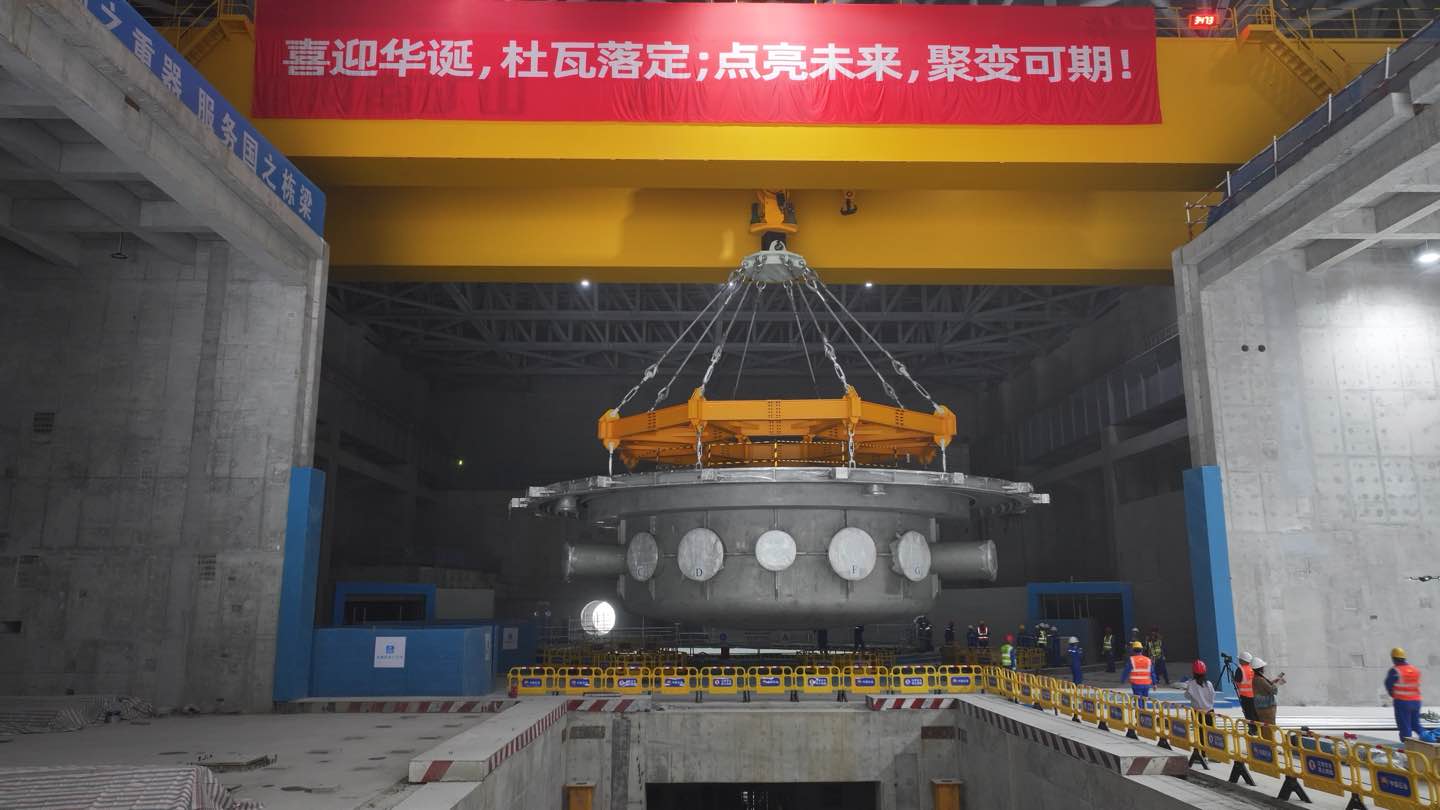
Core Viewpoint - The domestic nuclear fusion industry is experiencing a new wave of competition, with significant investment interest and technological advancements marking 2023 as a pivotal year for the sector [1][3]. Group 1: Industry Developments - The controllable nuclear fusion index has increased by over 60% this year, indicating strong market interest and investor returns [1]. - Major projects like the EAST and HL-3 have achieved significant milestones, including stable operation of plasma at 100 million degrees Celsius for over a thousand seconds [2]. - The establishment of companies like China Fusion Energy Co. and Fusion New Energy Co. has attracted nearly 11.5 billion yuan in investments, signaling robust state support [3]. Group 2: Investment Trends - A shift in investment dynamics is evident, with investors actively seeking opportunities in nuclear fusion startups, contrasting with previous years where companies struggled to attract funding [1][3]. - Several startups, including Nova Fusion and Antong Fusion, have successfully secured significant funding rounds, indicating a growing confidence in the sector [4][6]. - The capital influx is extending to the supply chain, with companies in related fields also receiving investments, highlighting the industry's expansive growth potential [6]. Group 3: Technological Innovations - The nuclear fusion landscape is diversifying, with new companies exploring alternative technologies like Field-Reversed Configuration (FRC) and Z-pinch, moving away from the traditional Tokamak approach [7][14]. - The government is supporting a multi-technology roadmap for nuclear fusion, allowing for varied approaches to development and commercialization [14]. - Companies like Hanhai Fusion are focusing on cost-effective solutions, with their HHMAX-901 device costing around 200 million yuan, aiming for competitive electricity pricing [11]. Group 4: Commercialization Efforts - The urgency for nuclear fusion is driven by the global demand for energy, particularly from AI and tech giants investing in fusion technologies [15]. - While commercial power generation is projected to take 5 to 8 years, companies are exploring immediate applications in medical isotopes and neutron sources to generate revenue [16][17]. - The medical sector presents a promising avenue for early application, with significant market demand for isotopes used in cancer treatment [17][18].

丰田汽车(TM.US)战略转型:RAV4将采用全混合动力,关税风险成最大变数
智通财经网· 2025-05-21 07:05
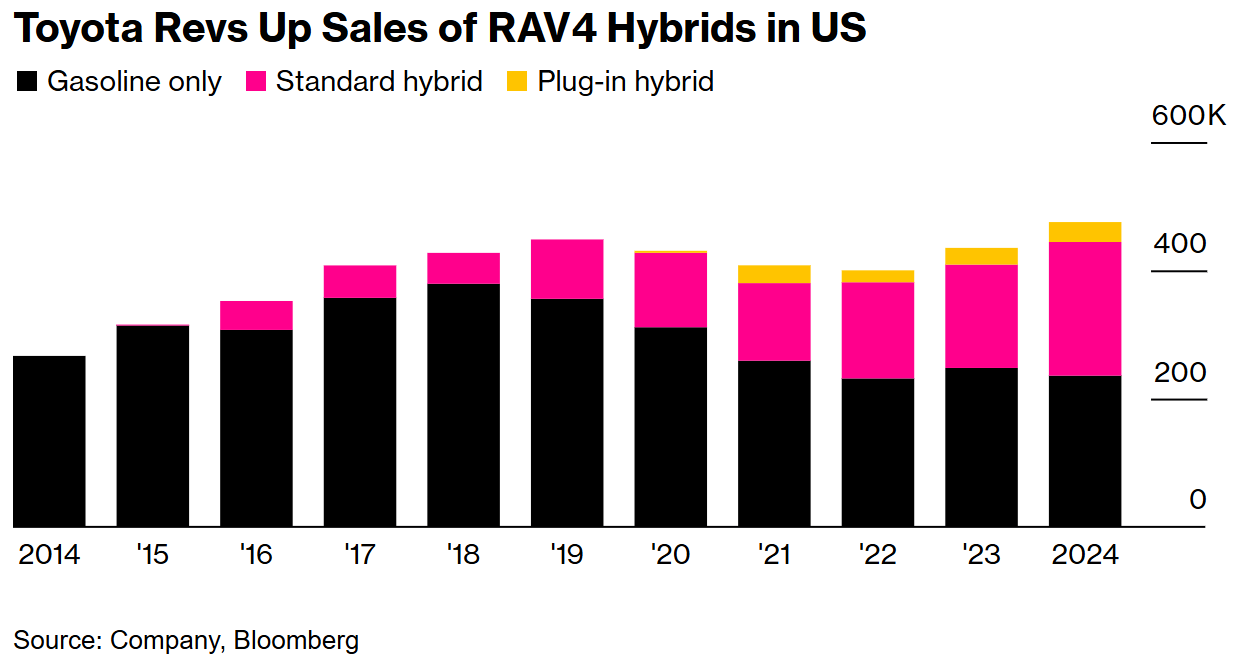
Group 1 - Toyota has announced the discontinuation of the gasoline version of its best-selling RAV4 in the U.S. market, with the new generation only offering hybrid and plug-in hybrid versions, marking a significant step in its electrification strategy [1][4] - The current RAV4 hybrid model is a top seller among dealers, with a starting price of $32,300, only $3,000 more than the gasoline version, indicating strong consumer demand for hybrid vehicles [1] - In Q1 of this year, the sales share of electrified models from Toyota and Lexus in the U.S. reached 53%, a significant increase from 37% in the same period last year, highlighting the growing demand for hybrid vehicles [1] Group 2 - The new RAV4 will be the first model to feature the Arene operating system developed by Woven by Toyota, integrating advanced driver assistance and smart cockpit functions [4] - The RAV4's electrification will directly impact competitors like Honda CR-V and Nissan Rogue, which rely on overseas production, as Toyota maintains a diversified production strategy [4] - Despite the shift towards electrification, Toyota will continue to utilize its current 2.5L engine platform in other models, indicating a balanced approach to technology [4] Group 3 - Analysts view Toyota's strategic adjustment as a response to the surge in hybrid demand and a proactive measure against trade policy uncertainties, providing a new model for industry transformation [5] - Currently, 80% of Toyota's models available in the U.S. offer electric options, and the addition of a third pure electric vehicle model next year aims to address previous criticisms regarding its pace of electrification [5]